
US Sanctions ICC President Tomoko Akane in Escalating Court Battle
Washington sanctioned ICC President Tomoko Akane and Senior Trial Lawyer Abdoulaye Seye, freezing assets and barring entry as the Trump administration escalates its campaign against the court. Japan called it 'very unfortunate'; Akane vows the court 'will not yield to pressure from anyone.'
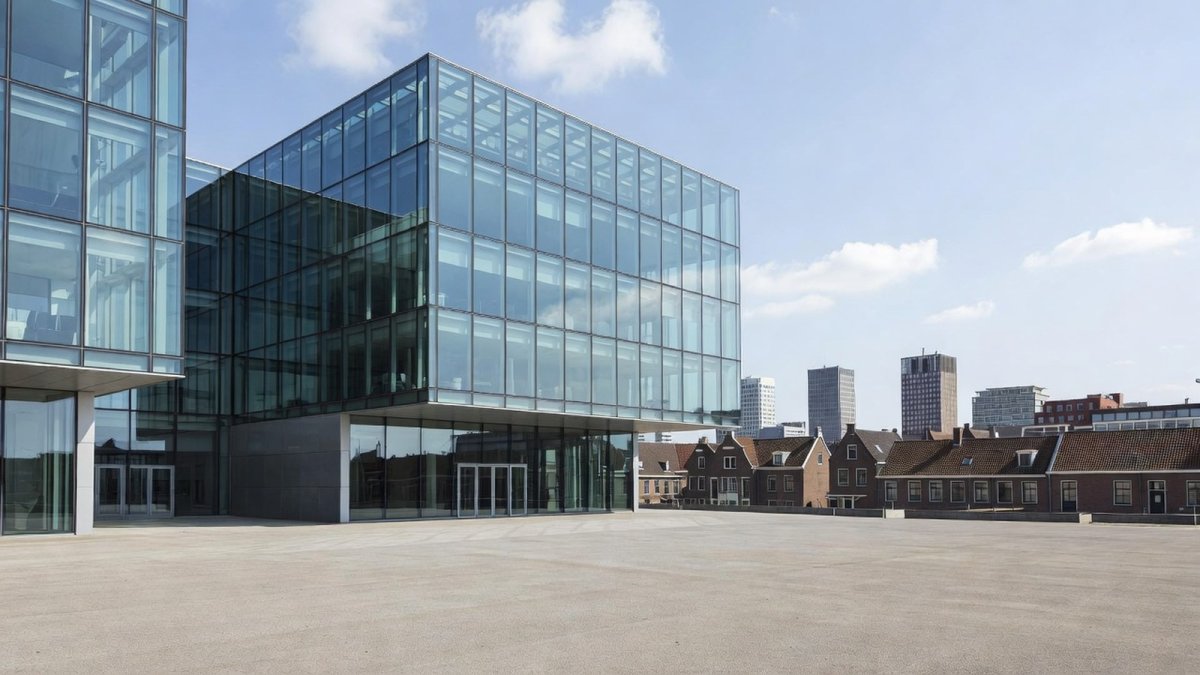
The United States has slapped sanctions on the president of the International Criminal Court, a Japanese judge named Tomoko Akane, and a senior trial lawyer from Senegal — a direct shot at the global body that has dared to issue arrest warrants for Vladimir Putin and Benjamin Netanyahu. Washington is now squeezing nine of the court's eighteen judges, freezing assets and barring entry, in what Secretary of State Marco Rubio calls a campaign to dismantle a "corrupt" institution. Japan, the ICC's biggest funder and a close US ally, is caught in the middle, offering tepid regret while the court's president vows she will not yield.
US Sanctions ICC President in Escalating Court Battle
Washington, D.C. — The State Department announced Tuesday that ICC President Tomoko Akane and Senior Trial Lawyer Abdoulaye Seye are now subject to an executive order signed by President Trump in February 2025, a move that freezes their US assets and bars them from American soil. The sanctions, announced by Rubio, mark the latest escalation in a long-running campaign against a court Washington views as a direct threat to American sovereignty.
What Just Happened
Secretary of State Marco Rubio made it official on Tuesday: the United States is sanctioning the top judge of the International Criminal Court and one of its senior prosecutors. The measures, which include asset freezes and entry bans, effectively cut Akane and Seye off from the US financial system. This is not a symbolic gesture — it is a targeted financial stranglehold on individuals who have overseen investigations Washington finds unacceptable.
Rubio did not mince words. "These individuals have directly engaged in efforts by the ICC to investigate, arrest, detain, or prosecute officials whose government has not consented to ICC jurisdiction," he said in a statement. He went further, calling the court "a corrupt and fatally politicised supranational court that has maliciously abused its authority and exceeded its mandate." The message is clear: the Trump administration will not tolerate what it sees as judicial overreach.
The Sanctions Mechanics
This is not the first time the US has gone after the ICC, but the scope is widening. Washington has now sanctioned nine of the court's eighteen judges, effectively crippling the bench's ability to operate without fear of American retaliation. The executive order, signed by Trump in February 2025, authorizes these measures against any ICC official involved in investigating US personnel or allies who have not consented to the court's jurisdiction.
The practical effect is brutal. Sanctioned individuals cannot travel to the United States, cannot hold US-based assets, and are locked out of the dollar-denominated financial system. For a court that relies on international cooperation, this is a hammer blow. The ICC responded with a statement warning that such actions "undermine the rule of law" and that "when judicial actors are threatened for applying the law, it is the international legal order itself that is placed at risk."
Who Is Tomoko Akane?
Akane is a 70-year-old former prosecutor from Japan who has served as an ICC judge since 2018. In March 2024, she was elected president of the court — the first Japanese national to hold that position. Her three-year term puts her at the helm during the most turbulent period in the court's history.
Her history includes involvement in the 2023 arrest warrant for Russian President Vladimir Putin over the alleged forcible deportation of Ukrainian children — the move that triggered Moscow's retaliation. Russia put her on its wanted list. When Moscow announced that, Akane shrugged it off. "Even if one judge were to die, we are easily replaceable, so there is really no value in targeting us," she said. That defiance has not wavered.
Russia's In-Absentia Conviction
This is not just a US problem. In December 2025, a Moscow City Court convicted ICC Prosecutor Karim Khan and eight judges, including Akane, in absentia for the "unlawful prosecution" of Russian citizens. The Kremlin has made no secret of its contempt for the court, and the convictions were a direct retaliation for the Putin arrest warrant.
UN human rights experts were quick to denounce the Russian move as a "blatant breach of international law." But the damage was done. Akane now faces legal jeopardy in Russia, financial sanctions from the United States, and a growing campaign to delegitimize the institution she leads. In her December speech at the annual Assembly of States Parties, she addressed the pressure head-on: "We will not yield to pressure from anyone."
Japan's Awkward Position
Here is where it gets uncomfortable for Tokyo. Japan is the ICC's largest financial contributor and a treaty ally of the United States. When the sanctions landed, Prime Minister Sanae Takaichi called it "very unfortunate" and said her government would deal with it by "continuing communication with relevant nations including the United States." That is diplomatic speak for: we are not happy, but we are not going to make a scene.
Foreign Press Secretary Toshihiro Kitamura tried to strike a balance, saying Japan has "consistently supported" the ICC and remains committed to "strengthening the rule of law" through dialogue. But the Japan Times reported this week that Tokyo's official protest in English appeared softened and restrained compared to its Japanese-language statements. The message to Washington is being diluted in translation, and everyone can see it.
Chief government spokesman Minoru Kihara said back in July that Japan was watching US announcements about the ICC "with concern" and had "consistently supported the ICC as a permanent international criminal tribunal." Concern, yes. Outrage, no. Japan is walking a tightrope between its alliance with Washington and its commitment to international justice, and it is not doing a graceful job of it.
The ICC Fights Back
The court is not rolling over. Akane has written a book, published in Japan in 2025, titled "Fighting War Crimes: The International Criminal Court Will Not Yield," in which she describes the current situation as "truly an existential crisis" for the institution. She is not wrong. The ICC was established in 2002 by the Rome Statute to prosecute individuals for genocide, crimes against humanity, and war crimes — acting as a last resort when states cannot or will not prosecute. The US signed but never ratified the treaty. Russia, Israel, and China are not members.
Washington's grievances are specific: the ICC's investigation into US military personnel over alleged war crimes in Afghanistan, and the 2024 arrest warrant for Israeli Prime Minister Benjamin Netanyahu over the Gaza war. Netanyahu, for his part, took to X on Tuesday to call the ICC "a kangaroo court that cloaks its abuse of power in the language of international law." The court's response has been measured but firm, insisting that threatening judicial actors puts the entire international legal order at risk.
International Reaction
The backlash against Washington is building. Dutch Foreign Minister Tom Berendsen posted on X that the Netherlands "disapproves of the latest sanctions against officials and staff of the ICC" and insisted that "international courts and tribunals must be able to freely carry out their mandates." That is a direct rebuke from a key US ally in Europe.
Human Rights Watch is going further. Kanae Doi, the group's Japan director, called the sanctions "an affront to victims around the world and a naked attempt to shield American and Israeli officials implicated in serious crimes from justice." She urged Tokyo to "strongly condemn" the Trump administration's attacks and work with other ICC member states to protect the court's mandate. Balkees Jarrah, HRW's MENA director, echoed that sentiment, calling the sanctions "just the latest example of the Trump administration's utter contempt for international law."
On the legal front, a coalition including Human Rights Watch, the American Friends Service Committee, the Center for Constitutional Rights, and the Open Society Institute filed a lawsuit in US federal court on August 11 challenging the sanctions against ICC prosecutors, judges, a UN human rights expert, and three Palestinian human rights groups. The legal fight is now on American soil.
What This Means for International Justice
Here is the uncomfortable truth: the ICC is in existential peril, and the United States is leading the charge to dismantle it. Rubio announced in July a "sweeping campaign to dismantle the threat" the court poses to US sovereignty, and Washington has called on partners to withdraw. Chad and Venezuela have already announced their departure. The court that was supposed to hold the world's worst war criminals accountable is now fighting for its survival against the world's remaining superpower.
For the average reader, this matters more than you might think. The ICC is the only permanent international body that can prosecute genocide, crimes against humanity, and war crimes when national courts fail. If Washington succeeds in gutting it, the message to dictators and war criminals is simple: there is no accountability. The sanctions on Akane are not just about one judge — they are about whether international law means anything at all.
Akane's own words from her book are worth remembering: "We will not yield to pressure from anyone." But the pressure is mounting, and the question is whether the court — and the nations that fund it — have the spine to stand with her. Japan, the court's biggest backer, is wavering. Europe is protesting but has not matched words with action. And Washington is betting that the ICC will crumble. The next few months will tell us who is right.
This article was produced with AI-assisted research and editorial support. Sources: CNA/AFP, Mainichi/Kyodo, Human Rights Watch, Reuters, The New York Times, TRT World, Asahi Shimbun.
By Jessica Ali, Staff Writer
What's Your Reaction?
 Like
0
Like
0
 Dislike
0
Dislike
0
 Love
0
Love
0
 Funny
0
Funny
0
 Wow
0
Wow
0
 Sad
0
Sad
0
 Angry
0
Angry
0

Editor-in-Chief at Global1.News. Atlanta-based journalist who cuts through the BS and tells it like it is. Lead anchor, host, and the voice you hear when the spin stops and the truth starts.









Comments (0)