
AI Search Engines Disrupt SEO, Says ANGA CEO — Thai Brands Must Adapt
The way Thai consumers find information online is changing before our eyes, and the ripple effects are reaching every corner of the Kingdom's digital economy. From the bustling streets of Bangkok to the provincial capitals of Isaan, the shift from clicking blue links to reading AI-generated summaries is forcing businesses to rethink their entire approach to being found online.
The way Thai consumers find information online is changing before our eyes, and the ripple effects are reaching every corner of the Kingdom's digital economy. From the bustling streets of Bangkok to the provincial capitals of Isaan, the shift from clicking blue links to reading AI-generated summaries is forcing businesses to rethink their entire approach to being found online. At the center of this transformation stands Rachavit "Gain" Whangpatanathon, CEO of ANGA Bangkok, who this week delivered a clear message to Thai marketers: adapt to artificial intelligence or risk disappearing from the digital landscape entirely.
AI Search Engines Disrupt and Evolve SEO, Says ANGA CEO — Thai Brands Must Adapt or Fade
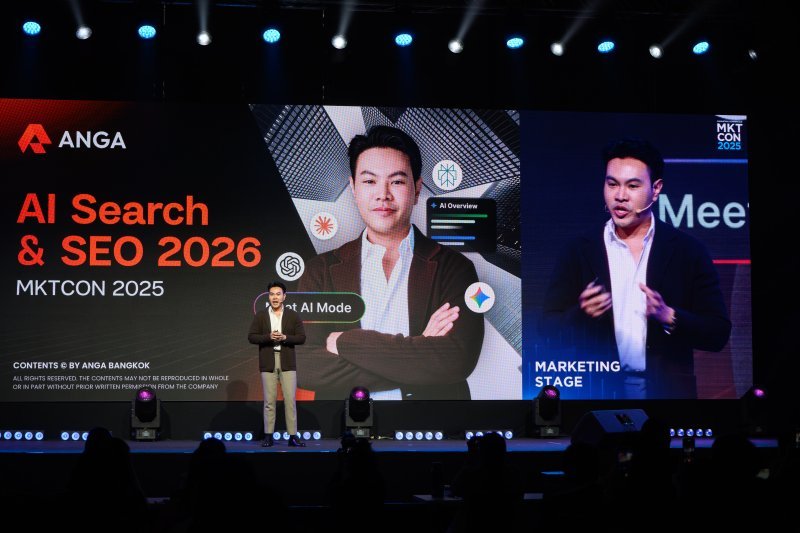
Bangkok, Thailand – today — Artificial intelligence has fundamentally altered how Thai audiences search online, and the traditional playbook for search engine optimisation is no longer enough, according to Rachavit "Gain" Whangpatanathon, CEO and founder of ANGA Bangkok, one of Thailand's leading AI-first SEO agencies. Speaking about the seismic shifts in digital marketing, Rachavit explained that more consumers are turning to AI models such as ChatGPT and Google Gemini, reading the summaries these tools provide instead of clicking through to actual websites.
The New Reality of Thai Search Behavior
The numbers tell a stark story. In May 2025, Google rolled out AI Overviews to approximately 80% of searches in Thailand, meaning that when Thai users type a query, they often see an immediate AI-generated answer at the top of the page. The result, Rachavit noted, is that consumers click on fewer and fewer website links. Even when people are not actively using AI models, the presence of AI Overviews on traditional Google searches has changed behavior across the board.
The searches themselves have also evolved. Thai consumers, accustomed to asking AI engines longer, more conversational questions, now type those same detailed prompts into Google. Short keyword phrases like "best hotel Bangkok" have given way to longer queries such as "which hotel in Bangkok has the best pool for families near the BTS?" This shift, Rachavit explained, requires a completely different approach to content creation and optimisation.
When Traditional SEO Failed: A Cautionary Tale
Rachavit shared a candid example from his own agency's experience. Last year, ANGA worked with one of its largest clients in Thailand, a company offering finance products. The agency committed to two ambitious targets: increasing website visits by 50% and boosting sales by roughly 30%. They missed both goals. The proprietary tools and data that ANGA had relied upon for years had become outdated, a wake-up call that resonated across the industry.
"Traditional SEO is still important and very crucial in the marketing approach," Rachavit said, but he emphasized that the old methods alone are no longer sufficient. The failure forced ANGA to confront a difficult truth: the rules of the game had changed, and clinging to outdated strategies would only lead to further losses.
Embracing AI: The New Path Forward for Thai Brands
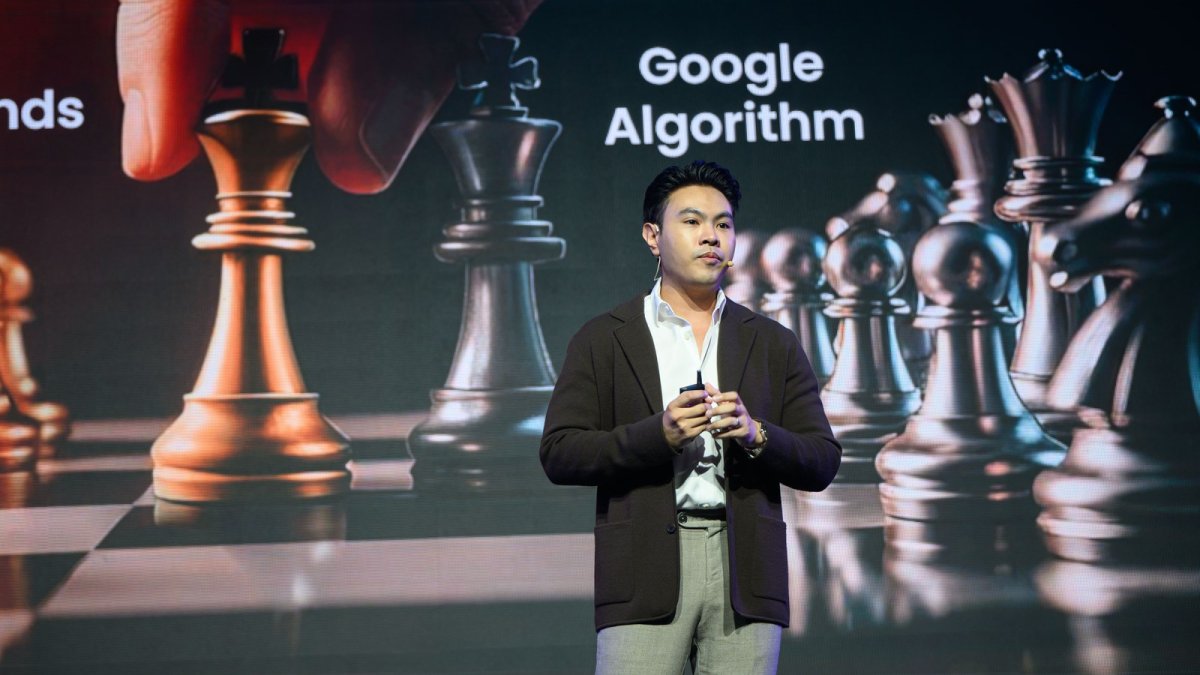
Instead of pushing back against AI, Rachavit argues that search engine optimisation must evolve alongside it. Brands that embraced this shift early are now reaping the rewards. "Brands that accepted the AI SEO expansion opportunity now get in the top three brand mentions on ChatGPT and Gemini because they made the shift," he said. This is not a distant future scenario — it is happening now, in Thailand, among companies that recognized the opportunity before their competitors.
ANGA, which was founded in 2020 to help new and established businesses with online marketing through SEO and pay-per-click advertising during the COVID-19 lockdowns, has since served more than 300 brands. The agency is partnered with Google, TikTok, and Meta, and has positioned itself as a specialist in Google AI Overviews, Generative Engine Optimisation (GEO), and visibility across ChatGPT, Gemini, and Perplexity.
Thailand's Digital Economy at a Crossroads
Thailand's digital economy is one of Southeast Asia's most dynamic, and the country has emerged as a regional hub for digital marketing and e-commerce. With high social media and messaging app usage, Thai businesses — from small and medium-sized enterprises in Chiang Mai to major conglomerates in Bangkok — are adapting to AI-driven consumer behavior. The stakes are high: those who fail to adapt risk losing visibility in a marketplace where AI models increasingly serve as the gatekeepers of information.
Rachavit drew a parallel between the disruptive effects of the pandemic and the advent of AI. Just as COVID-19 forced businesses to pivot to online models or face closure, AI now poses a similar challenge. "If you want your brand to get mentioned on ChatGPT, Gemini, AI Overviews or AI Mode on Google, this is the new approach that we need to act on now," he urged.
Training the Next Generation of Thai Digital Marketers
To address this urgent need, ANGA recently introduced a spin-off venture called ANGA MASTERY, an educational platform operated by a specialized AI search agency. The platform is designed to equip digital marketers and business owners with updated, future-proof strategies. Through this training arm, the firm aims to establish the benchmark for the Best AI SEO Course in Thailand, helping local professionals navigate the complexities of AI-driven search.
The launch of ANGA MASTERY reflects a broader recognition that Thailand's workforce must upskill to remain competitive. As AI continues to reshape the digital landscape, the demand for professionals who understand generative engine optimisation and AI search visibility will only grow. For Thai businesses, investing in this knowledge is no longer optional — it is essential for survival.
What to Watch For
In the coming months, expect to see more Thai brands shifting their digital marketing budgets toward AI search optimisation. The early adopters who secured top mentions on ChatGPT and Gemini have set a precedent, and their competitors will be watching closely. Google's continued rollout of AI Overviews in Thailand will likely expand beyond the current 80% coverage, further accelerating the decline of traditional click-through rates.
For Thai readers, the message is clear: the era of simply ranking high on Google is over. The new battleground is being mentioned by AI models, and the window to act is narrow. As Rachavit put it, the time to embrace this new approach is now. Businesses across Thailand, from Bangkok's bustling commercial districts to the emerging digital hubs of the Isaan region, must decide whether they will lead this transformation or be left behind by it.
By Ann Srisawat, Staff Writer
This article was produced with AI-assisted research and editorial support. Reporting is based on sources cited in the article.
What's Your Reaction?
 Like
0
Like
0
 Dislike
0
Dislike
0
 Love
0
Love
0
 Funny
0
Funny
0
 Wow
0
Wow
0
 Sad
0
Sad
0
 Angry
0
Angry
0

Southeast Asia Correspondent at Global1.News. Based in Bangkok, covering Thai and Southeast Asian politics, economy, technology, and culture. Deep regional perspective on one of the world's most dynamic regions.














Comments (0)