
Thailand School Shooting: Teen Kills Grandparents, Six at School Near Bangkok
Folks, a 14-year-old student turned a quiet Friday morning into a bloodbath at Debsirin Nonthaburi School outside Bangkok, killing his own grandparents at home before storming the campus and leaving at least seven people dead including himself. This is not some distant headline.
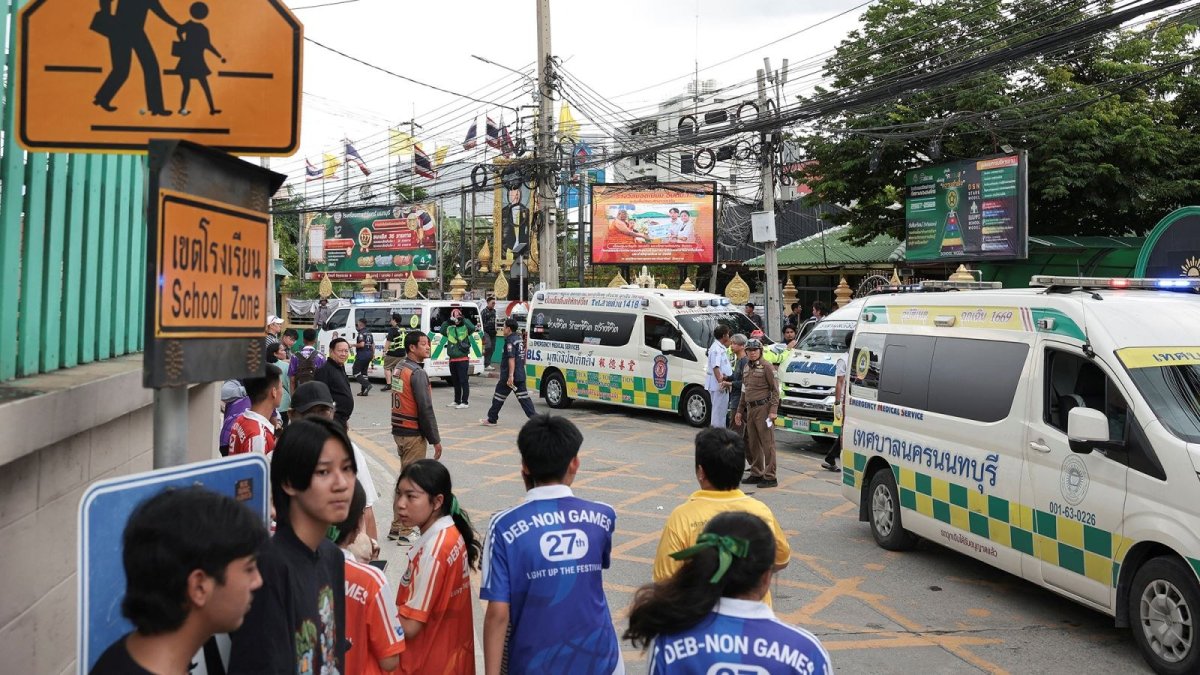
The Rampage Begins Before Dawn
The attack started at the boy's home in Nonthaburi province when he killed his grandmother and grandfather, police confirmed. He then took his grandfather's handgun and headed to Debsirin Nonthaburi School in Bang Kruai district on the northwestern edge of Bangkok.
By the time he reached the school grounds on August 7, 2026, the teenager had already crossed a line from family tragedy into mass violence. He fired at least 26 rounds during the assault and was found carrying 34 more rounds of ammunition.
Seven Dead, Dozens Wounded in Minutes
Police report seven people killed in total: the shooter himself plus six others at the school. Three students and three teachers died inside the buildings. Another 22 to 23 people were wounded, with nine listed in critical condition. The youngest victim was just 12 years old.
Lt. Col. Trairong Phiwphan stated plainly that the suspected shooter was among the seven killed. Deputy Prime Minister Anutin Charnvirakul later confirmed the gunman took his own life after the attack.
In moments like these, the true measure of loss extends far beyond any tally of lives taken. The presence of a child so young among the victims underscores how gun violence reaches into the most protected spaces, extinguishing not only individual futures but the collective promise that schools are meant to hold. Communities are left to confront an emptiness that no policy brief can fill, where the ordinary rhythms of learning and growth have been permanently altered.
When those entrusted with guiding students are themselves taken, the rupture touches every layer of daily life. Parents question the security of places once considered safe by default, while teachers weigh their own vulnerability against the duty to show up each day. This is the quiet, enduring weight that lingers long after headlines fade, a reminder that every incident carries stories of potential never realized and bonds never allowed to form.
Students Hid in Darkness While Shots Echoed
One 18-year-old student told reporters the gunfire sounded like firecrackers at first. "I didn't think it was a gun at first. There were many shots: bang bang bang. Then it went quiet. Then it started again."
Another student in an English class heard what he thought was someone shooting at birds. When a child ran in saying a teacher had been shot, the class barricaded the door with tables and chairs, turned off the lights, and crouched in the dark for 30 minutes. "Luckily, no one in our classroom was injured. The shooter only walked past our classroom."
A separate witness described students taking shelter in a classroom after gunshots echoed from another building, remaining hidden until police arrived to knock on the door and lead them to safety. CNN producer Karla Cripps, whose son attends the school, received a panicked call from him while he was away in Japan for a sporting event — proof that the anxiety rippled through families even those not physically present during the lockdown.
Rescue Workers Faced Carnage Up Close
Emergency worker Kiatikhun Verapongpradith, 47, arrived while the shooting was still underway. His team treated students hit in the back, chest, and arms. They found a male teacher dead on an upper floor and a female teacher with chest and arm wounds. "We gave CPR for about 30 minutes and rushed her to the hospital as we could not get her heart rate up, but we tried our best."
Another rescue worker described the scene to Reuters as "total chaos."
Prime Minister Calls It "Horrible" and Points to Guns
Prime Minister Anutin Charnvirakul did not mince words. "This is horrible, it shouldn't have happened," he said. "I'm very sad that this has happened. I'm not only sad for the deceased, I'm sad by the fact that this kind of incident could happen in our country."
He added that the government refuses to extend firearms possession for exactly this reason. Education Minister Prasert Jantararuangtong said the motive remains under investigation, while Deputy Education Minister Akkharanan Kannakittinan said he was coordinating to provide assistance.
The Ministry of Education laid out immediate steps: a review of security procedures to prevent weapons from being brought onto school grounds, and a nationwide meeting with education district directors the next day to tighten security. Parents were told to confirm their children had returned home safely and to monitor their emotional well-being. Financial support was set at 20,000 baht for families of those killed and 5,000 baht for each injured victim.
A School Built on Royal Legacy Now in Lockdown
Debsirin Nonthaburi School forms part of a network established by the Thai royal family, with a legacy of producing prime ministers, scholars, and writers among its alumni. In the 2025 academic year the institution enrolled 3,100 students supported by 147 teachers, operating as a prominent secondary school situated along a busy highway in Bang Kruai district on Bangkok's northwestern edge. This established presence in the community amplified the shock when the facility entered lockdown following the attack.
Students were seen streaming out of the building amid arriving ambulances, while teachers gathered in visible distress, hugging one another and crying as the scale of the incident became clear. The school's temporary closure prompted guidance for families to ensure safe returns home and to watch for signs of emotional strain, underscoring how an institution rooted in historical prestige now confronts the immediate aftermath of violence within its walls.
Thailand's Gun Violence Record Keeps Growing
Thailand holds the highest civilian gun ownership rate in Southeast Asia according to the Small Arms Survey from 2017, ranking 13th globally with over 10.3 million firearms in private hands, equating to roughly 15 guns per 100 people. This widespread access aligns with its position as second in the region for gun homicides after the Philippines, based on 2019 data from the Institute for Health Metrics and Evaluation. The pattern of incidents reveals how readily available weapons enable rapid escalation from personal disputes or mental health crises into mass violence, particularly when firearms are stored in homes without stricter controls.
Recent events underscore this ongoing trend, including a February 2026 shooting in Hat Yai that left a teacher dead and a student wounded, a July 2025 Bangkok market attack killing five before the gunman turned the weapon on himself, and a 2023 Siam Paragon incident where a 14-year-old used a modified handgun. Earlier cases such as the 2022 daycare massacre claiming 36 lives including 22 children and the 2020 Nakhon Ratchasima rampage by a soldier that killed 29 further illustrate how gun access in civilian and former official contexts sustains a cycle of deadly attacks across schools, markets, and public spaces.
The ease with which a firearm moved from a family home into younger hands reveals a persistent disconnect between written regulations and lived realities. Official statements emphasize control and responsibility, yet the presence of unsecured weapons in households suggests that enforcement often stops at the threshold of private property. This gap allows access to persist in ways that formal licensing requirements alone cannot prevent.
Thailand’s legal framework may appear stringent on paper, but cultural attitudes toward personal firearms and generational storage practices create openings that are difficult to close through legislation alone. When a young person can reach a handgun kept within the family, the conversation must shift from abstract policy to the practical question of how oversight is maintained once a weapon enters a home. Without addressing that household reality, statements of resolve risk remaining aspirational rather than operational.
The Pattern That Keeps Repeating
The numbers are staggering: a 2022 rampage that left 36 people dead, 22 of them children stabbed as they slept at a daycare center; a 2020 soldier's rampage that killed 29; a 2023 mall attack by a 14-year-old with a modified handgun. Thailand has now seen multiple mass shootings in under a decade, and Friday's attack adds a school in the capital's shadow to that grim list.
Following any such incident, attention naturally turns to the practical steps institutions can take to reduce future risk. Reviews of physical security at schools and the planned gathering of district directors offer opportunities to examine whether existing protocols match the scale of the threat. The question is whether these discussions will produce measurable changes or simply generate reports that sit on shelves until the next event.
Other nations have faced similar moments and responded with varying degrees of sustained reform, from tightened storage rules to broader cultural shifts around firearm access. Thailand now stands at a comparable juncture, where the choice between incremental adjustments and more decisive policy movement will determine whether this tragedy becomes a turning point or another entry in an ongoing record. The coming months will reveal whether political will extends beyond immediate condolences.
This tragedy is a gut punch. It shows how quickly one troubled teen with access to a gun can shatter an entire community. The question now is whether Thailand will finally treat these warning signs as the emergency they are — before the next classroom goes quiet.
School shootings have become a recurring chapter in the global story of the twenty-first century, appearing across borders and political systems with unsettling regularity. Each country that experiences one is forced to decide whether it will treat the event as an isolated failure or as evidence that deeper structural questions around access, culture, and prevention must finally be confronted. The pattern is clear enough that continued surprise itself begins to feel like a form of avoidance.
What other societies can learn from Thailand’s experience is that statements of grief and promises of review are only the beginning. Real progress requires translating public sorrow into consistent, enforceable measures that address how weapons enter young hands in the first place. The responsibility now falls on leaders and communities alike to move beyond cycles of reaction and toward prevention that actually holds, because the alternative is to accept these losses as inevitable rather than preventable.
By Jessica Ali, Staff Writer
This article was produced with AI-assisted research and editorial support. Reporting is based on sources cited in the article.
What's Your Reaction?
 Like
1
Like
1
 Dislike
0
Dislike
0
 Love
0
Love
0
 Funny
0
Funny
0
 Wow
0
Wow
0
 Sad
0
Sad
0
 Angry
0
Angry
0

Editor-in-Chief at Global1.News. Atlanta-based journalist who cuts through the BS and tells it like it is. Lead anchor, host, and the voice you hear when the spin stops and the truth starts.














Comments (0)