
Thai Rice Farmers Face Heavy Losses as Fuel Costs Rise and Paddy Prices Stall
Thai rice farmers in the central plains face mounting losses as diesel costs surge and paddy prices stay near 6,000 baht a tonne. An 82-year-old Pathum Thani farmer warns a generation of producers is at risk while government subsidies fall short of covering fuel and fertiliser expenses.
In the heart of Thailand's central plains, rice farmers in Pathum Thani and Ayutthaya provinces are confronting an unprecedented squeeze as diesel and fertiliser costs soar while paddy prices remain stuck near historic lows. Surapol Suksupaet, an 82-year-old farmer who began working the fields at age 20, warns that many smallholders now operate at a loss, threatening the future of the nation's staple crop and the communities that have sustained it for generations. Thailand remains one of the world's leading rice exporters, yet the pressure building in its paddy fields carries consequences far beyond the farm gate.
Thai Rice Farmers Face Heavy Losses as Fuel Costs Rise and Paddy Prices Stall
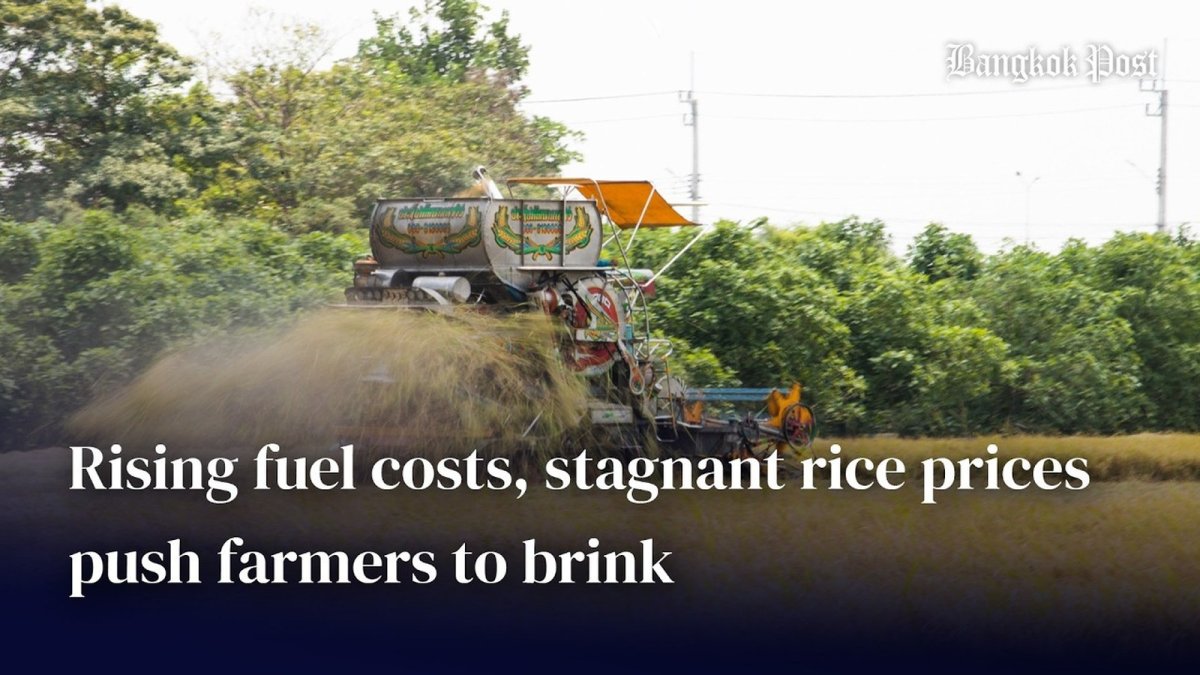
Bangkok, Thailand — Surapol Suksupaet has tended rice fields in Pathum Thani province for more than six decades, having started at age 20 in the fertile Chao Phraya basin that has long anchored Thailand's rice-growing heritage. At 82, he continues to work the land, but his warning is stark: with paddy prices at about 6,000 baht a tonne, many producers are "as good as dead." He is urging the government to raise support levels before a generation of farmers is lost.
The Farmer's Story in Pathum Thani
Surapol's fields sit in a province that supplies both local markets and the nation's export shipments, part of the central plains traditions where rice farming supports daily life and Buddhist temple offerings during harvest seasons. He reports that soaring input costs, stagnant paddy prices and mounting debts mean many producers work at a loss, and he has called directly on officials to increase support or risk losing an entire generation of producers who maintain these practices near Bangkok.
His appeal carries an emotional weight rooted in lived experience. Continued losses threaten the continuity of knowledge passed across decades in Pathum Thani and neighbouring provinces — the timing of planting, the management of water, the patient craft of harvesting. Without renewed backing, the departure of experienced farmers like Surapol would erode the social fabric of communities that have sustained staple crop production for generations.
The Cost Squeeze on Inputs
Retail diesel prices in Thailand surged more than 60 percent at their peak as a result of the Iran conflict, while fertiliser costs rose more than 30 percent, according to Reuters reporting this year. The increases added direct expenses tracked by the Oil Fuel Fund and existing diesel subsidies, compounding the burden for farmers such as Phayong Saengthong in Ayutthaya, who owes more than one million baht to lenders and recorded 200,000 baht in additional losses on his latest harvest.
The Ministry of Commerce recorded paddy white rice prices between 6,100 and 6,800 baht a tonne in recent months, offering little relief against these elevated costs. Pramote Charoensilp, president of the Thai Agriculturists Association, has stated that the targeted payment of about 1,000 baht per rai remains insufficient to offset the combined rise in fuel and fertiliser expenses. In Suphan Buri, Saithong Jamjai harvested 19 hectares but chose not to sow again because planting and harvesting would cost at least 33,000 dollars while expected grain sales would bring only about 22,000 dollars. Her conclusion was blunt: a confirmed loss.
Why Global Prices Collapsed
Thai rice export prices have reached an 18-year low amid ample global supply and intense competition from India. The USDA Rice Outlook this year forecasts that India will account for about 28 percent of world output, remain the largest producer for a third consecutive year, and lead exports at around 40 percent of global trade. This dominance has directly pressured Thai growers in the central plains who rely on steady overseas demand.
The Middle East took 17 percent of Thailand's rice exports in 2025, with Iraq as the largest single destination. Shipments bound for Gulf countries were removed from ships and returned to warehouses after the bombing of Iran, swelling domestic stocks and creating a glut that lowered returns for Thai producers. The resulting oversupply has compounded the effects of lower-priced Indian supplies on regional trade balances, leaving central plains farmers facing reduced revenues against unchanged or rising costs.
Government Response and Subsidies
Prime Minister Anutin Charnvirakul secured a landslide victory with rural voters but now sees support erode, as a Suan Dusit University poll showed 57 percent of respondents with little or no expectation of government performance compared with 68 percent optimism earlier this year. Finance Minister Ekniti Nitithanprapas has described the situation as a cost-of-living crisis affecting tourism-linked rural economies. The administration launched a 176-billion-baht consumer subsidy programme within a wider 400-billion-baht borrowing decree now facing legal challenge.
Targeted payments of about 1,000 baht per rai for rice farmers and a storage support payment of 1,500 baht per tonne for up to 3 million tonnes have not offset rising costs, according to Pramote Charoensilp. The Bank of Agriculture and Agricultural Cooperatives offers low-interest loans to rice institutions, yet household debt at 86.7 percent of GDP continues to add daily strain. Farmer Phayong Saengthong in Ayutthaya carries more than one million baht in debt linked to the same pressures, with the rising fertiliser and fuel costs adding a further 200,000 baht in losses after his latest harvest.
Deputy government spokesperson Ploythalay Laksameesaengjan has said the administration will roll out further measures to support people and boost confidence, adding that higher oil prices driven by the war are beyond the government's control. The fiscal space for a larger response is limited, however. After years of stimulus spending, inflation is projected to breach the Bank of Thailand's 1 to 3 percent target this year even as the central bank holds its key interest rate at 1 percent. Nearly 78 percent of respondents in the May poll called for urgent action on rising living costs, underscoring the political stakes for a government that swept to power on rural support.
Human Cost Across the Central Plains
Across the region, farmers are making painful choices. Nam Aoi, 58, could afford to plant only 19 of her 32 hectares, leaving 13 hectares barren for the first time in her farming life. Panida Srithong, 54, said she would borrow from local loan sharks even while using half the usual fertiliser to finance the next crop. Saichol Sudtoo, 52, was considering day labour to cover an expected 1,800-dollar loss and was losing sleep from anxiety over money.
Chaon Taiupok, 69, from Ayutthaya, voiced a frustration heard across the central plains: "Once they won and formed the government, they disappeared." These accounts illustrate how the cost squeeze has forced measurable reductions in planted area and deepened the debt burden on rural households at a time when the national economy is already strained.
Implications for Thailand and ASEAN
Thailand remains one of the world's leading rice exporters, yet continued pressure from Indian volumes threatens its position while increasing reliance on external producers for markets that once absorbed Thai paddy. The cost-of-living crisis touches tourism-linked rural economies and food security across Southeast Asia, where rice is the foundation of regional diets. Farmers in Pathum Thani and Ayutthaya supply markets that influence prices for neighbouring countries, and continued losses could reduce Thailand's export share and reshape trade dynamics within ASEAN.
For Thai readers, the crisis is about more than commodity prices. It is about the survival of a rural way of life rooted in Buddhist traditions, community reciprocity and the seasonal rhythms of the Chao Phraya basin. If smallholders abandon the fields, the consequences will ripple through temple communities, local markets and the cultural identity of the central plains.
What to Watch For
Officials will monitor the legal status of the 400-billion-baht borrowing decree and any adjustments to the 1,500-baht-per-tonne storage payments. Further shifts in Indian export volumes and Middle East demand will shape paddy prices in the coming months, as will the government's ability to deliver support before the next planting cycle. Rural communities in the central plains will track whether additional measures actually reach smallholders rather than remaining announcements on paper.
The situation in Thailand's rice fields carries forward implications for food security and rural stability across the region as producers weigh continued planting against mounting losses. For Surapol and farmers like him, the coming season will test whether the country that once fed much of Asia can still sustain the people who grow its most treasured grain.
By Ann Srisawat, Staff Writer
This article was produced with AI-assisted research and editorial support. Reporting is based on sources cited in the article.
What's Your Reaction?
 Like
0
Like
0
 Dislike
0
Dislike
0
 Love
0
Love
0
 Funny
0
Funny
0
 Wow
0
Wow
0
 Sad
0
Sad
0
 Angry
0
Angry
0

Southeast Asia Correspondent at Global1.News. Based in Bangkok, covering Thai and Southeast Asian politics, economy, technology, and culture. Deep regional perspective on one of the world's most dynamic regions.















Comments (0)