
Thai police probe possible third-party links in temple fund case
Thai police have opened a fresh investigation into the handling of temple funds linked to a former monk and a woman known only as “Ae.” The probe, announced on 12 September 2026, focuses on financial transactions that together exceed 215 million baht.
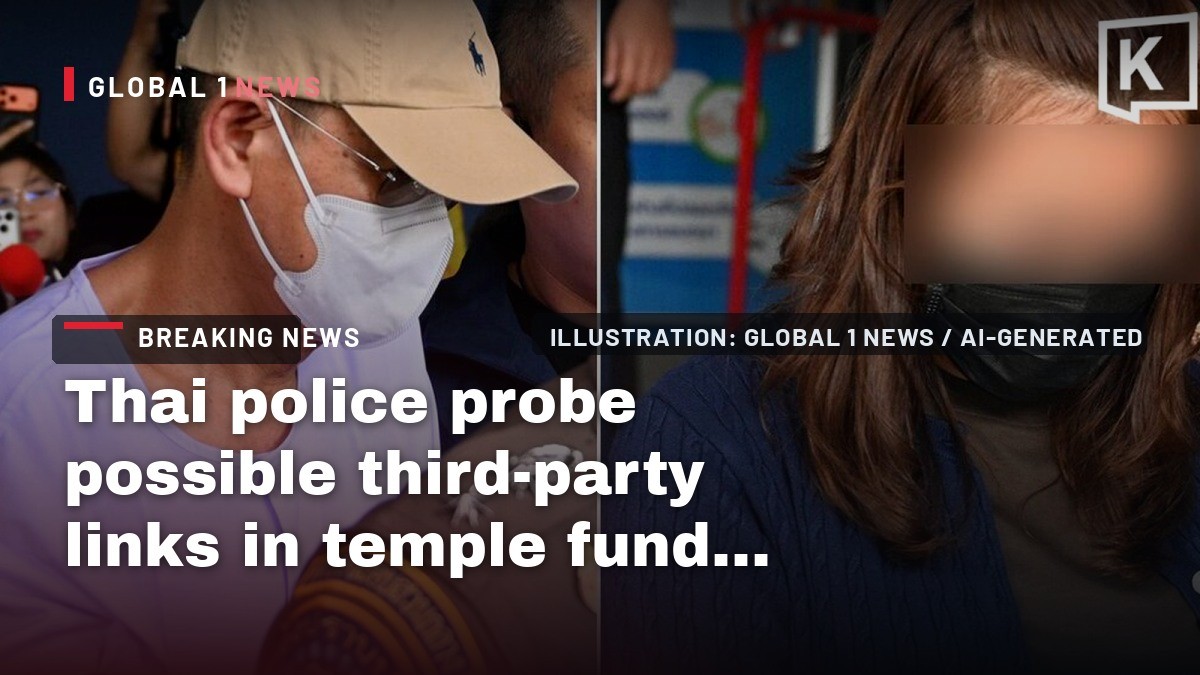
Thai police have opened a fresh investigation into the handling of temple funds linked to a former monk and a woman known only as “Ae.” The probe, announced on 12 September 2026, focuses on financial transactions that together exceed 215 million baht. As the case unfolds, it touches on long‑standing concerns in Thai society about the stewardship of religious donations, the role of monastic leaders, and the mechanisms that protect the public’s trust in Buddhist institutions.
Background of the alleged misconduct
The investigation centres on Atichot Thamwaro, a 66‑year‑old former abbot of Wat Phutthaisawan in Phra Nakhon Si Ayutthaya. Authorities allege that he diverted temple funds into his personal bank account while issuing donation acknowledgement certificates in the name of the temple. Such certificates, traditionally used to thank lay supporters for their generosity, are a cornerstone of the reciprocal relationship between monks and the community.
In addition to the alleged diversion of funds, investigators have uncovered records involving donation certificates, certificates related to the issuance of amulets, and contributions earmarked for temple renovations. The combined value of these transactions surpasses 215 million baht, prompting the Crime Suppression Division to launch a two‑pronged inquiry.
The two‑pronged police probe
Police commander Pol. Maj. Gen. Phatthanasak Bupphasuwann explained that the investigation proceeds on two fronts. The first examines the former monk’s alleged personal use of temple money, a breach that strikes at the heart of Buddhist ethics and the principle of dana, or giving, which underpins Thai charitable culture.
The second front seeks to trace the flow of money to possible accomplices. Investigators are looking for links between the financial records and other individuals who may have facilitated or benefited from the transactions. While the police have not yet identified the third parties, they suspect one or two individuals may be involved, though it remains unclear whether they are laywomen, monks, or others.
Role of the Anti‑Money Laundering Office
To deepen the financial forensics, the Crime Suppression Division has forwarded relevant documents to the Anti‑Money Laundering Office (AMLO). This step signals the seriousness with which Thai authorities are treating the case, as AMLO’s mandate includes scrutinising complex financial networks that could conceal illicit activity.
By involving AMLO, the police aim to map the full trajectory of the funds, from the original donations to any subsequent transfers. This collaborative approach reflects a broader governmental effort to ensure that religious institutions remain transparent and accountable, safeguarding public confidence in the sanctity of temple finances.
Community implications and Buddhist values
The allegations have resonated deeply within Thai communities, where temples serve as more than places of worship; they are centres of education, social welfare, and cultural preservation. When a former abbot is accused of misusing donations, it raises questions about the safeguards that protect the generosity of lay supporters.
In Buddhist thought, the act of giving is both a merit‑earning practice and a social contract. Misappropriation of such gifts can erode the moral fabric that binds monks and laity. As the investigation proceeds, many hope that the outcome will reaffirm the principle that temple resources must be stewarded with integrity, reinforcing the trust that underlies the Buddhist community.
Potential legal outcomes
While police have not set a specific timeframe for concluding the probe, they have pledged to work swiftly and provide updates as the investigation advances. Should the authorities find sufficient evidence, the case could lead to criminal charges against the former monk and any identified accomplices.
Legal repercussions would likely involve both criminal prosecution for financial misconduct and possible civil actions to recover misappropriated funds. Such outcomes would send a clear message that misuse of temple donations will not be tolerated, aligning with Thailand’s broader anti‑corruption agenda.
Wider context of temple finance scrutiny
This case arrives amid heightened scrutiny of temple finances across the country. Recent years have seen increased public awareness of how donations are managed, spurred by high‑profile incidents and the growing role of temples in community development projects.
Authorities have been encouraging greater transparency, urging temples to adopt clear accounting practices and to issue donation receipts that can be independently verified. The current investigation underscores the importance of these reforms, illustrating how financial oversight can protect both religious heritage and public trust.
Looking ahead
As the police continue to trace the flow of funds, the Thai public watches closely. The outcome will not only determine the fate of Atichot Thamwaro and any possible third parties but also shape the future of financial stewardship in Buddhist institutions.
In the spirit of compassion and accountability that underpins Thai culture, many hope the investigation will bring clarity, restore confidence, and reinforce the timeless values of generosity and honesty that have long guided Thai society.
This article was produced with AI-assisted research and editorial support. Reporting is based on the source material cited below. Sources: Khaosod English; khaosodenglish.com; Global1.News (12 September 2026).
By Ann Srisawat, Staff Writer
What's Your Reaction?
 Like
0
Like
0
 Dislike
0
Dislike
0
 Love
0
Love
0
 Funny
0
Funny
0
 Wow
0
Wow
0
 Sad
0
Sad
0
 Angry
0
Angry
0

Southeast Asia Correspondent at Global1.News. Based in Bangkok, covering Thai and Southeast Asian politics, economy, technology, and culture. Deep regional perspective on one of the world's most dynamic regions.











Comments (0)