
Xi Jinping’s New Delhi Arrival Signals Strategic Pivot at 18th BRICS Summit
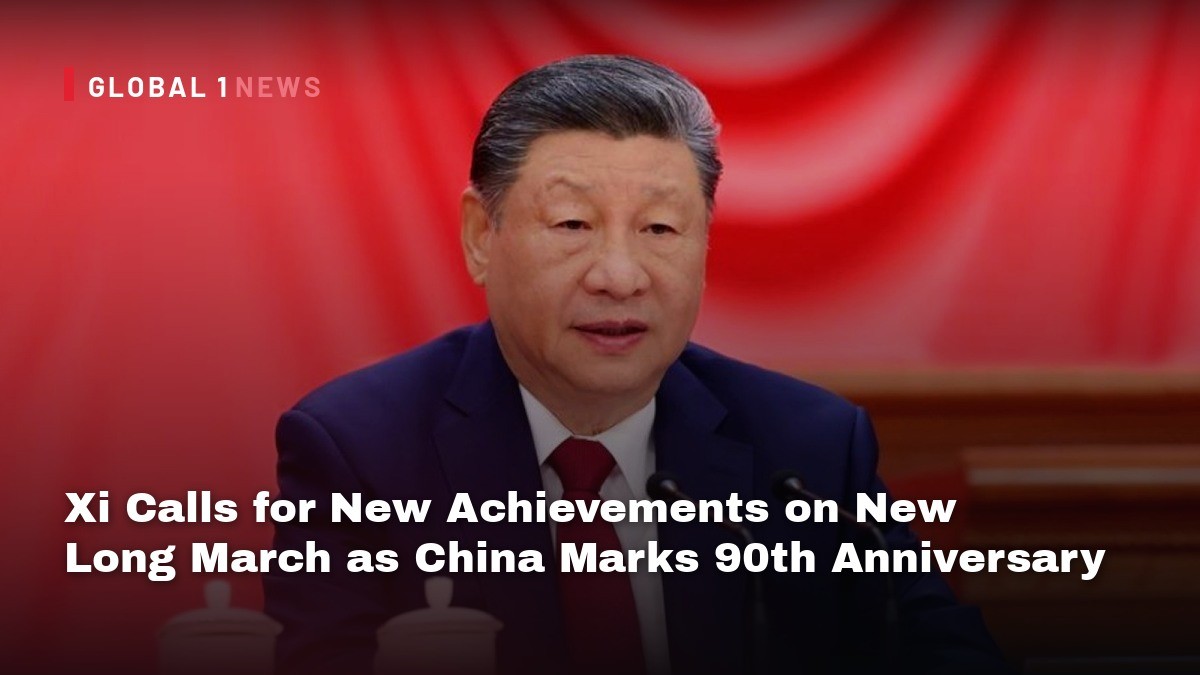
President Xi Jinping touched down in New Delhi on Saturday, marking the commencement of the 18th BRICS Summit. India’s participation in BRICS reflects its strategic balancing act.
President Xi Jinping touched down in New Delhi on Saturday, marking the commencement of the 18th BRICS Summit. The high‑profile visit, captured in CGTN’s video report, underscores Beijing’s intent to deepen multilateral cooperation with emerging economies while navigating a complex geopolitical environment that includes heightened US‑China rivalry, shifting supply‑chain dynamics, and the evolving contours of Indo‑Pacific security. Xi’s presence in India, a nation that has oscillated between partnership and competition with China, provides a critical lens through which to assess the strategic calculus of the Communist Party’s foreign policy at this juncture.
Geopolitical Context of the 18th BRICS Summit
The BRICS platform, now encompassing Brazil, Russia, India, China and South Africa, has emerged as a cornerstone of Beijing’s multilateral outreach. Over the past decade, the grouping has sought to present an alternative to Western‑led institutions, advocating for reforms in global governance structures such as the International Monetary Fund and the United Nations. In the current cycle, the summit arrives against a backdrop of intensified US pressure on China over technology transfer, trade practices, and regional security concerns, particularly in the South China Sea and Taiwan Strait.
India’s participation in BRICS reflects its strategic balancing act. While New Delhi has deepened defence and economic ties with the United States, it also maintains a pragmatic relationship with Beijing, especially in the realms of trade and multilateral diplomacy. Xi’s arrival therefore carries symbolic weight, signaling Beijing’s desire to sustain a constructive dialogue with a key Asian partner even as broader bilateral tensions persist.
From a supply‑chain perspective, the summit provides an arena for China to promote alternatives to Western‑dominated logistics corridors. Initiatives such as the Belt & Road continue to intersect with BRICS discussions, offering member states pathways to diversify trade routes and reduce reliance on ports controlled by rival powers. Xi’s agenda in New Delhi is likely to foreground these themes, positioning China as a facilitator of resilient, south‑south connectivity.
Historical Trajectory of China‑India Relations
The Sino‑Indian relationship has been marked by periods of cooperation punctuated by strategic rivalry. Since the 1962 border conflict, both capitals have pursued incremental confidence‑building measures, yet disputes over the Line of Actual Control have resurfaced intermittently. In recent years, trade between the two giants has expanded dramatically, making China one of India’s largest trading partners despite persistent calls in New Delhi for a more balanced partnership.
Within the Communist Party’s strategic framework, India occupies a unique position as a fellow large‑population, emerging market that can serve as a counterweight to US influence in Asia. Xi’s diplomatic outreach at the BRICS summit therefore aligns with a broader policy of cultivating partnerships that can collectively negotiate with the West on issues ranging from climate change to technology standards.
Nevertheless, the historical undercurrents of mistrust cannot be ignored. Beijing’s recent emphasis on “common development” in multilateral forums often juxtaposes with New Delhi’s insistence on sovereignty and non‑interference, especially concerning border incidents. Xi’s New Delhi visit is thus a litmus test for the durability of the diplomatic overtures that have characterized recent high‑level exchanges.
Strategic Objectives of the Chinese Delegation
While CGTN’s video report offers limited detail beyond the arrival of President Xi, the broader strategic objectives of the Chinese delegation can be inferred from recent Party statements and prior BRICS agendas. Central to Beijing’s agenda is the promotion of a “new type of international relations” that emphasizes mutual respect, win‑win cooperation, and opposition to unilateral sanctions. This narrative seeks to legitimize China’s development model and to rally emerging economies around a shared vision of a multipolar world order.
Economic cooperation will likely dominate the summit’s discussions. China has consistently advocated for greater financial integration among BRICS members, including the expansion of the New Development Bank’s capital base and the promotion of local currency settlement mechanisms. Such measures aim to reduce dependence on the US dollar, thereby insulating member economies from external financial shocks and political pressure.
Security and geopolitical coordination also feature prominently in Beijing’s diplomatic playbook. By aligning with India on certain global governance issues, China hopes to dilute the impact of coordinated US‑led coalitions that target Beijing’s strategic interests. The summit therefore serves as a venue for China to cultivate a coalition of like‑minded states that can collectively resist containment strategies.
Implications for US‑China Competition
The timing of Xi’s New Delhi visit is significant in the context of escalating US‑China competition. Washington has intensified its efforts to rally allies around a “free and open Indo‑Pacific,” a strategy that includes deepening security ties with India. In response, Beijing’s engagement with India at the BRICS summit can be read as an attempt to counterbalance US influence by highlighting alternative partnership models.
From a strategic standpoint, the summit offers China a platform to showcase its willingness to cooperate with India on issues where US interests diverge from those of the emerging economies, such as climate finance, infrastructure development, and reform of global institutions. By doing so, Beijing hopes to erode the perception that alignment with the United States is the sole pathway for India to achieve its development objectives.
Moreover, the summit’s outcomes could affect the trajectory of technology standards and supply‑chain realignments. China has been actively promoting its own standards in areas like 5G, artificial intelligence, and green technology. A coordinated stance among BRICS members, especially with India’s growing technological capabilities, could challenge the dominance of Western standards and further complicate US efforts to contain Chinese influence in the global tech ecosystem.
Economic Dimensions and Supply‑Chain Resilience
Economic cooperation remains a cornerstone of the BRICS agenda, and Xi’s presence in New Delhi underscores Beijing’s commitment to deepening trade linkages with India. While the video report does not enumerate specific agreements, past summits have produced commitments to expand intra‑BRICS trade, enhance investment flows, and develop joint infrastructure projects.
In the current global environment, where supply‑chain disruptions have prompted many nations to reconsider over‑reliance on any single source, the BRICS framework offers a platform for diversifying production networks. China’s Belt & Road Initiative, though not explicitly mentioned in the CGTN footage, continues to intersect with BRICS discussions, providing a logistical backbone for south‑south trade. By aligning with India, Beijing can leverage its manufacturing capacity to supply components and raw materials needed for Indian development projects, thereby fostering interdependence that may temper geopolitical frictions.
Furthermore, the summit may address financial mechanisms that facilitate trade in local currencies, a strategy that reduces exposure to exchange‑rate volatility and sanctions risk. Such financial integration would not only bolster the resilience of member economies but also reinforce China’s broader goal of promoting a multipolar monetary system.
Strategic Outlook for Regional Stability and Global Governance
President Xi’s arrival in New Delhi for the 18th BRICS Summit signals a deliberate effort by Beijing to shape the architecture of global governance through multilateral engagement. By reinforcing ties with India, China seeks to construct a coalition capable of influencing norms on trade, development, and security that reflect the interests of the Global South.
In the short term, the summit’s deliberations are likely to produce joint statements that emphasize cooperation on climate change, pandemic preparedness, and equitable economic growth. Such messaging serves to counterbalance narratives that portray the BRICS bloc as merely an anti‑Western coalition, instead presenting it as a constructive platform for addressing shared challenges.
Looking ahead, the outcomes of the summit could have lasting implications for regional stability. A strengthened Sino‑Indian partnership within the BRICS framework may encourage other Asian states to explore alternative diplomatic pathways beyond the US‑led security architecture. This diversification of alliances could lead to a more nuanced balance of power in the Indo‑Pacific, where competition and cooperation coexist.
Ultimately, Xi’s New Delhi visit underscores Beijing’s strategic calculus: leveraging multilateral institutions to advance its vision of a multipolar world while mitigating the risks associated with bilateral tensions. The 18th BRICS Summit thus stands as a pivotal moment in the evolving tapestry of 21st‑century geopolitics, with ramifications that will reverberate across supply chains, diplomatic corridors, and the broader contest for influence between the United States and China.
By Prof. Marcus Chen, Staff Writer
This article was produced with AI-assisted research and editorial support. Reporting is based on the source material cited below. Sources: CGTN video report (12 September 2026); CGTN; Global1.News
What's Your Reaction?
 Like
0
Like
0
 Dislike
0
Dislike
0
 Love
0
Love
0
 Funny
0
Funny
0
 Wow
0
Wow
0
 Sad
0
Sad
0
 Angry
0
Angry
0

World Politics Analyst at Global1.News. Based in Beijing, covering US-China relations, global trade, and geopolitical strategy. Brings deep analytical perspective to the power dynamics shaping international affairs.













Comments (0)