
Texas Is So Mad at Data Centers It's Threatening to Scrap the Power Lines the Whole State Needs
Texas lawmakers are pushing to scrap the 765-kV transmission buildout approved in 2023, even as ERCOT warns West Texas faces rolling blackouts without it. Anti-data-center anger has turned into a grid-reliability crisis.
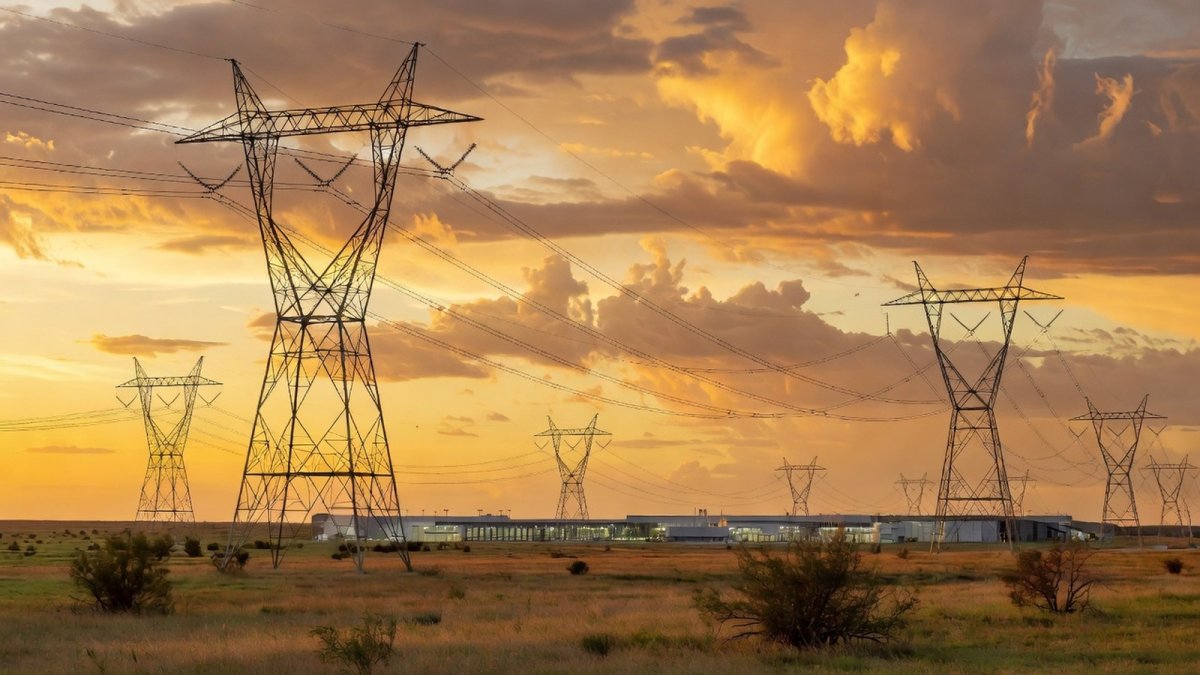
Texas Is So Mad at Data Centers It's Threatening to Scrap the Power Lines the Whole State Needs
Let me tell you something that's been sitting wrong with me all week. I've been running hosting infrastructure for over a decade, and I've watched the AI buildout do some strange things — I've watched chips become currency, power become the bottleneck, and debt become a spectator sport. But I have never watched a state get so angry at a technology that it started threatening the wires that keep its own lights on. That's where Texas is right now. And before you wave this off as another round of NIMBY noise, understand what's actually on the table: the state's top political leaders are calling on regulators to scrap a multi-billion-dollar transmission buildout that ERCOT — the same grid operator that failed during Winter Storm Uri — says is needed to prevent rolling blackouts in West Texas by next summer.
This isn't a zoning fight anymore. This is the anti-data-center backlash metastasizing into a grid-reliability crisis, and every business that needs power in Texas — data center or not — is about to get caught in the middle.
The Setup — How the Backlash Jumped From the Server Farm to the Transmission Tower
Rewind to 2023. Before the AI boom really took off, the Texas Legislature did something sensible: it approved a plan to dramatically expand the state's transmission capacity. The Public Utility Commission signed off on building 765-kilovolt lines across the state — a voltage class larger than anything ever built in Texas. The point wasn't AI. It was grid reliability in the wake of Uri, plus the explosive growth of oil and gas in the Permian Basin, which was running on what Texas Oil and Gas Association president Todd Staples calls "a patchwork of portable generators that just are not equipped for long-term needs or production growth."
Fast-forward to 2026. The data center boom piled onto that same demand forecast, and the state became the fastest-growing market in the country for electricity-hungry AI facilities — on track to host more than any other state. And that's when the politics flipped. Rural landowners looked at hundreds of miles of 765-kV towers crossing their property and said no. Grassroots groups organized — yellow bandanas on the Capitol steps became the symbol of the movement. And suddenly the very leaders who welcomed the buildout with open arms started calling on regulators to delay it, then to kill it.
Lt. Gov. Dan Patrick called on the PUC to reject the proposed lines outright. A bipartisan group of 30 House members called on the PUC to deny the applications after a nine-hour State Affairs hearing on Aug. 19. Dozens of legislators and state officials have said the whole plan should be scrapped so the Legislature can go back to the drawing board. Gov. Greg Abbott — who hasn't publicly weighed in on the lines themselves — ordered an audit of data centers seeking grid connection, which forced ERCOT to pause a first-of-its-kind effort to rework its interconnection queue. The result: grid planning just got harder, and every industry waiting to connect now has no idea if or when it gets power.
The Numbers — What ERCOT and the Market Monitor Are Actually Saying
Here's where it gets dangerous. The people who run the grid are not the ones calling for restraint. ERCOT's chief operating officer testified in July that rolling blackouts are possible in the Permian Basin by next summer if these lines don't get built. Not in five years. Next summer.
The PUC's own independent market monitor, Potomac Economics, found the West Zone's average demand grew 12.3% in 2025 versus 6.1% statewide. Congestion inside the zone rose 27% that year. The region posted ERCOT's highest average annual energy prices for a second straight year. And the oil and gas industry — joined by the Texas Chemistry Council, the Texas Association of Manufacturers, and the state's electric company associations — sent a joint letter to Abbott, Patrick, and House Speaker Dustin Burrows warning that reliability failures, congestion, and operational limits will ultimately cost consumers more than the infrastructure itself. The line from that letter that's been stuck in my head: "Avoidable delay is not a neutral choice for ratepayers; it is a choice between paying for planned infrastructure now or paying more later through outages and congestion."
Read that again. "Avoidable delay is not a neutral choice." That's the entire story in one sentence.
The Two Readings — Democracy Working, or the Grid Paying for Politics
I keep coming back to the same two readings, and both are true at the same time. That's what makes this story so uncomfortable.
Reading one: this is democracy working. The 180-day approval timeline that House Bill 5066 gave the PUC in 2023 genuinely trampled landowner rights. Landowners affected by a planned line had less time to weigh in than they did before. Mark Bell, president of the Association of Electric Companies of Texas — which represents the very utilities that would build these lines — admitted the 180-day process "is not sufficient" for large, bulk-rate, long-length lines. The rural Texans fighting this aren't the villains. Their property is being crossed by the biggest transmission lines ever built in the state, and they had less say than ever. "We expect that political leaders are going to be responsive in election season," said Jim Henson, director of the Texas Politics Project at the University of Texas at Austin. "That's how democracy works."
Reading two: the policy is breaking while the politics wins. Scrapping these lines doesn't stop data centers — it stops everything. ERCOT says the Permian risks blackouts next summer. The oil and gas industry says it can't grow without the lines. The Houston area — which is supposed to get the second phase of the buildout, an eastern loop of 765-kV lines to relieve congestion in the state's biggest cities — is already seeing elevated rates from congestion. And as CEBA's Bryn Baker put it: "A lot of the loads going into the Houston area are manufacturing loads. They're oil-and-gas terminal expansions. These are not industries that you can just move somewhere else." The anti-data-center vote doesn't punish data centers. It punishes refineries, manufacturers, and every household on the grid.
Meanwhile, PUC chair Thomas Gleeson told lawmakers: "I don't believe we have an option of doing nothing. We have to get electricity to customers in the Permian." Even the State Office of Administrative Hearings — the state's own administrative law shop — recommended the PUC reject a portion of the West Texas buildout last Thursday, the first time it has done so. Five applications are pending, and the final decisions land in the next couple of months.
The Part Nobody's Talking About — Reversal Risk on Approved Infrastructure
Here's the piece that keeps me up at night as someone who's watched this industry for a decade: Texas approved these lines in 2023 for grid reliability and oil and gas — before the AI boom was even the story. Now the data center backlash has turned the transmission buildout into collateral damage. Which means the AI buildout just discovered a brand-new risk category: approved infrastructure can be un-approved.
That's a structural shift. For years the assumption in this industry has been that once a project clears permitting, it's real. The risk lived in the queue — the wait, the interconnection backlog, the transformer lead times. Now the risk lives in the reversal. A state can look at infrastructure it already approved, see an election coming, hear from angry landowners, and simply pull the plug. And the people who lose aren't just the data center developers — it's every industry that planned around those watts, and every ratepayer who ends up paying congestion prices while the politics sort themselves out.
What This Means for Independent Hosting Providers
If you're running infrastructure — whether that's a colo cage, a small cloud, or a managed hosting shop — this story has four lessons, and they're not abstract.
First, watch the PUC's five pending applications. The decisions land in the next couple of months. If the PUC denies the lines, every power-price forecast for West Texas is wrong, and every operator with capacity there should reprice immediately.
Second, stop modeling approved infrastructure as guaranteed. Texas 2023 to Texas 2026 is your new case study. When you choose a market, ask not just "is power available" but "is the power plan politically stable." Regulatory whiplash is now a siting risk on the same level as transformer lead times.
Third, remember who pays either way. The letter's right: delay is a choice between paying for planned infrastructure now or paying more later through outages and congestion. As an operator, that means your colo power costs in Texas are going up regardless of who wins this fight. Budget for it. Lock rates where you can.
Fourth, diversify across the political map. States without active transmission fights become relatively cheaper and safer for new capacity. The arbitrage that used to be about power prices is now about political stability. And that's a harder spreadsheet to build.
The Bottom Line
Texas is the canary, and the canary is standing on a transmission tower. The state that approved the biggest grid buildout in its history to recover from Uri is now one election cycle away from tearing it up — not because the lines are a bad idea, but because the data center boom made them politically radioactive. That's the trap the whole AI buildout is walking into, state by state: when the infrastructure becomes the symbol of what people hate, the infrastructure loses, and everyone on the grid pays the bill.
I'm not here to tell you who's right about the 765-kV lines. I'm here to tell you the politics have officially become a structural constraint on the AI buildout — as real as chips, power, and debt. If you're building anything that depends on the grid, stop assuming the plan survives contact with the ballot box. In Texas right now, it's the ballot box that's winning.
— Allan Ali, Founder
This article was produced with AI-assisted research and editorial support. Sources: The Texas Tribune via KPRC Click2Houston, The Texas Tribune, KXAN, ERCOT testimony, Potomac Economics.
What's Your Reaction?
 Like
0
Like
0
 Dislike
0
Dislike
0
 Love
0
Love
0
 Funny
0
Funny
0
 Wow
0
Wow
0
 Sad
0
Sad
0
 Angry
0
Angry
0

Publisher of Global1.News. Automation architect, systems builder, and the guy making sure the truth gets published.















Comments (0)