
The P1-Billion Lifeline: How Project NOAH's New Funding Aims to Outsmart the Floods
DBM releases P1 billion for Project NOAH to enhance AI flood forecasting and hazard monitoring. Funding aims to shift disaster response from reaction to prevention, protecting Filipino lives and livelihoods from severe flooding.
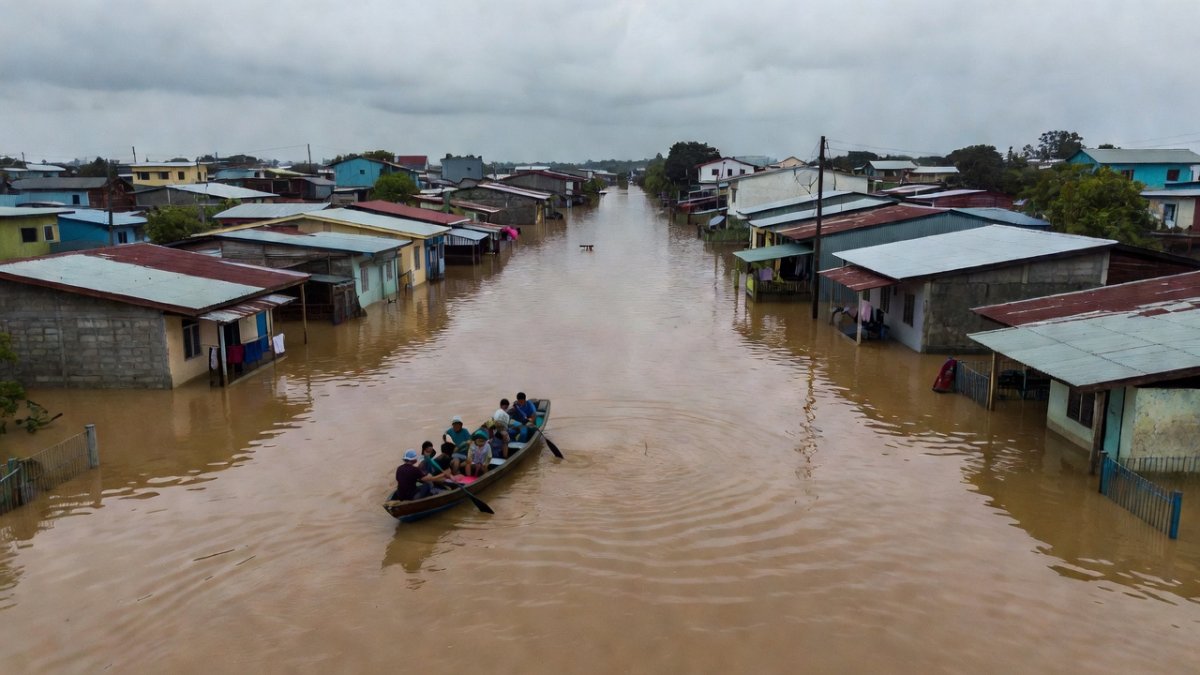
MANILA, Philippines — For generations, the rhythm of the Philippine rainy season has been a familiar, often tragic, refrain. The sky opens up, the creeks swell, and the streets of Metro Manila and the provinces of Luzon turn into rivers. But in the wake of weeks of relentless rain from the enhanced southwest monsoon and successive tropical cyclones, the national government is betting on a high-tech solution to break that cycle of devastation.
The Department of Budget and Management (DBM) has announced the release of P1 billion to supercharge Project NOAH, the country’s flagship disaster prevention program. This isn’t just a line item in the national budget; it is a declaration that the Philippines is shifting from a culture of reaction to a culture of prevention. The funding aims to sharpen the artificial intelligence-powered flood forecasting capabilities of the program, giving local governments and ordinary Filipinos the precious gift of time—time to evacuate, time to save belongings, and ultimately, time to save lives.
A Shot in the Arm for Science-Based Preparedness
The announcement, made on Monday, August 24, comes at a critical juncture. With large swathes of Luzon and Metro Manila still reeling from recent flooding, the need for accurate, real-time hazard information has never been more apparent. The DBM’s release of funds is a direct response to the vulnerability exposed by these recent weather events.
“This P1-billion investment in Project NOAH is an investment in prevention. We are putting science, AI, and real-time hazard information to work so the government can act earlier, communities can prepare better, and more Filipino lives and livelihoods can be protected,” DBM Acting Secretary Kim Robert De Leon said in a statement.
The breakdown of the funding shows a clear focus on technological muscle. Of the total release, P935 million is earmarked for research services, the lifeblood of any scientific endeavor. The remaining P65 million will support general management and supervision. This capital will be used to acquire and deploy cutting-edge information and communications technology, digital and technical scientific equipment, and to hire specialized technical personnel. It will also establish the operational support systems necessary to keep the project running 24/7, especially during the peak of the typhoon season.
This is a significant investment in the country’s intellectual infrastructure. It signals a move away from relying solely on traditional, often delayed, ground reports toward a proactive, data-driven approach that can model scenarios before the rain even falls.
From DOST Brainchild to UP Resilience Institute Powerhouse
Project NOAH is not a new name in the annals of Philippine disaster management. Launched in 2012 by the Department of Science and Technology (DOST), it was a pioneering effort to provide a science-based foundation for disaster risk reduction. Since 2017, the program has found a permanent home at the University of the Philippines Resilience Institute (UPRI), where it has evolved into a sophisticated hub for hazard assessment.
The project’s toolkit is impressive. It utilizes AI-enhanced modeling to predict flood scenarios with remarkable precision. It employs Light Detection and Ranging (LiDAR) mapping to create high-resolution topographical maps that are crucial for understanding water flow. Combined with data analytics and other digital technologies, Project NOAH provides national agencies and local government units (LGUs) with the actionable intelligence they need to make informed decisions.
For a country that sits on the Pacific Ring of Fire and the typhoon belt, this capability is not a luxury—it is a necessity. The shift from the DOST to the UP Resilience Institute has allowed the project to integrate academic rigor with practical, on-the-ground application, ensuring that the science doesn’t just stay in the laboratory but reaches the barangay captain who needs to know when to sound the alarm.
The Human Cost of Delayed Warnings
To understand the value of this investment, one only needs to look at the recent past. The floods that submerged parts of Metro Manila and Luzon were not just statistics; they were the stories of families trapped on rooftops, of sari-sari store owners watching their inventory float away, and of commuters stranded for hours on flooded thoroughfares.
In many flood-prone areas, the warning system is still reliant on manual observation—a barangay tanod watching the river level rise and shouting warnings through a megaphone. While this embodies the spirit of bayanihan, it is dangerously reactive. By the time the water reaches the street, it is often too late to move belongings to higher ground or for the elderly and infirm to evacuate safely.
Project NOAH aims to change this dynamic. With AI-powered forecasting, LGUs can receive predictions days in advance, not just hours. This allows for pre-emptive evacuations, the strategic positioning of rescue assets, and the early closure of schools and government offices. It transforms disaster response from a frantic scramble into a coordinated, orderly operation. For the jeepney driver, it means knowing which routes to avoid. For the market vendor, it means the chance to secure their goods. For the family in a high-risk zone, it means the difference between a safe night at home and a desperate call for rescue.
Investing in Prevention to Avoid Catastrophe
Acting Secretary De Leon’s statement underscores a fundamental shift in fiscal philosophy. “The best disaster management is when we are able to prevent disasters from becoming a catastrophe. Every peso we invest in better forecasting and preparedness can help save lives, protect livelihoods, and avoid far greater losses later on,” he said.
This is a pragmatic economic argument as much as a humanitarian one. The cost of rebuilding after a major typhoon—repairing roads, bridges, schools, and hospitals—far exceeds the cost of preparing for it. Every peso spent on a LiDAR map or a supercomputer model is a peso saved in post-disaster relief and reconstruction. It is an investment in the economic stability of the nation, protecting the livelihoods of farmers whose crops are vulnerable to flooding and the small business owners who form the backbone of the local economy.
The funding, which will be charged against the University of the Philippines System’s appropriation under the 2026 national budget, is a testament to the government’s commitment to institutionalizing this technology. It is not a one-off grant but a sustained investment in the country’s scientific capacity to defend itself against the forces of nature.
Empowering the Barangay: The Ultimate Goal
The true success of Project NOAH, however, will not be measured in the number of sensors deployed or the speed of its supercomputers. It will be measured in the resilience of the most vulnerable communities. The data generated by the project is only as powerful as its dissemination. The challenge lies in ensuring that the complex AI models and hazard maps are translated into simple, actionable warnings that a barangay captain can understand and act upon.
The investment in operational support systems and specialized personnel is a step in this direction. It suggests a focus on building the human infrastructure needed to interpret the data and communicate it effectively. This is where the project connects with the everyday Filipino. It is about bridging the gap between the high-tech command center in Quezon City and the remote coastal village in Bicol.
As the climate crisis intensifies, extreme weather events are becoming more frequent and more severe. The enhanced southwest monsoon, or habagat, is no longer just a seasonal inconvenience; it is a recurring threat that tests the nation’s resolve. The P1-billion boost for Project NOAH is a powerful acknowledgment that the Philippines must arm itself with the best tools available. It is a promise that the government is not just counting the costs of the last disaster but is actively investing in preventing the next one.
For the Filipino people, this funding represents hope. It is the hope that the next time the skies darken and the rain begins to pour, the warnings will come earlier, the response will be faster, and fewer lives will be lost to the rising waters. It is a commitment to ensuring that the spirit of bayanihan is supported by the power of science, creating a nation that is not only resilient in the face of disaster but proactive in outsmarting it.
This article was produced with AI-assisted research and editorial support. Sources: Philstar.com
By Bella Reyes, Staff WriterWhat's Your Reaction?
 Like
0
Like
0
 Dislike
0
Dislike
0
 Love
0
Love
0
 Funny
0
Funny
0
 Wow
0
Wow
0
 Sad
0
Sad
0
 Angry
0
Angry
0

Philippines/Southeast Asia Correspondent at Global1.News. Manila-based journalist covering Philippine politics, environment, maritime security, and social issues. Passionate about marine conservation and the communities protecting the Philippines' natural heritage.













Comments (0)