
Taiwan's Missing Deterrent: Civil Defense Lessons from South Korea
Taiwan's conventional deterrence overlooks civil defense as the defining vector of a cross-strait crisis. The Diplomat analysis points to South Korea's institutionalized resilience - Civil Defense Corps, Ulchi Freedom Shield, and public alert systems - as the model for closing the gap.
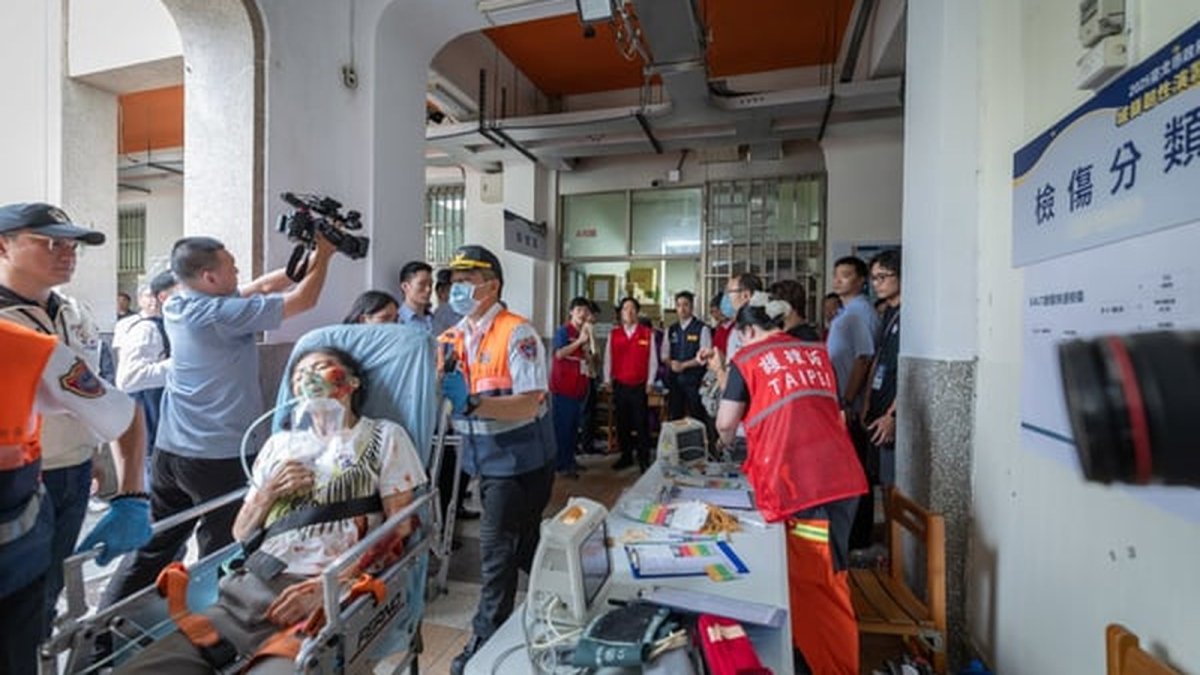
The Diplomat analysis argues that Taiwan's conventional deterrence overlooks civil defense as the likely defining vector of a cross-strait crisis, and points to South Korea as the model. Taiwan's reliance on U.S. arms sales and military technology leaves gaps in societal resilience against gray-zone tactics and potential blockades. South Korea's institutionalized approach offers concrete lessons for raising the costs of coercion.
Taiwan Civil Defense: Lessons from South Korea's Resilience
Seoul, South Korea - As Ulchi Freedom Shield 2026 prepares to integrate U.S. and South Korean forces from August 17 to 27, Taiwan's ongoing 2026 Urban Resilience Exercises underscore the urgent need to adapt proven civil defense frameworks from the Korean peninsula to the island's unique threat environment.
Conventional Deterrence and Its Limits
Taiwan fields F-16V fighters, Indigenous Defense Fighters, Patriot systems, Hsiung Feng anti-ship missiles, and HIMARS batteries to raise the costs of any Chinese amphibious operation. These assets target air superiority denial and coastal defense. Yet the Diplomat analysis notes that conventional systems alone cannot address economic coercion, submarine cable sabotage, or cognitive warfare campaigns designed to manipulate public opinion.
Gray-Zone Pressure and Economic Coercion
Beijing’s documented use of economic coercion, cognitive warfare, and potential sabotage of submarine cables creates pressures that fall below thresholds of open conflict. South Korea encounters parallel challenges through cyber operations, disinformation campaigns, and supply-chain vulnerabilities linked to North Korea and external actors. Both democracies therefore require civil defense mechanisms that preserve continuity of governance and public information rather than relying solely on conventional forces.
These unconventional vectors demand societal preparedness to resist ruptures in daily life. Korean institutions have incorporated gray-zone elements into the Ulchi Freedom Shield exercise series, combining disaster drills with military signaling to maintain public awareness. Taiwan’s Civil Defense Act provides a statutory foundation for similar integration, yet partisan divisions and uneven local implementation limit the translation of legal mandates into operational capacity against sustained non-kinetic coercion.
The Civil Defense Gap in Taiwan
Fragmented preparedness initiatives, uneven civil-military coordination, and partisan division between the DPP and KMT stall progress. The Civil Defense Act of 2001, amended in 2021, mandates village-level units and training, but legislative reviews show only 2 to 13 percent of local budgets allocated to tactical training. Shelter networks exist yet suffer from maintenance shortfalls and limited wartime utility.
Civil Society's Role in Preparedness
Organizations such as Kuma Academy and Forward Alliance drive much of the current activity. Kuma Academy received over US$31 million from businessman Robert Tsao in 2022, while Forward Alliance's waitlist exceeded 1,000 shortly after Russia's invasion of Ukraine. These groups teach evacuation planning, open-source intelligence against disinformation, and first aid, responding to sustained Chinese military exercises near the island.
The Ukraine Precedent
South Korean defense analysts have examined Ukraine’s experience since 2022 to assess how societal resilience functions as an element of deterrence. Ukrainian civil networks sustained logistics and information flows under sustained attack, raising operational costs for Russian forces and extending the timeline of expected victory. Seoul’s institutions, including the Korea Institute for Defense Analyses, track these patterns alongside Taiwan’s circumstances because both face adversaries capable of combining kinetic strikes with infrastructure disruption.
Taiwan’s island geography and reliance on external communications amplify the relevance of these observations. Taiwan can apply the Russia-Ukraine logic to its distinct threat profile, where credible civil defense complicates assumptions of rapid capitulation. Korean planners therefore study Ukrainian adaptations in evacuation coordination and redundant communications to inform assessments of cross-strait scenarios without assuming direct transferability.
South Korea's Civil Defense Model
South Korea’s Framework Act on the Management of Disasters and Safety supplies the statutory basis for an all-hazards approach that deliberately avoids explicit wartime language. This framing permits evacuation planning, critical-infrastructure protocols, and first-responder coordination developed for typhoons or industrial accidents to transfer directly to conflict contingencies without triggering partisan debate. The Civil Defense Corps operationalizes the statute by requiring men aged 20–40 who have completed mandatory service to maintain readiness, with training hours scaled according to years already served.
Ulchi Freedom Shield exercises illustrate the integration mechanism: the 2026 iteration, scheduled from 17 to 27 August, pairs large-scale military maneuvers with parallel government disaster drills, embedding civilian procedures inside a visibly serious operational context. Complementing these drills, the Korean Public Alert System arrives pre-installed on commercial smartphones, delivering low-friction, nationwide notification without requiring separate citizen enrollment. Repeated low-stakes exposure through annual cycles normalizes procedures in public consciousness, converting episodic training into institutionalized habit.
Challenges in South Korea's Approach
Seoul announced plans in 2025 for its first CBRN-resistant bunkers, with completion targeted for 2028. Until then, existing shelter infrastructure remains mismatched to an adversary’s chemical, biological, radiological, and nuclear capabilities, exposing a persistent material gap even within an otherwise mature system. Public participation in drills continues to lag because many citizens assess the immediate threat from North Korea as low, producing inconsistent turnout that undermines the very normalization the exercises seek to achieve.
This pattern generates measurable dissonance between government leadership and the populace: officials continue to invest in institutional architecture while ordinary citizens treat drills as bureaucratic routine rather than credible preparation. The South Korean experience therefore supplies Taiwan’s reformers with a cautionary demonstration that even long-standing legal frameworks erode when threat perception is not actively sustained and visibly linked to daily life.
Whole-of-Society Defense Architecture
Taiwan’s All-Out Defense Mobilization Agency coordinates the five pillars of whole-of-society resilience: civilian training, strategic material stockpiling, critical infrastructure protection, social welfare and evacuation readiness, and communications network security. South Korea’s disaster-management statute assigns comparable responsibilities across ministries and local governments, providing a legal basis for integrating civil and military functions during both peacetime disasters and wartime contingencies.
Persistent gaps remain in Taiwan’s implementation, particularly in communications security where Beijing’s capabilities target submarine cables and internet connectivity. Korean counterparts maintain the Civil Defense Corps for structured training that scales with prior service, offering a model for consistent exposure. Taipei views preemptive civil-military coordination as essential, yet current budget allocations for tactical training at the local level remain limited, constraining the effectiveness of the five-pillar framework.
Pathways for Taiwan's Reform
Taiwan can adopt the annually published civil-defense handbook’s dual-use framing, presenting typhoon preparedness and potential Chinese aggression as parallel contingencies that both require backup power, mobile generators, and redundant communications. Mandating minimum percentages of local budgets for tactical training, rather than permitting the current 2–13 percent allocation, would curb diversion of funds to social events and enforce measurable skill acquisition. Institutionalized coordination between the All-Out Defense Mobilization Agency and leading civil-society organizations would assign defined roles within the whole-of-society resilience framework, extending reach beyond private philanthropy.
Disaster-management curricula already familiar to citizens can be extended to include rapid public-alert protocols modeled on South Korea’s pre-installed smartphone system. Polling data indicate that 65.6 percent of respondents report improved impressions of the military after civil-military disaster interactions, while 64 percent identify natural disasters as a serious national threat compared with 55 percent who cite China directly; natural-disaster framing therefore sidesteps accusations of militarizing daily life while still building transferable competencies.
Regional Implications and Peninsular Lessons
South Korea’s physical border with its primary adversary, forged by the Korean War stalemate and underwritten by a U.S. mutual-defense treaty, produced shelter networks and reserve structures absent in Taiwan’s island geography. Taiwan faces vulnerable submarine cables, limited strategic reserves for prolonged blockades, and no equivalent treaty commitment, necessitating exceptional emphasis on communications redundancy and civilian stockpiling that South Korea’s model only partially anticipates. Seoul’s own threat assessments now incorporate Taiwan’s resilience debate as a variable that could affect Northeast Asian escalation dynamics.
Demonstrated regional learning between the two democracies strengthens inter-Korean security by showing that societal preparedness can raise the costs of coercion without requiring identical alliance architectures. Over the longer term, deterrence durability will rest less on platforms alone than on the capacity of societies to absorb non-kinetic shocks and sustain continuity of governance under sustained pressure.
By Prof. David Park, Staff Writer
This article was produced with AI-assisted research and editorial support. Reporting is based on sources cited in the article.
What's Your Reaction?
 Like
0
Like
0
 Dislike
0
Dislike
0
 Love
0
Love
0
 Funny
0
Funny
0
 Wow
0
Wow
0
 Sad
0
Sad
0
 Angry
0
Angry
0

East Asia/Technology Correspondent at Global1.News. Seoul-based voice covering Korean politics, technology, business, and culture. Analyzes how technology and geopolitics intersect across East Asia.











Comments (0)