
Seven Arches Hotel, Where the PLO Was Born, Faces Israeli Company Takeover
In a recent Middle East Eye report published on August 9, 2026, the management of the Seven Arches Hotel in East Jerusalem faces transfer to a private Israeli company for as long as 25 years. The hotel, built with Jordanian support and the site where the Palestine Liberation Organization was founded in 1964, has remained under Israeli custodianship since 1967. Legal experts cited in the report describe the arrangement as lacking any valid foundation under international...
Seven Arches Hotel Transfer Raises East Jerusalem Concerns
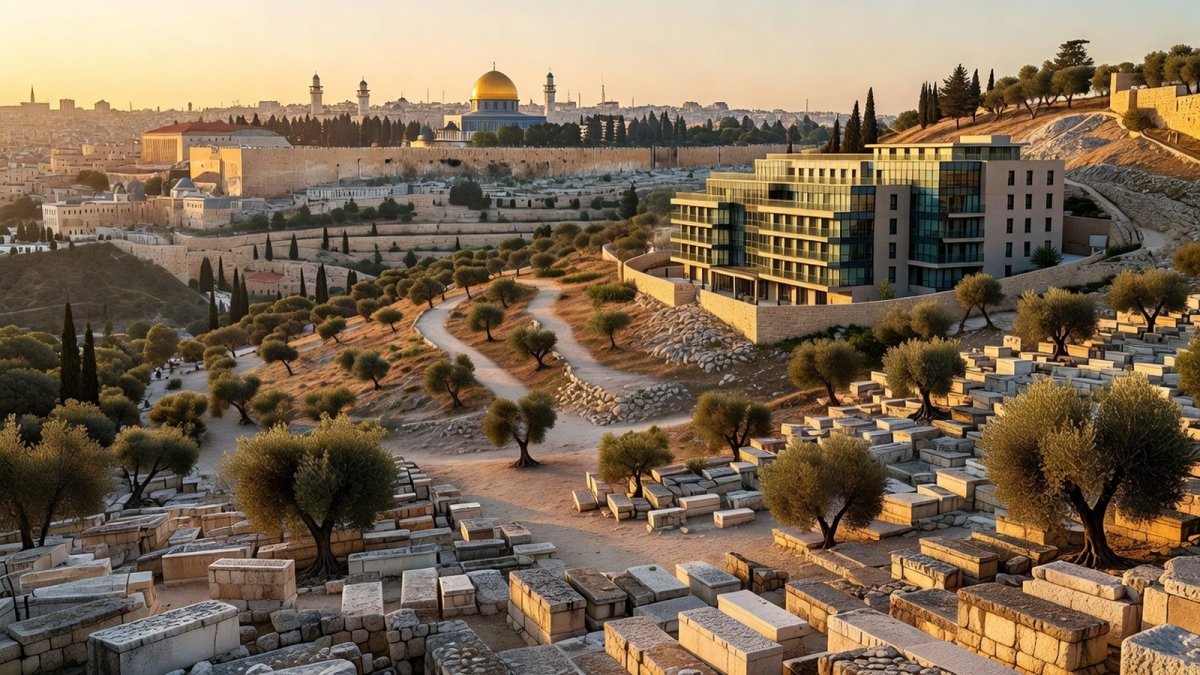
Jerusalem — August 9, 2026 — The Seven Arches Hotel, located in the at-Tur neighborhood on the Mount of Olives, stands at the center of a proposed management shift that would place its operations under an Israeli private company for up to 25 years. Built on Islamic Waqf land with backing from the Jordanian government, the property opened in 1964 and hosted the first Palestinian National Council meeting that established the PLO. Residents of East Jerusalem view the move as another step in the erosion of Palestinian presence in the city.
A Birthplace of Palestinian Nationhood
The Hotel 7 Arches Jerusalem opened on March 20, 1964, as the Hotel Jerusalem Intercontinental under management by the U.S. Intercontinental Hotels chain. Jordanian King Hussein took personal interest in the project, hosting heads of state and dignitaries there as a symbol of Jordanian commitment to Jerusalem. In May 1964, 422 representatives gathered at the hotel for the first Palestinian National Council conference. They adopted the Palestinian National Covenant and established the PLO on May 28, 1964, with Ahmad Shukeiri named as its first chairman. The event marked a foundational moment for organized Palestinian political representation.
The 1964 convening of the Palestinian National Council at the Seven Arches Hotel established the PLO as an institutional expression of collective Palestinian will, drawing 422 delegates from communities across Jordan, Syria, Lebanon, Egypt and the Gulf to adopt the National Covenant. This foundational act linked the movement's commitment to liberation directly to Jerusalem, underscoring how the city's physical spaces have long served as anchors for national identity amid ongoing displacement and denial of Palestinian presence.
Ahmad Shukeiri's selection as the first chairman, given his background as a lawyer and former Saudi UN representative, reflected the international dimensions of the Palestinian cause from its earliest organized phase. The hotel's role as venue therefore carries enduring weight, as Palestinians view the site as concrete evidence that Jerusalem formed an integral part of their political emergence, countering narratives that seek to detach the city from Palestinian history.
Subsequent recognition of the PLO as the sole legitimate representative by the Arab League in 1974 and its UN General Assembly observer status the same year built upon that Jerusalem origin, illustrating how decisions made at the Seven Arches continue to shape diplomatic realities and the pursuit of self-determination.
From Temporary Custody to Private Control
After the 1967 Six-Day War, Israel assumed control of the hotel under a custodianship framework described at the time as temporary. The property, never privatized in subsequent decades to avoid straining relations with Jordan, became closely identified with East Jerusalem. On May 26, 2026, management passed to the Israeli Ministry of Finance and the Custodian of Absentee Property. The ministry formed the Seven Arches Company to oversee operations on the 30-dunum plot. An assessment commissioned by Israeli authorities determined urgent restoration needs, leading to an allocation of more than $40 million. The current proposal would extend control to a private Israeli company for a period of up to 25 years.
Israel's 1950 Absentee Property Law, later extended to East Jerusalem after 1967, placed the Seven Arches Hotel under the Custodian of Absentee Property as Jordanian state holdings, transforming what had been public property into an asset administered by the occupying authorities. The 30-dunum plot represents one of the largest such parcels in East Jerusalem, and the decision to hold off on privatization through 2015 and beyond, as reported by Haaretz, stemmed from concerns over straining relations with Jordan.
The May 2026 transfer to the Ministry of Finance and creation of the Seven Arches Company, accompanied by more than $40 million for restoration, signals a shift from custodial oversight to commercial exploitation. Granting a private Israeli company management rights for up to 25 years converts temporary administration into long-term control, raising questions about how such arrangements affect the property's status and the broader pattern of land management in occupied territory.
This evolution from state custodianship to extended concession illustrates a departure from earlier restraint, embedding commercial interests into properties that originated under Jordanian authority and highlighting the gradual entrenchment of Israeli administrative practices over Palestinian and Jordanian assets in East Jerusalem.
What International Law Says
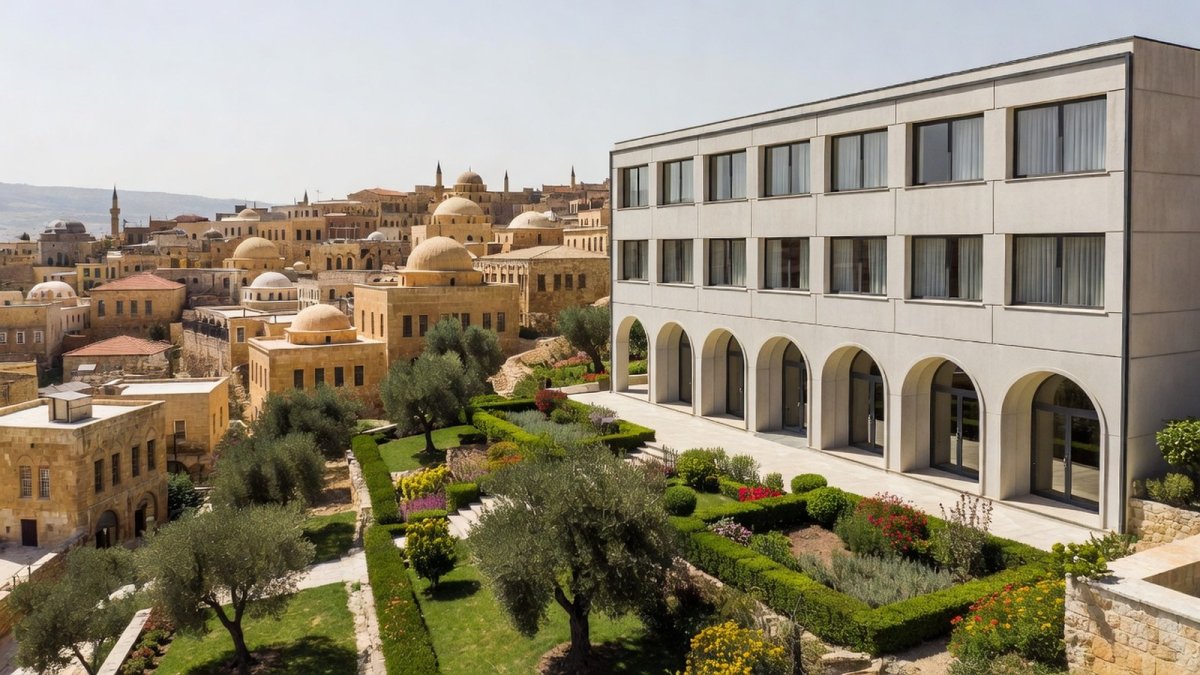
The United Nations has long held that Israel's annexation of East Jerusalem carries no legal validity. The International Court of Justice has stated that measures of this nature can constitute illegal annexation. Legal experts examining the proposed transfer note that it rests on no recognized legal basis. They point to the absence of any recognized authority for the Custodian of Absentee Property to grant long-term private management rights over property in occupied territory. These assessments align with prior international rulings that reject unilateral changes to the status of East Jerusalem.
UN Security Council Resolution 478 declared Israel's 1980 Basic Law on Jerusalem null and void, calling for the withdrawal of diplomatic missions and affirming the city's occupied status. The International Court of Justice's July 2024 advisory opinion further determined that Israel's presence in the occupied Palestinian territory is unlawful and amounts to annexation, obligating an end to that presence and provision of reparation.
Legal experts cited by Middle East Eye note that the Seven Arches transfer lacks foundation under international humanitarian law, which positions an occupying power as a temporary administrator rather than an owner empowered to issue multi-decade concessions. Article 49 of the Fourth Geneva Convention and the Hague Regulations explicitly limit alterations to the status of occupied property, framing long-term commercial arrangements as potential violations of these protections.
Such measures risk consolidating control in ways that contradict the temporary nature of occupation, affecting not only the hotel but the wider integrity of East Jerusalem properties held under custodianship and underscoring the tension between on-the-ground actions and established legal standards.
A Symbol of Erasure in East Jerusalem
For Palestinians in the at-Tur neighborhood and across East Jerusalem, the Seven Arches Hotel represents both Jordanian heritage and a site of national political origin. Built on Waqf land, the 196-room four-star property has long drawn visitors for its views over the Old City. Its transfer to private Israeli management would place a landmark of Palestinian history under commercial control that excludes local Palestinian input. Community members describe the hotel as part of the broader pattern of displacement and loss of cultural anchors in the city. Tourism revenue that once supported the surrounding Arab neighborhood now faces redirection away from Palestinian hands.
Jordan's Quiet Red Lines
The hotel originated as a Jordanian government project on land belonging to the Islamic Waqf. Reports from 2024 indicated that any significant expansion would require coordination with the Jordanian government because of the property's ties to the Jordanian royal family. The Hashemite Kingdom maintains historical custodianship sensitivities over Islamic holy sites in Jerusalem. The proposed 25-year management deal could test those diplomatic boundaries without formal consultation. Jordanian officials have previously signaled that unilateral steps affecting such properties carry implications for bilateral relations.
Jordan's 1994 peace treaty with Israel and the 2013 agreement preserved the Hashemite Kingdom's custodianship over Muslim and Christian holy sites in Jerusalem, a role that has repeatedly prompted protests against settlement expansion and property seizures in East Jerusalem. Reports from Haaretz in April 2024, relayed via Ammon News, indicate that plans involving the Seven Arches Hotel require coordination with Jordan because the property belongs to the Jordanian royal family.
A 25-year commercial concession would effectively lock in Israeli management of this royal holding for a generation, testing the boundaries of the stable bilateral relationship. Jordanian parliamentary and public sensitivities around any perceived weakening of custodianship amplify the potential for diplomatic friction, particularly when Palestinian factions and East Jerusalem leaders have urged Amman to respond more assertively to such developments.
The quiet handling of these issues reflects Jordan's careful navigation between treaty obligations and domestic pressures, yet the scale of the concession introduces new strains that could reverberate beyond immediate property concerns into broader questions of regional stability and historical responsibilities.
What Comes Next
The transfer remains in the proposal stage, with implementation dependent on further administrative steps. Observers will watch for any formal legal challenges filed by Palestinian or Jordanian parties. Palestinian reactions in East Jerusalem and the response from Amman could shape whether the arrangement proceeds or faces delays. The Ministry of Finance allocation for restoration work stands ready, yet the long-term private management contract has not been finalized. International bodies may also issue statements once additional details emerge.
The Seven Arches Hotel embodies decades of contested control over East Jerusalem. Its proposed handover to private Israeli management for up to 25 years would extend a custodianship that began in 1967 and place a site of Palestinian political birth under new commercial authority. Residents and legal observers alike continue to track developments that affect both the physical structure and the historical narrative attached to it.
This article was produced with AI-assisted research and editorial support. Sources: Middle East Eye, jerusalemstory.com, Haaretz, Ammon News.
By Fatima Al-Rashid, Staff Writer
What's Your Reaction?
 Like
0
Like
0
 Dislike
0
Dislike
0
 Love
0
Love
0
 Funny
0
Funny
0
 Wow
0
Wow
0
 Sad
0
Sad
0
 Angry
0
Angry
0

Gulf/MENA Correspondent at Global1.News. Based in Doha, covering Gulf politics, energy markets, diplomacy, and development across the Middle East and North Africa. Tracks the economic transformation of the Gulf states.















Comments (0)