
Taiwan's Midnight Evacuation Drill Highlights Deepening Cross-Strait Military Preparations
Taiwan's President Lai took part in a nighttime anti-decapitation drill as Han Kuang 41 opened, testing command continuity, civilian resilience, and bridge-blocking against a simulated PLA invasion. Marcus Chen analyzes what the exercises signal about cross-strait tensions.
Geopolitical Framing of Heightened Vigilance
Taiwan's decision to conduct a nighttime presidential evacuation during the Han Kuang exercises reflects Beijing's ongoing military modernization and its refusal to renounce force for reunification. The drills, running from August 5 to 14, test Taiwan's ability to maintain command continuity under simulated attack, directly addressing China's strategic objective of rapid decapitation strikes on key leadership targets. This preparation underscores the island's determination to preserve its de facto autonomy amid rising regional tensions.
Historical Context of the Han Kuang Exercises
Conducted annually since 1984, the Han Kuang exercises have evolved from routine maneuvers into comprehensive tests of wartime resilience. The 2026 iteration mobilizes more than 20,000 troops, including about 5,000 reservists, and incorporates scenarios focused on disrupted command centers, ports, and logistics sites. Taiwan's military introduced a backbrief approach modeled on U.S. practices, requiring junior officers to restate mission details to confirm alignment with commanders' intent.
Since their inception in 1984, the Han Kuang exercises have served as Taiwan's primary mechanism for testing national defense readiness against an evolving threat landscape. Over four decades, the drills have transitioned from large-scale, scripted set-piece maneuvers designed to demonstrate conventional force posture to more integrated combined-arms operations that emphasize rapid response and operational resilience. This evolution mirrors the People's Liberation Army's own modernization trajectory, particularly its development of precision-strike capabilities demonstrated through full-scale mock-ups of Taiwan's Presidential Office and Suao Naval Base constructed in Inner Mongolia and Xinjiang. The exercises now incorporate lessons from observed PLA rehearsals, allowing Taiwan's forces to refine countermeasures against potential decapitation and amphibious scenarios.
The Wan Chun Plan lineage within Han Kuang reflects Taiwan's broader doctrinal shift toward asymmetric warfare and whole-of-society resilience. Early iterations focused on repelling invasion through massed conventional defenses, but subsequent cycles have prioritized survival of command structures, protection of critical infrastructure, and mobilization of civilian resources under sustained pressure. This adaptation tracks the PLA's growing ability to conduct complex joint operations across the Taiwan Strait. By Han Kuang 41 in 2026, the series has become a living record of how Taiwan adjusts its defense posture in response to Beijing's persistent territorial claims and refusal to renounce the use of force against the island's 23 million residents.
The Anti-Decapitation Drill and Wan Chun Plan
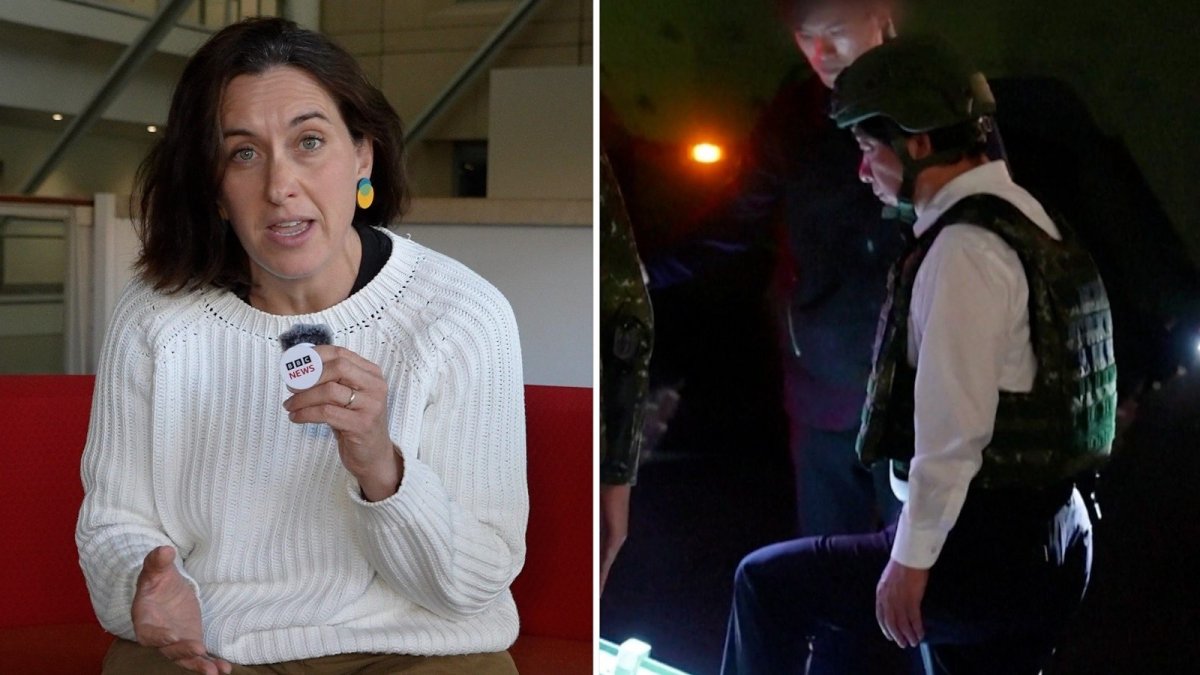
President William Lai participated in an emergency evacuation on August 5 as part of the long-standing Wan Chun Plan. Footage from the Presidential Office showed Lai boarding a Clouded Leopard armored vehicle and traveling in a convoy to the National Political and Military Operations Command Center in Taipei's Dazhi neighborhood. Three successive convoys departed the Presidential Office, apparently to confuse potential adversaries, while personnel believed to be from the U.S. government monitored the proceedings near both the origin and destination points.
Decapitation strikes targeting national leadership have become a defining feature of contemporary conflict, as seen in operations from the Gulf Wars to recent hybrid campaigns. Taiwan's emphasis on presidential evacuation under the Wan Chun Plan therefore represents a calculated investment in continuity-of-government mechanisms that preserve decision-making authority even if initial assaults succeed in isolating Taipei. The Clouded Leopard armored vehicle and three-convoy deception tactics illustrate a layered approach to leadership protection, while the Dazhi command center provides a hardened alternative node for coordinating national response. The presence of U.S. personnel during these drills underscores the interoperability dimension of Taiwan's planning.
Comparative analysis with other democracies reveals instructive parallels. The United States maintains multiple hardened facilities and succession protocols under its own continuity-of-government framework, while the United Kingdom relies on dispersed command arrangements and pre-designated deputies. Taiwan's model integrates these principles with island-specific geography and the added complication of proximity to a peer competitor. By rehearsing these procedures annually, Taipei signals that any attempt to neutralize its political center would encounter pre-planned redundancy rather than collapse, thereby raising the anticipated costs of aggression.
Command Continuity and Interagency Coordination
Presidential Office spokesperson Karen Kuo stated that the drill simulated command of defensive operations and continuity of government during an emergency. The exercise tested the command structure, interagency coordination, and response mechanisms to ensure effective operation while safeguarding national security. Lai was briefed by a military officer and issued instructions at the secure facility, demonstrating the plan's emphasis on sustained leadership under pressure.
Innovations Introduced in the 2026 Cycle
For the first time, the drills deliberately slowed mobile internet speeds to assess civilian communication under bandwidth constraints. Field commanders faced unexpected scenarios designed to replicate real battlefield conditions rather than laboratory-like settings. The military also implemented an embedded reporter mechanism to evaluate wartime frontline news releases and counter enemy disinformation efforts, reflecting a broader focus on population resilience and information operations.
The introduction of the "backbrief" method, drawn from established U.S. military after-action practices, marks a deliberate effort to institutionalize rapid learning within Taiwan's defense establishment. This structured review process allows units to dissect performance immediately after each phase, accelerating adaptation across the forces mobilized for Han Kuang 41. Complementing this is the controlled reduction of mobile internet speeds, which tests civilian communications resilience under degraded conditions and exposes vulnerabilities in public information networks before any actual crisis.
Additional measures include the wartime relocation of a major arsenal and the activation of civilian factories for surge production, both of which extend defense planning into the economic domain. Pacific-coast escort drills address the specific risk that Beijing may seek to interdict Taiwan's maritime connections to the wider ocean, a concern heightened by the PLA's expanding blue-water capabilities. The embedded reporter mechanism further aims to counter disinformation by ensuring verified information flows from the exercise to the public. Together these innovations reflect a maturing approach that treats resilience as a system-wide attribute rather than a purely military one.
Tactical Measures at the Danjiang Bridge
On August 6, Taiwanese troops used concrete barriers, barbed wire, and Hesco walls to block the recently opened Danjiang Bridge spanning the Tamsui River mouth. The nighttime exercise aimed to prevent advancing forces from controlling both sides of the estuary and linking potential landing bases. Defense expert Chieh Chung of Tamkang University noted that securing this stretch would allow enemy troops to advance along both riverbanks, highlighting the bridge's strategic value in any invasion scenario.
Strategic Calculus and Regional Second-Order Effects
China's defense ministry offered no comment on the exercises, consistent with its position that Taiwan remains part of its territory. Reports last month indicated the PLA rehearsed strikes on facilities including the Presidential Office using full-scale mock-ups in Inner Mongolia and Xinjiang. These developments carry implications for the United States, Japan, and global supply chains, given Taiwan's central role in semiconductor production. The drills also include simulations of arsenal relocation, civilian factory mobilization, and Pacific coast escort operations amid concerns over severed supply lines from allies.
Taiwan's strategy of deterrence-by-resilience directly challenges Beijing's preferred timeline for reunification by demonstrating that the island can absorb and recover from initial blows. The PLA, in turn, gains valuable signaling value by showcasing its ability to rehearse complex operations, thereby seeking to erode confidence in Taipei and its partners. This dynamic transmits clear messages to Washington and Tokyo about the potential speed and scale of any future contingency, influencing allied planning for reinforcement and sanctions regimes.
Taiwan's position at the center of global semiconductor supply chains amplifies these local developments into systemic risks. Disruption of the island's defense posture would reverberate through technology sectors worldwide, affecting economies from Europe to Southeast Asia. For Japan and the Philippines, the exercises highlight the forward-edge nature of their own security environments, prompting accelerated coordination on maritime domain awareness and logistics. Across the Indo-Pacific, Han Kuang 41 therefore functions as both a national rehearsal and a regional stress test of collective deterrence assumptions.
By Prof. Marcus Chen, Staff Writer
This article was produced with AI-assisted research and editorial support. Reporting is based on sources cited in the article.
What's Your Reaction?
 Like
0
Like
0
 Dislike
0
Dislike
0
 Love
0
Love
0
 Funny
0
Funny
0
 Wow
0
Wow
0
 Sad
0
Sad
0
 Angry
0
Angry
0

World Politics Analyst at Global1.News. Based in Beijing, covering US-China relations, global trade, and geopolitical strategy. Brings deep analytical perspective to the power dynamics shaping international affairs.










Comments (0)