
Ceuta Beach Erupts: Residents Tear Down Migrant Camp as Spain’s Enclave Crisis Boils Over
The destruction of a makeshift migrant camp by residents of Ceuta on 27-28 August 2026 marks a dangerous escalation in a crisis that has gripped Spain’s North African enclave for a month. With thousands of sub-Saharan migrants still sleeping on beaches and the Spanish government, the EU, and Morocco locked in a diplomatic standoff, the enclave has become the flashpoint for Europe’s most intractable migration and sovereignty disputes.
The destruction of a makeshift migrant camp by residents of Ceuta on 27-28 August 2026 marks a dangerous escalation in a crisis that has gripped Spain’s North African enclave for a month. With thousands of sub-Saharan migrants still sleeping on beaches and the Spanish government, the EU, and Morocco locked in a diplomatic standoff, the enclave has become the flashpoint for Europe’s most intractable migration and sovereignty disputes.
Ceuta Beach Erupts: Residents Tear Down Migrant Camp as Spain’s Enclave Crisis Boils Over
Ceuta, Spain – 28 August 2026 — Dozens of Ceuta residents stormed the shoreline on Thursday and Friday, tearing down tents and makeshift homes, throwing belongings into the sea, and burning others as they chanted "kick out invaders." The scenes, captured on mobile phone footage and broadcast across Spanish media, show a civilian population at its breaking point, taking the law into its own hands after weeks of uncontrolled migration.
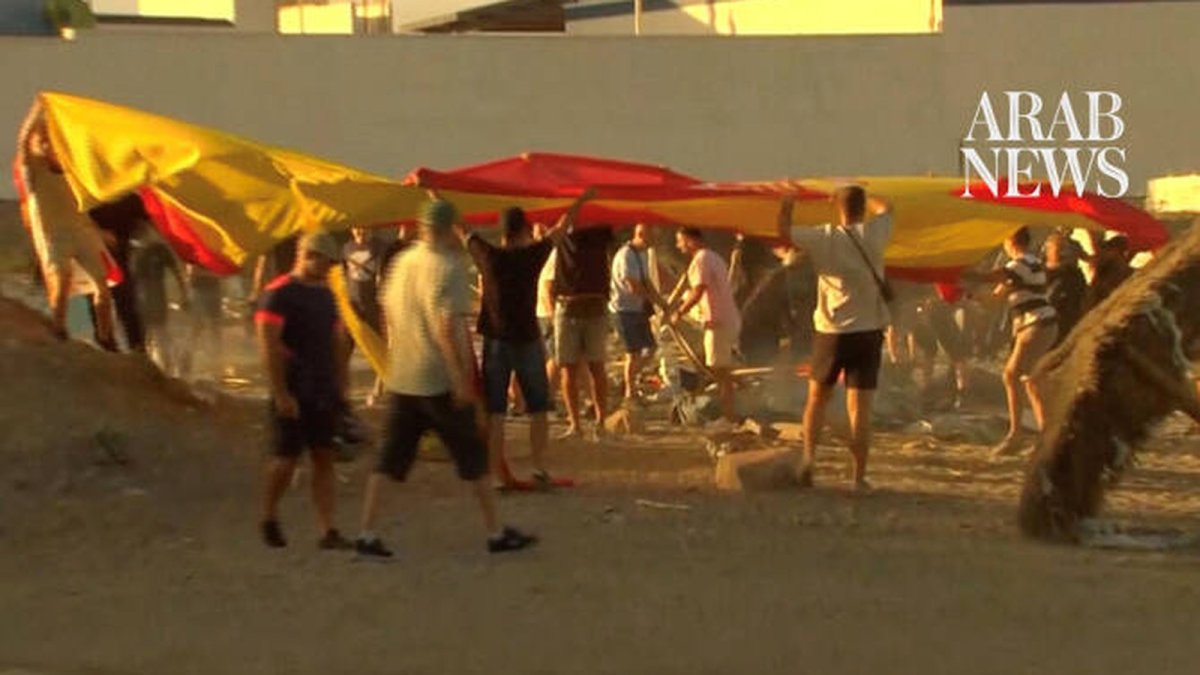
Protesters blocked a road adjacent to the beach, demanding the removal of the estimated 5,000 to 8,000 migrants who remain in the territory following the historic 30-31 July border surge. The unrest turned violent on Thursday when clashes erupted between police and migrants at the beach encampment. In a separate incident, a Spanish soldier was injured after migrants threw stones at troops, leading to the arrest of 12 Moroccan nationals. Two additional arrests were made after migrants attacked a police officer.
Spain’s Interior Minister Fernando Grande-Marlaska addressed parliament on Friday, striking a conciliatory but firm tone. "Violence is not the answer... I call for calm and an end to any form of violence, because... violence is not the way to resolve any problem with the complexity" facing Ceuta, he said. His words, however, did little to soothe the anger on the ground, where residents feel abandoned by Madrid and Brussels.
Geopolitical Context: Europe's Only Land Border With Africa
Ceuta, a Spanish autonomous city of roughly 18.5 square kilometres and a population of about 80,000, sits on the northern coast of Morocco. Along with Melilla, located approximately 400 kilometres to the east, Ceuta forms the European Union's only land border with Africa. This geographic anomaly makes the enclaves a pressure valve for migration pressures from the continent, but also a persistent irritant in Spanish-Moroccan relations.
Morocco does not recognize Spanish sovereignty over Ceuta and Melilla, viewing them as occupied territories. This claim, dormant for decades, has been weaponized by Rabat in times of diplomatic friction. The current crisis is no exception. The July surge, in which an estimated 72,000 people, mainly young men, crossed into Ceuta in under 48 hours, was widely interpreted in Madrid as a deliberate act of coercion by Morocco. Most of the migrants entered by swimming around the breakwaters at Tarajal and Benzú or crossing on foot along the shoreline, a feat that would have been impossible without the tacit acquiescence—or active facilitation—of Moroccan border forces.
The sheer scale of the crossing—the largest in the territory's history—overwhelmed Spanish defenses. Spain deployed its military to restore order, but by 3 August, approximately 70,000 people had voluntarily returned to Morocco. The remaining 5,000 to 8,000, largely from sub-Saharan Africa, have refused to leave, sleeping on beaches and wandering the streets of Ceuta, creating a humanitarian and security vacuum that has now exploded into civil unrest.
Historical Background: The 2021 Precedent and Morocco's Leverage
This is not the first time Ceuta has been used as a bargaining chip. In May 2021, between 8,000 and 10,000 people crossed into the enclave in a single day after Spain admitted Brahim Ghali, the leader of the Polisario Front—the Western Sahara independence movement—to a Spanish hospital for medical treatment. Morocco, which claims sovereignty over Western Sahara, reacted with fury, loosening border controls as a punitive measure.
The 2021 incident established a clear pattern: when Madrid displeases Rabat on the Western Sahara file, the border becomes porous. The current crisis follows the same script. In July 2026, Spanish Prime Minister Pedro Sánchez visited Algeria, deepening tensions with Morocco. Algeria is the primary backer of the Polisario Front, and Sánchez's overture to Algiers was seen in Rabat as a betrayal of the tacit understanding reached in 2022, when Spain shifted its position to support Morocco's autonomy plan for Western Sahara.
Compounding the diplomatic friction is Spain's domestic political calculus. Sánchez's leftist coalition government recently carried out a mass regularization of undocumented migrants, legalizing approximately 900,000 people. This move, celebrated by progressive allies but condemned by the right, has inflamed public opinion and provided ammunition for Moroccan officials who accuse Spain of hypocrisy—demanding Moroccan border enforcement while simultaneously liberalizing its own migration regime. A dispute over a Supreme Court ruling related to the regularization has further muddied the legal waters, leaving local authorities in Ceuta uncertain about their powers to process or deport the remaining migrants.
The Human Toll and the Legal Maze
Behind the political maneuvering lies a human catastrophe. At least 111 migrants died during the July crossing: 100 in Ceuta, according to the enclave's leader Juan Vivas, and 11 in Fnideq, Morocco. The dead include those who drowned attempting to swim around the breakwaters and others who succumbed to hypothermia or were crushed in the stampede of humanity.
For the thousands who remain, the situation is dire. Aid groups report that migrants are living in squalid conditions on the beaches, with limited access to food, water, or sanitation. Some migrants have staged beach protests in mid-August, demanding asylum from Spain. Their desperation is captured in a chilling refrain reported by humanitarian workers: "I'd rather die here than go back to Morocco."
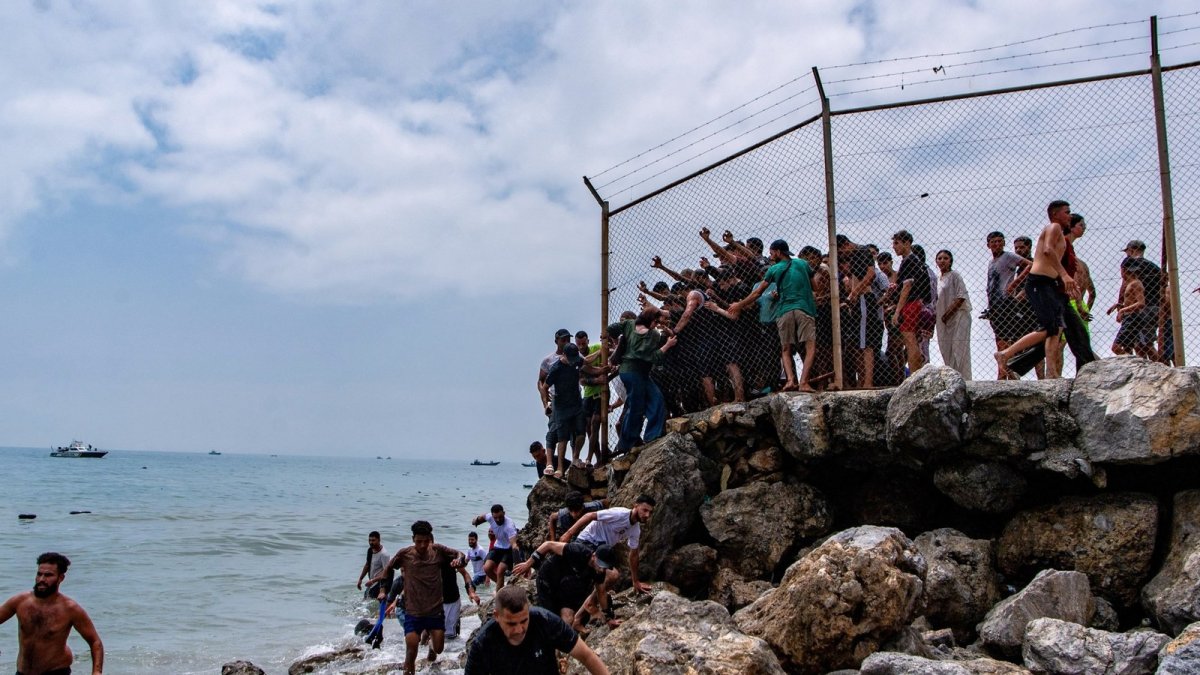
The Spanish government insists that each individual must be identified to determine whether they are entitled to asylum or subject to deportation. Unaccompanied migrant children, of whom there are believed to be hundreds, require special protection under both Spanish and EU law. This case-by-case approach, while legally sound, is agonizingly slow. With thousands of people to process and limited administrative capacity in a city of 80,000, the backlog is immense.
Juan Vivas, the head of Ceuta's local government, has walked a tightrope. He said peaceful protests "to demand the return to normality" were justified, but warned authorities would act against vandalism. "We totally reject the use of any kind of violence... No one can or should take the law into their own hands," he stated, attempting to channel public anger into constructive political pressure on Madrid.
Regional Dynamics: Schengen, Madrid and the EU's Fracturing Consensus
The Ceuta crisis has reverberated far beyond the Iberian Peninsula, exposing deep fractures within the European Union over migration policy. Italy, under its right-wing government, has called for suspending Spain from the Schengen area—the border-free travel zone that is a cornerstone of European integration. In a provocative unilateral move, Italy has already interrupted Schengen at its border with Slovenia, signaling that it will not wait for Brussels to act.
The European Commission, along with France, Germany, and Portugal, has reacted with concern, urging restraint and solidarity. However, the dispute over the EU Pact on Asylum and Migration—a landmark reform package that has been mired in negotiations for years—has left the bloc without a coherent response. The pact, which would establish mandatory solidarity mechanisms and border procedures, remains unratified, and the Ceuta crisis has become a proxy battle for its future.
The United Nations and Save the Children have raised concerns about migrant conditions in Ceuta, adding international pressure on Madrid. The UN has called for urgent humanitarian access and a transparent process for asylum claims, while Save the Children has specifically highlighted the vulnerability of unaccompanied minors, warning that they are at risk of exploitation and abuse.
Strategic Calculus: What Each Side Wants
For Morocco, the crisis is a lever. Rabat wants Madrid to unequivocally endorse Moroccan sovereignty over Western Sahara and to abandon any flirtation with Algeria or the Polisario Front. The July border opening was a message: control the narrative on Western Sahara, or we control your border. Morocco also seeks EU financial support for border management and development projects in the northern regions, and the crisis serves as a reminder of the cost of inaction.
For Spain, the priority is restoring order in Ceuta while avoiding a humanitarian catastrophe that would tarnish its international reputation. Madrid wants Morocco to take back the remaining migrants, but it cannot be seen as capitulating to Rabat's demands. The Sánchez government is also constrained by domestic politics: the right-wing and far-right parties have demanded that all migrants be rounded up and sent back to their home countries, a position Grande-Marlaska has accused of "inciting hatred and confrontation" in Ceuta. The government's legalistic approach—identify, process, and decide—is an attempt to thread the needle between humanitarian obligations and public anger.
For the EU, the crisis is a stress test. If Italy's call to suspend Spain from Schengen gains traction, it could unravel the bloc's foundational principle of free movement. The Commission is walking a tightrope, trying to support Spain while preventing a cascade of unilateral border closures. The unresolved Pact on Asylum and Migration looms over every discussion, with member states unable to agree on burden-sharing mechanisms.
Regional Implications
The Ceuta crisis is a microcosm of the broader challenges facing the Euro-Mediterranean region. It demonstrates that migration is not a standalone issue but is inextricably linked to geopolitics, colonial legacies, and great power competition in the Mediterranean. The Western Sahara dispute, long frozen, has been reactivated as a tool of leverage, with Morocco, Algeria, and Spain all maneuvering for advantage.
The crisis also highlights the limits of EU solidarity. Italy's unilateral actions and the slow pace of Brussels' response suggest that the bloc is ill-prepared for the next major migration wave. If the Pact on Asylum and Migration remains unratified, the EU will continue to rely on ad hoc arrangements and bilateral deals, leaving frontline states like Spain, Italy, and Greece to bear an unsustainable burden.
For the migrants themselves, the future is bleak. Those who remain in Ceuta face an uncertain legal status, deteriorating conditions, and growing hostility from the local population. The destruction of their camp on the beach is a stark symbol of their rejection. Yet their determination—"I'd rather die here than go back to Morocco"—speaks to the desperation that drives migration across the Sahara and the Mediterranean.
As Ceuta burns, the question is not whether the crisis will be resolved, but at what cost. Spain and Morocco must find a modus vivendi, but the underlying drivers—poverty, conflict, and climate change in sub-Saharan Africa—remain unaddressed. The EU must decide whether it is a union of solidarity or a collection of nation-states defending their borders. And the people of Ceuta, caught between Madrid and Rabat, must wonder whether their city will ever return to normality.
By Malik Hassan, Staff Writer
This article was produced with AI-assisted research and editorial support. Reporting is based on sources cited in the article.
What's Your Reaction?
 Like
0
Like
0
 Dislike
0
Dislike
0
 Love
0
Love
0
 Funny
0
Funny
0
 Wow
0
Wow
0
 Sad
0
Sad
0
 Angry
0
Angry
0

Middle East Correspondent at Global1.News. Based in Beirut, covering politics, conflict, energy, and society across the Middle East. Brings context and depth to a region often reduced to headlines.












Comments (0)