
Syria's Return to the World: A Visa Card and an English-Language X Account Mark a New Era of Western Reintegration
In a recent i24NEWS English report published on Aug 28, the network examined two striking symbols of Syria's reintegration with the West under President Ahmed al-Sharaa: the first use of a Visa credit card in Syria and the launch of an English-language government X account.
In a recent i24NEWS English report published on Aug 28, the network examined two striking symbols of Syria's reintegration with the West under President Ahmed al-Sharaa: the first use of a Visa credit card in Syria and the launch of an English-language government X account. The report lands at a pivotal moment, just days after the US State Department formally removed Syria from its State Sponsors of Terrorism list on Monday, Aug 24, 2026, a designation that had been in place since 1979. For Israeli readers watching from Jerusalem, these developments are not merely diplomatic curiosities—they signal a fundamental reshaping of the Middle East's security and economic architecture.
Syria's Return to the World: A Visa Card and an English-Language X Account Mark a New Era of Western Reintegration
Jerusalem, Israel — The images were carefully choreographed: President Ahmed al-Sharaa, flanked by Central Bank Governor Mohammed Safwat Raslan, using a Visa credit card for the first time in Syrian history to purchase coffee or tea in Old Damascus. The video, released by the Syrian government on Wednesday, Aug 26, was accompanied by a triumphant post on X from the newly launched "Syrian Response" account: "For more than fifteen years, this simple transaction was impossible... Today, in the oldest continuously inhabited capital in the world, Syria's return to the global financial system became a fact."
From Pariah to Partner: The Delisting Decision
The US State Department's decision to remove Syria from the State Sponsors of Terrorism list on Monday, Aug 24, 2026, came after a 45-day congressional review triggered by President Donald Trump. Secretary of State Marco Rubio framed the move in starkly pragmatic terms: "This action unlocks new potential for Syria's economic revitalization and progress... The Trump Administration continues to advance U.S. national security to achieve peace, prosperity, and security in the Middle East." The designation had effectively cut Syria off from the US financial system, blacklisted the country from military exports, and blocked critical foreign aid—a stranglehold that had persisted for nearly five decades.
The path to delisting was paved through direct personal diplomacy. Trump first met al-Sharaa at the White House in November 2025, and the two leaders reconvened at the NATO summit in Ankara, Turkey, in July 2026, where they discussed the specifics of winding down sanctions. Trump had been working for the past year and a half to wind down the sanctions regime, viewing Syria's rehabilitation as a strategic counterweight to Iranian influence in the region. The delisting also extended to Hayat Tahrir al-Sham (HTS), the group al-Sharaa once led, formally severing the terrorist designation that had defined US policy toward Damascus since the Assad era.
On the Ground in Damascus: A Financial Revolution
The Visa card transaction in Old Damascus was more than a photo opportunity—it was a demonstration of Syria's reconnection to the global financial system. Central Bank Governor Raslan hailed the US decision as "a historic step that restores the country to its natural place in the global economic system." The sanctions relief now allows Syrian banks to reconnect to international networks, enabling retail banking, cross-border payments, trade finance, and remittances from the millions of Syrian exiles living in Europe, the Gulf, and North America. For a country whose economy was devastated by more than a decade of civil war, these financial lifelines are existential.
The symbolism was not lost on observers in Damascus. The 63rd Damascus International Fair opened this week in the presence of al-Sharaa, drawing exhibitors from across the region and beyond—a stark contrast to the isolationist years under Bashar al-Assad. Al Jazeera reported al-Sharaa saying Syria "shakes off" its past with the US terror-list removal, and that the country's economy is poised for significant improvement. The fair, once a showcase of Syrian industry, is now being positioned as a gateway for foreign investment in reconstruction projects ranging from housing to energy infrastructure.
The English-Language Voice: Syrian Response on X
On the same day as the delisting, Syria's Information Ministry launched "Syrian Response" (@SyrianResponse), described as the first and only English-language government media account. Run by the ministry's external media directorate, the account's stated mission is to "counter disinformation" and present Damascus's position directly to international audiences. Its introductory message was carefully calibrated: "There's a lot of talk about our country. Until now, one voice was missing." The account added: "We're here to engage with you directly, and keep you in the loop about politics, economy, security, and the everyday Syria that rarely makes the headlines."
The launch represents a sophisticated public diplomacy effort, one that Israeli officials are monitoring closely. For years, the Syrian government's messaging was dominated by state television broadcasts in Arabic, largely ignored by Western audiences. The new English-language account signals a strategic shift toward engaging with Washington, Brussels, and London directly—bypassing traditional media intermediaries. It also reflects a broader trend in the region: governments increasingly using social media platforms to shape narratives, as seen with Israeli and Gulf state accounts that have amassed millions of followers.
Regional Context: Russia, Turkey, and the Shifting Balance
Syria's reintegration is unfolding against a complex regional backdrop. On Aug 26, Russian President Vladimir Putin and al-Sharaa discussed bilateral relations and a potential deal on Russian military bases in Syria—a negotiation that will determine Moscow's continued footprint in the eastern Mediterranean. Turkey, which has backed al-Sharaa's government since the fall of Assad, has vowed continued support for Damascus, even as Ankara and Jerusalem navigate their own complex relationship. The Turkish role in Syria's rehabilitation cannot be overstated: Ankara provided early diplomatic cover for al-Sharaa and has been a key conduit for trade and reconstruction funding.
Meanwhile, Israel has carried out strikes on Syrian military assets in recent weeks, targeting weapons depots and suspected Iranian-linked infrastructure. The Israeli military has made clear it will not tolerate the entrenchment of Iranian or Hezbollah forces in southern Syria, regardless of Damascus's new international standing. The 1974 Disengagement Agreement, which established the buffer zone along the Golan Heights border, remains a cornerstone of Israeli security policy, and Jerusalem has repeatedly warned that any changes to the status quo will be met with force.
Israel's Security Calculus: Watching Damascus Warily
For Israeli defense officials, Syria's reintegration into the Western fold is a double-edged sword. On one hand, a Syria that is economically stable and diplomatically engaged with Washington could reduce its reliance on Iran and Hezbollah—a long-standing Israeli objective. The delisting of HTS, the group al-Sharaa once led, is particularly significant; it removes a legal barrier to direct engagement and potentially opens channels for security coordination. On the other hand, a rehabilitated Syria with access to international financial systems and military equipment could pose new threats, particularly if al-Sharaa's government consolidates control over areas near the Golan border.
The question of what a rehabilitated Damascus means for Israel's security is already being debated in Jerusalem. Some analysts argue that the US delisting creates an opportunity to formalize security arrangements with Syria, potentially through a renewed disengagement agreement or a broader regional security framework. Others warn that al-Sharaa's government, despite its Western-friendly rhetoric, remains fundamentally unpredictable. The strikes on Syrian military assets in recent weeks suggest that the IDF is not waiting for diplomatic clarity—it is acting to shape the security environment on its own terms.
The Golan Heights border, the Quneitra crossing, and the broader northern front remain quiet but tense. Israeli officials have noted that the 1974 Disengagement Agreement has held, but they are watching for any signs that Syria's new international standing might embolden Damascus to challenge the status quo. The fear of Iranian and Hezbollah entrenchment, which drove Israeli operations during the Assad era, has not disappeared—it has merely evolved. A Syria with Western backing and financial resources could become a more capable adversary, even if it is no longer a state sponsor of terrorism.
Analysis and What This Means
The delisting and the accompanying symbols of reintegration—the Visa card, the English-language X account—represent a genuine turning point in Syria's trajectory. Al-Sharaa, who rose to power after toppling Assad's regime in late 2024, has prioritized reconstruction and mending ties with the West. The US decision, driven by the Trump administration's transactional approach to foreign policy, reflects a calculation that engaging Damascus is more productive than isolating it. For Syria's economy, the immediate benefits are clear: access to global financial markets, the potential for foreign investment, and the resumption of remittance flows from the diaspora.
But the deeper implications for the region are still unfolding. Syria's reintegration could reshape the balance of power in the eastern Mediterranean, offering a counterweight to Iranian influence while creating new dependencies on Washington and Ankara. For Israel, the challenge is to navigate this new reality without compromising its security red lines. The coming months will test whether the diplomatic thaw can translate into concrete security arrangements—or whether the old patterns of conflict will reassert themselves.
As the Damascus International Fair draws to a close and the Syrian Response account continues to post updates in English, one thing is clear: the Syria that emerges from this process will not be the Syria of the past. The question for Jerusalem is whether that new Syria can be a partner in regional stability or whether it will remain a source of uncertainty on Israel's northern border. The answer will shape Israeli policy for years to come.
By Hannah Berg, Staff Writer
This article was produced with AI-assisted research and editorial support. Sources: i24NEWS English, New York Post, Arab News, Al Jazeera, Global Finance Magazine.
What's Your Reaction?
 Like
0
Like
0
 Dislike
0
Dislike
0
 Love
0
Love
0
 Funny
0
Funny
0
 Wow
0
Wow
0
 Sad
0
Sad
0
 Angry
0
Angry
0
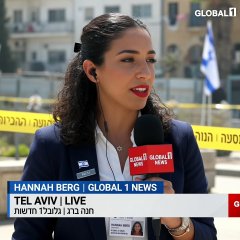
Israel Correspondent at Global1.News. Based in Tel Aviv, covering Israeli politics, security, technology, and society. Provides balanced, deeply-sourced reporting on one of the most closely-watched regions in the world.








Comments (0)