
Thousands More Gaza Patients Await Medical Evacuation: WHO Chief
GENEVA — Thousands of critically ill and injured Palestinians in the Gaza Strip remain trapped without access to urgent medical care, the head of the World Health Organization (WHO) said Friday, as the agency reported a fresh but woefully insufficient wave of medical evacuations from the besieged en
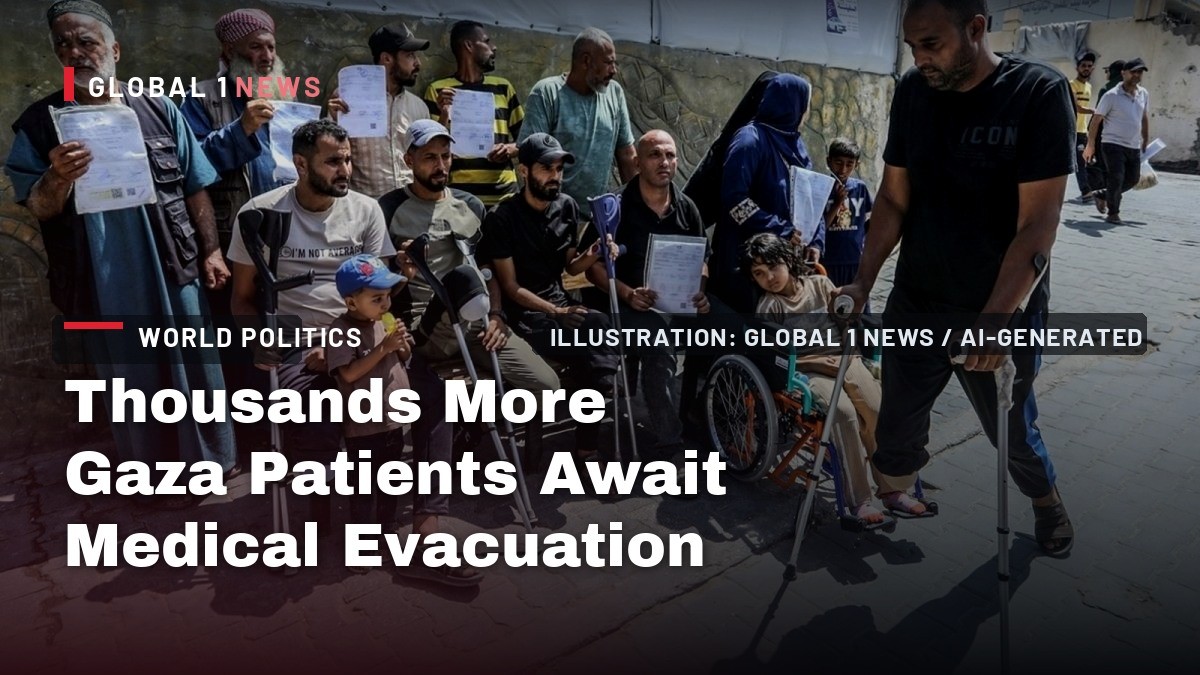
GENEVA — Thousands of critically ill and injured Palestinians in the Gaza Strip remain trapped without access to urgent medical care, the head of the World Health Organization (WHO) said Friday, as the agency reported a fresh but woefully insufficient wave of medical evacuations from the besieged enclave.
WHO Director-General Tedros Adhanom Ghebreyesus said the agency last week supported the evacuation of 106 patients, including 19 children, through the Rafah and Kerem Shalom crossings. They were accompanied by 132 companions. The announcement offers a rare glimpse of hope for a handful of families, yet it underscores the staggering scale of a medical crisis that continues to claim lives not from bombs alone, but from the slow, grinding denial of basic healthcare.
“Medical evacuations give people in need of urgent care a chance of survival,” Tedros said in a statement posted on the social media platform X. His words carry the weight of a dire reality: for thousands of others, that chance has not yet come.
A System on the Brink: The Numbers Behind the Crisis
The figures released by the WHO paint a harrowing picture of a healthcare system reduced to rubble. Since October 2023, a total of 13,237 patients, including 6,276 children, have been evacuated from Gaza for medical treatment. They have been accompanied by 16,406 companions — family members who often serve as the only caregivers for the wounded and the dying.
Yet these numbers represent only a fraction of those in need. The Gaza Health Ministry has reported more than 6,000 amputations since the onset of the conflict, many of them performed without adequate anesthesia or sterile supplies. The shortage of prosthetics and rehabilitation services means that even those who survive their initial injuries face a future of permanent disability, with little to no support infrastructure remaining in the enclave.
Tedros stressed that sustained access through multiple crossing routes is needed to ensure patients receive timely medical treatment. The Rafah crossing, on the border with Egypt, and the Kerem Shalom crossing, on the border with Israel, have become lifelines — but they are lifelines that operate at a trickle, not a flood.
The Right to Health Under Occupation
The right to health is enshrined in international human rights law, including the International Covenant on Economic, Social and Cultural Rights, to which Israel is a signatory. Under the Fourth Geneva Convention, an occupying power has a clear obligation to ensure the medical needs of the civilian population are met. The systematic denial of medical evacuation for critically ill patients raises serious questions about compliance with these fundamental legal standards.
For Palestinian patients, the journey to a hospital bed outside Gaza is fraught with bureaucratic hurdles, security delays, and the constant threat of violence. Medical files must be approved by Israeli authorities, coordination must be secured through international agencies, and even then, crossings can close without warning. Each delay can mean the difference between life and death for patients with cancer, heart disease, or severe trauma injuries.
The human cost of these delays is measured not only in mortality statistics but in the suffering of families forced to watch their loved ones deteriorate without recourse. Children with leukemia, burn victims, patients requiring dialysis — all are caught in a system that treats their access to healthcare as a privilege to be granted, rather than a right to be upheld.
Displacement and the Collapse of Medical Infrastructure
Israel’s ongoing military operations in the Gaza Strip have displaced hundreds of thousands of local residents, many of whom have sought refuge in temporary shelters and tents scattered across the enclave. These makeshift camps, often lacking clean water, sanitation, and adequate nutrition, have become breeding grounds for disease and secondary infections that further overwhelm what remains of Gaza’s medical capacity.
Hospitals that once served as regional referral centers have been damaged or destroyed in the fighting. Medical staff have been killed, detained, or forced to flee. Supply chains for essential medicines and equipment have been severed. The result is a healthcare system in name only — a collection of overwhelmed field hospitals and damaged facilities struggling to cope with a caseload that would strain the resources of any modern nation.
The WHO has repeatedly demanded protection for Gaza’s health care facilities amid Israeli attacks. These demands have gone largely unheeded. The destruction of medical infrastructure is not a collateral byproduct of conflict; it is a central feature of the devastation visited upon the enclave.
Since the Truce: A Fragile Calm, A Continuing Toll
Even the US-brokered truce, which brought a fragile and incomplete halt to the most intense phase of fighting, has not stopped the killing. According to Gaza’s Health Ministry, more than 1,300 Palestinians have been killed and over 4,000 injured since the ceasefire took hold. The truce has proven to be a pause, not a peace — a moment of reduced violence that has nonetheless failed to restore safety or dignity to the people of Gaza.
Since October 2023, when Israel launched its military campaign on Gaza, more than 73,400 Palestinians have been killed and over 174,400 injured by relentless attacks, most of which have targeted civilian infrastructure. These figures, compiled by Gaza’s Health Ministry and corroborated by international observers, represent a scale of human loss that defies comprehension.
For the families of the wounded, the truce has offered little relief. The medical evacuation system remains the only pathway to specialized care, and it remains woefully inadequate to the need. Each week, the WHO facilitates the departure of a few hundred patients at most. Each week, thousands more are added to the waiting lists.
A Call for Sustained Access and Accountability
Tedros’s call for sustained access through multiple crossing routes is more than a technical recommendation; it is a moral imperative. The international community, which has repeatedly voiced concern over the humanitarian situation in Gaza, must move beyond statements of sympathy and demand concrete action to ensure that medical evacuations are scaled up dramatically and expedited without delay.
The crossings at Rafah and Kerem Shalom must remain open, not as a gesture of goodwill but as a matter of legal obligation. The patients awaiting evacuation are not statistics; they are fathers and mothers, sons and daughters, children with their whole lives ahead of them. Their survival depends on the willingness of those with power to act.
For the people of Gaza, the right to health is not an abstract concept. It is the right to receive treatment for a treatable wound. It is the right to access chemotherapy for a cancer that could be managed. It is the right to be evacuated from a war zone to a hospital bed, rather than to die in a tent or a damaged ward, waiting for permission that never comes.
The WHO’s work in facilitating evacuations is a lifeline, but it is a lifeline stretched dangerously thin. Without a fundamental change in approach — without sustained, unimpeded, and expanded access — thousands more will perish not from the violence of war, but from the silence of neglect.
By Fatima Al-Rashid, Staff Writer
This article was produced with AI-assisted research and editorial support. Sources: Middle East Monitor via Anadolu Agency.
What's Your Reaction?
 Like
0
Like
0
 Dislike
0
Dislike
0
 Love
0
Love
0
 Funny
0
Funny
0
 Wow
0
Wow
0
 Sad
0
Sad
0
 Angry
0
Angry
0
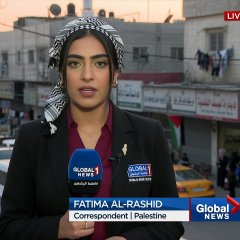
Gulf/MENA Correspondent at Global1.News. Based in Doha, covering Gulf politics, energy markets, diplomacy, and development across the Middle East and North Africa. Tracks the economic transformation of the Gulf states.









Comments (0)