
Türkiye’s New Party tones down newness in first convention
Turkey’s political landscape entered another phase of fragmentation this weekend as the newly formed New Party (Yeni Parti, YP) held its inaugural convention in Ankara.
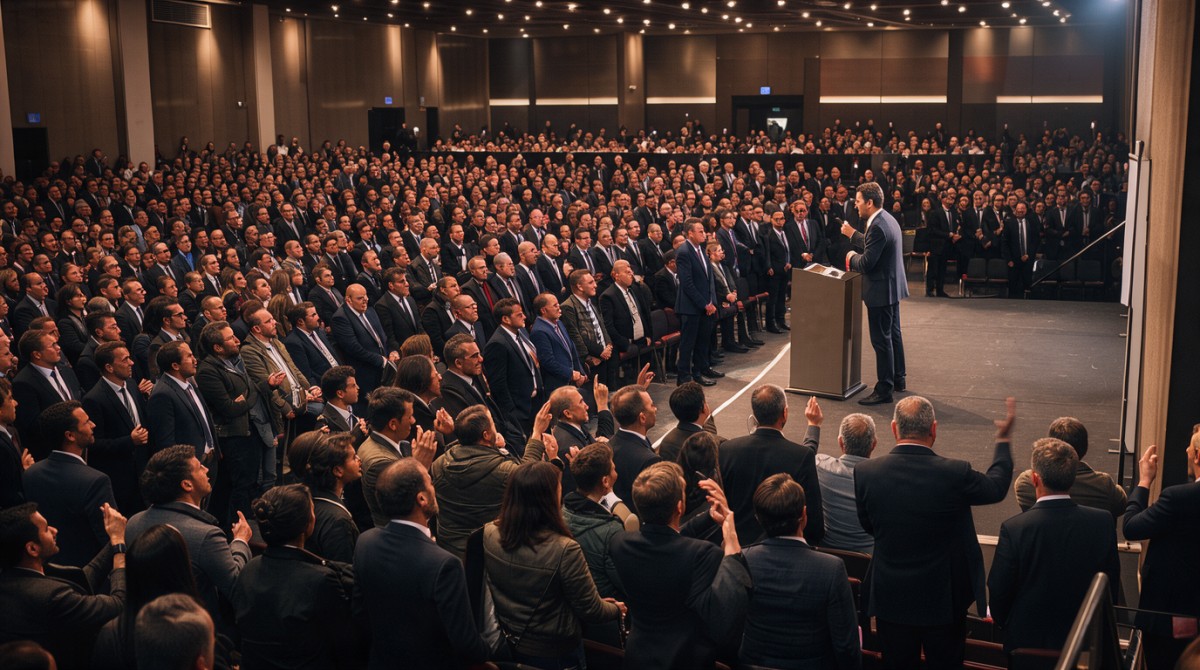
Turkey’s political landscape entered another phase of fragmentation this weekend as the newly formed New Party (Yeni Parti, YP) held its inaugural convention in Ankara. The event, dominated by founder Özgür Özel’s singular candidacy and a roster of former CHP figures, offered a window into the shifting allegiances within the Turkish opposition and the broader contest between the ruling Justice and Development Party (AKP) and a splintered secular camp. While the convention’s symbolism evoked the era of İsmet İnönü – a period marked by a one‑man party structure and limited ideological pluralism – the underlying dynamics reveal a more complex interplay of personal ambition, corruption narratives, and strategic positioning ahead of the next electoral cycle.
From CHP Defection to One‑Man Party
Özgür Özel, a former leader of the Republican People’s Party (CHP), launched the New Party after his departure from the CHP in July. The source material notes that Özel’s exit followed a contentious intra‑party contest three years earlier, in which he defeated Kemal Kılıçdaroğlu for the CHP chairmanship before Kılıçdaroğlu later reclaimed the position. This personal rivalry set the stage for Özel’s decision to establish a separate political vehicle, positioning the YP as a victim of a “campaign” he attributes to the government and to Kılıçdaroğlu’s leadership.
The convention’s first day featured an intra‑party vote in which Özel stood unopposed, underscoring the party’s nascent structure and the concentration of authority around its founder. The absence of competing candidates, coupled with the prevalence of Özel’s own posters and those of former Istanbul mayor Ekrem İmamoğlu – himself under investigation – reinforced the perception of a “one‑man regime,” a term the source material explicitly uses to describe the YP’s internal dynamics.
Corruption Narratives as Mobilising Tool
Corruption dominated Özel’s speeches, framing the YP as a clean alternative to a government he accused of graft. The convention welcomed seven CHP mayors who are currently incarcerated on bribery and tender‑rigging charges. Their letters of affiliation, sent from behind bars, were highlighted as a symbolic endorsement of the YP’s anti‑corruption stance. By contrast, Kılıçdaroğlu’s pledge to “cleanse” the CHP of similar accusations underscores a parallel narrative battle within the secular opposition.
These developments illustrate how both the YP and the CHP are leveraging corruption allegations to differentiate themselves from the AKP, while simultaneously attempting to attract disaffected members of the other party. The source material indicates that many CHP lawmakers immediately joined the YP upon its formation, yet the imprisoned mayors’ delayed alignment reflects a cautious approach among senior figures wary of further legal entanglements.
Strategic Recruitment and the Limits of Expansion
The convention’s recruitment drive yielded mixed results. While the YP boasted a “crowded occasion,” the departure of several delegates early in the day signalled skepticism about the party’s democratic credentials, given the lack of an actual contest for leadership. Moreover, claims by pro‑YP journalists that additional members from other parties would join over the weekend proved unfounded, according to the source material.
Nevertheless, the YP succeeded in attracting a cohort of academics, jurists, and civil‑society representatives to its party assembly and disciplinary board. The expansion of the assembly from 80 to 160 members, as reported, suggests an attempt to broaden the party’s institutional base. Yet the composition of this enlarged body—largely former CHP associates such as Gül Çiftçi, Yalçın Karatepe, Yankı Bağcıoğlu, and Aylin Nazlıaka—indicates that the YP’s growth is still heavily reliant on pre‑existing networks rather than a truly novel constituency.
Symbolic References to Atatürk and Historical Continuities
Posters of Mustafa Kemal Atatürk were notably scarce at the convention venue, a detail emphasized in the source material. This limited visual presence contrasts with the abundant imagery of Özel and İmamoğlu, suggesting a deliberate shift away from the foundational republican symbolism traditionally associated with the CHP. Nonetheless, Özel invoked Atatürk as a “guide” in his speech, attempting to claim custodianship of the secular, nationalist legacy while re‑branding it under his own leadership.
The selective use of Atatürk’s legacy mirrors a broader trend in Turkish politics where newer parties balance reverence for the republic’s founder with the need to differentiate themselves from the established CHP. By foregrounding personal leadership and contemporary anti‑corruption rhetoric, the YP seeks to position itself as a modern continuation of Atatürk’s principles, albeit filtered through Özel’s own political narrative.
Electoral Prospects Amidst a Dominant Ruling Party
Despite the YP’s confident assertions of “courage to win the election,” recent polls—cited in the source material—indicate that the party remains far behind the AKP. The YP’s reliance on a single charismatic figure, combined with its limited grassroots infrastructure, poses significant challenges in translating convention enthusiasm into broad electoral support.
The AKP’s entrenched position, reinforced by its control over state resources and media narratives, continues to dominate the political arena. The YP’s emergence therefore adds another layer to the opposition’s fragmentation, potentially diluting the anti‑AKP vote unless a strategic coalition materialises. The party’s future relevance will hinge on its ability to expand beyond former CHP elites and to present a credible alternative to voters disillusioned with both the ruling party and the traditional opposition.
Implications for Turkey’s Opposition Landscape
The New Party’s inaugural convention underscores a pivotal moment for Turkey’s opposition forces. The exodus of CHP members to the YP reflects deeper fissures within the secular camp, driven by personal rivalries and divergent strategies for confronting the AKP’s dominance. As the YP consolidates its internal structures—expanding its assembly, appointing a disciplinary board, and integrating former CHP officials—it may serve as a catalyst for further splintering or, conversely, as a bridge for future realignments.
Observers must watch how the YP navigates the delicate balance between leveraging anti‑corruption sentiment and building a sustainable organisational base. Its success or failure will influence whether Turkey’s opposition can coalesce around a unified platform or remain fragmented, thereby shaping the broader trajectory of Turkish democracy in the years ahead.
Regional Context and the Broader Strategic Picture
Turkey’s internal political shifts occur against a backdrop of heightened Sunni‑Shia competition, great‑power rivalry, and energy security concerns across the Middle East. A fragmented opposition may limit Ankara’s capacity to pursue an assertive foreign policy, especially in relation to Iran’s nuclear ambitions and the evolving dynamics of Arab‑Israeli normalisation. Moreover, internal political instability could affect Turkey’s role as an energy transit hub, influencing regional markets and diplomatic leverage.
In this environment, the New Party’s emergence is not merely a domestic footnote but part of a larger tapestry of political realignments that could reverberate through Turkey’s regional engagements. How the YP positions itself on foreign policy issues—whether it adopts a more conciliatory stance toward Tehran or aligns with the Gulf states’ strategic interests—will be a critical factor in determining its long‑term relevance both at home and abroad.
This article was produced with AI-assisted research and editorial support. Reporting is based on the source material cited below. Sources: Daily Sabah Middle East; dailysabah.com; Global1.News (15 November 2026).
By Malik Hassan, Staff Writer
What's Your Reaction?
 Like
0
 Dislike
0
 Love
0
 Funny
0
 Wow
0
 Sad
0
 Angry
0
Middle East Correspondent at Global1.News. Based in Beirut, covering politics, conflict, energy, and society across the Middle East. Brings context and depth to a region often reduced to headlines.









Comments (0)