
Super El Niño 2026: Record Climate Threat Puts Mexico on High Alert
In a recent DW News report, climate scientist Zack Labe was asked a pointed question: will warmer ocean temperatures make 2026 the hottest year on record?
In a recent DW News report, climate scientist Zack Labe was asked a pointed question: will warmer ocean temperatures make 2026 the hottest year on record? The answer, according to the developing "Super El Niño" now brewing in the Pacific, is a resounding and worrying "yes." For Mexican families from the colonias of Tijuana to the ejidos of Oaxaca, this is not an abstract scientific debate—it is a direct threat to their water supply, their harvests, and their safety during the upcoming hurricane season.
Super El Niño 2026: A Record-Breaking Climate Threat Puts Mexico on High Alert for Floods, Drought, and Scorching Heat
Mexico City, Mexico – August 2026 — The National Oceanic and Atmospheric Administration (NOAA) officially declared the arrival of El Niño on June 11, 2026. But what began as a typical climate oscillation has rapidly escalated into a monster. In a forecast released Thursday, August 13, NOAA announced a nearly 70% chance that this building Super El Niño will become the strongest such event on record since tracking began in 1950, potentially exceeding even the devastating 1982-83 event that wreaked havoc across the globe. For Mexico, a country already grappling with water scarcity in the north and vulnerable infrastructure in the south, the timing could not be more critical.

The Science Behind the "Super" Label
The mechanics of this event are staggering. NOAA’s Climate Prediction Center reports that sea surface temperature anomalies in the Niño region are expected to exceed 2.5 degrees Celsius above average over a three-month span. To put this in perspective, the previous record holder—the 1982-83 Super El Niño—caused mass coral bleaching, agricultural collapse, and thousands of deaths worldwide. This new event is projected to surpass those numbers, even when using NOAA’s new Relative Oceanic Niño Index (RONI), which accounts for background warming from climate change. The fact that this El Niño is on track to be unprecedented even with that handicap underscores how extraordinary the current ocean heat is.
University of California climate scientist Daniel Swain did not mince words in the DW News report. "This is a genuinely remarkable event," Swain said. "We're already at record-breaking or record-tying territory now, and we're expected to skyrocket." The concern is not just the heat itself, but the cascading effects. Warmer oceans fuel more intense hurricanes, longer droughts, and more severe marine heat waves that devastate fishing communities along the Mexican Pacific coast, from Mazatlán to Acapulco.
Mexico’s Two-Front War: Pacific Storms and Northern Drought
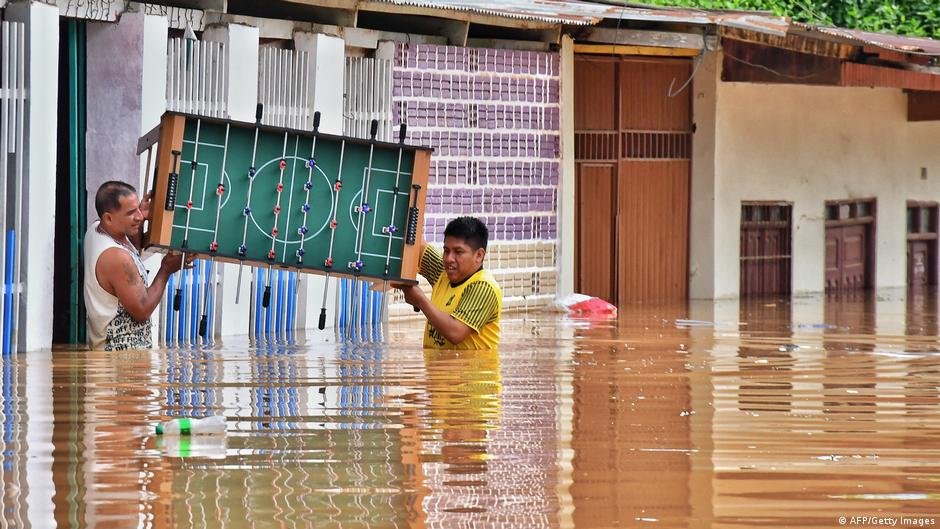
For Mexico, the Super El Niño presents a split personality. In the Mexican Pacific, authorities are on high alert for tropical cyclone formation. A stronger El Niño typically generates conditions for more intense tropical systems in the Pacific, increasing the risk of torrential rains, flash floods, river overflows, and landslides—known locally as deslaves—particularly in states like Guerrero, Chiapas, and Michoacán. These are regions where informal settlements on hillsides are highly vulnerable, and where a single night of heavy rain can wipe out entire colonias.
Conversely, other regions of Mexico could face significant rainfall deficits and prolonged dry periods. The northern states of Chihuahua, Sonora, and Coahuila, already suffering from chronic water shortages, may see reservoirs drop to critical levels. This has direct consequences for agriculture, particularly for campesinos who depend on seasonal rains to water their maize and bean crops. The Secretaría de Agricultura y Desarrollo Rural has not yet issued emergency protocols, but local water committees in rural ejidos are already rationing supplies, a sign of the stress to come.
The Human Cost: From the Dry Corridor to the Pampas
The impact extends far beyond Mexico’s borders, threatening the entire Latin American food supply chain. The World Food Programme (WFP) has issued a stark warning: food-insecure people in Central America could rise by 83% under this El Niño. The Central American Dry Corridor—spanning Guatemala, Honduras, El Salvador, and Nicaragua—faces prolonged water deficits that directly threaten food security. Cuba and Haiti are already reporting agricultural crisis conditions, and the EU climate monitor confirmed that from Mexico to northern Brazil, approximately 110 million people experienced their hottest July on record in 2026.
However, the story is not uniformly grim. In South America’s agricultural heartland, the Super El Niño brings a different set of challenges and opportunities. Meteorologist Germán Heinzenknecht of Argentina’s Applied Climatology Consultancy noted that in the Pampas, Paraguay, Uruguay, and southern Brazil, El Niño usually brings above-normal rainfall—generally good for soybeans, corn, and wheat crops. "El Niño could boost harvests by providing soil moisture," Heinzenknecht explained. This is critical because Latin America is the world’s top food-exporting region, and the FAO food price index has already reached a three-year high in July 2026, squeezing Mexican consumers at the tortillería and the taquería.
Global Leaders and Scientists Sound the Alarm
The international response has been urgent and coordinated. World Meteorological Organization (WMO) Secretary-General Celeste Saulo issued a warning on June 2, 2026, stating, "We need to prepare for a potentially strong El Niño event, which will exacerbate drought and heavy rainfall and increase the risk of heatwaves both on land and in the ocean." Her words have proven prophetic. UN Secretary-General António Guterres went further, framing the crisis in stark moral terms: "El Niño conditions will pour fuel on the fire of a warming world. Impacts will hit even harder, travel even farther, and cross borders with devastating speed. The only effective response is climate action equal to the crisis: ending the addiction to fossil fuels, accelerating the shift to renewables, protecting the most vulnerable, and delivering early warning systems for all."
Northern Illinois University meteorology professor Victor Gensini echoed the scientific consensus, noting that "a strong El Niño could plausibly push global temperatures to new record levels in late 2026 and into 2027." The analogy used by climate scientists is instructive: El Niño events are the steps upward on an escalator, while human-caused climate change is the long-term steady upward trend. The El Niño signal rides on top of the global warming trend, meaning every record broken now becomes the new baseline for future disasters.
What to Watch For
As we move into the critical months ahead, several key indicators will determine the severity of the impact on Mexican communities. NOAA’s Climate Prediction Center gives an 81% probability that the event reaches "very strong" intensity between October and December 2026, with a 97% probability it persists into early spring 2027. This means the upcoming winter and spring harvests are at risk, and the 2027 hurricane season could begin with oceans already primed for extreme activity.
For Mexican families, the immediate concerns are practical: Will there be water for the milpa? Will the rains come in time for the sowing season? Will the Pacific storms bypass the coastal communities? The answers remain uncertain, but the preparation must begin now. Local civil protection agencies in states like Veracruz and Tabasco are already mapping flood-prone zones, while the Comisión Nacional del Agua (CONAGUA) is monitoring reservoir levels in the north.
The Super El Niño of 2026 is not a distant threat—it is a present reality that will shape the lives of millions across Mexico and Latin America. As the escalator continues its upward climb, the only question is whether our institutions, our communities, and our families can adapt quickly enough to avoid the worst. The science is clear, the warnings are loud, and the time for action is now.
By Rosa Martinez, Staff Writer
This article was produced with AI-assisted research and editorial support. Reporting is based on sources cited in the article.
What's Your Reaction?
 Like
0
Like
0
 Dislike
0
Dislike
0
 Love
0
Love
0
 Funny
0
Funny
0
 Wow
0
Wow
0
 Sad
0
Sad
0
 Angry
0
Angry
0

Latin America/Andes Correspondent at Global1.News. Based in Bogota, covering politics, environment, energy, and social movements across the Andean region. Passionate about environmental journalism and communities protecting their land.














Comments (0)