
Chacahua Lagoon: Afro-Indigenous Island Faces Climate Crisis
Chacahua: An Afro-Indigenous Island on the Frontline of Climate Change The journey to Laguna de Chacahua is not for the faint of heart. A bus from Puerto Escondido, a colectivo minibus from Rio Grande, a lancha across the water to Zapotalito, and finally an open-air truck - only then have you arrive
Chacahua: An Afro-Indigenous Island on the Frontline of Climate Change
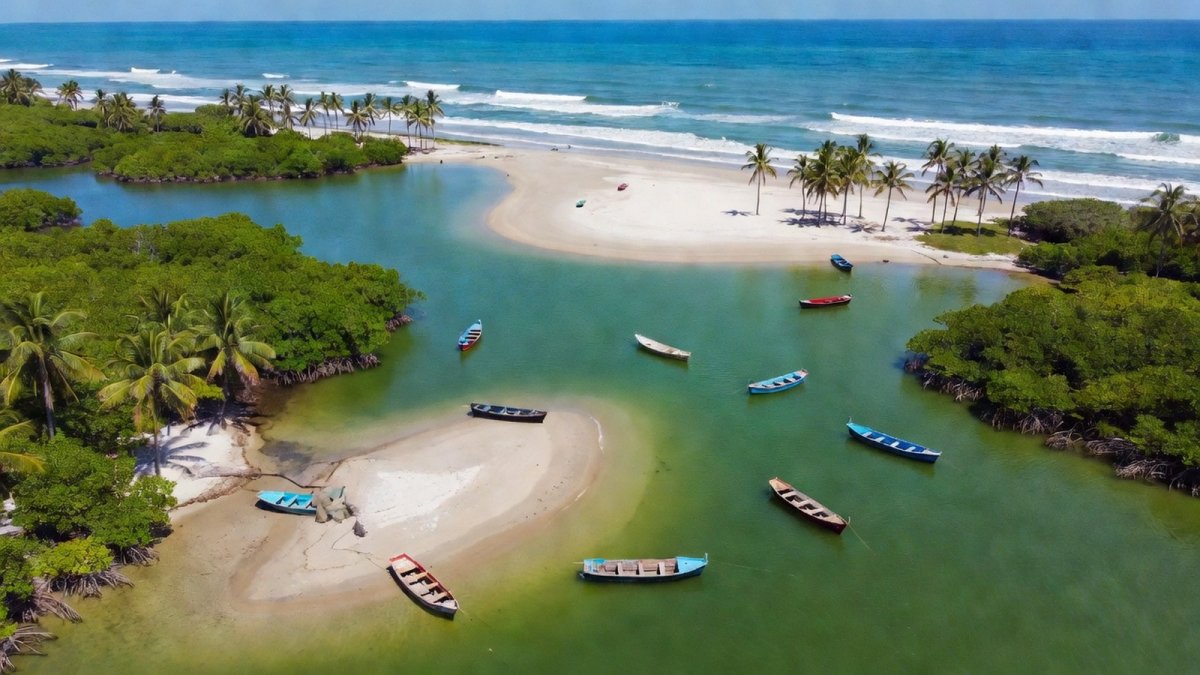
The journey to Laguna de Chacahua is not for the faint of heart. A bus from Puerto Escondido, a colectivo minibus from Rio Grande, a lancha across the water to Zapotalito, and finally an open-air truck - only then have you arrived at this remote barrier island along Oaxaca's western Pacific coast.
This is a place where the high sun smelts soft sand and rocks while hammocks loll idly in the low breeze. After sunset, bioluminescent plankton set the water aglow in a neon blue glacé. But beneath this paradise lies a community fighting for its survival - a predominantly Black and Afro-Indigenous population of no more than 800 people, more than half of whom are fishermen, facing the converging threats of climate change, environmental degradation, and what researchers describe as the "ecocide" of their ancestral lagoons.
A Community Rooted in Mangroves and Memory
Chacahua is technically a barrier island, meaning it is not entirely separate from the mainland but is only accessible by boat. The community's heritage partially links back to the Spanish enslavement of Africans and their forced labor in Mexico during the 16th and 17th centuries. Today, many residents make their way over from the mainland to surf, fish, and enjoy the more relaxed pulse of daily life.
"Here, you can be whatever you want to be," Augusto, an architect living in Chacahua, told Mexico News Daily. "And nobody is going to look down on you; you're living in a free place."
The island sits within a roughly 51-square-mile national park designated in 1937, surrounded by a network of mangrove corridors that anchor the island in verdant, woody tresses. The red mangrove, black mangrove, white mangrove, and buttonwood are essential to maintaining the health of the local ecosystem. Their long, complex root systems are adapted to survive in low-lying waters, optimizing oxygen absorption and filtering out saline contamination.
Fishing is integral to life here, and the catch is diverse - shrimp, puffer fish, oysters, blue crabs, and red snapper by the Bajo Este. "There are all kinds of fish," Antonio, a local fisherman, said. "There's a bit of everything here."
Antonio started fishing at age 8 with his grandfather. At 17, he began fishing for sharks; tiburoneros use a simbra, a 14-kilometer-long fishing line with around 300 hooks every 18 meters. "We'd head out along the Guerrero coast, going out toward the horizon where the sun sets … to where you can't see a thing anymore," he recalled. "Transatlantic ships pass through there. We'd stay one night and head back the next day."
The Rising Tide of Climate Threat
But it isn't all peace in paradise. Coastal environments and their communities are facing increased exposure to natural hazards. The rainy season from June to September brings storms and natural climate variations, but Oaxaca state's geography, situated along Mexico's southwest Pacific coast, leaves it particularly vulnerable to climate change. Pacific hurricanes and Atlantic basin tropical systems pose a dual threat, alongside the increasing reality of heavy rains, droughts, and rising temperatures and sea levels.
While localized data for the island is difficult to find, average yearly temperature in Oaxaca City rose by 1.1 degrees Celsius (2 degrees Fahrenheit) between 1994 and 2024. Though this figure may seem small, it represents a rapid change over three decades, even at the local level.
Global sea level rise has been affecting the coast of Oaxaca, and Chacahua is no exception. Drawing from the Intergovernmental Panel on Climate Change's 6th Assessment Report, NASA's Sea Level Projection projects extreme sea level rise along Oaxaca's Pacific coast, and the lagoon's low relief offers little defense.
Sitting in a cabana just 100 meters inland, Augusto points towards Playa Chacahua. "The sea is starting to reclaim the land. That's why the houses over there are collapsing."
It was Hurricane Pauline in 1997 that dramatically shifted the landscape of Chacahua, the lagoon rising to such a level that a new inlet was created and swathes of the beach were eaten away. Today, the beach faces an ever-greater risk due to damaging erosion. Oaxaca has been strongly affected by hurricanes Otis, John, Erick, and Boris in the last four years alone.
The Slow Death of the Lagoons
Beyond the immediate climate threats, the Chacahua-Pastoría lagoon system faces what researchers from CIESAS and DePaul University describe as "ecocide." The story of this environmental degradation spans decades of government intervention.
In 1972, the federal government built a breakwater at Cerro Hermoso, supposedly to stabilize the lagoon. The lagoon was originally connected to the Pacific Ocean through Cerro Hermoso, which brought oxygen and life to the lagoons. Then in 1992, the government built the Ricardo Flores Magón dam to create a hydraulic channel from the Verde River to irrigate crops. The dam reduced the direct flow of water between the Verde River and the lagoons.
Between 2001 and 2003, CONAPESCA (Mexico's National Commission for Aquaculture and Fisheries) built two more breakwaters at Cerro Hermoso, supposedly to boost tourism potential and fishing activity. After their construction, the lagoons were left disconnected from the ocean, and the channel between Cerro Hermoso and Zapotalito is now a sand dune.
Residents have tried to reconnect the ocean and the lagoons themselves, using shovels to remove sand, but it is an impossible task given the amount of sand. A third factor named mostly by fishers is a private transnational lime-oil factory in San José del Progreso, along with agrochemicals used in papaya and lime cultivation in the region that drain into the lagoons, according to the local organization Ecosta Yutu Cuii.
In 2013, a local fishermen's collective, supported by the Human Rights Ombudsman of the People of Oaxaca (DDHPO), produced a report detailing violations against the inhabitants of Zapotalito, Chacahua, La Pastoría, and El Corral. The report documents public health risks, loss of livelihood, and environmental degradation that communities have faced due to federal infrastructure projects, such as Irrigation District 110 and breakwaters in the Boca de Chacahua.
Voices from the Water: Grief and Resilience
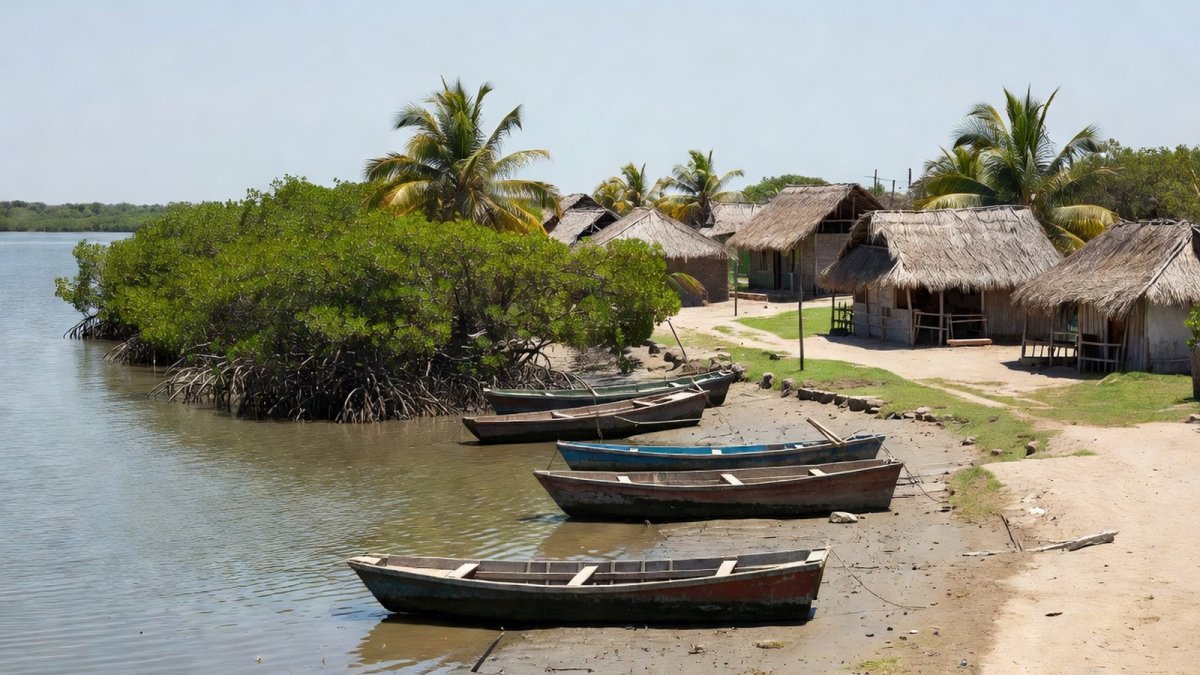
The impact on the community is profound. Maribel, a fisherwoman with the Colectivo Mujeres Pescadoras del Manglar, remembers when the lagoon was healthy. "When the sandbar between the sea and the lagoon was open, the sea cleaned the water and many fish came into the lagoon, but now that the bar is closed, there is only stagnant water and the water is dirty."
Celia, another fisherwoman, described the daily struggle: "Before, I could go two or three hours to the lagoon to fish and come back with plenty of fish to sell and eat; now everyone has to go farther and stay at the lagoon all day. There are days when you do not even earn enough for food."
Valeria, an indigenous Mixtec fisherwoman, put it most starkly: "The lagoon is our primary source of life; it is dying... If the lagoon dies, the community dies."
Santiago, born on the island and a fisherman for 20 years, notes the changing conditions. "Because of the rains and the storms that come, it's more dangerous now. It's more dangerous than compared to before. It used to be a good life."
Yet the community demonstrates remarkable resilience. Angél, who runs a grocery shop in the central square, acknowledges the worsening salinity but insists "the mangroves are strong. We don't have to cut them that much." Antonio agrees: "The mangroves are doing well. They're tough. When they fall, they land upright."
Perhaps they aren't giving themselves enough credit. In reality, mangroves are vulnerable to climate change, specifically increasing salinity, hurricane events, and worsening El Niño patterns. But it's the locals who demonstrate climate resilience every day, working as a community to restore the things that Angél says the government is neglecting financially and administratively.
"The effort is made every day; it's part of life here on the island," Augusto said. "People engage in what's called tequio, voluntary community work to help the environment." Tequio "takes place because people love their land," he explained.
Health, Livelihood, and the Gentrification Wave
The environmental crisis has direct health consequences. Community health reports have documented skin abscesses among fishers linked to bacteria in the lagoon water. A 2002 study by Ysunza and colleagues found that diarrhea and respiratory diseases were the leading causes of death in the national park, with accidents second at 16%, and stomach cancer at 9% - possibly related to smoked fish consumption.
On top of these pressures, the briny waves of gentrification are lapping at the island's shores. Lavish cabanas with polished wood walls and hiked-up rent are beginning to rear their heads. Tourism has been shown to worsen pollution - in Mexico's Caribbean coast, the tourism sector accounts for one-third of the region's total waste, and light pollution has been proven to pose threats to turtle populations, of which species such as the Leatherback are populous in Chacahua.
Researchers describe these communities' experience as "grieving geographies" - the grief over the slow death of the water body, expressed through sadness, anguish, rage, and nostalgia in interviews with women. But grief has also been a driver of collective mobilization for the defense of water and territory.
What to Watch For
While federal budgeting continues to be an issue for Natural Protected Areas across Mexico, local cooperatives, in tandem with the National Commission of Protected Natural Areas (CONANP), are taking measures to respond to growing tourism in Oaxaca and have made major steps in wildlife protection and sustainable infrastructure. However, the direct effects on Chacahua are yet to be comprehensively reported.
Looking into its climate future, Chacahua is standing at a delta. The community has demonstrated its climate resilience through supporting mangroves, keeping the waters around the island clean, and reconstructing and relocating seafront buildings. Fishermen are taking it upon themselves to try to mitigate marine pollution, but there is a limit to what can be done without wider support.
Without sufficient government support, the effects of environmental jeopardy and injustice may ultimately uproot the mangrove system and local way of life to an irremediable degree. The fishermen continue to go out each day, the women continue to organize, and the community continues to practice tequio - but they cannot hold back the sea alone.
As Valeria warned, if the lagoon dies, the community dies. The question is whether the rest of Mexico - and the world - will listen before it's too late.
Tags: Chacahua, Oaxaca, climate change, Afro-Indigenous community, mangroves, ecocide, fishing, tequio, sea level rise, Hurricane Pauline, CONANP, lagoon ecosystem, bioluminescence, coastal erosion, community resilience
This article was produced with AI-assisted research and editorial support. Sources: Mexico News Daily; CIESAS.
By Rosa Martinez, Staff Writer
What's Your Reaction?
 Like
0
Like
0
 Dislike
0
Dislike
0
 Love
0
Love
0
 Funny
0
Funny
0
 Wow
0
Wow
0
 Sad
0
Sad
0
 Angry
0
Angry
0

Latin America/Andes Correspondent at Global1.News. Based in Bogota, covering politics, environment, energy, and social movements across the Andean region. Passionate about environmental journalism and communities protecting their land.














Comments (0)