
South Korea’s K2 Black Panther Closes In on Historic Peru Tank Deal
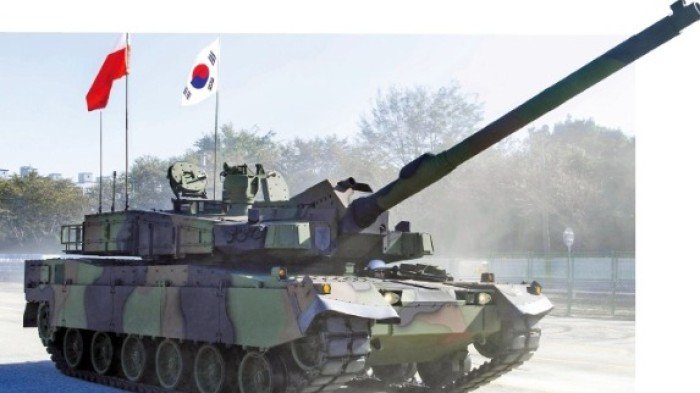
Hyundai Rotem Co., South Korea’s premier main battle tank manufacturer, is finalizing a landmark armored vehicle supply agreement with Peru valued at roughly US$1.4–2 billion (2.5–3 trillion won), a deal that would mark Seoul’s largest land defense export to Latin America and the first sale of the K2 Black Panther in the Americas.
Hyundai Rotem Co., South Korea’s premier main battle tank manufacturer, is finalizing a landmark armored vehicle supply agreement with Peru valued at roughly US$1.4–2 billion (2.5–3 trillion won), a deal that would mark Seoul’s largest land defense export to Latin America and the first sale of the K2 Black Panther in the Americas. The transaction, which encompasses 54 K2 main battle tanks and 141 K808 8x8 wheeled armored vehicles, represents a strategic inflection point for South Korea’s defense-industrial ambitions as it seeks to diversify beyond its European foothold and challenge established suppliers in emerging markets. The pending contract arrives amid a period of record-breaking growth for South Korea’s arms sector, which reached approximately US$15.4 billion in exports in 2025, a roughly 60 percent year-on-year surge that has positioned the Republic of Korea as the world’s ninth-largest arms exporter according to SIPRI.
Hyundai Rotem’s K2 Tank and K808 Vehicles Near Final Contract with Peru, Advancing Seoul’s Global Defense Ambitions
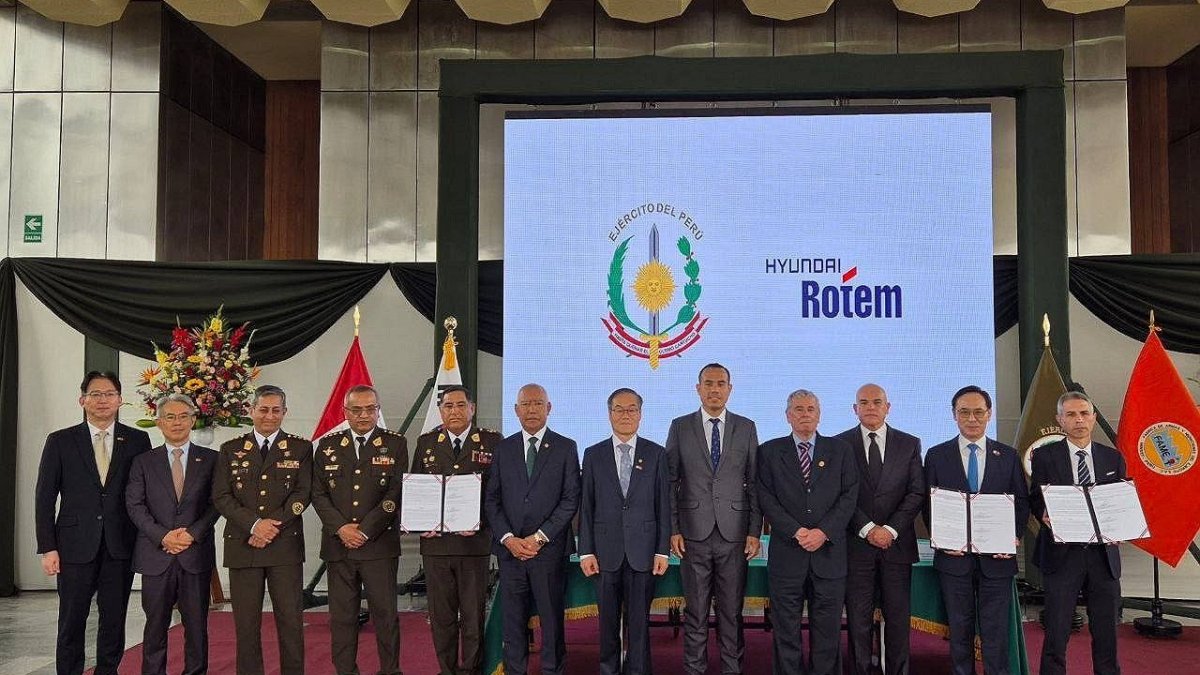
Seoul, South Korea – August 11, 2026 — The trajectory of South Korea’s defense export strategy has reached a pivotal juncture as Hyundai Rotem closes in on finalizing a contract to supply approximately 195 armored vehicles to the Peruvian Army. The deal, which has been in development since Peru’s November 2024 selection of the K2 as its preferred option to replace its aging Soviet-era T-55 tanks, is poised to become a signature achievement for Seoul’s defense-industrial complex. The framework agreement, signed in Lima on December 9, 2025, between Hyundai Rotem, the Peruvian Army, and FAME S.A.C. (Fabrica de Armas y Municiones del Ejercito), Peru’s state-owned defense company, laid the groundwork for what defense analysts describe as a transformative procurement for both nations.
The Framework Agreement: From Selection to Delivery
The December 2025 framework agreement formalized the terms for the supply of 54 K2 Black Panther main battle tanks and 141 K808 8x8 wheeled armored vehicles, a combined package that represents South Korea’s most significant land defense export to Latin America. This agreement was preceded by Peru’s November 2024 selection of the K2 as its preferred option to replace its T-55 tanks, alongside a General Agreement on Cooperation in Land Equipment signed that same month between FAME S.A.C. and Hyundai Rotem. The sequential nature of these agreements reflects a deliberate, phased approach to defense procurement that has become characteristic of South Korea’s export model.
The first tangible evidence of progress arrived in July 2026, when the initial vehicles reached Peru’s Port of Callao aboard the South Korean car carrier GLOVIS SAFETY. At least two K2 tanks and six K808 APCs were offloaded ahead of the final implementation contract, designated for testing and evaluation under local conditions. These trials, planned by the Peruvian Army, will include cold-start tests, crew training, maintenance assessments, and high-altitude mobility tests in the Andes Mountains — a rigorous evaluation regimen that underscores the operational demands of Peru’s diverse geography. The early delivery of test vehicles, prior to the final contract signature, signals a high degree of confidence on both sides that the agreement will be concluded successfully.
Modernizing Peru’s Armored Forces
The strategic rationale for Peru’s procurement is rooted in the obsolescence of its current armored fleet. The K2 is replacing Peru’s T-54 and T-55 tanks, which have been in service since the 1970s and which Peruvian officials say struggle with scarce spare parts and outdated fire-control systems. The operational limitations of these aging platforms have become increasingly apparent, particularly in the context of regional security dynamics and the Peruvian Army’s need for modern, reliable capabilities.
The K2 Black Panther, developed by Korea’s Agency for Defense Development and manufactured by Hyundai Rotem, represents a generational leap in armored warfare technology. The tank features a 1,500-horsepower diesel engine, hydropneumatic suspension that adjusts hull height for improved mobility and survivability, a 70 km/h road speed, and a 120 mm smoothbore gun equipped with a domestically developed automatic loader. These specifications place the K2 among the most advanced main battle tanks in production globally, offering capabilities that far exceed those of the Soviet-era platforms it replaces.
Complementing the K2 is the K808, an 8x8 wheeled armored vehicle designed for infantry transport. The K808 reaches approximately 100 km/h on roads and roughly 8 km/h in water, providing the Peruvian Army with a versatile platform for rapid deployment and maneuver operations. Defense observers have noted possible design changes on the delivered vehicles, referred to as a possible K808-PE configuration, suggesting that Hyundai Rotem has tailored the platform to meet specific Peruvian operational requirements. This customization reflects the adaptability that has become a hallmark of South Korean defense exports.
A Signature Export Model: Technology Transfer and Local Production
The Peru deal exemplifies South Korea’s distinctive approach to defense exports, which prioritizes technology transfer and local production as core components of the transaction. Under the program, South Korean partners plan an initial investment of approximately US$270 million in a specialized armored vehicle assembly plant in Peru. The implementation timeline is structured in phases: fully assembled vehicles are to be imported between 2026 and 2028, with licensed local assembly beginning around 2029 and a long-term target of 30 percent local content.
This model, which has been refined through South Korea’s experience in Poland and Turkey, offers recipient nations the dual benefits of modern military capability and domestic industrial development. For Peru, the establishment of an armored vehicle assembly plant represents a significant step toward defense-industrial self-sufficiency, a goal that has proven elusive for many Latin American nations. The 30 percent local content target, while ambitious, reflects a realistic assessment of Peru’s existing industrial capabilities and the gradual transfer of technical knowledge.
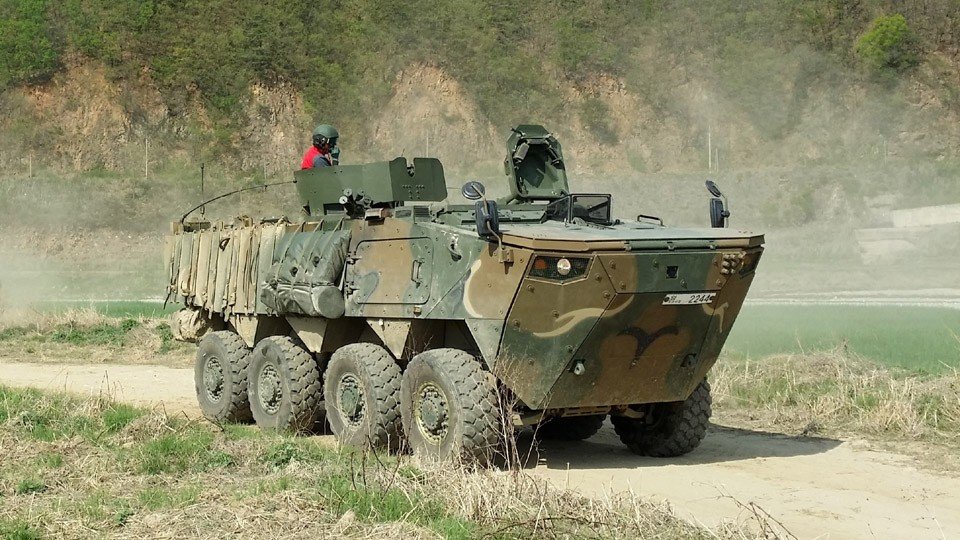
In a related development that underscores the breadth of the program, Hyundai Rotem announced in early May 2026 that STX had been selected as preferred bidder to supply 30 K808 "Baekho" wheeled armored vehicles — recovery and work vehicle variants — to the Peruvian Army through FAME S.A.C. This contract, valued at approximately US$60 million, represents the first overseas export of the Hyundai Rotem WAV and further deepens the industrial relationship between South Korean and Peruvian defense entities.
Geopolitical Context: Latin America as a New Frontier
The Peru deal must be understood within a broader geopolitical context that is reshaping global defense trade. For South Korea, Latin America represents a new frontier in its ambitious push to become a top-five global arms exporter by 2030. The region, historically dominated by suppliers from the United States, Russia, and Europe, offers significant growth potential for a country seeking to diversify its export markets beyond the European theater where it has achieved notable success.
The political backdrop in Peru adds another layer of complexity. Keiko Fujimori was sworn in as Peru’s president on July 28, 2026 — the country’s first democratically elected female president and its ninth head of state in a decade — after a narrow June 7, 2026 runoff victory over Roberto Sanchez by fewer than 50,000 votes. Fujimori has pledged a military-led crackdown on crime, a policy orientation that may increase demand for modern military equipment. Hyundai Rotem has explicitly tied its push to Peru’s post-election stability, suggesting that the company views the new administration as a reliable partner for long-term defense cooperation.
The timing of the deal is also significant in the context of South Korea’s broader export performance. South Korea’s arms exports reached a record of approximately US$15.4 billion in 2025, up roughly 60 percent year-on-year, with SIPRI ranking the country as the world’s ninth-largest arms exporter. The K2 has previously been exported to Poland under a series of deals, including a second-phase contract valued at about US$6.5 billion signed in August 2024 for 180 additional tanks. The K2 also underpins Turkey’s Altay program, demonstrating the platform’s adaptability to diverse operational environments and industrial partnerships.
Expert Perspectives and Policy Implications
From an academic perspective, the Peru deal represents a maturation of South Korea’s defense-industrial strategy. The transition from a focus on European markets to emerging economies in Latin America, Southeast Asia, and the Middle East reflects a deliberate diversification strategy designed to reduce dependence on any single market and to leverage technology transfer as a competitive advantage. The Hyundai Rotem experience in Peru offers valuable insights into how middle-power defense exporters can compete successfully against established suppliers by offering comprehensive packages that include not just equipment but also industrial capacity building.
The deal also has significant implications for chaebol dynamics within South Korea. Hyundai Rotem, as a subsidiary of the Hyundai Motor Group, benefits from the conglomerate’s extensive industrial capabilities and global supply chains. The company’s success in Peru may encourage other South Korean defense firms to pursue similar strategies in other emerging markets, potentially intensifying competition within the domestic defense industry while expanding the overall export pie.
For Peru, the implications extend beyond military modernization. The establishment of an armored vehicle assembly plant and the transfer of technology represent a significant investment in the country’s industrial base, with potential spillover effects for related sectors. The 30 percent local content target, if achieved, would position Peru as a regional hub for armored vehicle production, potentially enabling future exports to neighboring countries.
Looking Ahead
The immediate next steps involve the finalization of the implementation contract, which is expected to follow the completion of the ongoing testing and evaluation trials in Peru. The results of the high-altitude mobility tests in the Andes will be particularly important, as they will validate the K2’s performance under conditions that differ significantly from those of the Korean Peninsula or the European plains where the tank has been previously deployed. Successful completion of these trials would clear the way for the full-scale import of vehicles between 2026 and 2028, followed by the commencement of licensed local assembly around 2029.
The broader significance of this deal extends beyond the immediate transaction. For South Korea, the Peru contract validates an export model that combines advanced technology with industrial cooperation, offering a template for future engagements in other emerging markets. For Latin America, the deal signals the arrival of a new supplier capable of challenging traditional defense exporters with competitive pricing, advanced technology, and a willingness to share industrial capabilities. As South Korea pursues its ambition to become a top-five global arms exporter by 2030, the Peru deal may well be remembered as the breakthrough that opened the Latin American market to Korean defense industry.
The convergence of Peru’s modernization needs, South Korea’s export ambitions, and the region’s evolving security dynamics creates a strategic alignment that benefits both nations. As the final contract is signed and the first vehicles enter Peruvian service, the K2 Black Panther will begin a new chapter in its operational history — one that extends far beyond the Korean Peninsula and into the high altitudes of the Andes.
By Prof. David Park, Staff Writer
This article was produced with AI-assisted research and editorial support. Reporting is based on sources cited in the article.
What's Your Reaction?
 Like
0
Like
0
 Dislike
0
Dislike
0
 Love
0
Love
0
 Funny
0
Funny
0
 Wow
0
Wow
0
 Sad
0
Sad
0
 Angry
0
Angry
0

East Asia/Technology Correspondent at Global1.News. Seoul-based voice covering Korean politics, technology, business, and culture. Analyzes how technology and geopolitics intersect across East Asia.












Comments (0)