
US Reassures Asia With 'Deterrence by Denial' While Demanding Allies Pay More: What It Means for Seoul
MANILA — In a speech designed to counter perceptions of American unreliability, U.S. Under Secretary of War for Policy Elbridge Colby delivered a blunt message to Asian allies on August 10: Washington is "digging in," not pulling out, but the era of the protectorate is over. Speaking at the Stratbase Institute in Manila, Colby declared that "America is definitely not disengaging from Asia" while insisting that regional partners must bear more of the burden for their own defense. The address kic
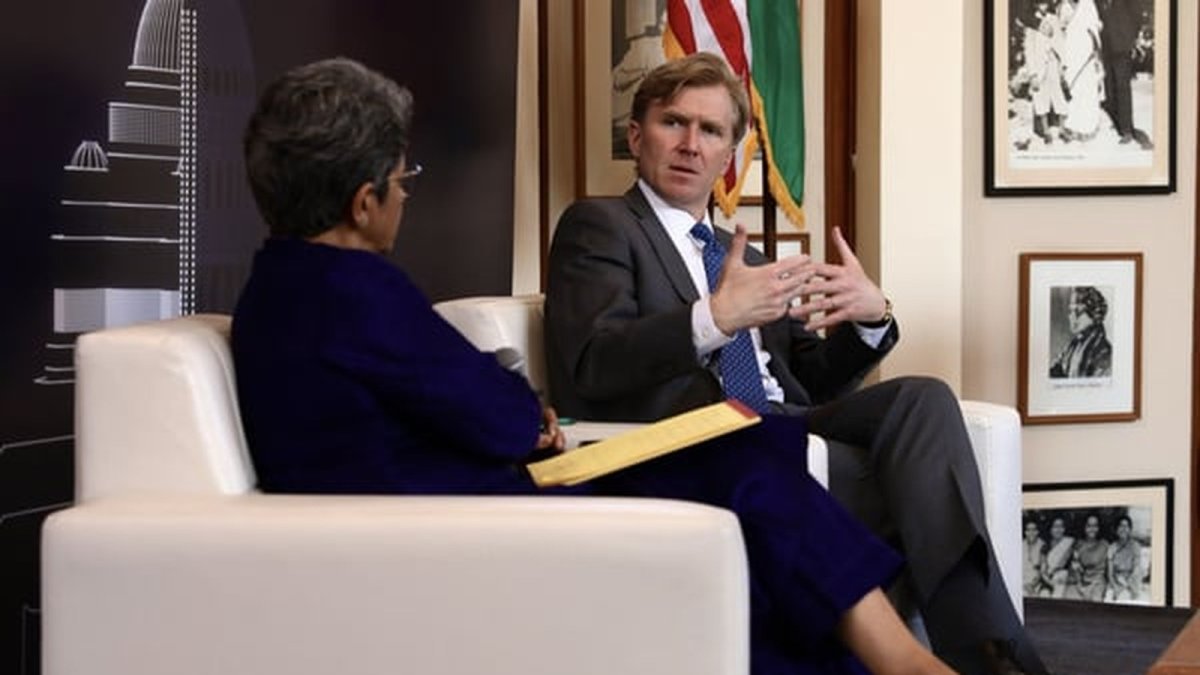
MANILA — In a speech designed to counter perceptions of American unreliability, U.S. Under Secretary of War for Policy Elbridge Colby delivered a blunt message to Asian allies on August 10: Washington is "digging in," not pulling out, but the era of the protectorate is over. Speaking at the Stratbase Institute in Manila, Colby declared that "America is definitely not disengaging from Asia" while insisting that regional partners must bear more of the burden for their own defense.
The address kicked off a four-nation Southeast Asian tour encompassing Indonesia, Thailand, and Cambodia, reflecting an effort by Washington to stabilize its image in a region rattled by tariff wars and a Middle East misadventure. For South Korea, Colby's framing of "partners, not protectorates" is not a hypothetical proposition. It describes the existing—and increasingly contested—architecture of the U.S.-ROK alliance, where Seoul has already pledged record sums to keep American troops on the peninsula.
The Colby Doctrine: Deterrence by Denial Along the First Island Chain
Colby's core argument was that the United States is pursuing a "posture of deterrence by denial along the First Island Chain"—the arc of islands stretching from Japan through Taiwan and the Philippines to Borneo. He contrasted this with what he called the "hollow, merely symbolic engagement of previous decades," pointing to the deployment of "additional troops, ships, aircraft, and missile systems" as evidence of a "formidable, resource-backed posture calibrated to actual structural realities."
The strategic logic is designed to make Chinese coercion infeasible rather than merely costly. "A signed piece of paper or a newly formed working group does not deter coercion; fielded hard power and the demonstrated political will to use it do," Colby said. This is vintage Colby—a hard-nosed realist who has long advocated prioritizing East Asia over the Middle East.
Yet the corollary is a demand for fiscal burden-sharing likely to unsettle allies as much as it reassures them. "When we ask our allies and partners to step up, to invest more in their own defense, and to take responsibility for their own sovereign security, we are not signaling abandonment," Colby insisted. "We are looking for partners, not protectorates." The subtext was unmistakable: the United States will provide the framework, but the region must provide the funding.
Manila as the Model: EDCA and the South China Sea Flashpoint
Colby's choice of Manila as the first stop was deliberate. He lavished praise on the Philippines, Washington's oldest mutual defense treaty ally in Asia, calling it a "model ally" under President Ferdinand Marcos Jr. and Defense Secretary Gilberto Teodoro Jr. "When our partners are strong, deterrence is strong. And that is exactly what we have here in Manila," he said, citing the "historic modernization" of the alliance through the Enhanced Defense Cooperation Agreement (EDCA).
The context is urgent. The speech came just three weeks after a July 20 clash at Second Thomas Shoal in the Spratly Islands, during which a Philippine sailor sustained a head injury after being struck with a baton by a China Coast Guard member. The resumption of China's maritime pressure campaign underscores the tangible risks regional states face. Colby confirmed the U.S. is operationalizing its commitment, rotating four Fast Response Cutters to work with the Philippine Coast Guard in patrolling its exclusive economic zone.
However, Colby was careful to note that this is "not a one-sided partnership." He endorsed allies developing their own defense industries, provided those efforts integrate with "broader US-led deterrence efforts," and cautioned against regional security arrangements designed to exclude Washington—a veiled warning to ASEAN members who might seek hedging strategies.
The Economic Contradiction: Tariffs, Hormuz, and the Trust Deficit
Despite the security reassurances, Colby's trip is shadowed by a profound economic contradiction. The Diplomat notes that the long-standing complaint from Southeast Asia is not a lack of U.S. security commitment, but that it is "the only thing the U.S. does consistently in the region." Since Donald Trump's first electoral victory in 2016, Washington has withdrawn from the Trans-Pacific Partnership and pursued increasingly acrimonious strategic competition with China, detracting from the region's fundamental goals: trade and economic growth.
The second Trump administration has exacerbated this problem. Indiscriminate tariff policies have hit close regional partners, while the war in Iran has led to the blockage of the Strait of Hormuz, through which the region receives a significant proportion of its crude oil. The Biden administration's stillborn Indo-Pacific Economic Framework for Prosperity (IPEF) did little to fill the void; Colby's speech, focused almost exclusively on military deterrence, did not address these grievances.
As The Diplomat concludes, while the U.S. can help maintain a stable balance of power in Asia, it remains "an economically disruptive force on the global stage, to the detriment of its long-term standing in Southeast Asia." This is the central paradox of Colby's tour: he is asking allies to invest more in a security architecture undermined by his own administration's economic policies.
The Korea Angle: Seoul as the Cautionary Tale of Burden-Sharing
For South Korean policymakers, Colby's Manila speech resonates far beyond Southeast Asia. Seoul has already lived the "partners, not protectorates" doctrine. The 12th U.S.-ROK Special Measures Agreement (SMA), covering 2026-2030, was finalized in November 2024 after five months of negotiations, setting Seoul's 2026 contribution to the cost of maintaining U.S. Forces Korea (USFK)—approximately 28,500 troops—at 1.5192 trillion won (about $1.1 billion), an 8.3% increase over the previous year.
Yet even that agreement may not be sufficient. In November 2025, Seoul pledged $33 billion in "comprehensive support" for USFK—a pledge that raised questions in the South Korean press about whether Korea had sidestepped the existing cost-sharing agreement and acquiesced to Trump administration demands for a larger share of the defense burden. Seoul's Foreign Ministry has insisted the 12th SMA should be upheld, but the pledge suggests a de facto renegotiation is already underway.
The debate has intensified. A July 13, 2026 opinion column in the Seoul Economic Daily, titled "Trump's NATO Bill Is Coming Next for Korea," argued that after the NATO summit in Ankara produced defense spending increases and burden-shifting from Washington, Korea faces "the next bill" for higher burden-sharing. This sentiment is echoed by a Korea Economic Institute of America (KEIA) analysis from February 2026, which flagged the administration's push for burden-sharing and "strategic flexibility" of USFK amid a shift in U.S. focus toward the mainland and the Western Hemisphere—and noted the ambiguity of its North Korea denuclearization policy, a critical gap in Colby's deterrence framework.
Strategic Flexibility and the Future of the ROK-U.S. Alliance
Colby's "deterrence by denial" has specific implications for the Korean Peninsula. "Strategic flexibility"—the ability to redeploy USFK assets to other regional contingencies, particularly those involving China—has long been a sensitive issue in Seoul. The KEIA analysis suggests the administration is pushing for exactly this flexibility, transforming USFK from a peninsula-specific tripwire into a regional rapid-response force.
This creates a dilemma for South Korean foreign policy. Seoul benefits from a robust U.S. commitment to deter North Korea, yet the prospect of USFK assets being drawn into a Taiwan contingency—or reduced in number amid a broader strategic reorientation—raises profound questions about alliance reliability precisely when it matters most. The $33 billion pledge can be read as an attempt to buy continued U.S. commitment—but also as a precedent that burden-sharing demands will only escalate.
Colby's warning that Washington seeks "partnerships, not dependencies" is a double-edged sword for Seoul. It implies Korea must take the lead in its own defense—accelerating timelines for the transfer of wartime operational control (OPCON) or pressure to develop independent strike capabilities. But it also suggests U.S. commitment is conditional on Korean performance, a conditionality that undermines the very deterrence it is meant to strengthen.
Conclusion: A Region Asked to Pay for Its Own Security
Colby's Manila speech represents a coherent strategic vision: the United States will maintain a forward-deployed, denial-focused posture along the First Island Chain, but it expects its allies to fund it. The logic is internally consistent and likely to find a receptive audience in capitals that fear Chinese hegemony more than American abandonment; the Philippines has already demonstrated its willingness to step up under EDCA.
Yet the tour's success will depend on whether Washington can resolve the economic contradictions undermining its security message—tariffs on allies, a disruptive war in the Middle East, the failure of IPEF—which have eroded trust in ways military deployments cannot easily repair. For South Korea, the path forward is fraught: the 12th SMA and the $33 billion pledge have established Seoul as a model burden-sharer, but they have also raised expectations that cannot be sustained indefinitely. As Colby continues through Jakarta, Bangkok, and Phnom Penh, the question for Asian allies is not whether the United States is committed—it is whether they can afford the price of that commitment.
This article was produced with AI-assisted research and editorial support. Sources: The Diplomat, Daily Tribune, Pakistan Today, U.S. Department of War.
By Prof. David Park, Staff Writer
What's Your Reaction?
 Like
0
Like
0
 Dislike
0
Dislike
0
 Love
0
Love
0
 Funny
0
Funny
0
 Wow
0
Wow
0
 Sad
0
Sad
0
 Angry
0
Angry
0

East Asia/Technology Correspondent at Global1.News. Seoul-based voice covering Korean politics, technology, business, and culture. Analyzes how technology and geopolitics intersect across East Asia.













Comments (0)