
South Korea Weighs Strait of Hormuz Deployment as Trump Pressure Mounts
The gap between South Korean media reports of an impending military deployment to the Strait of Hormuz and the presidential office's categorical denial on Friday encapsulates the delicate strategic calculus facing Seoul.
The gap between South Korean media reports of an impending military deployment to the Strait of Hormuz and the presidential office's categorical denial on Friday encapsulates the delicate strategic calculus facing Seoul. While unnamed government sources told local broadcasters that a dispatch of naval assets was being prepared for year's end, the Blue House insists no decision has been made, leaving observers to parse the fine line between contingency planning and political commitment.
This ambiguity is not merely bureaucratic caution. It reflects the profound tension between Washington's demands for tangible support in its war with Iran, Seoul's economic dependence on the waterway, and the legal and political hurdles of any overseas troop dispatch. The coming weeks will reveal whether President Lee Jae-myung can navigate these pressures without triggering a domestic backlash or further straining an already frayed alliance.
South Korea Weighs Strait of Hormuz Deployment as Trump Pressure Mounts
Seoul, South Korea - September 4, 2026 - Late Thursday evening, South Korea's major broadcasters-JTBC, MBC, and SBS-sent a shockwave through the political establishment. Citing unnamed government and military sources, they reported that Seoul was preparing to deploy military assets to the Strait of Hormuz to support freedom of navigation, with a target dispatch before the end of the year. The reports suggested a consent motion could be submitted to the National Assembly this month following cabinet review.
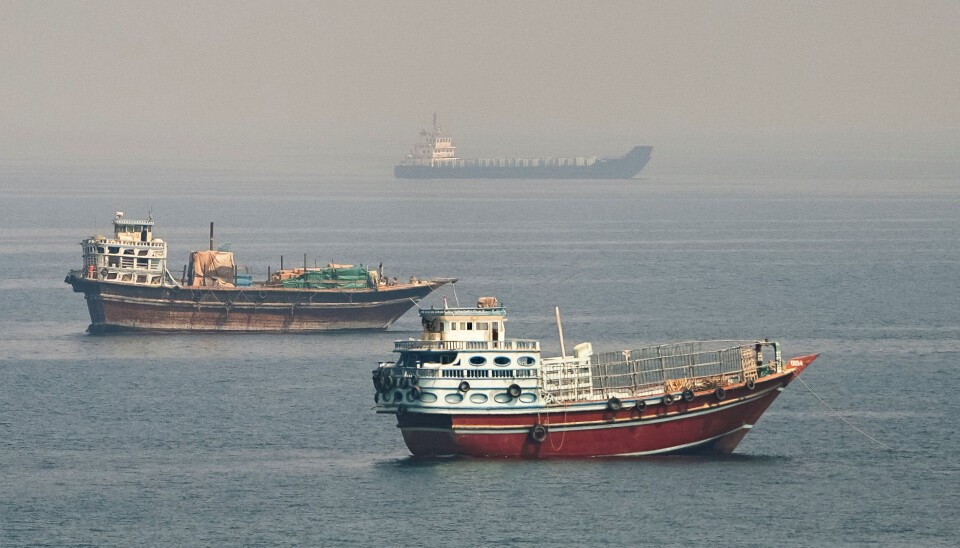
By Friday morning, the presidential office was in full damage-control mode. A Blue House official flatly stated that reports of a decided deployment were "not true," emphasizing that "no decision has been made on the matter." This public rebuke of the media narrative highlights the extreme sensitivity of the issue, coming just six months into a U.S.-led war with Iran that has placed Seoul between its primary security ally and its energy lifeline.
The Reported Options: A Study in Calculated Restraint
The assets reportedly under consideration are notable for their non-combat nature, a choice widely interpreted as a nod to South Korea's diplomatic relationship with Iran. According to the media reports, the leading option is the deployment of a Navy P-8A Poseidon maritime patrol aircraft, a sophisticated surveillance platform capable of monitoring shipping lanes without engaging in direct hostilities.
Alternatively, Seoul could dispatch the Soyang-class fast combat support ship (AOE-II), a 23,000-metric-ton logistics vessel with a crew of approximately 140, potentially carrying a maritime operations helicopter. A third option involves a mine-detection and clearance unit or an explosive ordnance disposal (EOD) team, which would address the threat of Iranian naval mines-a hazard that would threaten commercial shipping through the waterway.
A Ministry of National Defense official told Australia's SBS that "we are making concrete preparations to dispatch naval forces to the Strait of Hormuz." Another ministry official added that the government had been in close discussions with the international community "on ways to make substantive contributions while taking into account factors including military readiness and domestic legal procedures. Details will be disclosed at an appropriate time."
The Blue House Pushback: Managing Expectations
The presidential office's Friday statement was carefully calibrated to neither confirm nor deny the trajectory of the discussions. A presidential official told reporters that "contributions to the Strait of Hormuz could be managed within limits that do not compromise military readiness." The official also clarified that references at a briefing to combat participation, non-combat roles, and search operations were "merely general descriptions of various options."
Critically, the Blue House confirmed that military measures were among the options under review, while pushing back on claims that Seoul had provided no assistance related to the strait, calling such assertions "not true." The official also revealed that President Lee Jae-myung may discuss the options with French President Emmanuel Macron next week-a significant diplomatic signal given France's active role in the U.S.-led coalition efforts.
This careful choreography suggests a government attempting to signal responsiveness to Washington without triggering domestic political costs. A Gallup Korea poll from March found 55 percent of South Koreans opposed sending warships to the Strait of Hormuz, with only 30 percent in support-a formidable obstacle for any administration seeking legislative approval.
The Legal Labyrinth: National Assembly Approval Required
Under South Korea's Act on the Dispatch of Military Forces Abroad, any overseas military deployment requires National Assembly approval. The process would follow deliberations by the National Security Council and a cabinet resolution, meaning the government cannot act unilaterally regardless of media speculation.
If approved, a deployment would mark South Korea's first maritime operation outside the Korean Peninsula since the Cheonghae anti-piracy unit was dispatched to the Gulf of Aden in March 2009. That unit remains deployed off Somalia, providing a precedent for non-combat naval missions. However, a formal troop deployment at U.S. request would be the first in more than two decades-the last being the Roh Moo-hyun administration's decision to send troops to Iraq in 2003.
The Iraq precedent looms large in current deliberations. National Intelligence Service Director Lee Jong-seok, who served as deputy secretary-general of the National Security Council during the Roh administration, defended that deployment in a JoongAng Ilbo interview last year as realistic and necessary for securing U.S. cooperation on the Korean Peninsula. His current position suggests continuity in this strategic thinking within the highest echelons of the intelligence community.
Alliance Management: The Trump Factor
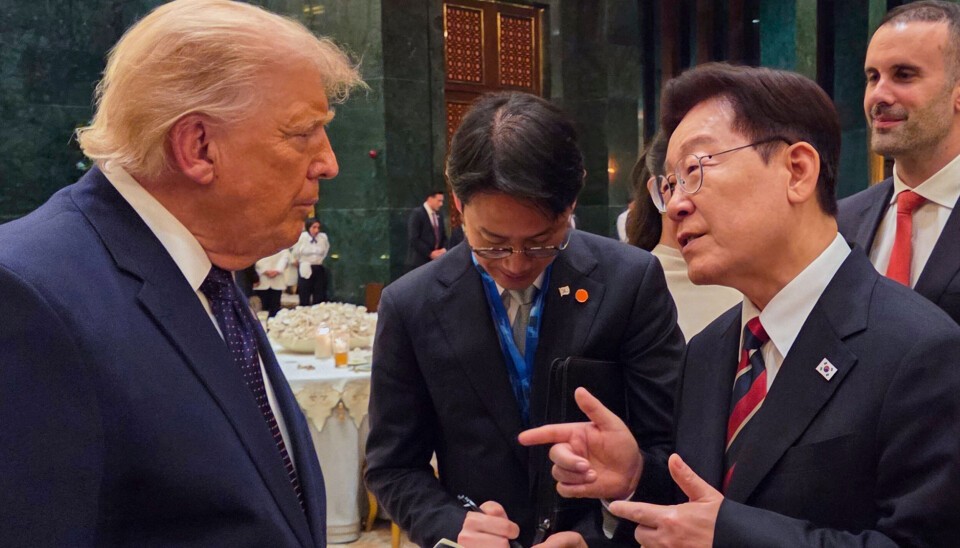
The immediate context for Seoul's deliberations is intense pressure from Washington. U.S. President Donald Trump, who has maintained significant influence over U.S. policy discourse, claimed in an August social media post that he had scaled back U.S.-South Korea joint military exercises in part because Seoul declined to help in the war against Iran. On August 17, on Truth Social, Trump asserted he asked the Korean president whether Korea would join efforts to denuclearize Iran and received the answer "No, thanks"-an account Seoul has disputed.
Trump also accused NATO and South Korea of failing to assist in the Middle East during a Fox News interview, amplifying the narrative that allies are not bearing their fair share of the burden. This pressure comes at a delicate moment for the alliance, which has faced strains over a delayed investment package in the United States and disputes over the government's handling of a Coupang data leak.
A military contribution to the Hormuz effort is widely seen as a potential circuit-breaker-a way for Seoul to demonstrate its commitment to the alliance while managing the optics of supporting a war deeply unpopular with the South Korean public.
Strategic Stakes: Energy Dependence and Regional Stability
Beyond alliance politics, South Korea's national interest in the Strait of Hormuz is existential. Last year, the country relied on the waterway for approximately 61 percent of its crude oil imports and 54 percent of its naphtha imports. Any prolonged disruption would have immediate and severe consequences for the Korean economy, which is heavily dependent on energy imports for its industrial base.
The war context is critical. The United States and Israel launched military action against Iran approximately six months ago, around March 2026. Iran holds a stranglehold on the strait, while Washington is running a counter-blockade of Iranian ports. The fighting is at an impasse, with no clear end in sight. The European Union formally joined U.S.-led sanctions against Iran on September 4, signaling a broadening international consensus against Tehran-but also raising the stakes for any country perceived as insufficiently supportive.
Seoul has been discussing the scale and nature of a potential contribution with the United States, Britain, and France, including ports of call and operational logistics. This multinational coordination suggests the reported deployment is not merely speculative but part of active contingency planning with key coalition partners.
Expert Perspectives: A Medium-Intensity Signal
Security analysts see the reported options as a carefully calibrated response to Washington's demands. Ban Kil-joo, professor of international security studies at the Korea National Diplomatic Academy, characterized the potential deployment as a "medium-intensity" contribution that would signal to Washington that Seoul remains willing to shoulder alliance responsibilities despite recent friction. Crucially, the non-combat nature of the assets would support international efforts without amounting to combat participation against Iran.
Retired Lieutenant General Chun In-bum, a former special forces commander, offered a strategic rationale, arguing that contributing to keeping the Strait of Hormuz open is in South Korea's national interest given its economic dependence on the waterway. Chun emphasized that Korea's "asymmetric" relationship with the United States makes a proactive response preferable to passive resistance.
These expert views underscore the strategic logic behind a deployment, even as domestic politics counsel caution. The reported deployment would support freedom of navigation and could be made conditional on stabilization of the strait, without a specified timeline-language that provides maximum flexibility for Seoul to adjust its posture as the conflict evolves.
Conclusion: A Decision Deferred, Not Avoided
The gap between Thursday's media reports and Friday's official denial may narrow in the coming weeks as President Lee prepares for his meeting with President Macron and as the National Security Council continues its deliberations. The legal requirement for National Assembly approval ensures a public debate that will test the government's ability to manage both its domestic constituency and its alliance obligations.
What remains clear is that South Korea cannot avoid the Hormuz question. Its energy security, its alliance credibility, and its regional standing all hinge on how it navigates this crisis. The reported options-surveillance aircraft, logistics vessels, and mine-clearing units-represent a middle path between inaction and combat participation. Whether that path proves politically viable will depend on factors beyond Seoul's control, including the trajectory of the war itself and the intensity of Washington's demands.
For now, the Blue House's cautious response reflects a government acutely aware that in the Strait of Hormuz, every option carries strategic consequences-and every word carries political weight.
By Prof. David Park, Staff Writer
This article was produced with AI-assisted research and editorial support. Reporting is based on sources cited in the article.
What's Your Reaction?
 Like
0
Like
0
 Dislike
0
Dislike
0
 Love
0
Love
0
 Funny
0
Funny
0
 Wow
0
Wow
0
 Sad
0
Sad
0
 Angry
0
Angry
0

East Asia/Technology Correspondent at Global1.News. Seoul-based voice covering Korean politics, technology, business, and culture. Analyzes how technology and geopolitics intersect across East Asia.













Comments (0)