
South Korea Names Former Prosecutor to Lead New Serious Crimes Investigation Agency
South Korea moved a step closer to its most significant criminal justice overhaul in decades today, as Interior and Safety Minister Yun Ho-jung formally nominated former senior prosecutor Kim Ji-yong to lead the new Serious Crimes Investigation Agency (SCIA).
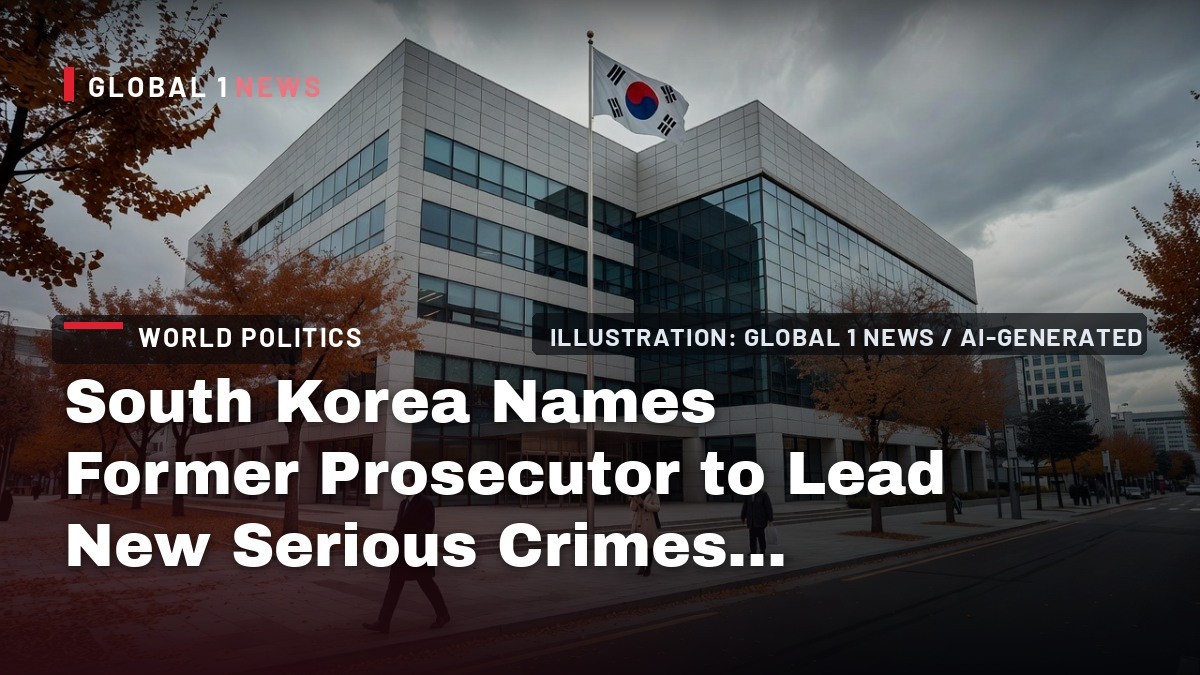
South Korea moved a step closer to its most significant criminal justice overhaul in decades today, as Interior and Safety Minister Yun Ho-jung formally nominated former senior prosecutor Kim Ji-yong to lead the new Serious Crimes Investigation Agency (SCIA). The agency, set to launch on October 2, is designed to strip the prosecution service of long-held investigative powers and centralize major crime probes under a single independent body. Kim’s nomination now heads to President Lee Jae-myung for designation, followed by a parliamentary confirmation hearing that will test whether a career prosecutor can credibly lead the very institution built to check prosecutorial power.
What Is the Serious Crimes Investigation Agency?
The SCIA — known in Korean as “Joong-su-cheong,” or the Major Crimes Investigation Agency — is a new government body that will take over responsibility for investigating serious crimes that prosecutors previously handled themselves. It is the centerpiece of a sweeping reform that removes prosecutors’ independent and supplementary investigative powers, a change that has been debated and fought over for years.
The agency will not be a general police force. It is a specialized unit with jurisdiction over seven specific categories: corruption, economic crimes, defense acquisition, drug offenses, crimes against state security, cybercrimes, and offenses involving distortion of the law. It is scheduled to begin operations on October 2 — less than four weeks from now — and must stand up its leadership, staffing, and procedures quickly to avoid the investigative gaps officials have already flagged as a risk during the transition.
Who Is Kim Ji-yong?
Kim is no newcomer to criminal justice. He is a former chief of the criminal affairs department at the Supreme Prosecutors’ Office, the country’s top prosecutorial body, and spent decades moving through its ranks: prosecutor at the Daejeon District Prosecutors’ Office, head of the special investigation division at the Daegu District Prosecutors’ Office, chief of the second trial division at the Seoul Central District Prosecutors’ Office, head of the first inspection division at the Supreme Prosecutors’ Office, chief of the Chuncheon District Prosecutors’ Office, and deputy chief of the Gwangju High Prosecutors’ Office. Most recently, he has been managing partner at the law firm Apex.
The nomination itself followed an unusually open process: a special recommendation committee vetted 11 candidates put forward through public calls before narrowing the field to four finalists — Kim and three others — from which the interior minister made his choice. That mix of public service and private practice gives Kim a broad view of the system, and it also frames the central question of this nomination: Can a man who spent his career inside the prosecution service be trusted to lead an agency whose very purpose is to curb prosecutorial power?
Why the Pick Matters
The SCIA grew out of long-running public anger over prosecutorial abuses of power. For decades, South Korea’s prosecution service wielded enormous authority — not just to charge and try cases, but to investigate them independently, often with limited outside oversight. Critics have long argued that prosecutors used those powers to target political opponents and protect institutional interests rather than serve justice. The reform movement behind the SCIA rests on a simple premise: separate the power to investigate from the power to prosecute.
Putting a former prosecutor in charge is, on its face, a paradox — like asking a fox to guard the henhouse, except the henhouse was built specifically because the fox kept eating the chickens. But there is another way to read it. The agency needs a leader who understands the system from the inside, who knows how prosecutorial power has been wielded and where its vulnerabilities lie. Kim’s defenders would argue that his familiarity with the machinery makes him uniquely qualified to dismantle its worst excesses from within.
That argument will face serious scrutiny in the confirmation hearing, where lawmakers will press Kim on his record, his views on reform, and how he plans to build a culture that prioritizes human rights and due process over conviction rates.
What Happens Next
The process is not complete. Today’s announcement by Minister Yun is the first formal step. The recommendation goes to President Lee Jae-myung, who designates the nominee; Kim then faces a parliamentary confirmation hearing, and the president makes the final appointment. If appointed, he will serve a two-year term.
Under the new structure, prosecutors will focus on prosecution and trial preparation while the SCIA handles investigative work in the most serious categories — a separation meant to create checks and balances so that no single institution can dominate the criminal justice process. The hearing is not a formality. In South Korea, the final appointment for posts like this rests with the president, but a contentious hearing can create intense political pressure and damage a nominee’s credibility before the appointment is made. With the October 2 launch date fixed, the clock is tight — and the first months of the agency’s life will be shaped by whoever is in charge when the doors open.
What the Minister Said
At today’s briefing, Minister Yun laid out three priorities. First, the SCIA must embed the shift to a criminal justice system that separates investigation from prosecution — the philosophical core of the reform, and one that will require cultural change, not just new organizational charts. Second, the new commissioner must dispel concerns about investigative gaps in the early stages of the launch; with cases in transition, evidence to be transferred, and procedures still being built, the public will not be patient with delays in high-profile corruption or national-security cases.
Third, the minister said the agency must make the protection of citizens’ human rights its top priority — a pointed statement given the history that produced the reform. Yun described Kim as an investigative and legal expert with ample experience across investigations, inspections, and trials, and credited him with managing major investigative organizations stably.
The Seven Categories, Briefly
The jurisdiction is broad but not unlimited, and the list skews toward the most politically sensitive and socially damaging crimes. Corruption leads the way, given the role scandals have played in South Korean politics for decades. Economic crimes — large-scale financial fraud and embezzlement — are central, as are defense acquisition offenses, historically a magnet for kickbacks and collusion between contractors and military officials.
Drug offenses reflect a country with strict drug laws that has nonetheless seen rising drug-related arrests in recent years. Crimes against state security cover espionage and other threats to the constitutional order, a category that carries particular weight given tensions with North Korea. Cybercrimes respond to the growing sophistication of digital threats. And the final category — offenses involving distortion of the law — is perhaps the most symbolically important: it targets legal professionals who abuse their positions to manipulate legal outcomes, a direct acknowledgment that the justice system itself has been a source of injustice and that the SCIA will be expected to hold its own predecessors and peers accountable.
What to Watch at the Confirmation Hearing
The hearing, expected in the coming weeks, will be the first real test of Kim’s viability. Watch how he answers questions about his prosecutorial past — the cases he handled, the investigations he supervised, and whether he ever tolerated the kind of abuses the SCIA is designed to prevent.
Watch how he addresses independence. The agency must be independent not just from the prosecution service but from political influence as well, and Kim will need to convince lawmakers he will not take direction from the president or the ruling party that nominated him. And watch his plans for staffing and culture: how he will recruit investigators committed to the mission, create internal rules that reward integrity, and handle cases involving former colleagues — a conflict-of-interest minefield that will demand clear recusal rules.
The politics matter too. The ruling party will want confirmation wrapped up quickly so the agency launches on schedule; the opposition may use the hearing to paint Kim as a symbol of the old guard and question whether the reform is sincere. The hearing could easily become a proxy battle over the direction of South Korea’s criminal justice system.
The Stakes
This is not a routine appointment. The SCIA represents a fundamental shift in how South Korea handles serious crime, and its success or failure will help determine whether the country can build a justice system that is fair, accountable, and free from political manipulation. If the agency succeeds, it could restore public trust in the rule of law and become a model for other democracies wrestling with prosecutorial overreach. If it falters — through incompetence, political interference, or institutional capture — the reform will be remembered as a sham with a new name.
Kim Ji-yong’s nomination is the first test of whether the SCIA can live up to its promise. He has the experience and the legal expertise. Whether he has the independence and the will remains an open question — one the confirmation hearing will begin to answer, and the agency’s first months will finish. The launch date is October 2, and South Korea is watching.
By Jessica Ali, Staff Writer
This article was produced with AI-assisted research and editorial support. Sources: The Korea Times, Seoul Economic Daily (English edition), Yonhap, KBS, and MBC.
What's Your Reaction?
 Like
0
Like
0
 Dislike
0
Dislike
0
 Love
0
Love
0
 Funny
0
Funny
0
 Wow
0
Wow
0
 Sad
0
Sad
0
 Angry
0
Angry
0

Editor-in-Chief at Global1.News. Atlanta-based journalist who cuts through the BS and tells it like it is. Lead anchor, host, and the voice you hear when the spin stops and the truth starts.














Comments (0)