
Can South Korea’s $880 Billion AI Ambition Cement Its Status as a High-Tech Powerhouse?
For all the global attention fixed on the artificial intelligence rivalry between Washington and Beijing, it is South Korea that is currently executing one of the most aggressive and capital-intensive AI buildouts on the planet. In June, President Lee Jae-myung announced a ten-year plan to deploy at least 1,350 trillion won—approximately $880 billion—into semiconductors, AI data centers, and physical AI and robotics. The initiative, branded as the "Three Mega Projects," is designed to leverage t
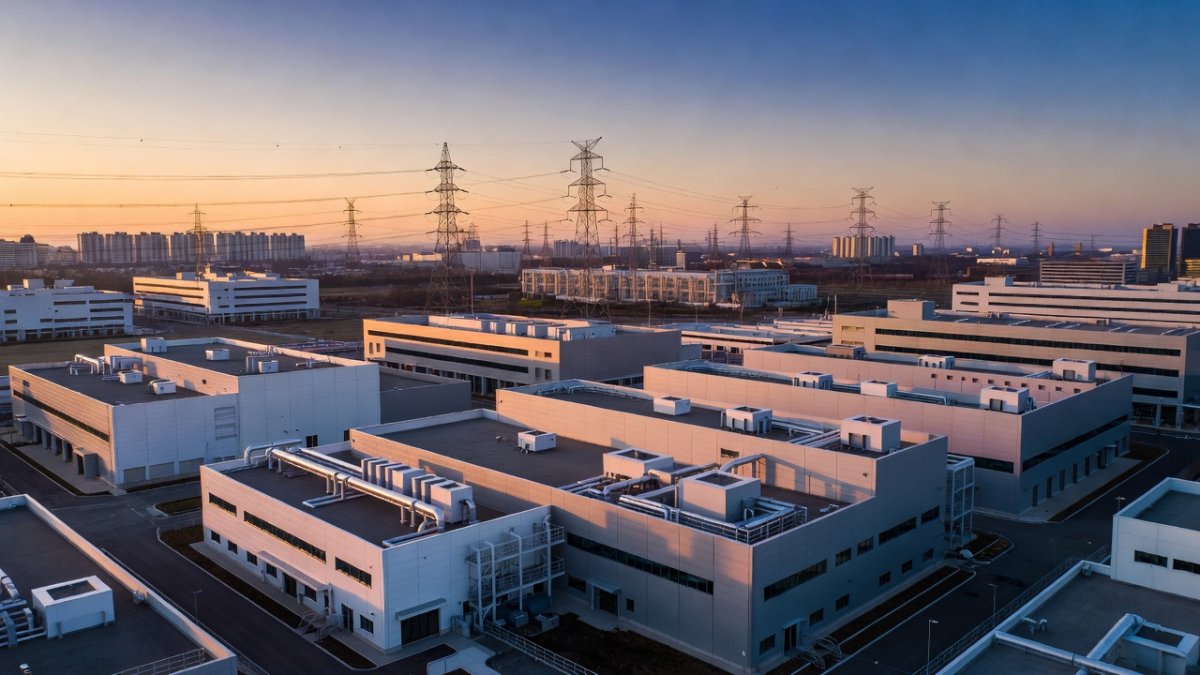
For all the global attention fixed on the artificial intelligence rivalry between Washington and Beijing, it is South Korea that is currently executing one of the most aggressive and capital-intensive AI buildouts on the planet. In June, President Lee Jae-myung announced a ten-year plan to deploy at least 1,350 trillion won—approximately $880 billion—into semiconductors, AI data centers, and physical AI and robotics. The initiative, branded as the "Three Mega Projects," is designed to leverage the nation’s dominant position in memory chip manufacturing into a broader strategic foothold in the emerging AI economy. While the scale of the investment is unprecedented, the success of the endeavor hinges on resolving critical bottlenecks in energy supply, software capability, and regional economic integration.
The Scale and Structure of the Three Mega Projects
The financial commitment outlined by the Lee administration is staggering by any comparative measure. At roughly 5 percent of South Korea’s entire 2024 economic output, the $880 billion figure is more than double the total allocation of the US CHIPS Act, which directed approximately $52 billion to domestic semiconductor manufacturing. It also dwarfs the European Union’s Chips Act commitment of 43 billion euros and Japan’s semiconductor subsidies, which have totaled around $13 billion. No single country has committed this level of public-private capital to semiconductor and AI infrastructure in history.
The plan is organized around a "triple axis" of semiconductors, data centers, and robotics. Samsung Electronics and SK Hynix—the world’s two largest memory chipmakers—will invest around 800 trillion won ($518 billion), together with their suppliers, to construct two new fabrication sites each in the country’s southwest. Much of this spending is concentrated in the Honam region, with the city of Gwangju and South Jeolla Province committing 520 trillion won ($336.7 billion) of their own. The data center pillar earmarks roughly $550 billion, with a target of 8.4 gigawatts of capacity by 2029—a figure that, for context, exceeds the entire US AI data center build-out over the last two years, which sits at approximately 20 gigawatts. The robotics component aims to lift Korea’s share of the global humanoid robot market from about 1 percent today to 20 percent by 2028.
Strategic Rationale and Regional Rebalancing
President Lee’s framing of the initiative is as much about domestic political economy as it is about technological competitiveness. In a televised event alongside the leaders of Samsung and SK Hynix, Lee stated, "We must secure the core elements of AI faster than any other country. Semiconductors, physical AI, and AI data centers are the triple axis for a great leap forward." He further characterized the project as a matter of "survival" for the country, explicitly linking the investment to addressing the long-standing decline of rural areas caused by the concentration of industries in the Seoul metropolitan area. "Now, we must break this long-standing cycle of discrimination and marginalisation—not only for the sake of justice and equity, but also to ensure sustainable and inclusive growth," he said.
This regional dimension is a distinctive feature of the Korean approach. Unlike the US CHIPS Act, which has faced criticism for concentrating benefits in a handful of states, the Korean plan deliberately channels capital toward the Honam region, a historically agricultural area that has been politically marginalized. The strategic logic is twofold: it addresses demographic decline and regional inequality while simultaneously avoiding the grid and real estate constraints that plague the Seoul capital area, where more than 70 percent of the nation’s data centers are currently located.
Market Dominance and the HBM Monopoly
South Korea’s AI ambitions are anchored in an extraordinary run of market success. SK Hynix and Samsung Electronics currently account for approximately 51 percent of the total market capitalization of the benchmark KOSPI index. SK Hynix’s five-year growth spurt stands at precisely 1,250 percent, while Samsung has posted a 205 percent rally over the same period. In May, SK Hynix’s stock market valuation topped $1 trillion, driven by the boom in AI data centers and its near-monopoly position in High Bandwidth Memory (HBM) chips.
HBM is the critical hardware component for training frontier AI models on Nvidia accelerators. Without this memory, the software booms in both the United States and China would be unable to function. SK Hynix is in a multi-year partnership with Nvidia to co-develop next-generation memory for AI supercomputers, cementing a symbiotic relationship that gives South Korea outsized leverage in the global AI supply chain. Notably, South Korea is not attempting to compete with Taiwan’s TSMC on advanced logic chips; rather, it is making a calculated bet that memory—not logic—will become the defining constraint in AI infrastructure.
Software Gaps and the Sovereign AI Dilemma
Despite its hardware supremacy, South Korea faces a significant and widening gap in software and large-language models (LLMs). A national competition to build proprietary LLMs launched last year risked falling into a farce when multiple finalists relied heavily on foreign open-source code for their models. This dependency is a strategic vulnerability, particularly as the United States and China race to deliver more powerful and scalable AI solutions to the market.
The government’s response has been to pursue a policy of "total independence" within its own borders, aiming to create sovereign AI models that do not rely on external infrastructure. While this approach could result in a slower buildout, the support of a high-quality infrastructure strategy may help create a landscape that enhances the capabilities of domestic models. The challenge, however, is that sovereign AI development risks isolating Korean researchers from the global open-source ecosystem that has driven much of the recent progress in the field. The tension between self-sufficiency and global integration will be a defining policy question for the Lee administration in the coming years.
The Power Bottleneck
The most immediate and intractable challenge facing the Three Mega Projects is not competition from China or the United States, but the physics of electricity consumption. Massive AI data centers consume far more power than conventional facilities. Industry estimates indicate that a server equipped with eight Nvidia B200 GPUs can require about 20 kilowatts of power, including cooling. A full rack would need around 80 kilowatts, compared with the 3 to 5 kilowatts typically required in traditional data centers.
Given that more than 70 percent of South Korea’s data centers are concentrated in and around Seoul, the prospect of grid overloads, transmission bottlenecks, and power supply stability problems could be highly damaging to the region, according to Park Jong-bae, a professor of electrical and electronics engineering at Konkuk University. The government has introduced the Distributed Energy Act and grid impact assessments to encourage AI data center development away from the capital, which could help foster faster infrastructure growth. However, the sheer scale of the 8.4 gigawatt target will require substantial upgrades to the national grid and a diversified energy portfolio that includes nuclear, renewable, and potentially new gas-fired capacity.
AI as an Enabler of Its Own Buildout
There is a symbiotic dimension to this buildout that is often overlooked. AI is increasingly being deployed to optimize the construction and supply chain logistics required to build data centers at scale. AI systems can monitor weather conditions, logistics, and geopolitical challenges to ensure that the right construction materials are readily available, reducing project delays and cost overruns. This self-reinforcing dynamic—where AI accelerates the construction of the infrastructure needed to run AI—could give South Korea a compounding advantage over competitors that are slower to adopt these tools.
Furthermore, the Bank of America identified South Korea last month as the strongest overall AI contender over both the short and long term outside of the United States and China. The brokerage highlighted South Korea’s strength in semiconductor manufacturing, its rapidly expanding AI adoption program, and supportive government policies as key catalysts for further growth. This assessment suggests that the transition from AI deployment to tangible long-term productivity gains is not merely aspirational but is already underway.
Prospects and Strategic Implications
South Korea’s $880 billion bet represents a calculated wager that memory, not logic, will be the defining constraint in the AI era. The nation’s monopoly on HBM production gives it a unique lever in the global supply chain, and the scale of the Three Mega Projects signals a commitment to converting that leverage into a durable structural advantage. However, the success of the initiative is contingent on resolving the power bottleneck, bridging the software gap, and managing the delicate balance between sovereign AI ambitions and global integration.
For investors and policymakers alike, South Korea is now one of the most consequential arenas in the global AI race. The runaway success of SK Hynix and Samsung has already transformed the KOSPI into a proxy for AI hardware demand, and the government’s commitment to regional rebalancing adds a distinctive political economy dimension to the technological buildout. Whether the plan can deliver on its promise of 8.4 gigawatts of data center capacity and a 20 percent share of the humanoid robot market by 2028 remains to be seen, but the direction of travel is unmistakable. South Korea is no longer content to be a supplier to the AI revolution; it intends to be a principal architect.
This article was produced with AI-assisted research and editorial support. Sources: The Diplomat (Dmytro Spilka, August 13, 2026); BBC News; Bloomberg; Future Technology; BitsMinds.
By Prof. David Park, Staff WriterWhat's Your Reaction?
 Like
0
Like
0
 Dislike
0
Dislike
0
 Love
0
Love
0
 Funny
0
Funny
0
 Wow
0
Wow
0
 Sad
0
Sad
0
 Angry
0
Angry
0

East Asia/Technology Correspondent at Global1.News. Seoul-based voice covering Korean politics, technology, business, and culture. Analyzes how technology and geopolitics intersect across East Asia.















Comments (0)