
Israel Katz Inaugurates Illegal Settlement in Jenin as Demolitions Continue
In a recent Middle East Eye report, Israeli Defence Minister Israel Katz was shown inaugurating an illegal settlement in Jenin on Thursday, just hours after Israeli soldiers demolished Palestinian-owned shops and properties in the same governorate.
In a recent Middle East Eye report, Israeli Defence Minister Israel Katz was shown inaugurating an illegal settlement in Jenin on Thursday, just hours after Israeli soldiers demolished Palestinian-owned shops and properties in the same governorate. The video, published on August 14, captures the stark duality of a single day in the occupied West Bank: the ceremonial laying of foundations for colonial expansion alongside the wreckage of Palestinian livelihoods. The inauguration marks a significant escalation in Israel's settlement enterprise, one that threatens to redraw the map of the northern West Bank and extinguish any remaining hope for a contiguous Palestinian state.
Israel Katz Inaugurates Illegal Settlement in Jenin as Demolitions Continue Across Governorate
Jenin, Occupied West Bank – 14 August 2026 — Israeli Defence Minister Israel Katz stood before a cluster of prefabricated structures on a hilltop east of Jenin city on Thursday, flanked by far-right politicians and settlement leaders, and declared the re-establishment of the Ganim settlement. The ceremony, which took place on Palestinian-owned land, came just hours after Israeli occupation forces demolished Palestinian shops and properties in the same governorate, a pattern that has become all too familiar to residents here. The timing was not coincidental; it was a deliberate message that the Israeli government intends to cement its presence in the northern West Bank, regardless of international law or Palestinian opposition.

Inauguration Amid Rubble: A Day of Ceremony and Destruction
The inauguration ceremony on Thursday was attended by a who's who of Israel's settlement movement, including Communications Minister Shlomo Karhi, members of the Knesset, and Yossi Dagan, the head of the so-called Samaria Regional Council. For the assembled officials, the event was a triumph—a reversal of what they view as the historic mistake of Israel's 2005 disengagement from the northern West Bank. For the Palestinian residents of Jenin governorate, however, the day was one of loss and foreboding.
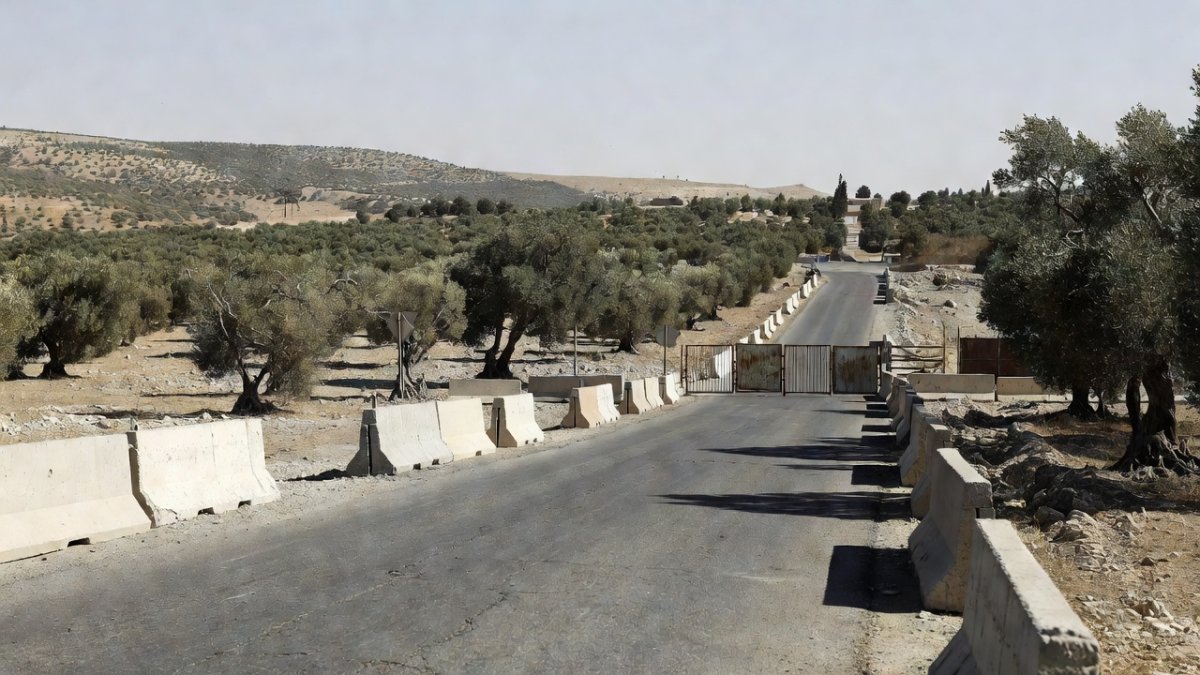
According to WAFA, the official Palestinian news agency, Israeli occupation forces closed entrances and secondary roads along the main road from Haddad Roundabout to the Al-Jalama military checkpoint, citing security for the colonists and officials attending the ceremony. The closures effectively paralyzed movement for thousands of Palestinians, cutting off communities from one another and from essential services. The sight of military vehicles and armed personnel along the route was a grim reminder of the occupation's pervasive presence in daily life.
The demolitions that preceded the ceremony were part of a broader campaign that has seen Israeli forces destroy 27 Palestinian structures in Jenin governorate over the past week. These structures included homes, shops, and agricultural facilities, many of which were built without Israeli permits—permits that Palestinians say are nearly impossible to obtain. The demolitions have displaced families and destroyed livelihoods, adding to the already dire humanitarian situation in the governorate, which has been a focal point of Israeli military operations over the past year.
Ganim's Return: Reversing the 2005 Disengagement
The re-establishment of Ganim is not a new development but rather the resurrection of a settlement that was evacuated 21 years ago. As part of Israel's 2005 disengagement plan, which also saw the withdrawal from the Gaza Strip, four settlements in the northern West Bank were evacuated: Ganim, Kadim, Homesh, and Sa-Nur. The evacuation was hailed at the time as a step toward peace, but it has since been systematically undone by successive Israeli governments.
In March 2023, the Knesset repealed provisions of a law that had prohibited settlers from entering the four evacuated settlements, paving the way for their return. The first to be re-established was Homesh, where a religious school was rebuilt. Now, Ganim has followed, and Israeli media report that the settlement is part of a plan to establish 18 more settlements in the northern West Bank. The return of settlers has been accompanied by attacks on Palestinian residents and a range of military measures, including the establishment of military posts, road closures, and restrictions on farmers' movement to and from their lands.
For Tareq Ighbariyeh, the settlement affairs official in Jenin governorate, the colonists' return to Ganim represents a dangerous development that would redraw the geopolitical map of the governorate and impose new facts on the ground. In an interview with WAFA, Ighbariyeh warned that the re-establishment would "fragment the governorate," turning the area into something resembling a military barracks. He said the move would increase attacks and confrontations and threaten the geographical contiguity between Palestinian communities. "This reflects the growing influence of settlers and settlement councils over the extremist Israeli government," Ighbariyeh said, "and it undermines the possibility of a geographically contiguous Palestinian state."
Human Impact: Jenin Communities Under Siege
The human cost of these developments is being borne by the residents of Jenin governorate, a region that has long been a symbol of Palestinian resistance and resilience. The city of Jenin and its surrounding villages have been subjected to repeated Israeli military incursions, which have killed dozens of Palestinians and destroyed critical infrastructure. The re-establishment of Ganim, situated on a strategic hilltop overlooking the city, threatens to further isolate Palestinian communities and restrict their access to agricultural land.
Farmers in the area have already seen their movement severely curtailed by the road closures and military checkpoints that have accompanied the settlers' return. Many have been unable to reach their olive groves and fields, which are the backbone of the local economy. The demolitions of the past week have compounded the hardship, leaving families without shelter and merchants without shops. The psychological toll is equally severe, as residents live in constant fear of further demolitions, land seizures, and settler violence.
The situation is particularly acute in the villages surrounding Ganim, where residents report that Israeli forces have established new military posts and restricted movement between communities. The closures have made it difficult for students to reach schools, patients to access medical care, and workers to reach their jobs. The cumulative effect is a slow strangulation of daily life, a deliberate policy aimed at making life so unbearable that Palestinians will leave their land.
Smotrich's Hand: The Far-Right Agenda Behind the Settlements
The re-establishment of Ganim is inextricably linked to the rise of Bezalel Smotrich, Israel's Finance Minister and a leading figure in the religious Zionist movement. Smotrich, who has long advocated for the annexation of the West Bank, has been given unprecedented authority over the Civil Administration, the Israeli military body that governs the occupied territory. This transfer of powers has effectively placed the day-to-day management of the West Bank in the hands of a man who has called for the "erasure" of Palestinian villages and the establishment of Israeli sovereignty over the entire territory.
Smotrich has been explicit about his intentions regarding Ganim and Kadim. He has said that the demolitions in these areas are intended to pave the way for the return of settlements there, a statement that lays bare the connection between the destruction of Palestinian property and the expansion of Israeli colonization. The Israeli government approved in late 2025 the re-establishment of Ganim and Kadim as part of a decision involving the establishment or reorganization of 19 settlements in the occupied West Bank. This decision, which was pushed through by Smotrich and his allies, represents one of the most significant expansions of the settlement enterprise in recent years.
The move coincides with the ongoing transfer of powers of the Civil Administration to Smotrich, a process that has accelerated Israel's de facto annexation of the West Bank. By placing settlement expansion under the authority of a far-right minister with a clear ideological agenda, the Israeli government has signaled that it is no longer interested in even the pretense of a negotiated peace. The two-state solution, already on life support, is being systematically dismantled in favor of a one-state reality in which Palestinians are denied equal rights and subjected to permanent military occupation.
International Law: A Clear Violation, A Weak Response
The re-establishment of Ganim is a flagrant violation of international law. Under the Fourth Geneva Convention, which governs the conduct of occupying powers, Israel is prohibited from transferring parts of its own civilian population into the territory it occupies. The International Court of Justice, in its landmark advisory opinion of July 2024, declared Israel's occupation and settlement enterprise unlawful and called for its dismantlement. The UN Security Council, in Resolution 2334, has repeatedly affirmed that settlements constitute a "flagrant violation" of international law and a major obstacle to peace.
Despite these clear legal pronouncements, the international community has done little to hold Israel accountable. The United States, Israel's most powerful ally, has consistently shielded it from UN Security Council action, while European nations have issued statements of concern but have failed to impose meaningful sanctions. The result is a climate of impunity in which Israeli governments feel free to expand settlements at will, secure in the knowledge that there will be no serious consequences.
The ICJ's advisory opinion, while legally significant, is non-binding, and Israel has dismissed it as biased and irrelevant. The court's finding that the occupation is unlawful has been echoed by human rights organizations, including Amnesty International and Human Rights Watch, which have documented the systematic discrimination and oppression that Palestinians face. Yet, without enforcement mechanisms, these legal pronouncements remain hollow words, offering little comfort to the families whose homes are demolished and whose land is seized.
Analysis: The End of the Two-State Solution
The re-establishment of Ganim, coming on the heels of the government's approval of 19 settlements, marks a decisive shift in Israel's approach to the West Bank. The settlement enterprise is no longer a matter of isolated outposts and illegal construction; it is now a coordinated, state-sponsored project aimed at making the occupation permanent. The northern West Bank, in particular, is being targeted for colonization, with the goal of creating a contiguous bloc of settlements that would sever the region from the rest of the Palestinian territories.
For Palestinians, the implications are dire. The fragmentation of the West Bank into isolated enclaves, separated by settlements, military zones, and checkpoints, makes the creation of a viable, contiguous Palestinian state virtually impossible. The re-establishment of Ganim is not just a local issue; it is a strategic move that threatens the very possibility of Palestinian self-determination. As Ighbariyeh noted, the move reflects the growing influence of settlers and settlement councils over the Israeli government, an influence that has transformed the occupation from a temporary military arrangement into a permanent system of control and dispossession.
The international community's response has been characterized by a combination of condemnation and inaction. While the UN, the EU, and individual states have issued statements criticizing the settlement expansion, they have failed to take concrete steps to deter Israel. The lack of consequences has emboldened the Israeli government, which continues to pursue its annexationist agenda with impunity. The result is a slow-motion catastrophe for the Palestinian people, who are being systematically stripped of their land, their homes, and their future.
Looking Ahead: A Future of Resistance and Uncertainty
As the dust settles on the inauguration ceremony and the rubble from the demolitions is cleared, the people of Jenin governorate are left to contemplate an increasingly uncertain future. The re-establishment of Ganim is a stark reminder that the occupation is not static; it is constantly expanding, constantly encroaching on Palestinian land and life. The settlers who have returned to Ganim are not just building homes; they are building a reality in which Palestinians are confined to ever-shrinking enclaves, denied the most basic rights and freedoms.
Yet, the Palestinian response has been one of resilience and resistance. Local communities have organized protests, legal challenges, and acts of civil disobedience in an effort to resist the settlement expansion. The international solidarity movement has also grown, with activists and organizations around the world calling for boycotts, divestment, and sanctions against Israel. Whether these efforts will be enough to halt the settlement enterprise remains to be seen, but for the people of Jenin, there is no choice but to resist.
The coming months will be critical. The Israeli government has signaled its intention to continue expanding settlements in the northern West Bank, and the transfer of powers to Smotrich suggests that this expansion will be pursued with even greater vigor. For Palestinians, the stakes could not be higher. The re-establishment of Ganim is not just a political development; it is a lived reality that will shape the lives of generations to come. The world is watching, but the question remains: will it act?
By Fatima Al-Rashid, Staff Writer
This article was produced with AI-assisted research and editorial support. Reporting is based on sources cited in the article.
What's Your Reaction?
 Like
0
Like
0
 Dislike
0
Dislike
0
 Love
0
Love
0
 Funny
0
Funny
0
 Wow
0
Wow
0
 Sad
0
Sad
0
 Angry
0
Angry
0

Gulf/MENA Correspondent at Global1.News. Based in Doha, covering Gulf politics, energy markets, diplomacy, and development across the Middle East and North Africa. Tracks the economic transformation of the Gulf states.













Comments (0)