
Türkiye plans to more than double power capacity, eyes $500B investment
Turkey’s new “National Energy 2040” roadmap, unveiled by Energy and Natural Resources Minister Alparslan Bayraktar, marks a decisive pivot toward an electrified, low‑carbon future.
Turkey’s new “National Energy 2040” roadmap, unveiled by Energy and Natural Resources Minister Alparslan Bayraktar, marks a decisive pivot toward an electrified, low‑carbon future. The plan, presented to Parliament’s Planning and Budget Committee, seeks to more than double the country’s installed electricity capacity—from 128 gigawatts (GW) today to 281 GW by 2040—while channeling roughly $500 billion in public and private investment over the next fourteen years. In a region where energy security intertwines with geopolitical rivalry, the scale of Turkey’s ambition signals both an economic transformation and a strategic recalibration of its role in the Middle‑East energy landscape.
Electrification at the Core of Turkey’s Energy Architecture
Bayraktar framed the 2040 agenda around a dramatic rise in electricity’s share of end‑use demand. The government intends to lift the overall electrification rate to 36%, with sectoral shifts that would see electricity’s contribution to transport climb from a marginal 1 % to 24 %, while industry, residential and services sectors would each see modest to substantial increases. By 2040, electricity would account for 33 % of industrial consumption, 30 % of residential use, and 65 % of services and agriculture, up from current levels of 30 %, 21 % and 45 % respectively.
Correspondingly, total electricity demand is projected to surge 86 % to 680 billion kilowatt‑hours (kWh). Meeting this demand would require bringing online capacity equivalent to 1.6 times the additions made over the past twenty‑four years, underscoring the urgency of the investment drive.
Massive Capital Inflows and the Role of Private Finance
The $500 billion target for the National Energy 2040 program blends state funding with private sector participation. Of the total, Bayraktar highlighted $190 billion earmarked for new generation capacity, while $36 billion is slated for transmission upgrades and $80 billion for distribution network expansion, including smart‑meter roll‑outs. The distribution sector alone has already seen spending rise by more than 50 % to almost TL 1.26 trillion for the 2026‑2030 period, reflecting the government’s commitment to reducing technical losses, which have fallen from 21 % to 8 %—a reduction he valued at roughly $3 billion annually.
Private capital is expected to flow through the YEKA renewable‑energy auction mechanism, which has already allocated 6,085 megawatts (MW) since 2024 and collected $752 million in contribution fees. The state plans to auction at least 2,000 MW each year, with an offshore wind tranche slated for the first half of 2027, aiming for a cumulative 6 GW of offshore capacity by 2040.
Renewables as the Backbone of New Capacity
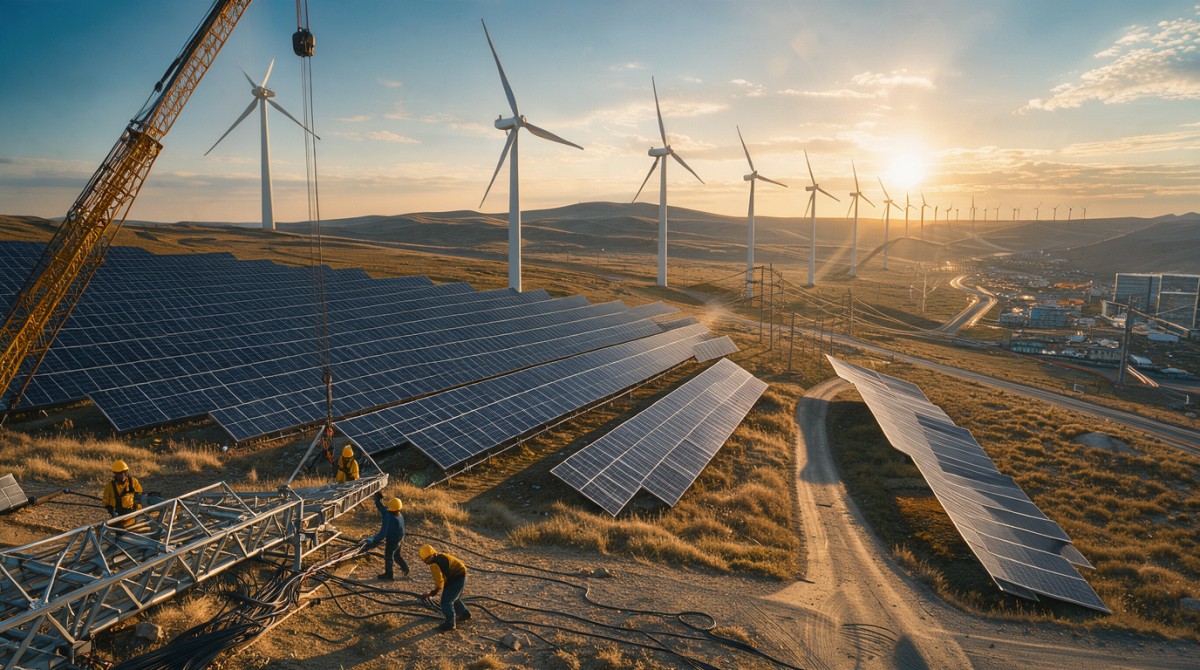
Turkey’s renewable ambition is central to the plan’s low‑carbon narrative. The government intends to quadruple solar and wind capacity—from roughly 45 GW today to 175 GW by 2040—requiring an estimated $100 billion in investment. This would lift the share of renewables in total installed capacity from 63 % to 77 %. Domestic content already underpins much of the sector, with solar panel localisation at 91 % and wind turbine localisation at 65 %.
In addition to utility‑scale projects, Bayraktar announced measures to stimulate on‑site generation, including automatic grid connection for rooftop and other installations up to 1 MW. The policy aims to democratise renewable uptake and reduce reliance on large‑scale transmission corridors.
Transmission, Grid Modernisation and Flexibility
To accommodate the surge in generation, Turkey will expand its high‑voltage network from 77,000 km to 112,000 km and increase transformer capacity from 241,000 to 316,000 megavolt‑amperes (MVA). Notably, the plan introduces 10,000 km of high‑voltage direct current (HVDC) lines—a first for the country—enhancing long‑distance power transfer efficiency.
Flexibility measures receive $28 billion, targeting battery storage, pumped‑storage hydropower, cross‑border interconnections and demand‑side management. The government envisions 20 million electric vehicles (EVs) on Turkish roads by 2040, supported by at least 1.5 million charging points, underscoring the integration of transport electrification with grid flexibility.
Regional Interconnection and the “Green Energy Corridor”
Bayraktar highlighted a strategic push to deepen electricity ties with neighbours. Turkey aims to quadruple its power interconnection capacity to 15 GW, launching a “Green Energy Corridor” with Georgia, Azerbaijan and Bulgaria—a project he likened to the Trans‑Anatolian Natural Gas Pipeline (TANAP). The corridor is expected to facilitate the export of Turkish renewable power and the import of complementary generation, reinforcing Ankara’s role as a regional energy hub.
A bilateral solar venture with Saudi Arabia, featuring a 2,000‑MW project at the lowest electricity purchase price ever offered in Turkey, illustrates the country’s willingness to leverage its growing renewable base for diplomatic outreach and market diversification.
Nuclear Power as the Cornerstone of Decarbonisation
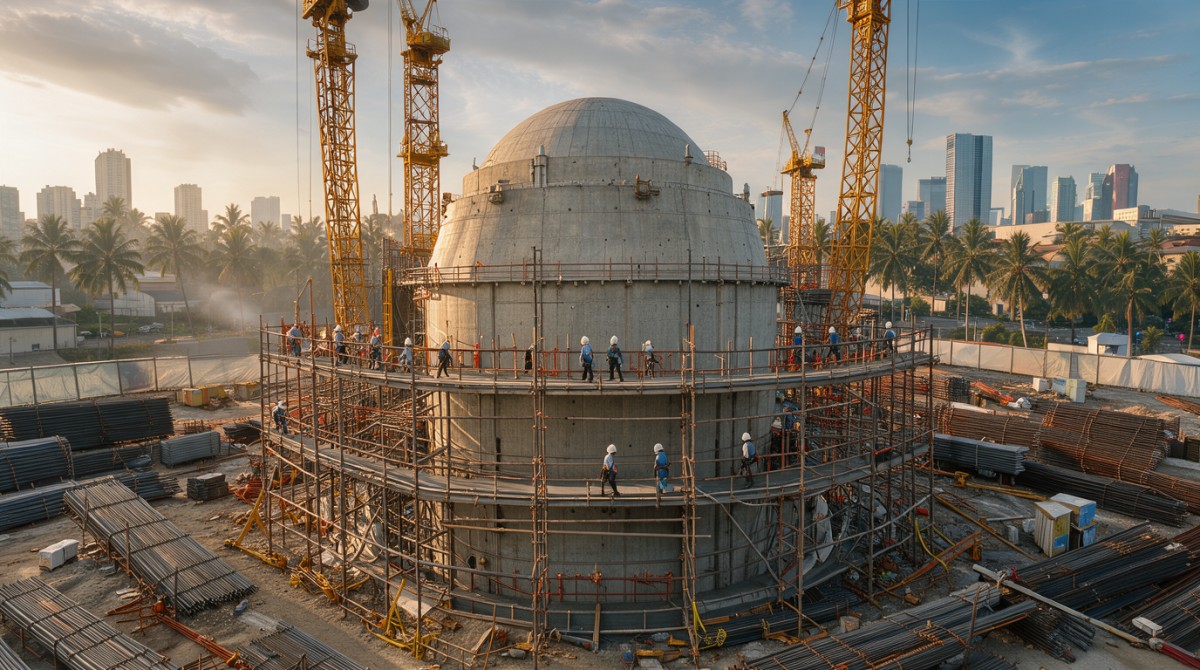
While renewables dominate the headline figures, Bayraktar stressed that nuclear energy remains indispensable for meeting climate targets and surging electricity demand. Construction continues at the Akkuyu plant, Turkey’s first nuclear station, with all four reactors progressing in parallel. Domestic manufacturers and service firms have already contributed $12 billion, achieving a 55 % local content rate.
Future nuclear sites are earmarked for Sinop on the Black Sea coast and the Thrace region in European Turkey, with a goal of 10 GW of nuclear capacity by 2040. The roadmap also envisions at least 5 GW of small modular reactors (SMRs) by 2050, reflecting a long‑term commitment to diversified low‑carbon baseload.
Energy Efficiency, Gas Strategy and Wider Energy Outlook
Efficiency gains underpin the broader demand‑side narrative. Since 2002, Turkey’s energy intensity has fallen 33 %, with industry alone achieving a 52 % reduction, saving an estimated $25 billion. The 2025 second national efficiency plan injected $4.3 billion, averting 1.5 million tons of oil‑equivalent energy and 4.7 million tons of CO₂. The 2040 plan seeks an additional 40 % cut in intensity, projecting $240 billion in cumulative savings.
In the gas sector, natural gas consumption is projected to rise from 59 billion cubic metres (bcm) last year to 77 bcm by 2040 without intervention. The National Energy 2040 program aims to cap consumption at 57 bcm, while oil use would be trimmed from 1.2 million barrels per day to 718,000 barrels per day. Domestic production is set to increase, with the Sakarya Gas Field’s output expected to double following the deployment of the Osman Gazi floating production platform, targeting supply to 8 million households in 2027 and 17 million in 2028.
Additional gas‑related initiatives include plans to produce 1.5 billion cubic metres of renewable gas annually from organic waste, raise LNG regasification capacity beyond 200 million cubic metres per day, and expand underground storage from 6.8 billion to 17.6 billion cubic metres. On the oil front, the Ceyhan port is slated to become a regional hub with 50 million barrels of storage, alongside new refining and petrochemical projects, while domestic output is projected to exceed 160,000 barrels per day by 2027, helping to narrow the current‑account deficit by an estimated $5.6 billion annually.
This article was produced with AI-assisted research and editorial support. Reporting is based on the source material cited below. Sources: Daily Sabah Middle East; dailysabah.com; Global1.News (23 November 2026).
By Malik Hassan, Staff Writer
What's Your Reaction?
 Like
0
 Dislike
0
 Love
0
 Funny
0
 Wow
0
 Sad
0
 Angry
0

Middle East Correspondent at Global1.News. Based in Beirut, covering politics, conflict, energy, and society across the Middle East. Brings context and depth to a region often reduced to headlines.













Comments (0)