
Social Media Ban for Children: Meta Fine Forces UK Hand
The Channel 4 News debate "Should social media be banned for children?", broadcast on 8 August 2026, lands just two days after a New Mexico judge ordered Meta to pay an additional $567m (£421m) for the mental health harms its platforms inflict on young users.
The Channel 4 News debate "Should social media be banned for children?", broadcast on 8 August 2026, lands just two days after a New Mexico judge ordered Meta to pay an additional $567m (£421m) for the mental health harms its platforms inflict on young users. With Britain already committed to barring under-16s from ten major platforms from spring 2027, the programme pits Baroness Beeban Kidron against Jeff Jarvis at a moment when US court rulings are reshaping what governments on this side of the Atlantic can demand.
Meta's Record Fine and Britain's Ban: How a New Mexico Courtroom Is Forcing Whitehall's Hand on Children's Online Safety
London, UK – Saturday 8 August 2026 — The latest US ruling against Meta has handed UK ministers fresh political cover as they prepare to enforce the most sweeping social media restrictions in Europe.
The New Mexico Ruling
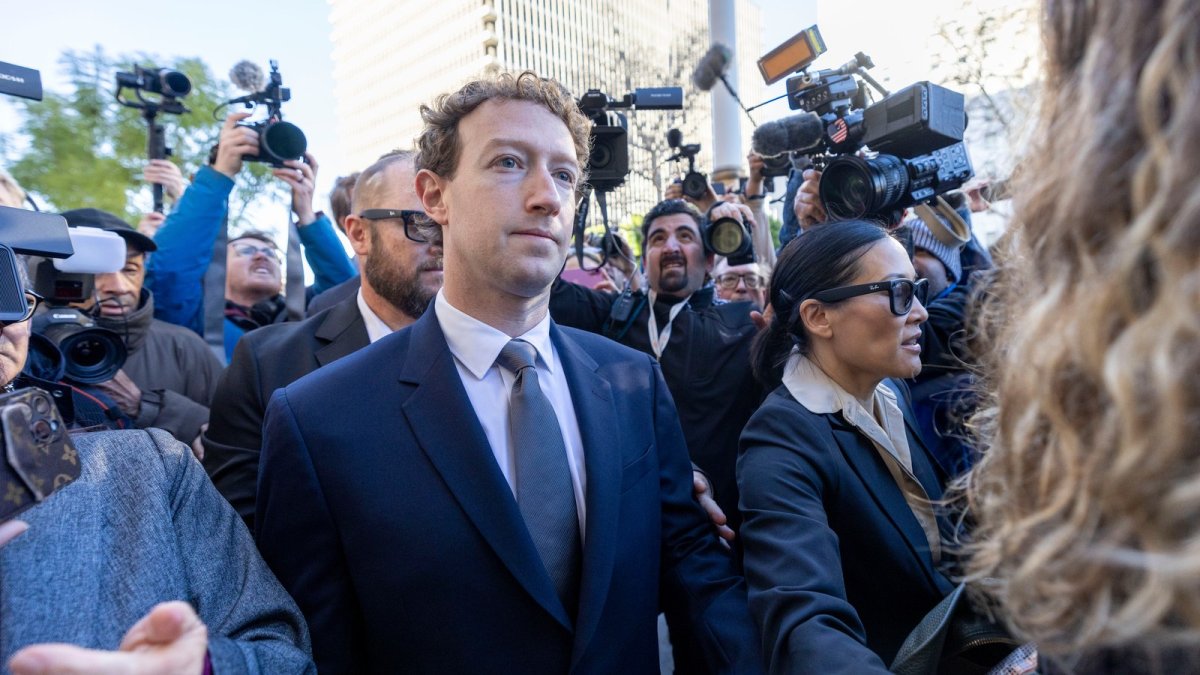
On 6 August 2026 Judge Bryan Biedscheid ordered Meta to pay $567m (£421m) into a redress fund after a jury had already found the company knowingly harmed children's mental health and concealed evidence of child sexual exploitation. Combined with the earlier $375m maximum penalty, Meta now faces a total bill of $942m. Of the new sum, $420m will fund treatment services for young people in New Mexico, with the remainder allocated to awareness, prevention and screening programmes over five years.
The ruling marks a significant escalation in accountability for social media platforms. In March 2026 a jury delivered the first successful state verdict against Meta over child safety failures, building on a 2023 Guardian investigation that exposed Facebook and Instagram marketplaces facilitating child sex trafficking. Former moderators revealed that flagged grooming content was routinely not escalated, underscoring systemic lapses.
Meta faces thousands of similar US lawsuits and has already lost an earlier case in Los Angeles concerning addictive platform design. The company has stated it disagrees with the New Mexico ruling and will appeal.
What the Judge Ordered
Judge Biedscheid described Meta as a "public nuisance" comparable to air pollution, likening the company to a factory whose "psychological harm and sexual exploitation of children" must be abated. Meta must now display banner screens on Facebook and Instagram explaining protection features, improve age-assurance using AI signals from friends and content, develop an under-13 prediction model, request proof of age for those estimated under 13, partner with schools on a reporting portal and delete personal data of under-13 users. The company will report progress twice yearly.
The judge noted that federal privacy laws prevent broad age verification for children under 13, and that ordering verification only for Meta would be "inequitable and unduly injurious" to the company. It is a narrow legal space for mandatory checks without wider federal reform — a constraint that will be familiar to regulators in London wrestling with the same question.
Britain's Parallel Crackdown
Prime Minister Keir Starmer announced on 15 June 2026 that children under 16 will be banned from at least ten platforms — TikTok, Snapchat, YouTube, Instagram, Facebook, X, Reddit, Twitch, Threads and Kick — from spring 2027. WhatsApp and Signal fall outside the scope. The policy, described by Whitehall sources as "Australia-plus", emerged after a government consultation that received 116,000 responses; nine in ten parents backed an outright ban and 83% said risks outweigh benefits. Tech Secretary Liz Kendall leads implementation, while Ofcom has been tasked with a rapid review of age-assurance technology. Legislation is expected to clear Parliament before Christmas 2026.
The Online Safety Act provides the legislative pathway for the changes, with enforcement aimed squarely at platforms rather than individual children, as Online Safety Minister Kanishka Narayan has confirmed. A proposed curfew would impose a default midnight-to-06:00 restriction for 16- and 17-year-olds on Instagram, TikTok and YouTube, with auto-play and infinite scroll disabled by default. Campaigner Ellen Roome, whose 14-year-old son Jools Sweeney died in an online challenge in 2022, criticised the measure as "a bit like offering a 17-year-old a bottle of alcohol and then moving it slightly out of arms reach", while Professor Lorna Woods of Essex University said it targets apprehensions from parents and child safety groups. Apple has introduced device-level age checks, aligning with Meta's preference for verification handled by hardware manufacturers.
The Two Voices in the Debate
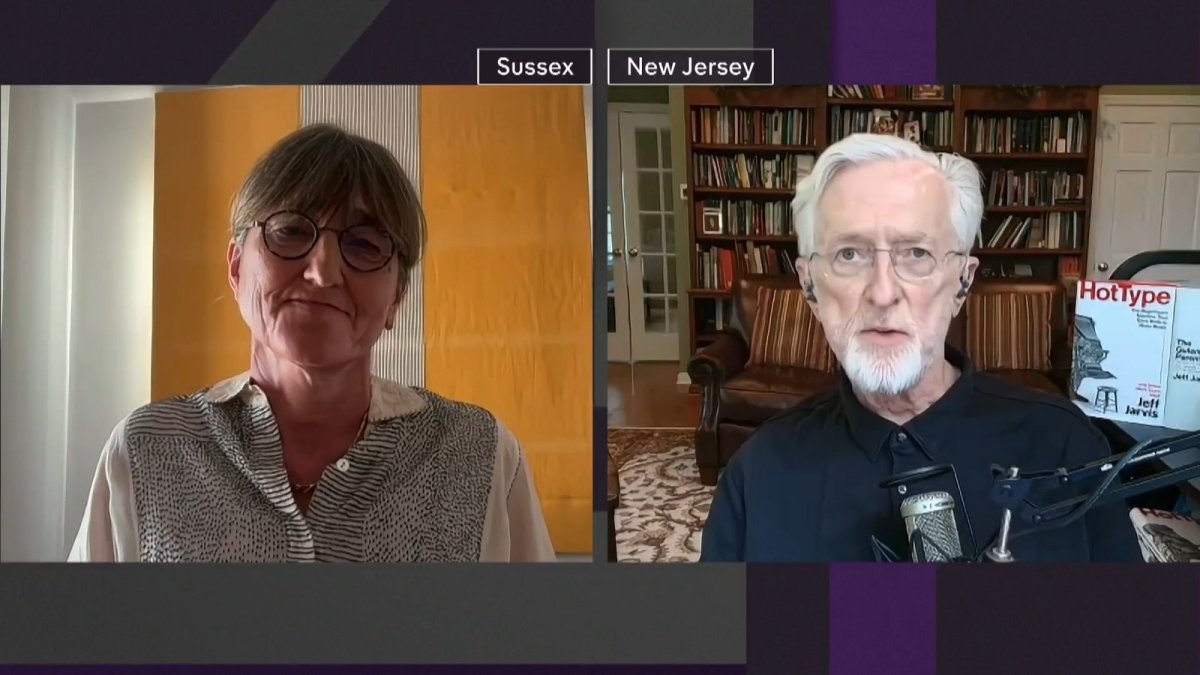
The Channel 4 programme pairs Baroness Beeban Kidron OBE, founder and chair of 5Rights Foundation and a Crossbench peer in the House of Lords, against Jeff Jarvis, Emeritus Leonard Tow Professor of Journalism Innovation at CUNY's Craig Newmark Graduate School of Journalism. Kidron, who authored the UK's Age Appropriate Design Code in force since September 2021, told BBC Breakfast the approach should not be about "banning children from tech" but "banning tech from putting toxic products in the hands of children." At her LSE lecture on 3 July she stated: "The problems in front of us are not primarily technical. They are political." She is now working with bipartisan California lawmakers on a similar state code.
Jarvis, a visiting professor at Stony Brook University and author of the forthcoming book 'Hot Type', advocates embracing the internet rather than restricting it, drawing on a career that has taken in the New York Daily News, the San Francisco Examiner and The Guardian. The programme opens with a stark generational challenge: "It's an insult to future generations who need to take over this world from us because we've screwed it up." That framing captures the fault line at the heart of the British debate — whether protection means designing safer products or trusting the next generation to navigate a digital world adults built.
The Channel 4 News companion piece poses the question directly: is this a moral panic, or a "big tobacco" moment? For Kidron, the comparison is apt — an industry that knew the harms, marketed the product to children and resisted regulation until the courts forced the issue. For Jarvis, it is an overreach that treats a generation of young people as passive victims rather than capable citizens. The programme's value lies in refusing to settle the argument, laying out the stakes for a decision Britain has already effectively made.
Enforcement Questions
Ofcom's "Use of Age Assurance Report 2026", published 15 July, concluded that social media companies "will need to take a more effective approach" for under-16 restrictions to succeed. A statutory report on app-store protections is due in January 2027. The ICO already fined Reddit £14.47m in March 2026 over age-verification failures, a signal that British regulators are not waiting for the spring 2027 deadline.
Australian evidence shows teenagers rapidly adopt VPNs and alternative accounts to circumvent bans — a pattern likely to recur under Britain's proposals. It raises the question of whether enforcement can truly target platforms without driving young users toward less regulated services, the warning issued by both YouTube and Meta when the ban was announced in June.
The technical reality is that age assurance at scale remains a work in progress. The New Mexico order leans on AI signals drawn from a user's friends and content to estimate age, alongside a dedicated under-13 prediction model — the same class of technology Ofcom is now scrutinising for Britain. If the regulator's January 2027 app-store report and the rapid age-assurance review conclude that these tools are not yet "highly effective", the spring 2027 timetable will face its first serious strain.
UK Reactions and Political Cover
Former Twitter/X European vice-president Bruce Daisley told BBC Radio 4's Today the fine is "a drop in the ocean" for Meta, whose Q2 revenue reached $61bn, up 28% year-on-year, yet signals that "social media is going to be tackled around the world." Former safeguarding minister Jess Phillips told the same programme that US court challenges could allow Britain to act more robustly without damaging UK-US diplomatic ties — a calculation that matters in Westminster, where transatlantic relations have shaped the caution of previous governments.
Not everyone in the child-safety movement backs the blanket-ban approach. Ian Russell, father of Molly Russell, called the policy "deplorable" and urged stronger enforceable regulation instead, while the NSPCC said the priority must be forcing platforms to redesign their products rather than simply excluding younger users.
What This Means for British Families
Across England, Scotland, Wales and Northern Ireland, parents and schools now await the practical effects of both the New Mexico precedent and the forthcoming UK ban. MPs are already anticipating increased constituency correspondence as the policy moves toward implementation, with enforcement explicitly aimed at platforms rather than children themselves. Schools, libraries and youth clubs are preparing guidance for the 2027 rollout, mindful that the measures will change daily life for millions of families.
Political consensus appears strong — nine in ten parents in the consultation supported the ban and 83% believed the risks outweigh the benefits. Between now and spring 2027, Ofcom's age-assurance review and the app-store report due in January will shape the practical rollout, while Liz Kendall oversees coordination across the Department for Science, Innovation and Technology. The coming months will test whether Britain can deliver what the New Mexico courtroom has demanded of Meta — and whether the political consensus survives contact with technical and commercial reality.
By Erica Thornton, Staff Writer
This article was produced with AI-assisted research and editorial support. Reporting is based on sources cited in the article.
What's Your Reaction?
 Like
0
Like
0
 Dislike
0
Dislike
0
 Love
0
Love
0
 Funny
0
Funny
0
 Wow
0
Wow
0
 Sad
0
Sad
0
 Angry
0
Angry
0

US Politics and Policy Correspondent at Global1.News. Based in Washington DC, covering American politics, policy, elections, and the courts. Knows how the system works and tells you what it actually means.














Comments (0)