
Slovakia Opens Door to Chinese EV Investment in EU
Slovak President Pellegrini pitches Slovakia as a safe island for Chinese investment during his July 2026 state visit, as $11.9B trade, BYD showrooms and EU tariffs reshape the bloc's China calculus.
Slovak President Peter Pellegrini has turned his first state visit to China into a clear commercial pitch: Slovakia, he says, is ready to serve as a reliable gateway for Chinese capital inside the European Union. The July 27-29 visit produced high-level talks with President Xi Jinping, a Leaders Talk interview with CGTN, and an explicit promise that Chinese companies will find a favorable investment environment in Bratislava. For readers in Japan and across Asia Pacific, the episode is a case study in how smaller European economies are recalibrating their relationship with Beijing at a moment of rising tariffs, tightening technology controls, and intense competition in electric vehicles. Slovakia's openness offers both an opportunity and a warning for Japanese exporters watching the same European market.
Slovakia Positions as Safe Island for Chinese EV Investment in EU
[Beijing/Bratislava - August 2, 2026] - Slovak President Peter Pellegrini has positioned his country as a reliable entry point for Chinese capital inside the European Union during his first state visit to China. In interviews and official talks, Pellegrini described Slovakia as ready to serve as a "safe island" for Chinese firms seeking stable access to the EU market despite rising trade frictions.
Slovakia's 'Safe Island' Pitch to Chinese Capital
During the CGTN Leaders Talk interview with host Zou Yun, President Pellegrini stressed that dialogue and cooperation remain the only viable path to bridge differences between China and Europe. He explicitly offered Slovakia as a favorable environment for Chinese investment within the bloc. This stance comes at a time when many EU members face pressure to limit exposure to Chinese technology and manufacturing. Pellegrini's remarks highlight Slovakia's willingness to maintain open channels even as broader EU policy tilts toward caution. The president's message aligns with longstanding Slovak economic pragmatism, where attracting foreign direct investment has long been a priority for job creation and industrial upgrading. By framing Slovakia as a stable partner, Pellegrini seeks to differentiate his country from more restrictive EU voices. This approach could prove attractive to Chinese firms navigating regulatory uncertainty across the continent. The interview, recorded during the July 27-29 state visit, underscores Slovakia's intent to act as a constructive bridge rather than a barrier. Relations stand at a historic high, with concrete results expected in trade, innovation, education, new technologies, investment, and youth and university exchanges. Pellegrini emphasized that Slovakia is prepared to deliver tangible outcomes that benefit both sides while serving as a reliable gateway inside the EU single market.
Strategic Partnership Deepens Under New Leadership
Xi Jinping met Pellegrini on July 28 at the Great Hall of the People, noting that Slovakia was among the first countries to establish diplomatic relations with the People's Republic of China. In 2024 the two sides elevated ties to a strategic partnership. Xi outlined four priority areas for the next phase: consolidating strategic mutual trust including adherence to the one-China principle, deepening mutually beneficial cooperation in emerging industries through the Belt and Road Initiative and China-CEEC mechanisms plus an intergovernmental cooperation committee, strengthening people-to-people exchanges in culture, sports, tourism, youth, and subnational ties, and defending international fairness through the UN-centered system to promote a multipolar world and inclusive economic globalization. Pellegrini reaffirmed Slovakia's adherence to the one-China principle and expressed interest in expanding cooperation across economy, trade, artificial intelligence, digital economy, robotics, and new energy. Both leaders highlighted the role of the intergovernmental cooperation committee and China-CEEC mechanisms. The visit included a 21-gun salute and welcome banquet, signaling high-level commitment. Slovakia's position as an EU member gives these bilateral commitments added weight for Chinese companies seeking broader European access. Xi expressed hope that Slovakia will play a constructive role in advancing overall EU-China relations.
Trade and Investment at the Core
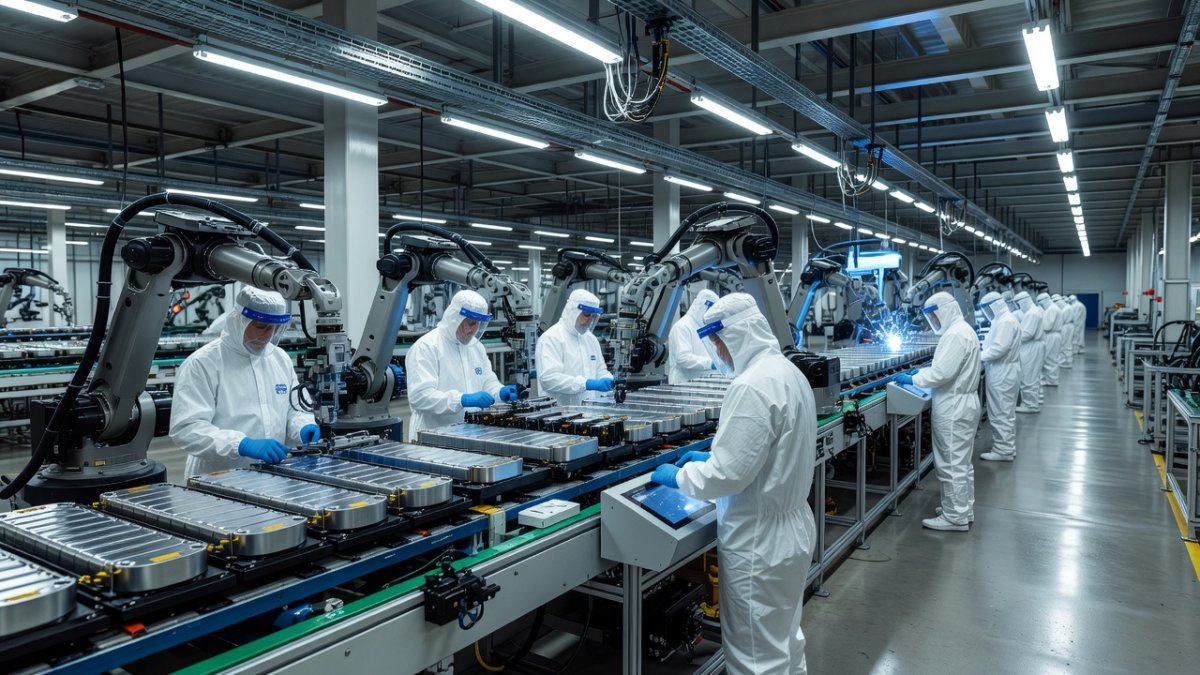
Two-way trade between China and Slovakia exceeds $11.9 billion annually, driven by vehicles, batteries, electronics, and machinery. China is already Slovakia's largest trading partner outside the EU. During the Beijing talks, Xi emphasized clean energy, digital economy, robotics, and artificial intelligence as key future sectors. Pellegrini welcomed Chinese companies to invest and build partnerships in Slovakia. A flagship project is the $1.3 billion Gotion-InoBat battery plant, expected to reinforce Slovakia's role in Europe's electric vehicle supply chain, with each Gotion facility targeting roughly 20 GWh annual capacity. Former State Secretary Martin Klus noted that Slovakia ranks among the world's top car producers relative to its population, making automotive cooperation with China strategically important. Klus stressed the need to balance such opportunities with EU membership obligations, calling for deeper research collaboration and university exchanges alongside business ties. These concrete projects illustrate how the strategic partnership is moving from diplomatic language to industrial reality. The intergovernmental cooperation committee is positioned to oversee progress in emerging sectors and ensure that investment flows translate into sustained economic benefits for both countries.
The BYD Showroom Effect
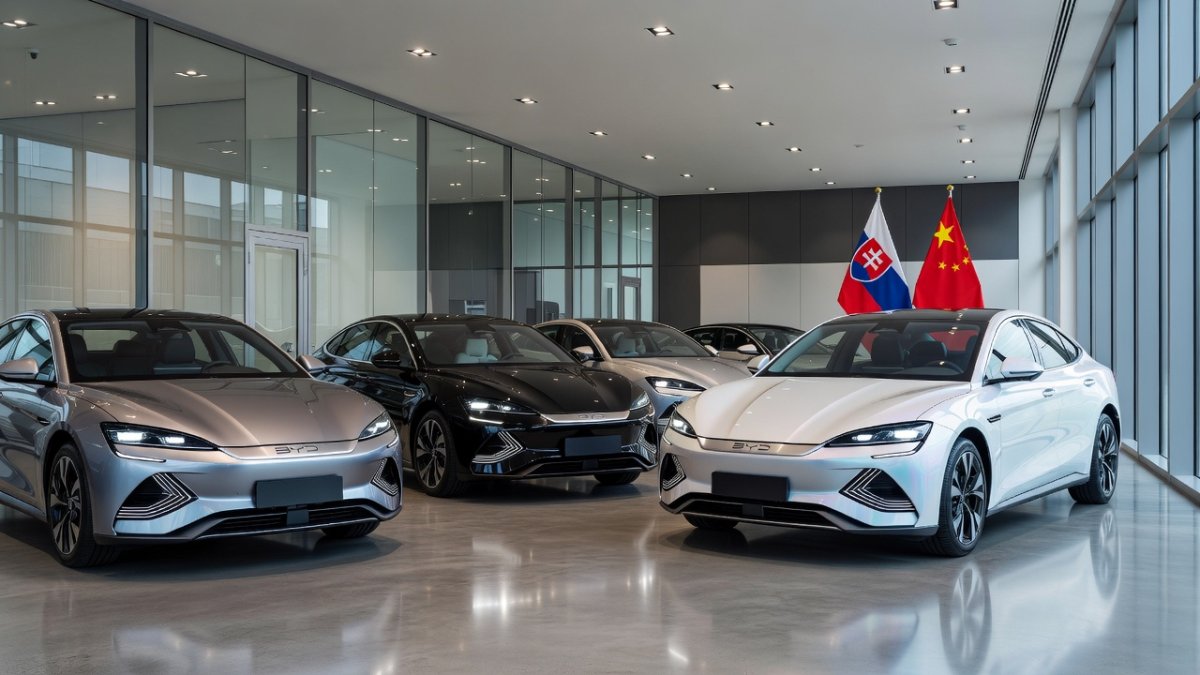
Chinese electric vehicles are gaining visible ground in Slovakia. Auto Impex, a family-owned Bratislava dealership operating for nearly 35 years, has transitioned from Japanese and Italian gasoline models to Chinese-made BYD vehicles as its first official Slovak dealership. CEO Peter Hron reported daily foot traffic of 100 to 280 visitors when the showroom opened and current monthly sales of 50-70 cars. Hron observed that opportunity, not origin, drives business decisions, noting China currently brings more prospects to the table than traditional partners. The shift reflects broader changes in European consumer interest and pricing dynamics. While EU tariffs on Chinese EVs have risen, local demand in Slovakia remains strong enough to support dedicated showrooms. This grassroots commercial activity complements high-level diplomatic efforts and demonstrates tangible market acceptance despite political headwinds. The dealership's evolution from conventional fuel vehicles to electric models underscores how Chinese manufacturers are reshaping Slovakia's automotive retail landscape and providing new revenue streams for established local businesses.
EU Tariffs and the 'De-Risking' Dilemma
The European Union has imposed additional tariffs on Chinese electric vehicles reaching up to 38 percent amid ongoing trade tensions. At the same time, several member states continue competing to attract Chinese automaker factories and battery plants. The "de-risking" and "reducing dependence on China" narratives have constrained deeper technological cooperation across the EU, with Brussels weighing screening mechanisms for foreign direct investment in sensitive sectors. Pellegrini's visit occurred against this backdrop, with the Slovak leader repeatedly advocating dialogue to handle disagreements. Analysts in Slovakia note that the president embraces China's economic offer while carefully navigating EU commitments - a posture one Bratislava outlet described as welcoming the opportunity while sidestepping the risks. During the visit, Pellegrini also toured Beijing's Robot Mall in Yizhuang, signaling interest in advanced manufacturing and robotics. This dual-track approach-welcoming investment while remaining inside EU structures-illustrates the practical balancing act many smaller EU economies now face. Slovakia's stance may influence how other Central and Eastern European countries calibrate their own China policies in the coming years. The strategic partnership framework provides a structured channel for managing these tensions while pursuing mutual economic gains.
AI Governance and the Leaders Talk Agenda
In separate interview clips from the same visit, Pellegrini addressed global AI governance. He argued that artificial intelligence should benefit everyone, including developing countries, and called for stronger privacy and security safeguards to prevent new technologies from widening inequality. Slovakia fully agrees with the visions presented at the 2026 World Artificial Intelligence Conference and stands ready to strengthen international AI rules. These comments align with Xi's emphasis on emerging industries during the bilateral talks. By linking AI governance to concrete cooperation areas such as robotics and digital economy, Slovakia signals readiness to participate in standard-setting rather than merely adopting rules set elsewhere. This position could open avenues for joint research and regulatory dialogue that extend beyond traditional trade and investment. Pellegrini highlighted the importance of ensuring AI technologies serve inclusive development goals, reinforcing Slovakia's willingness to engage constructively on global technology governance issues.
What It Means for Japan and Asia Pacific
Japanese automakers and battery suppliers face similar competitive pressures in Europe as Chinese EV makers expand. METI's ongoing focus on securing resilient EV and battery supply chains will require close monitoring of Chinese investments in Central Europe, including the Gotion-InoBat facility. Japanese firms with existing European production footprints may encounter both new partnership opportunities and heightened competition. The Bank of Japan and METI have long tracked how third-country dynamics affect Japanese economic security. Slovakia's explicit welcome to Chinese capital, paired with its EU membership, creates a test case for how Asian exporters navigate an increasingly fragmented European market. Green Transformation (GX) strategies in Japan could also draw lessons from Slovakia's approach to balancing openness with regulatory compliance. As China-CEEC cooperation advances, Japanese companies may explore trilateral arrangements that combine Japanese technology with Slovak manufacturing locations and Chinese scale. For policymakers in Tokyo, the deeper question is whether such bilateral openness inside the EU will accelerate Chinese market access into Europe - and how Japanese industry should position itself in response. The coming months will reveal whether Slovakia's "safe island" positioning delivers sustained project pipelines or remains largely rhetorical.
By Kenji Tanaka, Staff Writer
This article was produced with AI-assisted research and editorial support. Reporting is based on sources cited in the article.
What's Your Reaction?
 Like
0
Like
0
 Dislike
0
Dislike
0
 Love
0
Love
0
 Funny
0
Funny
0
 Wow
0
Wow
0
 Sad
0
Sad
0
 Angry
0
Angry
0

Japan Correspondent at Global1.News. Tokyo-based voice covering Japanese politics, technology, economy, and culture. Tracks the intersection of tradition and innovation in one of the world's most dynamic societies.











Comments (0)