
Sixty-Nine Unpermitted Gas Turbines Are Powering AI — and That's the Whole Story in One Sentence
SpaceXAI will keep 69 unpermitted gas turbines running near Memphis until July 2027 while it builds a permanent 1.2 GW gas plant. Meta is backing 10 gas plants for one data center. A founder's take on AI's temporary-power fiction.
Sixty-Nine Unpermitted Gas Turbines Are Powering AI — and That's the Whole Story in One Sentence
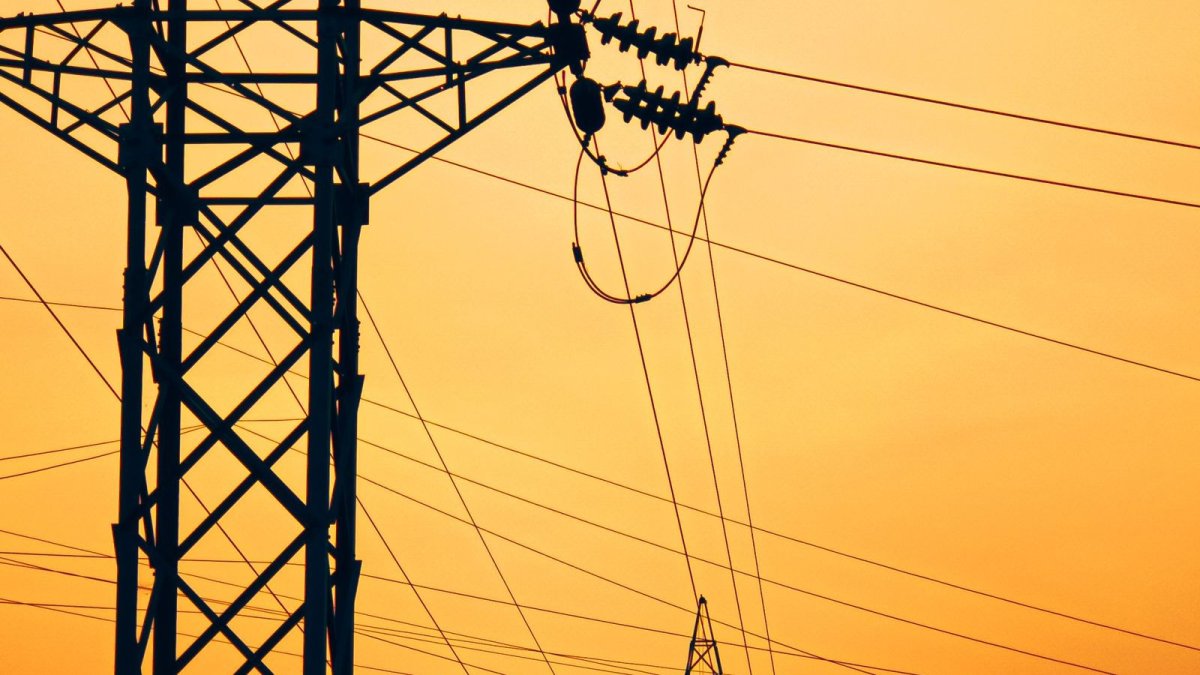
Let me tell you something that's been sitting heavy with me all week. On July 30, SpaceXAI — that's xAI, rebranded after SpaceX swallowed it in February — signed an agreed order with the Mississippi Department of Environmental Quality to remove all 69 of the temporary gas turbines powering its Southaven facility. Sounds like a win for the community, right? No. Read the fine print. The first turbine doesn't leave until August 2026, and the last one isn't scheduled to move until July 2027. And here's the part that should make every founder sit up straight: this isn't a concession, it's a trade. SpaceXAI gets to keep running 69 unpermitted turbines for another year in exchange for building a 1.2-gigawatt permanent gas plant — 41 turbines under a Clean Air Act permit granted back in March. They're replacing one problem with a bigger, permanent version of the same problem, and regulators are calling it progress.
The Southaven Story — 69 Turbines, Zero Permits, One Agreed Order
Let me give you the numbers because they matter. The site is a former Duke Energy plant on Stanton Road in Southaven, Mississippi — directly across the state line from the Colossus 2 data center at 5420 Tulane Road in Memphis. Colossus 2 is part of the largest single-site AI training facility on Earth: 555,000 GPUs, roughly 2 gigawatts of compute. And it's being powered, at least partly, by trailer-mounted gas turbines operating without proper air permits.
Here's the timeline that should alarm you. In August 2025, there were 18 turbines at the Southaven site. By May 2026, that number hit 46. In June, 60. In July — the month they announced "rapid removal" — the count reached 69. That's a 283% increase while the company's lawyers argued the equipment was exempt because it sat on flatbed trailers. Of the 60 turbines on site in June, only 14 had Selective Catalytic Reduction technology — the emissions control equipment permitted plants are required to install. The rest were venting nitrogen oxides into a region that environmental groups — including the NAACP and the Southern Environmental Law Center — say is already among the most polluted in the country.
The "Temporary" Loophole — a 364-Day Exemption on Repeat
The whole fight comes down to one regulatory fiction. In August 2025, the Mississippi Department of Environmental Quality issued an exemption mirroring one from the Shelby County Health Department: temporary turbines could run for up to 364 days without requiring a permit. You mount a gas turbine on a trailer, call it temporary, and you get a year of unpermitted operation. In theory, you're supposed to permit it or move it. In practice, the fleet just kept growing — 18, 46, 60, 69 — each new turbine with its own 364-day clock.
The EPA tried to close this in January 2026. It updated the Federal Register to require that all combustion gas turbines — temporary or permanent — be permitted. But federal rule changes only matter if someone enforces them. The Guardian asked the EPA in January how it would penalize non-compliant companies. The agency didn't answer. Now the Department of Justice has stepped in — on the company's side. In court filings defending SpaceXAI against the NAACP's lawsuit, DOJ lawyers argued that shutting down the unpermitted turbines would threaten "national, economic, and energy security" because AI systems supporting military operations depend on the power.
The DOJ Shield — National Security as the Ultimate Get-Out-of-Permit Card
Let me be blunt about what that DOJ filing means. The federal government is now explicitly arguing that AI compute is a matter of national security, and therefore the environmental rules that apply to every other power plant on the continent don't apply here. Not because the law says so — the law says the opposite, and the EPA rule change in January was clear — but because the government decided the turbines are too important to shut down. That's a policy decision wearing a legal costume.
Kym Meyer, litigation director at the Southern Environmental Law Center, put it better than I can: "While xAI claims it is 'rapidly removing' its unpermitted gas turbines from its Southaven site, in reality the opposite is true: the company has been continually expanding its already-enormous Colossus Gas Plant, adding nine new polluting gas turbines and bringing the current total number of turbines to 69." They announced removal and added nine turbines in the same breath. That's theater, not compliance.
The Meta Story — 10 Gas Plants, and a Quit Notice to the Renewables Club
Now here's where this stops being one company's problem and becomes the industry's pattern. On July 23, Recharge reported that Meta quit RE100 — the global corporate initiative whose members commit to 100% renewable electricity. Meta joined back in 2016 as Facebook, pledged to cover its entire operation with renewables by 2020, and claimed it hit that target in 2021. Now it's out, because it no longer meets the technical criteria. Why? Because Meta is bankrolling gas-fired power plants for its AI data centers.
The numbers at Meta's Hyperion site in Richland Parish, Louisiana are staggering. The original plan called for three new gas plants totaling about 2.26 gigawatts. In March 2026, Entergy Louisiana announced a second agreement: seven additional combined-cycle gas plants totaling more than 5.2 gigawatts. That's ten gas plants and roughly 7.5 gigawatts of fossil generation for one data center. According to the New York Times, no insurers would even provide full coverage for Hyperion — it was so big and built in a flood plain. The Senate Environment and Public Works Committee is now asking why.
And Meta isn't alone. Google has agreed to buy power from a 400-megawatt Illinois gas plant with carbon capture. Microsoft signed a 20-year deal for a 2.67-gigawatt gas plant at its West Texas data center. The era of "we power our data centers with 100% renewables" — always more accounting than engineering — is over.
The Secondary Bottleneck Nobody's Talking About — the Temporary-Power Fiction
Here's the part I don't hear anyone in the industry discussing, and it's the part that should worry you most. The temporary-turbine exemption isn't just an xAI problem. It's a structural hole in the entire AI buildout. Every hyperscaler that can't wait three to five years for grid interconnection is looking at the same workaround: bring your own power, fast, and call it temporary while you sort out the permits. The EPA closed the letter of the loophole in January, but the practice hasn't stopped — because enforcement hasn't caught up, and because the DOJ has signaled that AI power gets special treatment.
Think about what that means for anyone trying to build legally. If you're an independent provider or colo operator pulling a legitimate permit, you're waiting in the same queue as everyone else — interconnection studies, environmental reviews, community hearings. Meanwhile, the biggest players are deploying unpermitted generation, getting the DOJ to shield them, and running at full power while you wait. That's not competition. That's regulatory arbitrage, and it distorts every power price signal in the market.
What This Means for Independent Hosting Providers
First — watch power prices in gas-heavy regions. When hyperscalers convert temporary turbines into permanent gas plants, the capital cost gets passed somewhere. In Louisiana, ratepayers are already facing the bill for Meta's 7.5 gigawatts. If your colo contract sits in a utility territory where a hyperscaler is building generation, expect your power line items to climb.
Second — don't build capacity plans on "temporary" power. If a provider offers you power backed by mobile turbines or behind-the-meter generation without long-term permits, understand that the regulatory rug can be pulled at any moment. The only thing more unpredictable than EPA enforcement is what happens to your SLA when a court order yanks the power.
Third — factor community backlash into your own site selection. The playbook is now proven: NAACP + Southern Environmental Law Center + local residents + lawsuits + regulatory appeals. It worked on the biggest, best-lawyered AI company in the country. It will work on you faster. If your site is in a community that's been burned before, budget for the fight, not just the build.
Fourth — read the DOJ filing as the warning it is. The government has declared AI compute a national security asset, which means the rules can change overnight — both for you and for the giants. The same logic that shields xAI's turbines today could prioritize hyperscaler grid connections over yours tomorrow. Hedge your power sourcing across multiple regions while you still can.
The Structural Reality — the Buildout Is Running on Borrowed Power
Here's the uncomfortable truth. The AI buildout is not running on the grid. It's running on the gap between what the grid can deliver and what the industry needs — and that gap is being filled with gas turbines, trailer-mounted generators, and regulatory fictions. The 69 unpermitted turbines in Southaven are not an anomaly. They're the canary — and everywhere else, the canary hasn't been counted yet.
SpaceX's IPO filing — the record-breaker, with combined assets valued at $1.75 trillion — revealed plans to buy roughly $2.8 billion more in gas turbines over the next three years. Read that again. While the company is telling Mississippi it's "rapidly removing" temporary turbines, its own SEC filings show it's about to spend nearly three billion dollars buying more. The turbines APR Energy has in its fleet — the company Musk acquired this year — don't even match the ones in the new Mississippi permits, suggesting another project, unannounced, waiting in the wings.
I'm not anti-AI. I run infrastructure; I know exactly how much power this stuff needs. But I am anti-fiction. And the fiction that a 69-turbine, half-gigawatt-plus power plant running for a year straight is "temporary" — that's the kind of lie that gets the whole industry regulated into the ground.
The hyperscalers had a choice. They could build power the legitimate way, with permits and community consent and timelines that stretch into years. Or they could bolt turbines to trailers, call them temporary, and dare regulators to stop them. They chose the second path — and when the backlash comes, and it will come, it won't stop at xAI and Meta. It'll hit every data center, every colo, every hosting provider in the country, because regulators don't draw lines between the giants and the rest of us. They draw lines around the industry. So do your planning now. Lock your power contracts. Document your permits. And if someone offers you "temporary" power with a wink — walk away. Because temporary is just permanent with a shorter lie attached.
— Allan Ali, Founder
This article was produced with AI-assisted research and editorial support. Reporting is based on sources cited in the article.
What's Your Reaction?
 Like
0
Like
0
 Dislike
0
Dislike
0
 Love
0
Love
0
 Funny
0
Funny
0
 Wow
0
Wow
0
 Sad
0
Sad
0
 Angry
0
Angry
0

Publisher of Global1.News. Automation architect, systems builder, and the guy making sure the truth gets published.













Comments (0)