
Rekha Gupta sets Chandni Chowk revamp in motion: Illegal buses, encroachments under scanner — check Delhi CM’s plan
Delhi’s iconic Chandni Chowk, a bustling maze of lanes that has long been the commercial heart of Old Delhi, is set to undergo a coordinated overhaul after Chief Minister Rekha Gupta’s recent directives.
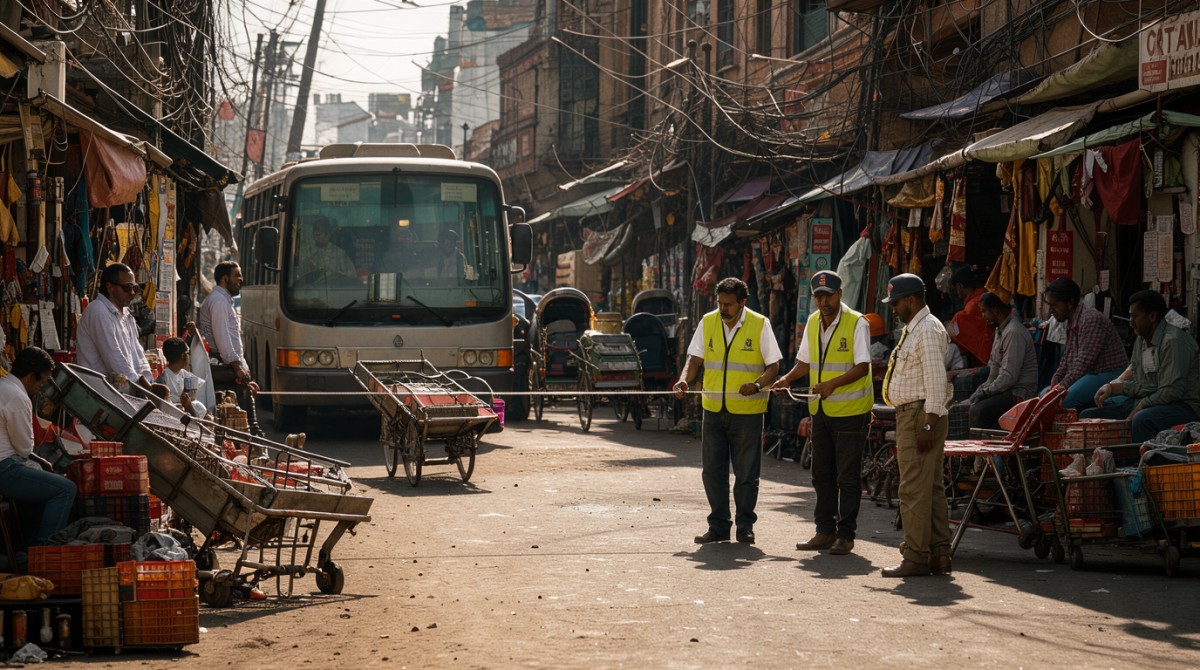
Delhi’s iconic Chandni Chowk, a bustling maze of lanes that has long been the commercial heart of Old Delhi, is set to undergo a coordinated overhaul after Chief Minister Rekha Gupta’s recent directives. In a meeting convened under the Indraprastha Virasat Punervikas Nigam (IVPN), the CM called for a multi‑departmental push to ease traffic snarls, clear illegal encroachments, upgrade sanitation facilities and improve pedestrian access, all while safeguarding the market’s historic character. The plan, detailed in a briefing to senior officials, reflects a broader policy thrust to modernise heritage precincts without eroding their cultural essence.
Strategic Coordination Across Departments
The revamp of Chandni Chowk is being driven by a joint effort that brings together the Delhi Police, the Municipal Corporation of Delhi (MCD), the Public Works Department (PWD), the Transport Department and the Urban Development Ministry. At the core of the strategy is a newly formed joint enforcement team under the Transport Department, comprising officials from the Delhi Police, Traffic Police and MCD. This team will monitor unauthorised parking, curb the movement of goods vehicles on Shyama Prasad Mukherjee Marg and enforce limits on rickshaw numbers, thereby aiming to reduce the chronic congestion that has plagued the market’s narrow lanes.
Chief Minister Gupta’s emphasis on inter‑agency coordination reflects an acknowledgement that isolated interventions have historically fallen short. By mandating a shared responsibility framework, the administration hopes to streamline decision‑making and ensure that actions such as road repairs, drain maintenance and security upgrades are synchronised, reducing duplication and delays.
Targeted Traffic Management Measures
One of the most pressing concerns highlighted in the meeting was the bottleneck created by buses near the Kashmere Gate ISBT flyover. Gupta directed the Transport Department to accelerate the operationalisation of the Burari ISBT, allowing buses to use a designated surface parking area in the interim. This move is intended to divert bus traffic away from the congested arteries of Chandni Chowk, providing immediate relief while the new terminal comes online.
In parallel, the CM called for strict enforcement against illegal buses operating near Old Delhi Railway Station, proposing heavy fines as a deterrent. By tightening controls on both formal and informal bus services, the administration aims to reclaim road space for pedestrians and essential traffic, a shift that aligns with broader urban mobility policies prioritising public transport efficiency and non‑motorised movement.
Encroachment Clearance and Pedestrian Priorities
Encroachments have long been a source of friction in Chandni Chowk, with makeshift stalls and unauthorised structures narrowing already tight footpaths. Gupta instructed the Delhi Police, MCD and PWD to coordinate a systematic clearance of roads and footpaths, ensuring smoother pedestrian movement. The directive underscores a policy shift towards prioritising foot traffic in heritage zones, recognising that pedestrian accessibility is essential for both commerce and safety.
The clearance drive will also address the proliferation of rickshaws, whose numbers the CM sought to limit. By reducing the density of these three‑wheeled vehicles, the plan aims to free up space for walkers, improve air quality and enhance the overall experience for visitors and traders alike.
Sanitation Overhaul and Women‑Centric Facilities
Sanitation has been a persistent challenge in the market’s bustling environment. Gupta ordered an expansion of women’s toilet facilities, signalling a commitment to gender‑sensitive urban planning. The market currently deploys 120 sanitation workers across three shifts, a workforce that will continue to maintain day‑long cleanliness while the infrastructure upgrades are implemented.
All four existing public toilets are slated for renovation, with new fixtures to be installed and damaged flooring and tiles repaired or replaced. By improving the quality and availability of sanitary amenities, the administration hopes to address both public health concerns and women’s safety, aligning with national objectives to enhance urban sanitation standards.
Technology‑Enabled Grievance Redressal
In a nod to digital governance, Gupta directed the introduction of a QR code‑based grievance redressal system. Visitors and traders will be able to scan codes placed at strategic points within Chandni Chowk to register complaints directly with relevant departments. This mechanism is designed to streamline issue reporting, reduce response times and create a transparent feedback loop.
The adoption of QR technology reflects a broader trend in Indian municipal services to leverage low‑cost digital tools for citizen engagement. By embedding this system within a heritage market, the administration tests the scalability of such solutions in complex, high‑density environments.
Infrastructure and Green Space Enhancements
The PWD is preparing a comprehensive facility management plan that covers road repairs, drain maintenance, cleaning, security and horticulture. This holistic approach aims to raise the overall standard of public infrastructure while preserving the market’s historic ambience. In addition to hard‑scape upgrades, work is underway to improve the central green strip and other green spaces within Chandni Chowk, signalling an intent to integrate urban greening into heritage conservation.
Renovating damaged flooring and tiles, alongside the green space improvements, serves a dual purpose: it upgrades the physical environment for daily users and enhances the aesthetic appeal for tourists. Such interventions are consistent with national policies that promote sustainable urban development, balancing heritage preservation with modern amenity provision.
Implications for Policy and Future Heritage Projects
The Chandni Chowk revamp, as outlined by Chief Minister Gupta, offers a template for tackling similar challenges in other historic precincts across India. By coupling traffic decongestion, encroachment removal and sanitation upgrades with digital grievance mechanisms and coordinated inter‑agency action, the plan aligns with the central government’s Smart Cities Mission and the Ministry of Housing and Urban Affairs’ emphasis on heritage‑sensitive urban renewal.
Successful implementation will hinge on sustained political will, effective inter‑departmental communication and community cooperation. If the measures deliver smoother traffic flow, cleaner public spaces and enhanced safety—particularly for women—they could set a benchmark for heritage‑centric urban policy. As Delhi moves forward, the Chandni Chowk initiative will be closely watched by planners and policymakers seeking to reconcile the twin imperatives of preserving India’s cultural legacy while meeting the demands of a rapidly urbanising population.
This article was produced with AI-assisted research and editorial support. Reporting is based on the source material cited below. Sources: Livemint; livemint.com; Global1.News (23 November 2026).
By Dr. Raj Patel, Staff Writer
What's Your Reaction?
 Like
0
 Dislike
0
 Love
0
 Funny
0
 Wow
0
 Sad
0
 Angry
0

India/South Asia Correspondent at Global1.News. Analytical voice with a background in science and health journalism. Based in New Delhi, covering Indian politics, education, healthcare, technology, and policy. Breaks down complex data into clear, actionable reporting.












Comments (0)