
Sheinbaum Meets Goldman Sachs President at Palacio Nacional
President Claudia Sheinbaum hosted Goldman Sachs President John E. Waldron at Palacio Nacional to discuss Plan Mexico investment opportunities and Mexico's favorable market perception, signaling confidence ahead of the USMCA review.
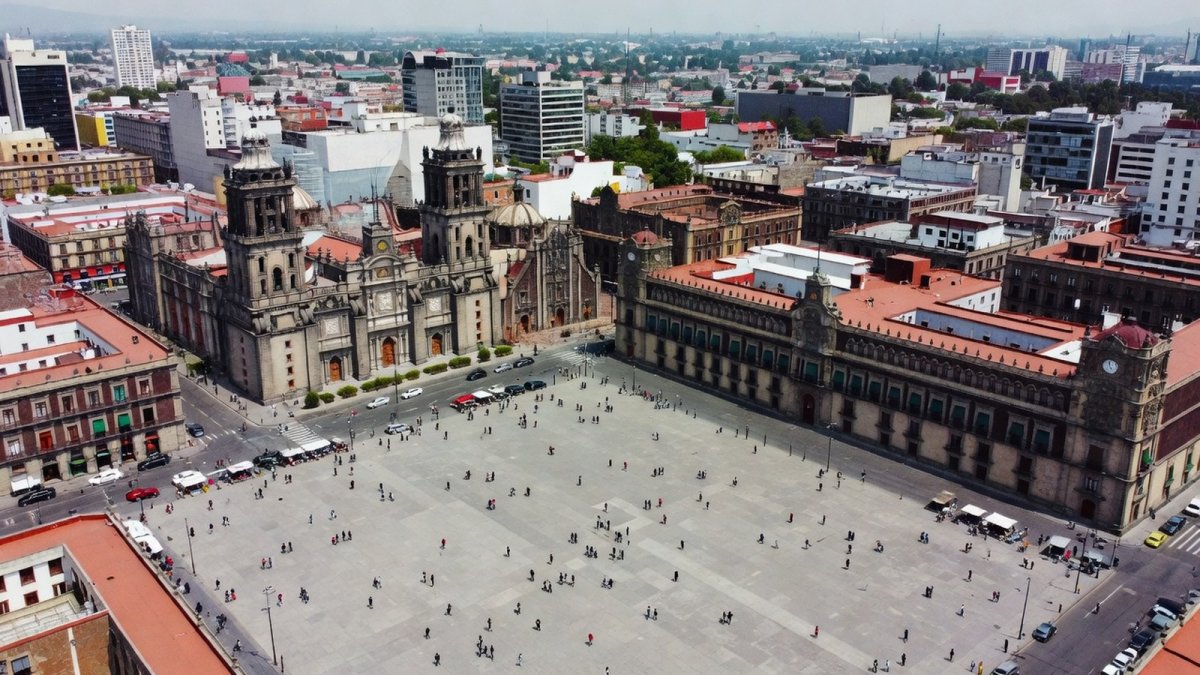
Sheinbaum Hosts Goldman Sachs President at Palacio Nacional to Pitch Plan México
In a clear signal of the Sheinbaum administration's push to attract global capital, President Claudia Sheinbaum received John E. Waldron, President and Chief Operating Officer of Goldman Sachs, at the Palacio Nacional in Mexico City's Historic Center on Tuesday, August 12, 2026. The high-level meeting, which also included Mexico's finance minister Edgar Amador Zamora of the Secretaría de Hacienda y Crédito Público, centered on the investment opportunities presented by the government's flagship economic strategy, Plan México.
President Sheinbaum took to her X account following the meeting to share the substance of the conversation. "En Palacio Nacional, recibí al presidente y director de operaciones de Goldman Sachs, John E. Waldron, y a su equipo; conversamos sobre la percepción favorable de nuestro país en los mercados internacionales y las buenas oportunidades de inversión que brinda el Plan México," she wrote. The post highlighted discussions around Mexico's "favorable perception" in international markets and the "good investment opportunities" offered by the national development plan.
No specific details regarding investment amounts, particular projects, or binding agreements were released following the meeting. The lack of concrete announcements suggests this was a strategic diplomatic engagement rather than a transactional negotiation, but the symbolism of a Wall Street titan sitting down with Mexico's president in the seat of federal power should not be underestimated. For families in colonias from Nezahualcóyotl to Monterrey, this meeting represents the quiet, behind-the-scenes work that determines whether jobs will come to their communities.
The meeting builds on prior engagement between Sheinbaum and Goldman Sachs leadership. In August 2024, while still president-elect, Sheinbaum hosted Waldron alongside John Greenwood and Osmin Rivera, co-heads for Latin America, and Manuel Camacho, head of the Investment Banking and Financing Group in Mexico. This continuity of dialogue signals a sustained relationship between the Mexican government and one of the world's most influential financial institutions.
What Is Plan México and Why Does It Matter to Everyday Mexicans?
Plan México is the cornerstone of the Sheinbaum administration's economic and industrial policy, launched in January 2025 with ambitious targets that touch the lives of nearly every Mexican worker and family. The plan seeks to create 1.5 million new jobs, reduce imports from Asia, raise total investment to over 25% of GDP, alleviate poverty, and create more specialized employment opportunities. The ultimate goal is to elevate the Mexican economy from its current position as the 15th largest in the world into the top 10.
For workers in the maquiladora belt stretching across Nuevo León, Querétaro, Guanajuato, and the Estado de México, these targets translate into questions about job security, wage growth, and the quality of employment available. The plan's emphasis on specialized manufacturing means that a worker in a taquería in León or a tortillería in Querétaro may see their children access better-paying factory jobs than previous generations. The promise of 1.5 million additional jobs in specialized manufacturing and strategic sectors is not abstract policy language — it is the difference between a family staying together in their comunidad or members having to migrate north for work.
The investment-to-GDP ratio targets are equally significant. The government aims to push investment above 25% of GDP by 2026 and above 28% by 2030. For context, Mexico has historically struggled to break the 20% barrier, and reaching these levels would require sustained capital inflows from both domestic and foreign sources. This is precisely where Goldman Sachs and other international financial institutions enter the picture — they are the conduits through which global capital flows into Mexican infrastructure, manufacturing, and energy projects.
Beyond the macroeconomic indicators, Plan México carries a deeply political significance for the Morena party and the Sheinbaum administration. It represents the continuation and evolution of the AMLO legacy, but with a distinctly different approach to private investment. While former President Andrés Manuel López Obrador was often skeptical of the private sector, Sheinbaum has positioned Plan México as a pragmatic bridge between social welfare commitments and market-friendly policies that attract foreign capital.
Goldman Sachs' Long History in Mexico Signals Confidence
Goldman Sachs is not a newcomer to the Mexican market. The firm first established operations in Mexico in 1994, the same year the North American Free Trade Agreement came into force and the country experienced the peso crisis that would reshape its economic trajectory. Since then, Goldman Sachs has participated in debt and equity transactions, as well as mergers and acquisitions involving both private companies and public entities across the Mexican economy.
This three-decade presence gives the firm deep institutional knowledge of Mexico's economic cycles, regulatory environment, and political landscape. When Goldman Sachs' President and COO makes the trip to Palacio Nacional, it signals that the firm sees Mexico as a market worth sustained senior-level attention. The meeting also underscores foreign investor interest in Mexico's macroeconomic outlook and nearshoring framework ahead of the USMCA review, which looms as a critical moment for North American trade relations.
The USMCA, known in Mexico as the T-MEC, is scheduled for review, and the outcome will have profound implications for Mexican workers and businesses. The agreement governs trade in automobiles, agricultural products, labor standards, and digital commerce among Mexico, the United States, and Canada. For Mexican manufacturing communities, the T-MEC review is not an abstract diplomatic exercise — it determines whether the factories employing their neighbors will continue to have access to the US market, their primary export destination.
Goldman Sachs' engagement with the Sheinbaum administration ahead of this review suggests that international financial players are monitoring the political and regulatory environment closely. The firm's participation in Mexican debt markets, equity offerings, and merger activity provides it with a unique vantage point on the country's economic health. Its leadership choosing to meet personally with the president indicates that Mexico remains a priority market for the firm's Latin American operations.
Mixed Signals: Economic Stagnation and Poverty Reduction
While the meeting at Palacio Nacional projected confidence, the economic reality on the ground is more nuanced. The think tank México ¿cómo vamos? (MCV) released a report in early 2026 that questioned whether Plan México's goals are on track. The report found stagnant economic growth and job losses in manufacturing sectors, a concerning development for a plan that promises 1.5 million new jobs. However, the report also noted positive improvements in poverty reduction for everyday Mexicans, suggesting that some benefits of the policy framework are reaching vulnerable populations.
The MCV report offered a measured assessment: "Mexico can advance ... [toward the achievement of] these goals if we provide greater legal certainty, openness to investment in the energy sector, and a more robust rule of law." This statement encapsulates the challenges facing the Sheinbaum administration. While the government has made progress on social programs and poverty alleviation, the private sector and international investors are looking for signals on legal stability, energy policy, and the enforcement of contracts.
For small business owners in tianguis markets and family-run enterprises across the country, these concerns translate into practical questions. Will the government provide stable energy prices for their operations? Can they rely on the courts to enforce commercial agreements? Will regulatory changes be predictable and transparent? The answers to these questions will determine whether the investment climate improves enough to generate the jobs Plan México promises.
The tension between social welfare commitments and market-friendly policies is not unique to Mexico, but it is particularly acute in the current political moment. The Sheinbaum administration must balance the expectations of Morena's base, which includes labor unions and social movements, with the demands of international capital, which seeks predictability and returns. The Goldman Sachs meeting suggests that Sheinbaum is actively courting the latter while maintaining her commitment to the former.
Nearshoring and the Future of Mexican Manufacturing
The concept of nearshoring — the relocation of supply chains closer to end markets — has been a central theme of Mexico's economic narrative since the trade disruptions of the pandemic era. As companies seek to reduce their dependence on Asian manufacturing hubs, Mexico has positioned itself as the natural alternative for serving the North American market. The Goldman Sachs meeting reinforces this narrative, with the firm's leadership engaging directly with the Mexican government on investment opportunities.
For workers in manufacturing states like Nuevo León, Querétaro, and Guanajuato, nearshoring represents both opportunity and challenge. The opportunity lies in the potential for new factories, higher wages, and more stable employment. The challenge is that nearshoring investments are not guaranteed — companies must choose Mexico over other destinations, and they make those choices based on factors like infrastructure quality, energy costs, security, and regulatory certainty.
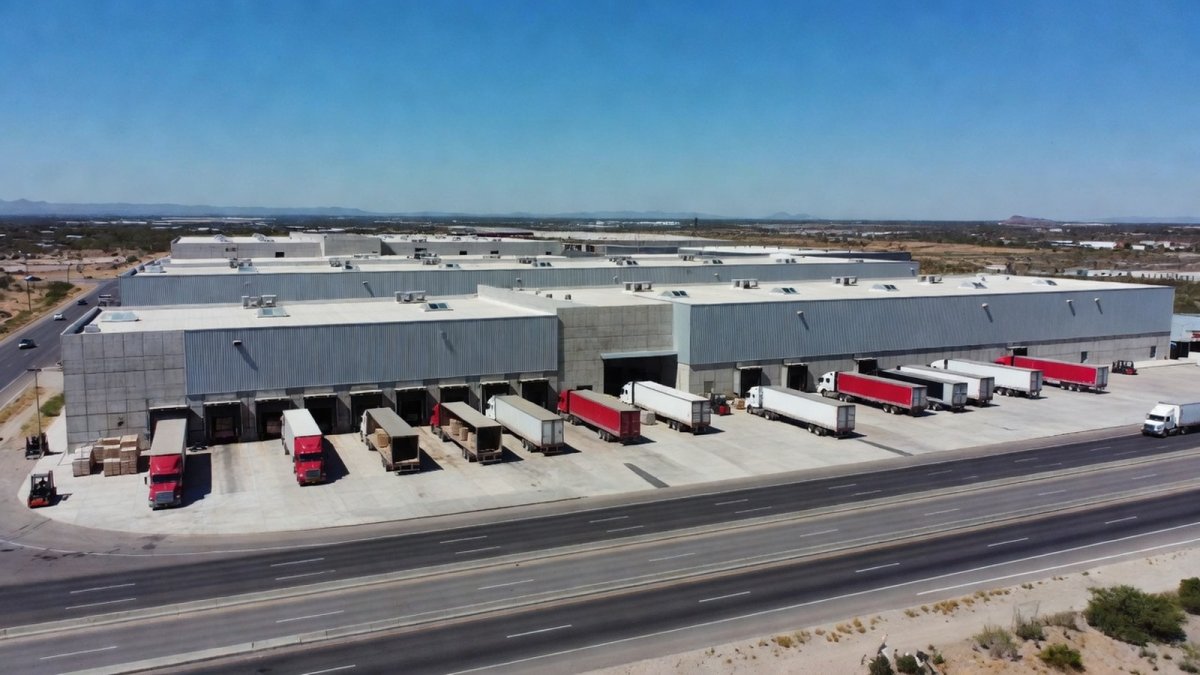
The Plan México framework explicitly aims to reduce imports from Asia and strengthen domestic production capacity. This strategy has implications for the maquiladora sector, which has traditionally operated as an assembly platform using imported components. The government's vision is to deepen the domestic supply chain, creating more value-added jobs rather than simple assembly work. This transition, if successful, would mean better-paying jobs for Mexican workers and stronger linkages between foreign-owned factories and local suppliers.
However, the transition is not without friction. The MCV report's finding of job losses in manufacturing suggests that the shift toward more specialized production is not happening quickly enough to offset losses in traditional assembly operations. For workers caught in this transition, the promise of future specialized jobs is cold comfort if their current employment disappears. The Sheinbaum administration must navigate this delicate balance between long-term structural transformation and short-term employment stability.
What This Meeting Means for Mexican Families and Communities
For the average Mexican family, the meeting between President Sheinbaum and Goldman Sachs leadership may seem distant from daily concerns. But the outcomes of such diplomatic engagements ripple through the economy in tangible ways. When international investors gain confidence in Mexico, they fund projects that create jobs in construction, manufacturing, and services. These jobs support families in colonias across the country, from the sprawling suburbs of the Estado de México to the industrial corridors of the Bajío region.
The connection to remittances is also relevant. Many Mexican families depend on money sent from relatives working in the United States. While remittances have remained resilient, the long-term goal of Plan México is to create enough domestic opportunities that migration becomes a choice rather than a necessity. Every investment that creates quality jobs in Mexico is a step toward keeping families together and strengthening communities.
For indigenous communities and rural areas, the benefits of increased investment are less direct but still significant. Infrastructure projects funded through public-private partnerships can bring roads, electricity, and internet connectivity to underserved regions. The government's commitment to poverty reduction, noted positively in the MCV report, suggests that social programs are reaching vulnerable populations even as the broader economic transformation proceeds unevenly.
The meeting at Palacio Nacional also carries symbolic weight. The Palacio is not just an office building — it is the seat of Mexican executive power, where presidents have received foreign dignitaries for centuries. By hosting Waldron there, Sheinbaum signaled that foreign investment is a priority for her administration and that she is willing to engage directly with the leaders of global finance. For a president from the Morena party, which has historically been skeptical of neoliberal economic policies, this engagement represents a pragmatic evolution.
Looking Ahead: The USMCA Review and Mexico's Economic Trajectory
The timing of the Goldman Sachs meeting is significant given the upcoming USMCA review. The trade agreement, which replaced NAFTA in 2020, is the backbone of North American economic integration. The review process will examine whether the agreement is meeting its objectives and may lead to modifications that affect Mexican exporters, workers, and businesses. International investors are watching this process closely, as any disruption to USMCA would have profound implications for the Mexican economy.
The Sheinbaum administration's engagement with Goldman Sachs suggests a strategy of building confidence among international financial players ahead of the review. By demonstrating that Mexico is open for business and committed to maintaining a favorable investment climate, the government hopes to reassure markets that the T-MEC review will not derail the country's economic trajectory. The presence of Finance Minister Edgar Amador Zamora at the meeting underscores the economic policy dimension of the engagement.
For Mexican workers and businesses, the stakes of the USMCA review are enormous. The agreement governs market access for Mexican exports, which account for a significant portion of the country's GDP. It also includes labor standards provisions that affect workers' rights and wages. Any changes to the agreement could either strengthen or weaken the position of Mexican workers in the North American economy.
As the Sheinbaum administration moves forward, it must balance multiple priorities: attracting foreign investment, maintaining social welfare programs, navigating the USMCA review, and delivering on the ambitious promises of Plan México. The meeting with Goldman Sachs is one piece of this complex puzzle, but it is a meaningful piece. It signals to the world that Mexico's president is willing to sit down with the leaders of global finance and make the case for her country. Whether that case translates into tangible investments and jobs for Mexican families will be measured in the months and years ahead.
Tags: Sheinbaum, Goldman Sachs, Plan México, Palacio Nacional, foreign investment, nearshoring, USMCA, T-MEC, Edgar Amador Zamora, John Waldron, Mexican economy, manufacturing jobs, Morena, maquiladora, trade agreement
By Rosa Martinez, Staff Writer
This article was produced with AI-assisted research and editorial support. Sources: Mexico News Daily, Mexico Business News, La Razón.
What's Your Reaction?
 Like
0
Like
0
 Dislike
0
Dislike
0
 Love
0
Love
0
 Funny
0
Funny
0
 Wow
0
Wow
0
 Sad
0
Sad
0
 Angry
0
Angry
0

Latin America/Andes Correspondent at Global1.News. Based in Bogota, covering politics, environment, energy, and social movements across the Andean region. Passionate about environmental journalism and communities protecting their land.













Comments (0)