
China and Australia Seek New Partnership at Shenzhen Summit
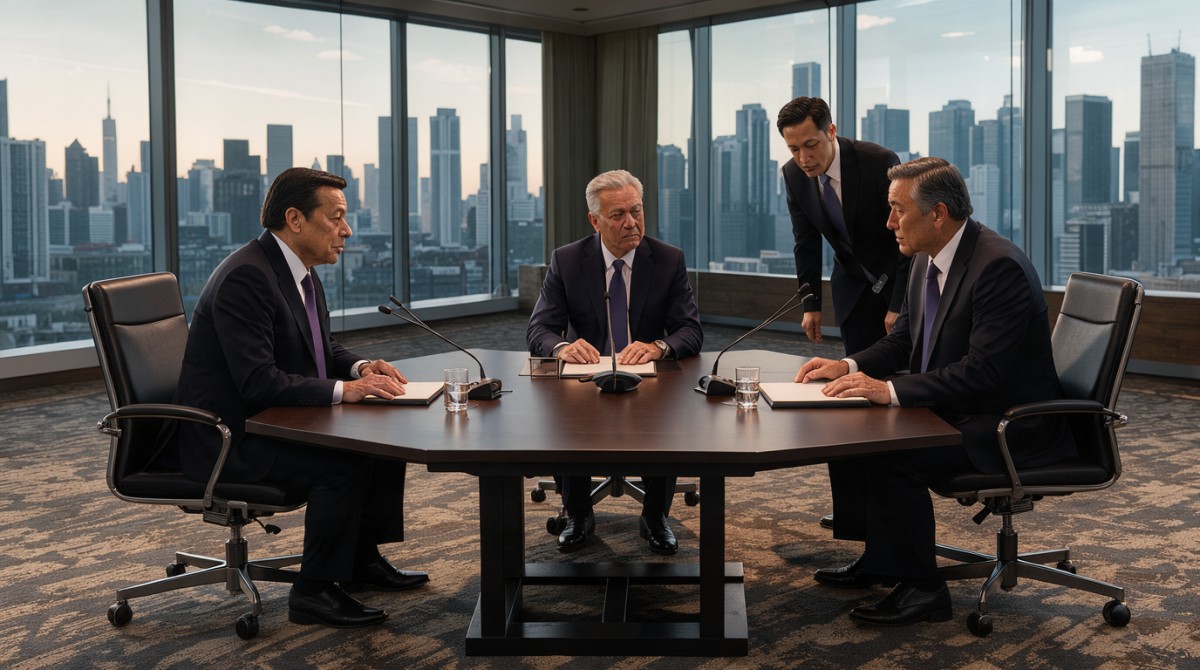
In a diplomatic overture that underscores Beijing's broader strategy of stabilising regional relationships, Chinese President Xi Jinping and Australian Prime Minister Anthony Albanese convened in Shenzhen on 22 November 2026.
In a diplomatic overture that underscores Beijing's broader strategy of stabilising regional relationships, Chinese President Xi Jinping and Australian Prime Minister Anthony Albanese convened in Shenzhen on 22 November 2026. The meeting, framed by both leaders as a “new starting point” ahead of the 55th anniversary of diplomatic ties in 2027, signals a concerted effort to move beyond lingering tensions and to cultivate a partnership grounded in mutual trust and shared success. The encounter, reported by CGTN, was not merely a symbolic gesture; it set the agenda for deepening trade, expanding cooperation in the green economy, new energy, digital industries and artificial intelligence (AI). By analysing the statements made during the summit and the insights offered by Rhys Roberts, president of the Australia‑China Business Council (ACBC), we can discern the strategic calculus that underpins this rapprochement and its implications for regional stability, global supply chains and the evolving architecture of Indo‑Pacific diplomacy.
Historical Context and the Significance of the “New Starting Point”
The phrase “new starting point” carries weight in Sino‑Australian relations, which have been marked by periodic friction over trade barriers, security concerns and divergent geopolitical alignments. The two nations celebrated the 55th anniversary of diplomatic ties in 2027, a milestone that has historically been used by Beijing to showcase its capacity for constructive engagement with Western partners. By positioning the Shenzhen meeting as a pre‑anniversary checkpoint, President Xi signalled a desire to reset the bilateral narrative before the commemorative year, thereby projecting an image of forward‑looking pragmatism.
From a strategic perspective, the timing aligns with China’s broader diplomatic push to consolidate its influence in the Indo‑Pacific through economic outreach and multilateral platforms such as the Belt & Road Initiative. For Australia, the meeting offers an avenue to diversify its trade portfolio amid shifting US‑China dynamics. The mutual acknowledgment of “mutual trust and shared success” reflects an attempt to re‑anchor the relationship in economic interdependence rather than ideological rivalry.
Rhys Roberts’ interview with CGTN host Wang Guan further contextualised the dialogue, emphasizing that both sides are keen to translate political goodwill into concrete business outcomes. This underscores a pragmatic dimension to the diplomatic overture: the pursuit of tangible economic benefits that can reinforce the political settlement and reduce the risk of future disputes.
Trade Relations: Removing Barriers and Expanding Traditional Exchanges
The core of the Shenzhen agenda centred on revitalising traditional trade flows that have suffered from tariff disputes and export controls in recent years. Roberts highlighted the need to “remove trade barriers” as a prerequisite for unlocking the full potential of bilateral commerce. While the video description does not enumerate specific tariffs, the emphasis on barrier removal suggests a willingness on both sides to revisit contentious sectors such as barley, wine and coal, which have historically been flashpoints.
From Beijing’s perspective, easing trade frictions serves a dual purpose. Economically, it secures a reliable market for Chinese manufacturers and raw material imports. Politically, it demonstrates Beijing’s capacity to negotiate concessions without resorting to coercive measures, thereby reinforcing its narrative of a “win‑win” partnership. For Australia, greater market access to China’s vast consumer base aligns with Canberra’s diversification strategy, reducing reliance on traditional partners like the United States and Japan.
The discussion of “traditional trade” also implied a broader agenda of normalising supply chain linkages that were disrupted by pandemic‑related restrictions and geopolitical tensions. Restoring these channels is critical for global industries that depend on seamless logistics, particularly in sectors such as agriculture, minerals and manufacturing where China and Australia are complementary players.
Green Economy Cooperation: From Rhetoric to Investment
Beyond conventional trade, the Shenzhen summit placed a pronounced emphasis on cooperation in the green economy. Both leaders identified “green economy” as a pillar of future collaboration, reflecting global trends toward decarbonisation and the strategic importance of clean technology. Roberts noted that expanding cooperation in this arena could translate into “tangible business growth,” signalling an intent to move beyond policy statements toward concrete investment projects.
China’s commitment to carbon neutrality by 2060 has driven massive state‑led initiatives in renewable energy, electric vehicles and battery production. Australia, endowed with abundant natural resources such as lithium, rare earths and solar potential, stands as a natural partner for Chinese green technology firms seeking raw material security. Joint ventures in lithium extraction, solar panel manufacturing and hydrogen development could therefore become focal points of the partnership.
The strategic calculus here is twofold. For Beijing, securing supply chains for critical minerals mitigates the risk of export controls imposed by rival powers. For Canberra, aligning with China’s green agenda offers a pathway to attract Chinese capital and technology, thereby accelerating domestic clean‑energy transitions. The mutual interest in green cooperation thus serves both economic and geopolitical objectives, reinforcing the partnership’s resilience against external pressures.
Digital Industries and AI: A New Frontier of Collaboration
Digital transformation and artificial intelligence (AI) emerged as another key theme of the Shenzhen dialogue. The video description references “digital industries and artificial intelligence” as sectors where both sides seek to deepen cooperation. This reflects China’s ambition to lead in next‑generation technologies while acknowledging Australia’s growing capabilities in cybersecurity, data analytics and research.
From a strategic standpoint, collaboration in AI and digital industries carries significant implications for the broader technology rivalry between the United States and China. By engaging Australia in joint research, standard‑setting and market access, Beijing aims to cultivate a network of partners that can help shape global technology norms in ways that are more favourable to Chinese interests. For Australia, participation in Chinese‑led digital initiatives offers access to a vast market and the opportunity to influence standards that will affect its own tech sector.
Roberts’ remarks about “people‑to‑people exchanges” underscore the importance of talent mobility and academic cooperation in this domain. Facilitating exchanges of researchers, engineers and students can help build the trust necessary for deeper technological integration, while also serving as a soft‑power conduit that reinforces the broader bilateral relationship.
People‑to‑People Links: Building Trust Beyond Government Channels
The emphasis on “people‑to‑people exchanges” in the CGTN interview reflects an understanding that sustainable partnerships require societal-level engagement. Roberts highlighted that business and cultural interactions can bring the two countries “closer,” suggesting that beyond high‑level diplomatic accords, grassroots connections are essential for consolidating trust.
In practice, this could involve expanding tourism, educational scholarships, and cultural festivals that showcase each nation’s heritage. Such initiatives not only generate goodwill but also create constituencies that have a vested interest in maintaining stable relations. For Beijing, fostering positive perceptions of China among Australian publics can counteract narratives that portray China as a strategic threat, thereby smoothing the path for future policy concessions.
Conversely, for Australia, deeper people‑to‑people ties can help mitigate domestic political pressures that often frame China as a security adversary. By highlighting tangible benefits—such as job creation through Chinese investment or academic collaborations—Australian stakeholders can present a more nuanced view of the bilateral relationship to their constituencies.
Strategic Implications for Regional Stability and Global Supply Chains
The Shenzhen summit, as reported by CGTN, represents more than a bilateral goodwill tour; it is a microcosm of the shifting balance of power in the Indo‑Pacific. By seeking to normalise relations with Australia, China aims to reduce the diplomatic isolation that has intensified since the early 2020s, thereby creating a broader coalition of states willing to engage with its development model. Successful implementation of the outlined initiatives—trade barrier removal, green economy cooperation, digital and AI partnerships—could reinforce supply chain resilience for both nations, mitigating the volatility that has characterised global trade in recent years.
For regional stability, a constructive Sino‑Australian partnership may serve as a stabilising factor, tempering the risk of a binary alignment of Indo‑Pacific states around the United States versus China. If Australia can balance its security alliance with Washington while deepening economic ties with Beijing, it may act as a bridge that encourages dialogue rather than confrontation. This could, in turn, influence other regional actors—such as Japan, South Korea and Southeast Asian nations—to pursue similar pragmatic engagements with China.
In the broader context of global supply chains, the sectors highlighted at Shenzhen—energy minerals, digital technologies and AI—are critical nodes in the international production network. Enhanced cooperation could lead to more integrated supply routes, reducing dependence on any single market and thereby enhancing overall system robustness. However, the success of these initiatives will hinge on the ability of both governments to translate high‑level rhetoric into enforceable agreements, and on the willingness of private sector actors to navigate the complex regulatory environments that accompany cross‑border collaborations.
By Prof. Marcus Chen, Staff Writer
This article was produced with AI-assisted research and editorial support. Reporting is based on the source material cited below. Sources: CGTN video report (22 November 2026); CGTN; Global1.News
What's Your Reaction?
 Like
0
 Dislike
0
 Love
0
 Funny
0
 Wow
0
 Sad
0
 Angry
0

World Politics Analyst at Global1.News. Based in Beijing, covering US-China relations, global trade, and geopolitical strategy. Brings deep analytical perspective to the power dynamics shaping international affairs.














Comments (0)