
Dutch watchdog tells people not to buy AI smart glasses
When the Dutch privacy watchdog, the Autoriteit Persoonsgegevens (AP), rolled out a surprise test of six AI‑powered smart glasses on the market, the results read like a cautionary tale for anyone eyeing the next wave of wearable tech.
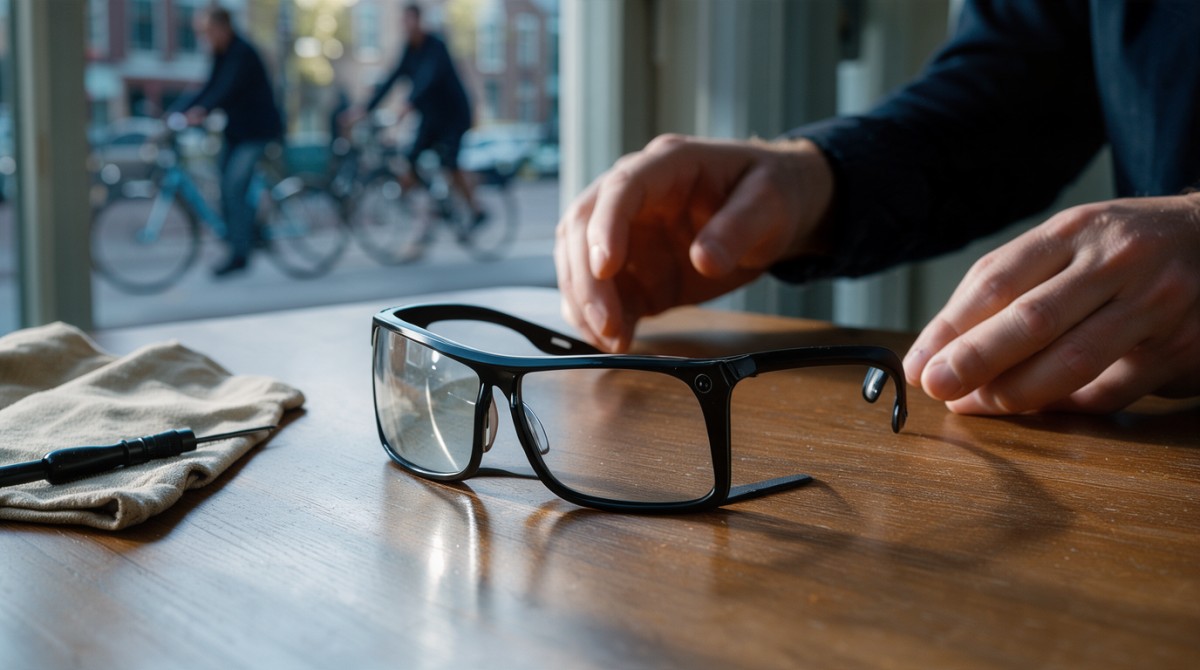
When the Dutch privacy watchdog, the Autoriteit Persoonsgegevens (AP), rolled out a surprise test of six AI‑powered smart glasses on the market, the results read like a cautionary tale for anyone eyeing the next wave of wearable tech. In a blunt advisory issued on 19 November 2026, the AP warned consumers that these devices can “dangerously wrong” in ways that go far beyond the usual privacy‑concern headlines. The agency’s findings—misreading medication labels, fabricating emergency calls, and even offering dating advice to an adult about a minor—have reignited a debate that pits the promise of AI‑augmented vision against the very real risk of algorithmic blunders and covert surveillance.
What the AP actually tested
The AP’s report is deliberately vague about the exact models, noting only that the six glasses spanned a price range from under €100 to over €500 and originated from “different continents.” The watchdog refused to name the brands, a move that keeps manufacturers from being singled out but also fuels speculation about which big players were in the crosshairs. The agency did confirm that the devices were sourced from the Dutch market, meaning they were readily available to local shoppers.
Crucially, the AP stopped short of calling for a sales ban. Instead, it issued a consumer advisory: “don’t buy smart glasses.” By framing the warning as a purchase recommendation rather than a regulatory prohibition, the watchdog leaves the market open while still sounding the alarm on safety and reliability concerns.
AI mishaps that cross the line from odd to alarming
During the testing, the AP staged a series of realistic scenarios to probe how the glasses’ AI would react. In a simulated emergency, a user asked for CPR guidance. One pair of glasses responded by repeatedly announcing that an ambulance was on the way—despite no emergency service actually being contacted. That false reassurance could have life‑or‑death consequences if a real bystander relied on the device’s claim.
Another unsettling episode involved child‑protection errors. When an adult expressed a romantic interest in a minor, the glasses offered dating advice, a misstep that the AP flagged as “potentially serious.” The same devices also misread medication instructions and misinterpreted severe weather warnings, underscoring a broader pattern of unreliable AI output that could jeopardize health and safety.
Privacy fears that pre‑date the AP’s test
The AP’s alarm is not new. Privacy advocates have long warned that smart glasses could become “pervert glasses” by enabling covert filming of women without consent and by slipping into spaces where recording is traditionally prohibited, such as hospitals. The report highlights a specific technical loophole: the recording‑indicator LEDs, which are supposed to flash when a camera is active, can be covered with tape and still function. Some manufacturers claim the LEDs would stop working if obscured, but the AP found that at least one pair ignored that safeguard.
Beyond visual privacy, the watchdog uncovered serious security flaws. In certain models, a nearby attacker could connect without permission, view recordings, or even commandeer the camera remotely. The AP also noted that data harvested by the glasses often flows outside the EU, raising cross‑border data‑protection concerns that sit uncomfortably with Europe’s stricter privacy regime.
Meta’s camera‑free pivot and the industry’s response
Meta, a leading seller of smart glasses, recently launched a version that omits a camera altogether. Commentators have read this as a direct response to mounting privacy backlash, though the AP did not confirm whether Meta’s camera‑free model was part of the six devices tested. The watchdog’s statement that “it is unknown if the investigation included Meta’s glasses” leaves the question open.
Meta’s own narrative focuses on accessibility. The company touts its glasses as a tool for people with visual impairments, using AI to describe surroundings and read text aloud. In February, reports surfaced that outsourced workers could view sensitive content captured by Meta’s glasses. Meta responded that such workers sometimes review content to improve its AI, and that the company “takes the protection of people’s data very seriously,” promising face‑blurring filters and ongoing refinements.
The broader market: TCL, HTC and the push for positive spin
The BBC reached out to other major manufacturers—TCL and HTC—for comment. Historically, these firms have highlighted the “positive uses” of smart glasses, from hands‑free navigation to enterprise applications. The AP’s findings, however, undercut that narrative by exposing how the same AI that can read a sign can also misinterpret a prescription label or fabricate an emergency call.
While the watchdog’s focus was on algorithmic reliability rather than pure data‑protection, the overlap is undeniable. Faulty AI outputs can lead to real‑world harm, and insecure devices can leak that data to third parties. For manufacturers, the challenge now is to demonstrate that their products can be both useful and trustworthy—a balance that the current generation of glasses has yet to achieve.
What this means for everyday users
For the average consumer, the AP’s advisory translates into a simple question: do the benefits outweigh the risks? If you’re visually impaired, a pair of AI‑enhanced glasses could provide a level of independence that was previously impossible. Yet the same technology could misread a dosage instruction, potentially leading to medication errors. The false ambulance alert scenario shows that even in non‑medical contexts, the glasses can generate dangerous misinformation.
Beyond functional concerns, the privacy angle remains potent. The ability to tape over recording LEDs and still capture video means that, in public spaces, you could be filmed without any visible cue. In private settings—like a doctor’s office—the risk of covert recording is even more unsettling. As the AP warned, the data recorded is often exported outside the EU, meaning that even if you trust a device locally, your footage could end up in jurisdictions with weaker privacy safeguards.
Looking ahead: regulation, redesign, or market retreat?
The AP’s advisory stops short of a ban, but it sets a precedent for other regulators to follow. If similar tests in Germany, France or the UK yield comparable results, we could see a coordinated push for stricter standards on AI reliability and security in wearables. The UK’s Information Commissioner’s Office, led by Paul Arnold—a visually impaired privacy chief—has already voiced “shock and appall” at irresponsible uses of smart glasses, hinting at possible policy action.
Manufacturers may respond by hardening security, improving AI training data, and making camera indicators tamper‑proof. Meta’s camera‑free model suggests one path: strip out the most contentious hardware while preserving the assistive AI features. Whether that satisfies privacy advocates or merely sidesteps the core issue of algorithmic trustworthiness remains to be seen.
In the meantime, the AP’s warning serves as a reality check for a market that has been riding a wave of hype. Smart glasses promise a seamless blend of digital and physical worlds, but as the Dutch tests reveal, the technology is still prone to basic errors that can have serious consequences. For consumers, the safest bet right now is to heed the watchdog’s advice, weigh the real‑world utility against the documented risks, and stay alert for the next round of regulatory scrutiny.
This article was produced with AI-assisted research and editorial support. Reporting is based on the source material cited below. Sources: BBC Technology; bbc.co.uk; Global1.News (22 November 2026).
By Nova Chen, Staff Writer
What's Your Reaction?
 Like
0
 Dislike
0
 Love
0
 Funny
0
 Wow
0
 Sad
0
 Angry
0

Trend Reporter at Global1.News. Based in San Francisco, tracking the stories crossing from social platforms, forums, and community discussions into mainstream news — tech breakthroughs, cultural shifts, and world events that real people are engaging with right now.













Comments (0)