
Global courts under attack and four more takeaways from the Trump, Xi, Putin meeting
On the margins of the APEC summit in Shenzhen, the leaders of the United States, China and Russia convened for an unprecedented trilateral dialogue that, while symbolic, underscored the shifting architecture of global nuclear governance and great‑power diplomacy.

On the margins of the APEC summit in Shenzhen, the leaders of the United States, China and Russia convened for an unprecedented trilateral dialogue that, while symbolic, underscored the shifting architecture of global nuclear governance and great‑power diplomacy. The meeting—lasting just over an hour—brought together the heads of the world’s three principal nuclear arsenals at a moment when the existing New START treaty between Washington and Moscow is set to lapse. By examining the tenor of the discussions, the public statements of the three presidents, and the broader geopolitical context, one can discern both the constraints and the latent possibilities that this encounter reveals for the future of strategic stability, international law, and the balance of power.
Historical backdrop: the erosion of existing arms control frameworks
The New START treaty, which caps the deployed strategic warheads of the United States and Russia at 1,550 each, is slated to expire in February 2027. Since its inception, the accord has acted as the cornerstone of bilateral nuclear risk reduction, providing transparency mechanisms and verification protocols that have helped to temper the post‑Cold War rivalry. The treaty’s impending termination, noted in the Guardian report, creates a strategic vacuum that Beijing has long coveted as a lever to elevate its own nuclear posture.
In September of the previous year, President Vladimir Putin offered to voluntarily extend the New START limits for an additional year, a gesture that signaled Moscow’s willingness to preserve a modicum of stability despite the broader deterioration of US‑Russia ties. President Donald Trump, however, dismissed the proposal, insisting that any future framework must incorporate China. This insistence reflects a growing recognition among Washington officials that the bilateral nuclear balance can no longer be managed without accounting for Beijing’s expanding arsenal and its strategic ambitions.
Trump’s framing of the trilateral encounter
President Trump opened the Shenzhen talks by declaring that “we are really making history,” positioning the United States, China and Russia as “uniquely positioned” to discuss nuclear risk reduction. This rhetorical framing served multiple purposes. First, it cast the United States as a proactive architect of a new, inclusive arms control architecture, countering narratives that Washington is retreating from multilateral engagement. Second, by emphasizing “uniqueness,” Trump sought to elevate the trilateral format above traditional bilateral or multilateral forums, suggesting a fresh diplomatic avenue that could bypass entrenched Western‑centric mechanisms.
Trump also underscored the importance of dialogue, arguing that peace cannot be achieved by “turning down opportunities for dialogue.” This language, while generic, signals an attempt to legitimize the meeting despite the absence of concrete outcomes. It also reflects a broader Trump administration trend of prioritizing high‑profile diplomatic gestures—such as this historic trilateral summit—over substantive policy breakthroughs.
Xi’s public commitment to nuclear abolition
President Xi Jinping used the occasion to reiterate China’s long‑standing rhetorical commitment to nuclear disarmament, calling for “every effort to be made to prevent nuclear war” and for nuclear weapons to be “completely prohibited and thoroughly destroyed.” While these statements align with Beijing’s official doctrine of “no first use” and a minimal deterrent, they also serve a diplomatic function: presenting China as a responsible nuclear power willing to lead global disarmament efforts.
Crucially, Xi’s remarks were not accompanied by any proposal for a concrete arms control instrument. The absence of a new agreement underscores the limits of China’s willingness to translate rhetoric into binding commitments, especially when such steps might constrain its strategic flexibility or expose its nuclear modernization program to external scrutiny.
Putin’s emphasis on converging interests and the Ukraine war
President Putin highlighted “many converging interests” with the United States and China, explicitly referencing the war in Ukraine. By framing the conflict as a shared concern, Putin sought to portray Russia as a partner in a broader coalition of powers dissatisfied with the current Western‑led security order. This narrative aligns with Moscow’s long‑standing strategy of exploiting fissures within the liberal international system to erode collective pressure.
Nevertheless, the meeting offered no substantive progress on ending the Ukrainian war. Kyiv was absent from the joint peace declaration, and the discussion did not yield any new diplomatic overtures. This omission reflects the entrenched positions of the parties: the United States remains committed to Ukraine’s sovereignty, while Russia continues its military campaign, now in its fifth year, and China maintains a cautious stance, balancing its strategic partnership with Moscow against its economic ties to Europe.
Challenges to international legal institutions
President Trump’s criticism of the International Criminal Court (ICC) as “out of control” and the joint Chinese‑Russian declaration’s call for limiting the court’s jurisdiction reveal a coordinated effort to undermine a key pillar of the post‑World War II legal order. The ICC issued an arrest warrant for President Putin in March 2023 for alleged war crimes related to the forced transfer of Ukrainian children. By attacking the court’s legitimacy, the three powers signal a willingness to shield high‑ranking officials from international accountability.
The United States and China are not parties to the Rome Statute, the treaty that established the ICC, and therefore are not legally bound to enforce its warrants. The declaration’s emphasis on “state consent” and “immunity of officials” underscores a broader strategy to reinforce the principle of sovereign immunity, complicating future attempts to hold leaders of major powers accountable for alleged violations of international law.
UN reform and the quest for a more inclusive security architecture
The joint peace declaration, issued by Chinese and Russian state media, called for United Nations reform to better respond to global challenges, including “boosting fuel supplies” and “dialogue to reduce nuclear risks.” This language reflects a long‑standing Russian and Chinese agenda to expand the role of non‑Western states within the UN system, particularly in the Security Council.
Both Beijing and Moscow have advocated for greater representation of nations from Asia, Africa and South America, arguing that the current composition—dominated by the five permanent members—fails to reflect contemporary geopolitical realities. They also oppose permanent seats for Germany and Japan, contending that NATO and Western blocs are already overrepresented. By coupling UN reform with calls for nuclear risk reduction, the declaration attempts to link institutional change with substantive security outcomes, thereby framing reform as a prerequisite for effective global governance.
Strategic implications and the road ahead
The Shenzhen trilateral meeting, while lacking concrete agreements, is emblematic of a shifting great‑power dynamic in which the United States, China and Russia are increasingly willing to coordinate on issues of mutual interest, even as they remain adversaries in other domains. The expiration of New START creates a strategic opening for a three‑way framework that could either stabilize or destabilize the nuclear status quo, depending on whether Beijing is persuaded to accept verifiable limits.
For Washington, the challenge lies in balancing the desire to incorporate China into arms control discussions with the need to maintain pressure on Moscow over Ukraine and on Beijing over trade, technology and regional security concerns. For Beijing, the opportunity is to position itself as a responsible nuclear power while preserving strategic ambiguity and avoiding constraints that could impede its long‑term modernization goals. For Moscow, the summit offers a platform to legitimize its actions in Ukraine and to seek diplomatic cover against Western sanctions and legal challenges.
In the near term, the lack of a breakthrough suggests that the trilateral format will remain a venue for signaling rather than for negotiating substantive policy. However, the very fact that the three leaders convened—an unprecedented event—signals a willingness to explore new diplomatic architectures outside traditional Western‑led institutions. As the New START deadline approaches, the world will watch closely whether this willingness translates into a concrete, verifiable agreement that can anchor strategic stability in an era of multipolar competition.
This article was produced with AI-assisted research and editorial support. Reporting is based on the source material cited below. Sources: The Guardian China; theguardian.com; Global1.News (23 November 2026).
By Prof. Marcus Chen, Staff Writer
What's Your Reaction?
 Like
0
 Dislike
0
 Love
0
 Funny
0
 Wow
0
 Sad
0
 Angry
0
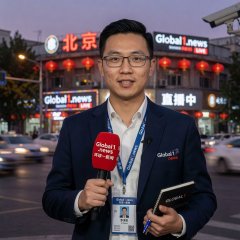
World Politics Analyst at Global1.News. Based in Beijing, covering US-China relations, global trade, and geopolitical strategy. Brings deep analytical perspective to the power dynamics shaping international affairs.















Comments (0)