
Seoul and Tokyo Forge Energy Alliance at Andong Summit, Signaling Strategic Shift in Korea-Japan Relations
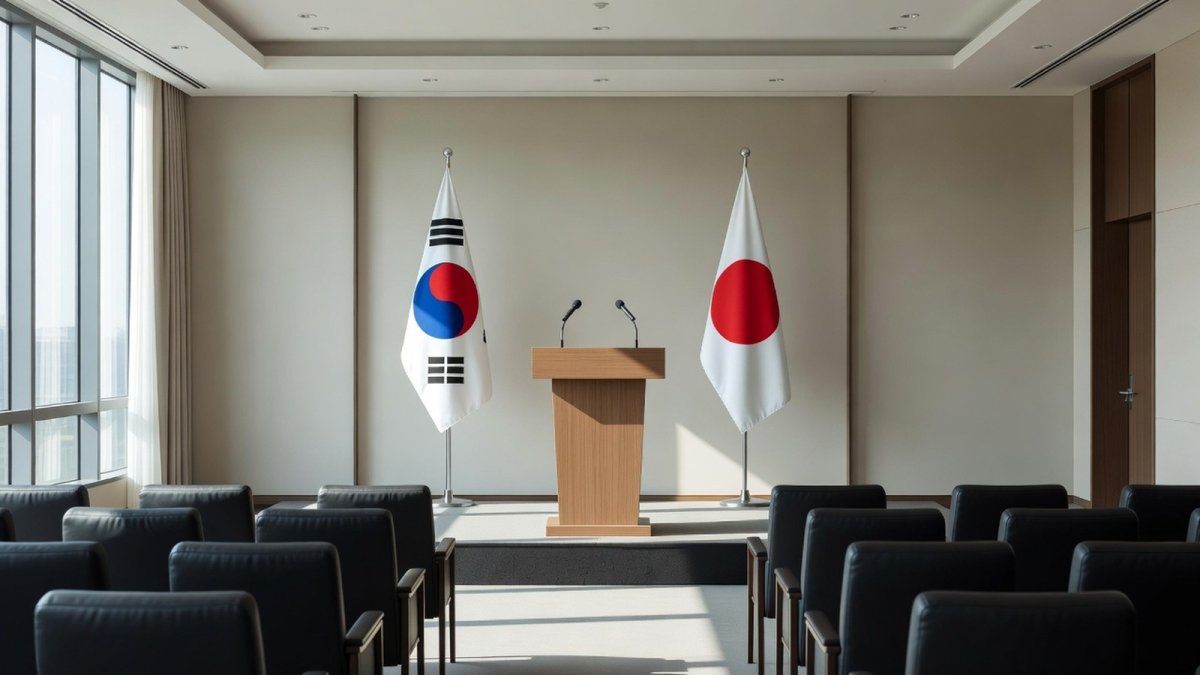
South Korean President Lee Jae-myung and Japanese Prime Minister Takaichi Sanae met in Andong on May 19, 2026, agreeing to deepen energy supply-chain cooperation and Indo-Pacific security coordination as Middle East instability and Strait of Hormuz disruptions reshape Korea-Japan ties.
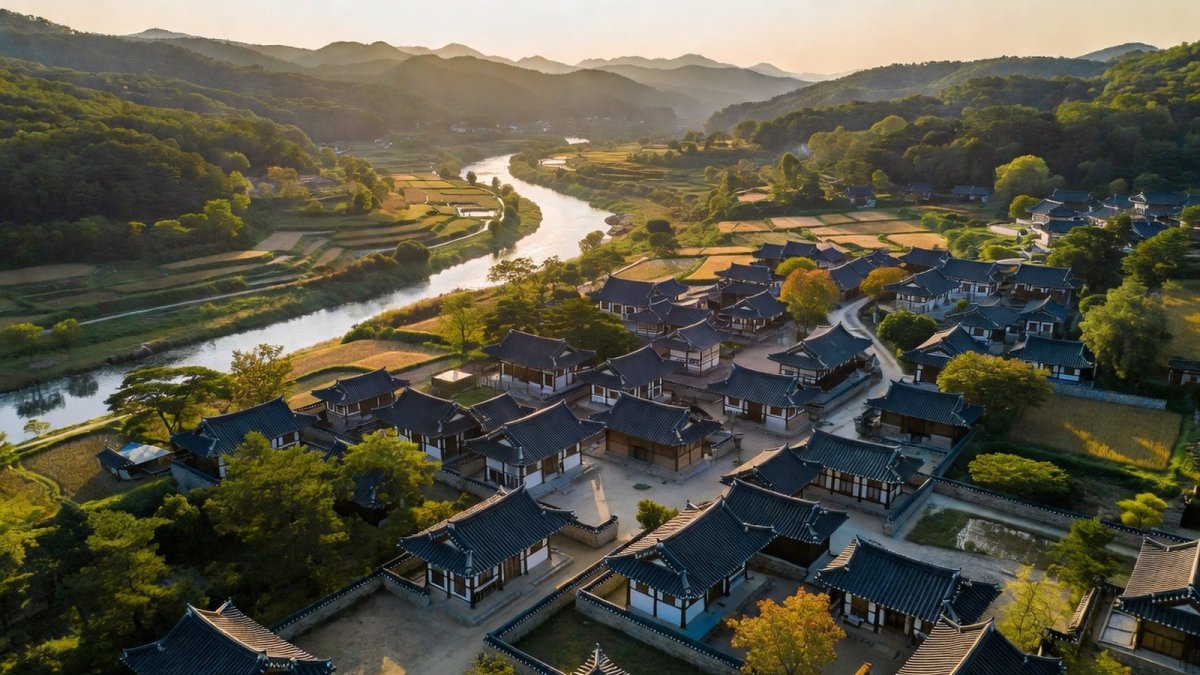
The fourth meeting between South Korean President Lee Jae-myung and Japanese Prime Minister Takaichi Sanae, held in Andong on May 19, 2026, produced the most concrete bilateral outcomes yet in energy security cooperation, signaling a strategic recalibration between Asia's two largest energy importers. The summit, held in Lee's hometown and reciprocating Takaichi's January visit to Nara, came at a moment of acute geopolitical flux-days after the U.S.-China summit concluded and amid Middle East instability that has directly threatened maritime energy routes critical to both economies.
Seoul and Tokyo Forge Energy Alliance at Andong Summit, Signaling Strategic Shift in Korea-Japan Relations
Seoul, South Korea - May 19, 2026 - The following analysis examines the Korea-Japan summit held in Andong and its implications for Northeast Asian diplomacy.
Energy Security Takes Center Stage
The most substantive outcome was an agreement to deepen cooperation on energy supply chains, a domain that has historically remained within the purely commercial sphere of bilateral relations. Both leaders acknowledged that the recent situation in the Middle East-specifically the Iran-led blockade of the Strait of Hormuz that has persisted since the outbreak of war in February 2026-has transformed energy security into a matter of strategic urgency.
At the joint press conference following the summit, Lee articulated the shared concern with unusual directness: "We agreed that close bilateral cooperation is needed more than ever amid the instability in supply chains and energy markets arising from the recent situation in the Middle East." The numbers underscore the stakes: Japan depends on the Middle East for roughly 90 percent of its crude oil imports, while South Korea's dependence stands at approximately 70 percent. Both nations rely heavily on seaborne crude, making any disruption at the Strait of Hormuz an immediate economic vulnerability.
The agreed measures include enhanced information-sharing and communication channels on crude oil supply and strategic reserves, joint exploration of swap arrangements for crude oil, petroleum products, and LNG, and expanded LNG cooperation building on a March 2026 agreement between Korea Gas Corp (KOGAS) and Japan's JERA. That earlier agreement, focused on improving the stability and efficiency of LNG supply management, now appears to be the foundation for a broader energy partnership.
Strategic Context: The Strait of Hormuz and Superpower Dynamics
The energy cooperation agreement cannot be understood in isolation from the broader security environment. Since the outbreak of the Iran war in February 2026, U.S. President Donald Trump has repeatedly called on allies, including Tokyo and Seoul, to contribute militarily to efforts to break the blockade of the Strait of Hormuz. The Andong summit produced a carefully calibrated response: Lee and Takaichi agreed to continue respective efforts to help calm the Middle East situation, including ensuring free and safe navigation through the strait, and discussed joint responses and cooperation on navigation and security in the waterway.
The timing was significant: the summit came immediately after the U.S.-China summit concluded on May 15, 2026-Trump's second visit to China and the first official U.S. presidential visit in nearly a decade. Seoul and Tokyo have been closely observing superpower dynamics, navigating what analysts describe as fears of both abandonment and entrapment under Trump's second term. The two leaders exchanged views on the U.S.-China summit and shared updates on communications with Washington, reflecting a coordinated approach to the trilateral relationship with the United States.
President Lee's framing at the press conference was explicit: "At a time of rapidly shifting international order, the two leaders reaffirmed the importance of South Korea-Japan and South Korea-US-Japan cooperation for regional peace and stability." The two sides shared the view that Tokyo and Seoul should work actively to maintain and strengthen deterrence and response capabilities in the Indo-Pacific through their respective alliances with the U.S. and closer strategic coordination among the three countries.
North Korea and the Korean Peninsula
The summit also addressed the Korean Peninsula, with the two leaders discussing Pyongyang's nuclear and missile development. Takaichi expressed gratitude for Lee's support on the immediate resolution of the issue of Japanese citizens abducted by North Korea-a matter of profound domestic political significance in Japan.
Lee articulated Seoul's vision for the peninsula in terms that reflect continuity with his administration's approach: "building a peaceful peninsula where the two Koreas can coexist peacefully and grow together-one where there is no need to fight." This framing is notable given that North Korea has revised its constitution to drop references to unification. The summit reaffirmed that Seoul's approach to Pyongyang remains anchored in stability and coexistence even as the security environment grows more complex.
Historical Issues: A Humanitarian First Step
On the historically fraught terrain of Korea-Japan relations, the summit produced a modest but symbolically significant development. DNA analysis of remains excavated from the Chosei (Josei) Coal Mine in Japan will begin soon, with Korea's National Forensic Service and Japanese police authorities conducting joint DNA analysis to identify victims of the mine flooding incident. This cooperation was agreed at the January Nara summit.
Lee characterized the initiative in careful terms: "This will be a small but meaningful first step for both countries in cooperating on historical issues, starting with humanitarian matters." The phrasing reflects the Lee administration's deliberate sequencing-humanitarian cooperation before more contentious issues.
No breakthrough was achieved on more sensitive matters: South Korea's possible accession to the CPTPP and the resumption of Japanese seafood imports were not resolved. Seoul has maintained a ban on seafood imports from Fukushima and seven other Japanese prefectures since 2013, a policy that remains a point of friction. The absence of progress underscores the limits of the current rapprochement.
China: Divergent Approaches
The two leaders' approaches to China revealed a notable divergence. Lee proposed revitalizing Korea-China-Japan trilateral cooperation, arguing that given Northeast Asia's tight interconnection across economic and security issues, it "is essential for Korea, China and Japan to respect one another, cooperate and pursue shared interests," led by civilian exchanges and practical collaboration.
Takaichi, by contrast, avoided any direct reference to China. This silence reflects the strained state of Tokyo-Beijing relations following her remarks last November on a possible Taiwan contingency. Beijing has since tightened economic pressure on Japan, including restrictions on rare earth-related exports. The contrast between Lee's openness to trilateral engagement and Takaichi's reticence highlights the different strategic calculations facing Seoul and Tokyo in managing their relationships with Beijing.
Future Industries and People-Centered Diplomacy
Beyond energy and security, the summit addressed future industries and people-to-people ties. Lee noted that companies and people in both countries will be "at the forefront of efforts to establish a 'global AI universal basic society,'" leveraging each other's competitiveness for mutually beneficial strategic cooperation. He proposed expanding practical cooperation in space technology, biotechnology, regional revitalization, and joint responses to transnational scam crimes-proposals that Takaichi welcomed positively.
The "Common Social Issues Consultative Body," launched during Lee's August 2025 visit to Japan, has expanded cooperation in regional revitalization, agriculture, suicide prevention, low birth rates, and aging societies-shared demographic and social challenges facing both countries.
The dinner that followed reflected the people-centered diplomacy characterizing this phase of Korea-Japan relations. Dishes were prepared without red pepper powder for Takaichi, reflecting inland Andong's culinary traditions where fresh seafood was historically scarce. Lee recalled that Takaichi personally taught him to play drums during the January Nara visit. Lee said Korea and Japan should no longer remain "close yet distant neighbors" but become "truly close partners built on trust and friendship," and Takaichi proposed the next shuttle diplomacy meeting in a Japanese hot spring town.
Strategic Implications and Outlook
The Andong summit represents a significant milestone in Korea-Japan relations under the Lee and Takaichi administrations. This was their fourth meeting and third summit, following their first encounter in October 2025 on the sidelines of the APEC summit in Gyeongju, their meeting at the G20 Summit, and Lee's January visit to Nara. Six Korea-Japan summits have taken place since the Lee government was inaugurated, with this the second shuttle diplomacy meeting of 2026.
Analysts see energy security becoming part of the overlapping strategic security thinking of Japan and South Korea rather than remaining purely economic or commercial. The shift is reinforced by concrete developments: Japan has invested approximately $256 million in deep-sea mineral development projects since 2018, while South Korean companies are expanding overseas mining investments. The bilateral Supply Chain Partnership Arrangement (SCPA) signed in March 2026 provides an institutional framework for enhanced supply chain preparedness.
For Lee, the Andong meeting demonstrated that outreach to Japan produces practical gains ahead of critical local elections in June 2026. For Takaichi, it reinforced efforts to keep South Korea close as Japan expands its security and economic role in the Indo-Pacific while navigating tensions with China. The summit's outcomes-particularly in energy security-suggest the relationship is being redefined around shared strategic interests, even as historical and political sensitivities persist.
The test will come in implementation. The energy cooperation agreements, the joint DNA analysis, and the proposed trilateral initiatives all require sustained follow-through; the next shuttle diplomacy meeting, proposed for a Japanese hot spring town, will show whether the momentum of Andong can be maintained. For now, the summit has demonstrated that Seoul and Tokyo can translate shared vulnerabilities into concrete cooperation-a development with significant implications for regional stability and the broader Indo-Pacific order.
By Prof. David Park, Staff Writer
This article was produced with AI-assisted research and editorial support. Reporting is based on sources cited in the article.
What's Your Reaction?
 Like
0
Like
0
 Dislike
0
Dislike
0
 Love
0
Love
0
 Funny
0
Funny
0
 Wow
0
Wow
0
 Sad
0
Sad
0
 Angry
0
Angry
0
East Asia/Technology Correspondent at Global1.News. Seoul-based voice covering Korean politics, technology, business, and culture. Analyzes how technology and geopolitics intersect across East Asia.














Comments (0)