
Saudi FM in Moscow: Riyadh Balances OPEC+ Ties, US Security and Iran Accord
The visit of Saudi Arabia's top diplomat to Moscow on September 8, 2026, arrives at a pivotal juncture for the Middle East, as a US-Iran peace accord signing is set for Geneva on Friday and Gulf states navigate a complex web of security alliances.
The visit of Saudi Arabia's top diplomat to Moscow on September 8, 2026, arrives at a pivotal juncture for the Middle East, as a US-Iran peace accord signing is set for Geneva on Friday and Gulf states navigate a complex web of security alliances. The talks between Foreign Minister Prince Faisal bin Farhan and his Russian counterpart Sergei Lavrov underscore Riyadh's doctrine of "balanced partnerships" — maintaining deep security ties with Washington while preserving a critical energy axis with Moscow.
Saudi Foreign Minister in Moscow: Riyadh Balances OPEC+ Energy Ties, US Security Guarantees and Looming Iran Accord
Moscow, Russia - September 8, 2026 — Saudi Minister of Foreign Affairs Prince Faisal bin Farhan bin Abdullah arrived in the Russian capital on Tuesday for an official visit, meeting Foreign Minister Sergei Lavrov at Zinaida Morozova's Mansion, according to Reuters pool photographs. The talks, confirmed by the Saudi Press Agency (SPA), were set to cover bilateral relations alongside regional and international developments of mutual interest, as the two nations mark the centenary of Saudi-Russian diplomatic relations this year.
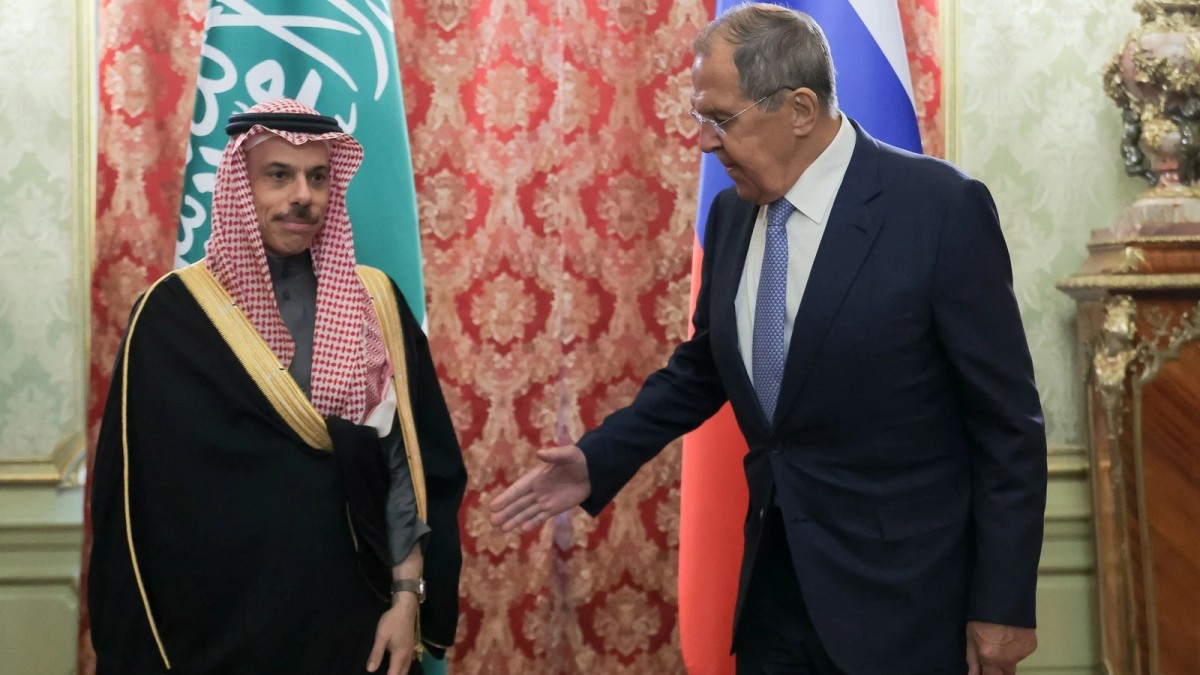
Diplomatic Milestone and Strategic Messaging
The meeting carries symbolic weight beyond its agenda, coming exactly 100 years after the establishment of diplomatic ties between Riyadh and Moscow, as Russian state media noted. The visit follows a pattern of frequent telephone contact between the two foreign ministers, with the Russian Foreign Ministry stating that the central topic of their discussions has been the conflict in the Persian Gulf and related issues. In a May 8 phone call, the two officials specifically discussed shipping through the Strait of Hormuz and efforts toward long-term normalization between Arab monarchies and Iran.
Lavrov framed Russia's role in constructive terms, saying: "Russia is genuinely interested in contributing to efforts to calm the situation, as well as to other regional issues of mutual interest," according to Sputnik. Reuters separately reported that Lavrov told Prince Faisal that Russia was "ready to mediate" in the Middle East — a signal that Moscow seeks relevance in any post-conflict architecture emerging from the US-Iran war that has dominated the region for roughly six months.
Prince Faisal's public remarks emphasized the economic and political weight of the bilateral relationship. "Saudi Arabian and Russian cooperation includes a spectrum of political and economic sectors, which proved to be important for supporting global energy markets," he said, per Reuters via Arab News. He added, according to Sputnik, that "Russian-Saudi cooperation has today become an important factor of global economic stability."
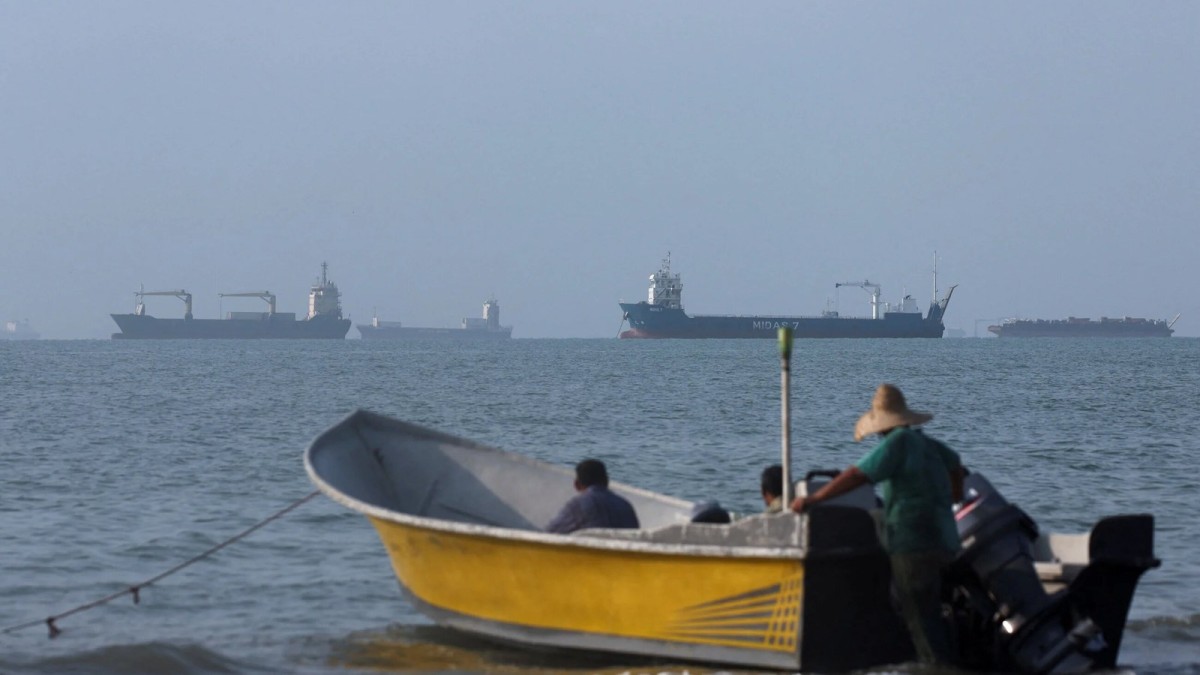
OPEC+ as a Pillar of Global Energy Stability
The energy dimension of the Moscow talks cannot be overstated. Prince Faisal told Lavrov that Saudi-Russian cooperation within the OPEC+ alliance allows the two countries "to balance oil supply and demand," and that Riyadh is interested in further partnership between the two nations, according to Russian state media. This messaging reinforces the durability of the OPEC+ framework, first formalized in 2016-2017, which coordinated production through the 2020 COVID price collapse and has since served as the primary mechanism for managing global crude markets.
The timing is significant: with a US-Iran accord expected to reopen the Strait of Hormuz and potentially bring Iranian barrels back to market over a 60-day negotiation window, OPEC+ cohesion becomes even more critical for price stability. Energy trade and shared production strategy further intertwine the two economies, creating mutual dependencies that transcend geopolitical disagreements.
Riyadh's position on the Russia-Ukraine war illustrates this balancing act. Experts at the Security and History Dialogue 2026 conference in Riyadh cited the Kingdom's approach as a model: Saudi Arabia voted against Russia at the UN and provided humanitarian aid to Ukraine while maintaining working relations with Moscow. This dual-track policy — condemning specific actions while preserving channels of communication — has allowed Riyadh to mediate prisoner exchanges between Russia and Ukraine, burnishing its credentials as a regional power broker.
Regional Security: Houthi Attacks and the Iran Factor
Even as the Saudi foreign minister traveled to Moscow, the Kingdom faced fresh security challenges from Yemen. A Houthi drone and missile attack wounded 73 people across Abha, Khamis Mushait, Jazan and Najran, according to Asharq Al-Awsat, with Saudi Arabia stating it reserves the right to respond. The attack serves as a stark reminder that the regional security environment remains volatile even as diplomatic tracks advance on multiple fronts.
The Houthi escalation complicates the narrative of de-escalation surrounding the expected Geneva accord. The US-Iran accord process, which Middle East Eye reported is set for a signing ceremony in Geneva on Friday, has centered on ending hostilities, lifting the US naval blockade of Iran and reopening the Strait of Hormuz. Nuclear issues and sanctions relief are to be negotiated over a roughly 60-day window, according to multiple reports — a timeline that leaves significant room for spoilers on multiple sides.
For Riyadh, the Houthi threat is not merely a Yemeni problem but an Iranian proxy issue. The Kingdom's calculus in Moscow likely includes conveying to Russia — which has its own relationships with Iranian leadership — the importance of restraining Tehran-aligned actors as part of any broader normalization. The May 8 phone call between Lavrov and Prince Faisal, which specifically addressed Hormuz shipping and Arab-Iranian normalization, suggests this track has been active for months.
Balanced Partnerships: Riyadh's Strategic Doctrine
The conceptual framework underpinning Prince Faisal's Moscow visit was articulated at the Security and History Dialogue 2026 conference in Riyadh, where experts argued that alliances can deter wars, domestic security protects the energy industry, and balanced partnerships allow the Kingdom to maintain international ties without compromising sovereignty. This doctrine has been tested across multiple fronts: the Kingdom coordinates oil policy with Russia through OPEC+ even as the United States remains Saudi Arabia's primary security guarantor.
The US dimension of Saudi security policy has been active in recent months. Joint US-Saudi strikes against Houthi targets, a US-Saudi civil nuclear cooperation agreement, and meetings between Saudi Defense Minister Prince Khalid bin Salman and US officials in Washington all point to a deepening of the traditional security relationship. The Kingdom's ability to layer these US ties atop its Russian energy partnership — without forcing a choice between them — represents the core of its current diplomatic strategy.
Before arriving in Moscow, Prince Faisal was in Berlin, where he met Dr. Alexander Radwan, chair of the German-Arab Parliamentary Relations Group, and German Minister of Economic Affairs and Energy Katherina Reiche. Their discussions covered energy security, freedom of navigation and waterways, supply chain resilience, and Saudi Vision 2030 investment ties, according to SPA via Asharq Al-Awsat. The European leg of the tour signals that Riyadh is cultivating multiple economic and political relationships beyond the traditional US-Russia binary.
Historical Context: A Century of Shifting Relations
The centenary of Saudi-Russian relations provides a useful lens for understanding the current moment. King Salman's 2017 visit to Moscow was the first by a reigning Saudi monarch, breaking decades of cool distance that dated to the Soviet era. President Putin returned the visit to Riyadh in 2019, cementing a rapprochement that had been building through coordinated oil policy and shared interests in managing regional conflicts.
The relationship has weathered significant storms. Saudi Arabia's UN vote against Russia over Ukraine and its humanitarian aid to Kyiv did not derail the bilateral track, demonstrating the resilience of interest-based diplomacy. Russia's role in the Middle East has evolved from ideological adversary to pragmatic partner, with Moscow maintaining relationships across the region — including with Iran — that Riyadh sometimes finds useful for indirect communication.
The current visit must also be read against the backdrop of the US-Iran war and its aftermath. Russia's stated readiness to mediate, as expressed by Lavrov, positions Moscow as a potential player in the post-conflict order. For Saudi Arabia, engaging Russia on these issues serves multiple purposes: it keeps Moscow invested in regional stability, provides an additional channel to Tehran, and signals to Washington that Riyadh has options beyond the American security umbrella.
Regional Implications
The Moscow talks carry implications that extend well beyond Saudi-Russian bilateral relations. For the Gulf Cooperation Council states watching from the sidelines, Riyadh's ability to maintain productive relationships with both Moscow and Washington offers a template for hedging in an era of great-power competition. The UAE, Qatar and others have pursued similar strategies, but Saudi Arabia's weight in OPEC+ and its role as custodian of Islam's holiest sites give its balancing act particular significance.
The expected Geneva accord on Friday will test whether the diplomatic tracks now in motion can deliver concrete results. If the US-Iran agreement holds, the reopening of the Strait of Hormuz and the gradual return of Iranian oil to global markets will reshape energy dynamics — a development that OPEC+ will need to manage carefully. Saudi Arabia's coordination with Russia within that framework becomes even more consequential as the cartel faces the prospect of integrating Iranian supply without destabilizing prices.
For Moscow, the Saudi visit reinforces Russia's claim to relevance in Middle East affairs despite its focus on Ukraine. Lavrov's offer to mediate, coupled with Russia's existing relationships across the region, positions the Kremlin as a potential facilitator rather than an obstacle to normalization. The coming weeks — with the Geneva signing and the 60-day negotiation window on nuclear issues and sanctions — will reveal whether these diplomatic investments yield concrete dividends or merely represent another round of strategic posturing in a region accustomed to both.
By Malik Hassan, Staff Writer
This article was produced with AI-assisted research and editorial support. Reporting is based on sources cited in the article.
What's Your Reaction?
 Like
0
Like
0
 Dislike
0
Dislike
0
 Love
0
Love
0
 Funny
0
Funny
0
 Wow
0
Wow
0
 Sad
0
Sad
0
 Angry
0
Angry
0

Middle East Correspondent at Global1.News. Based in Beirut, covering politics, conflict, energy, and society across the Middle East. Brings context and depth to a region often reduced to headlines.











Comments (0)