
Clean Energy Must Avoid the Mistake of Overdependence
Japan’s energy strategy has long been shaped by the need to avoid over‑reliance on a narrow set of fossil‑fuel suppliers. From Oil to Renewables: A Shift in Strategic Vulnerabilities For decades, energy security was synonymous with oil.
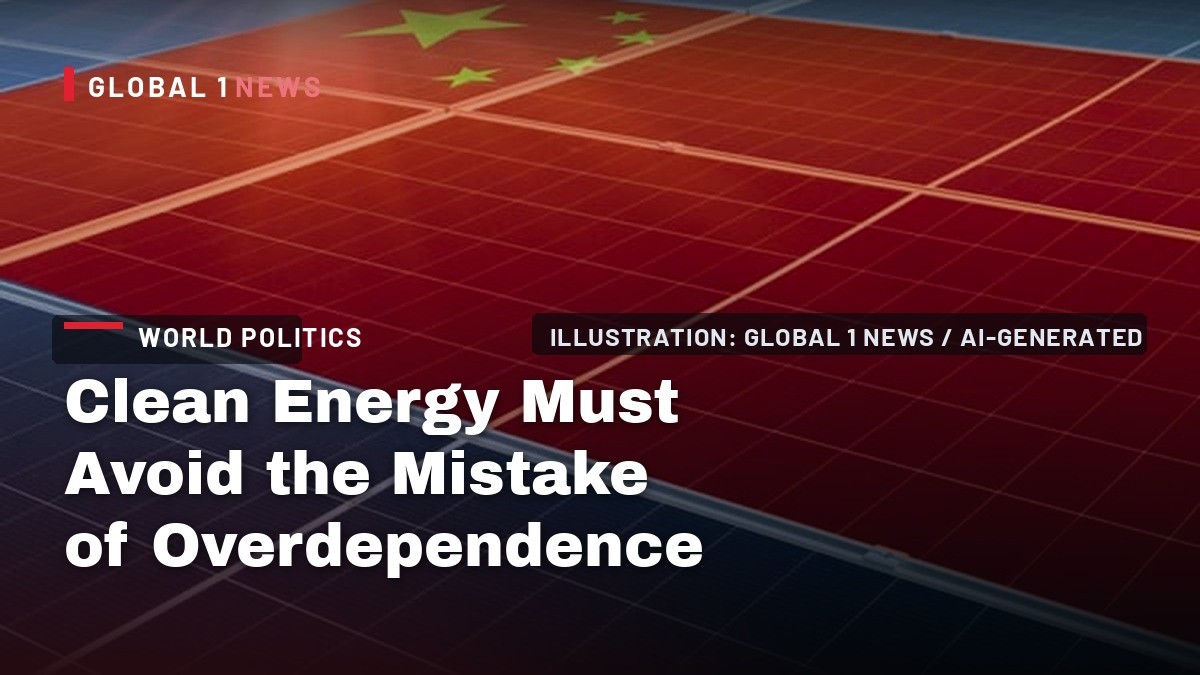
Japan’s energy strategy has long been shaped by the need to avoid over‑reliance on a narrow set of fossil‑fuel suppliers. The recent analysis by The Diplomat highlights a new dilemma: as the world pivots to clean energy, the supply chain that underpins renewable technologies is increasingly dominated by a single country—China. This reality forces policymakers in Tokyo, as well as in other advanced economies, to reconsider how diversification can be achieved without crippling the transition to low‑carbon power.
From Oil to Renewables: A Shift in Strategic Vulnerabilities
For decades, energy security was synonymous with oil. Nations worried about the geopolitical risks of depending on the Middle East and Russia, the safety of shipping lanes, and the concentration of production in a few giant exporters. The invasion of Ukraine in 2022 starkly illustrated these concerns: before the war, Russia supplied 45 percent of the European Union’s natural‑gas imports, a figure that collapsed as Europe scrambled for alternatives. The conflict in the Middle East similarly showed how a single chokepoint—the Strait of Hormuz—handled roughly one‑fifth of global oil consumption before it was effectively closed.
Renewables were expected to dilute such vulnerabilities, but the emerging clean‑energy supply chain is now heavily weighted toward China. The article notes that China is the world’s largest supplier and exporter of green technology, with green‑energy exports rising 51 percent year‑on‑year in July 2026 and new‑energy vehicle shipments surging 90 percent in the same month. This concentration raises the risk that the next generation of energy dependence could be just as strategic as the oil‑centric model it seeks to replace.
China’s Dominance Across the Clean‑Energy Value Chain
China’s grip extends from raw‑material extraction to finished products. The country provides roughly 85 percent of global solar‑panel production capacity and 80 percent of lithium‑ion batteries, effectively creating a monopoly on two of the most critical clean‑energy components. In electric‑vehicle (EV) manufacturing, China accounted for almost three‑quarters of global output in 2025, underscoring its reach across the entire ecosystem.
Beyond downstream products, China also controls upstream processing of essential minerals. It mines about 60 percent of the world’s rare‑earth elements and manufactures approximately 90 percent of rare‑earth permanent magnets, a key component for motors and wind‑turbine generators. This vertical integration means that any disruption—whether from export controls, geopolitical tension, or environmental regulation—could reverberate through the entire clean‑energy supply chain.
Economic Implications of a Disrupted Supply Chain
The International Energy Agency (IEA) estimates that a single month of halted Chinese battery exports would cut EV‑factory output elsewhere by roughly $17 billion, with more than half of those losses falling in Europe. While the figure is expressed in monetary terms, the underlying message is clear: the scale of China’s involvement translates directly into systemic risk for manufacturers worldwide, including Japanese firms that rely on imported battery cells for domestic EV production.
China’s use of export controls on rare earths and other critical materials has already demonstrated how supply concentration can be leveraged strategically. The article cites these controls as evidence that a country with such a dominant position can influence global markets and, by extension, the foreign policies of dependent nations.
Why Replicating China’s Model Is Not a Quick Fix
China’s advantage is rooted in decades of industrial policy, massive capital investment, and a willingness to accept environmental costs that many other jurisdictions are reluctant to bear. The IEA attributes more than 40 percent of China’s battery‑cost edge over Europe to automation and manufacturing efficiency. Replicating this level of scale and expertise would require substantial time, capital, and political will—resources that are not readily available in most advanced economies.
Moreover, the article points out that oil reserves are fixed by geology, whereas China’s clean‑technology dominance is a product of deliberate policy choices. In theory, this makes the dominance more reversible, but in practice, the entrenched infrastructure and expertise make rapid diversification challenging.
Strategic Diversification: A Pragmatic Path Forward
The Diplomat’s analysis stresses that the solution is not decoupling but diversification. Countries should identify sectors where domestic capacity is strategically essential—such as rare‑earth processing or battery manufacturing—and invest in alternative supply sources with trusted allies. The example of MP Materials, a Las Vegas‑based firm that operates North America’s only large‑scale rare‑earth mine, illustrates this approach. MP Materials produces more than 10 percent of global rare‑earth supply and is investing over $1.25 billion in a magnet‑manufacturing campus.
Importantly, MP Materials is pursuing an international partnership: in 2025, it, the U.S. government, and Saudi Arabia’s Maaden agreed to develop a Saudi rare‑earth refinery to supply oxides to U.S., Saudi, and allied manufacturers. While a single refinery will not solve the systemic dependence on China, it signals the type of government‑backed, allied investment that can gradually rebalance the supply chain.
Implications for Japan’s Energy and Industrial Policy
Japan faces a dual challenge. On one hand, it must continue to secure stable supplies of fossil fuels for the foreseeable future, given that oil and gas remain essential for transport, industry, and power generation. On the other hand, it must avoid swapping dependence on Middle‑Eastern and Russian hydrocarbons for a new reliance on Chinese clean‑technology components.
Policy options include expanding domestic rare‑earth recycling capabilities, supporting the development of alternative battery chemistries that reduce reliance on lithium‑ion technology, and deepening strategic partnerships with countries like the United States, Australia, and emerging markets that possess untapped mineral resources. Aligning these efforts with Japan’s broader industrial strategy—particularly its focus on advanced materials and high‑value manufacturing—could help create a more resilient supply chain without sacrificing the cost and speed benefits that Chinese products currently provide.
Looking Ahead: Balancing Speed, Cost, and Security
The transition to clean energy is accelerating, driven by climate commitments and the declining cost of renewable technologies—benefits that have largely stemmed from China’s massive production capacity. However, the risk of overdependence is now a strategic concern for all major economies. As the article concludes, the world should not spend decades reducing its reliance on Middle‑Eastern and Russian hydrocarbons only to discover that it has exchanged one form of strategic dependence for another, this time on China.
For Japan, the path forward will require a careful calibration of speed, cost, and security. Diversification will demand sustained investment, coordinated international cooperation, and a willingness to accept higher short‑term costs for longer‑term resilience. By learning from the European experience and the emerging models of allied investment in rare‑earth processing, Japan can help shape a clean‑energy future that is both economically viable and strategically secure.
This article was produced with AI-assisted research and editorial support. Reporting is based on the source material cited below. Sources: The Diplomat; thediplomat.com; Global1.News (18 October 2026).
By Kenji Tanaka, Staff Writer
What's Your Reaction?
 Like
0
Like
0
 Dislike
0
Dislike
0
 Love
0
Love
0
 Funny
0
Funny
0
 Wow
0
Wow
0
 Sad
0
Sad
0
 Angry
0
Angry
0

Japan Correspondent at Global1.News. Tokyo-based voice covering Japanese politics, technology, economy, and culture. Tracks the intersection of tradition and innovation in one of the world's most dynamic societies.













Comments (0)