
After 8 Months in Power, How Much Has the BNP Changed Bangladesh?
The Bangladesh Nationalist Party (BNP) entered power in February 2026 amid a regional crisis that quickly turned into a domestic test of governance. Eight months later, the party’s record shows a mixture of modest gains and persistent challenges.
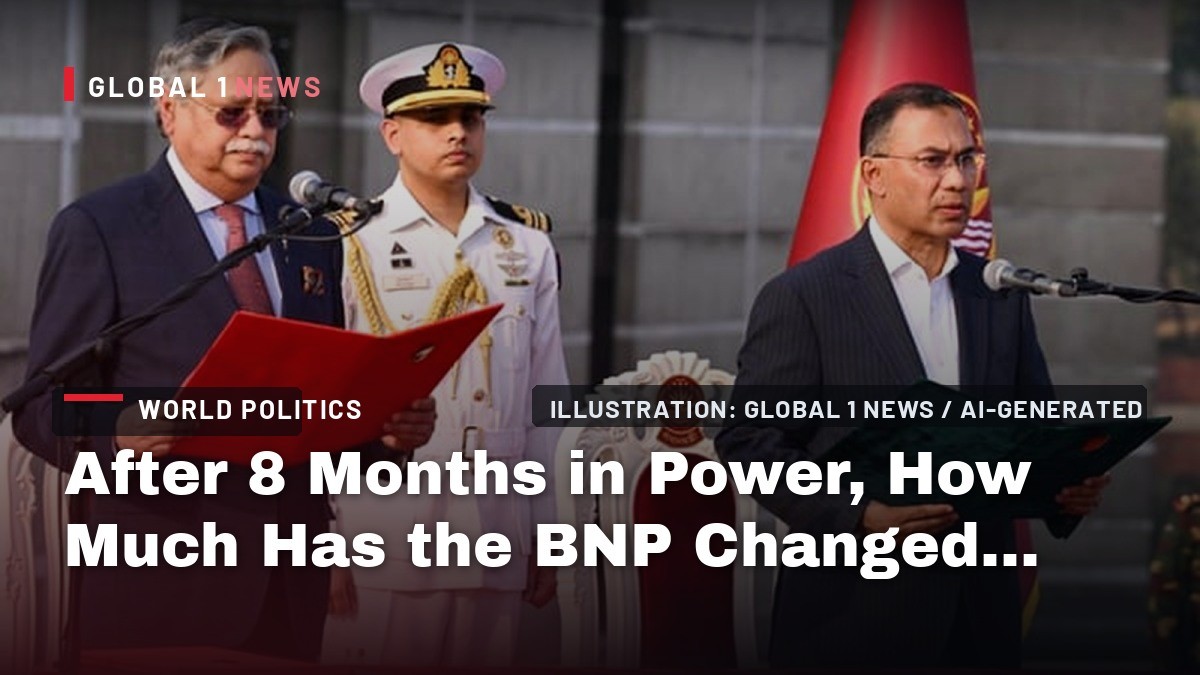
The Bangladesh Nationalist Party (BNP) entered power in February 2026 amid a regional crisis that quickly turned into a domestic test of governance. Eight months later, the party’s record shows a mixture of modest gains and persistent challenges. While remittances have risen and inflation has eased slightly, law‑and‑order concerns, uneven economic relief and incomplete institutional reforms suggest that the BNP’s impact remains provisional.
Economic Indicators: Remittances and Inflation
One of the most encouraging signs for the BNP government is the continued growth in overseas remittances. Between March and August 2026, Bangladesh received roughly $18.94 billion, a rise of about 13 percent over the same period a year earlier, according to Bangladesh Bank. This inflow has bolstered foreign‑exchange reserves and provided vital support to families dependent on overseas earnings, reinforcing a trend that began before the BNP took office.
Inflation, however, tells a more nuanced story. Consumer prices were 8.71 percent higher in March 2026 than a year earlier, climbed to 9.42 percent in May, and then fell to 8.34 percent in September. The September figure is only marginally below the 8.36 percent recorded in September 2025, indicating that price pressures have not been dramatically alleviated. Moreover, wage growth has lagged behind price increases. The Bangladesh Bureau of Statistics’ wage index rose by 8.05 percent in August, trailing the inflation rate and suggesting that lower‑paid workers still face a decline in real purchasing power.
Law and Order: Mixed Crime Statistics
Official police data show a partial improvement in certain crime categories. Murder cases fell from 2,317 in the comparable period of 2025 to 2,122, while robbery incidents declined from 1,159 to 1,077. Kidnapping cases also slipped slightly, from 628 to 618. These reductions indicate that the BNP’s security apparatus has been able to curb some violent offenses.
Conversely, burglary incidents rose sharply, increasing by nearly 13 percent from 1,796 to 2,022. The total number of registered criminal cases grew by 14 percent, from 110,296 to 125,763, driven largely by a surge in narcotics cases, which jumped from 31,111 to 45,091. While the rise in drug‑related filings could reflect heightened enforcement, it also raises questions about whether drug offenses have become more prevalent or whether police activity simply intensified.
Mob Violence and Police Vulnerability
Mob violence remains a stark and troubling feature of the BNP era. Human‑rights monitoring by Ain o Salish Kendra recorded 131 deaths from mob beatings between March and August 2026. Notable incidents include the killing of a Sufi spiritual leader in Kushtia’s Daulatpur upazila on April 11, where police were present but failed to prevent the attack, and the looting and demolition of the Radda MCH‑FP Center in Dhaka on September 25, carried out by more than 200 masked assailants despite police presence.
Police officers themselves have become targets. In June, a mob assaulted two officers in Savar and freed a suspect; in July, three officers were attacked in Kutubdia while escorting a detainee; and on September 5, Special Branch Sub‑Inspector Altaf Hossain was beaten to death in Savar. More recently, on October 10, a police inspector was seriously injured in an attack by muggers in Khulna. These episodes underscore a broader problem of law‑enforcement vulnerability and raise doubts about the effectiveness of the BNP’s security strategies.
Extortion and Judicial Concerns
Extortion cases also feature prominently in the security landscape. Court records cited in media reports reveal that 723 extortion complaints were filed across 49 Dhaka police stations between January and August 2026, a period that includes weeks before the BNP assumed power. While the data do not isolate the post‑election trend, the volume suggests that extortion remains a pervasive issue for businesses and citizens.
Legal analysts, such as Dr. Md Tawohidul Haque of the University of Dhaka, describe the BNP’s law‑and‑order record as “mixed.” He cautions that without a decisive stance against wrongdoing within the party’s own ranks, improvements are unlikely. Haque also points to the continued political protection of influential figures in the drug trade, arguing that the Bangladesh Police has not been sufficiently depoliticized and that its internal structure remains largely unchanged.
Institutional Reforms: Constitutional and Rights Legislation
The BNP inherited a set of constitutional reforms that were endorsed in a February referendum alongside the national election. These reforms remain under negotiation, reflecting the party’s cautious approach to altering the institutional framework it now controls. New rights laws introduced by the government have attracted criticism for weakening independent oversight, suggesting a tension between the party’s reform agenda and concerns over democratic safeguards.
Home Minister Salahuddin Ahmed, speaking on August 26, asserted that suspects in almost all criminal cases filed during the first six months had been arrested within a reasonable timeframe. He framed the security situation as fragile at the outset and emphasized ongoing efforts to boost police morale. However, the persistence of mob violence, attacks on police personnel and the rise in burglary cases indicate that the promised institutional strengthening has yet to translate into tangible security outcomes.
Business Sentiment and Future Outlook
Business confidence remains tentative. Interviews with bankers from The Business Standard reveal concerns about weak demand, high borrowing costs and energy shortages. Sohail R. K. Hussain, managing director of Bank Asia, noted that factories are operating with unused capacity, reflecting a cautious stance among manufacturers. This sentiment aligns with the broader economic picture: while remittances provide a buffer, inflationary pressures and limited wage growth constrain consumer spending, dampening domestic demand.
Looking ahead, the BNP’s ability to convert modest economic gains into broader prosperity will depend on addressing the entrenched challenges of law and order, depoliticizing the police force and delivering on promised institutional reforms. Without decisive action on these fronts, the party risks a continuation of mixed outcomes, where incremental improvements are offset by persistent insecurity and uneven economic relief for ordinary Bangladeshis.
This article was produced with AI-assisted research and editorial support. Reporting is based on the source material cited below. Sources: The Diplomat; thediplomat.com; Global1.News (19 October 2026).
By Kenji Tanaka, Staff Writer
What's Your Reaction?
 Like
0
 Dislike
0
 Love
0
 Funny
0
 Wow
0
 Sad
0
 Angry
0

Japan Correspondent at Global1.News. Tokyo-based voice covering Japanese politics, technology, economy, and culture. Tracks the intersection of tradition and innovation in one of the world's most dynamic societies.










Comments (0)