
Saudi Arabia and Sudan Establish Coordination Council as Riyadh Deepens Stake in Ending Sudan War
Saudi Arabia and Sudan signed a coordination council in Riyadh on August 17, institutionalizing ties as Riyadh deepens mediation, economic investment, and Red Sea security stakes in the war-torn country.
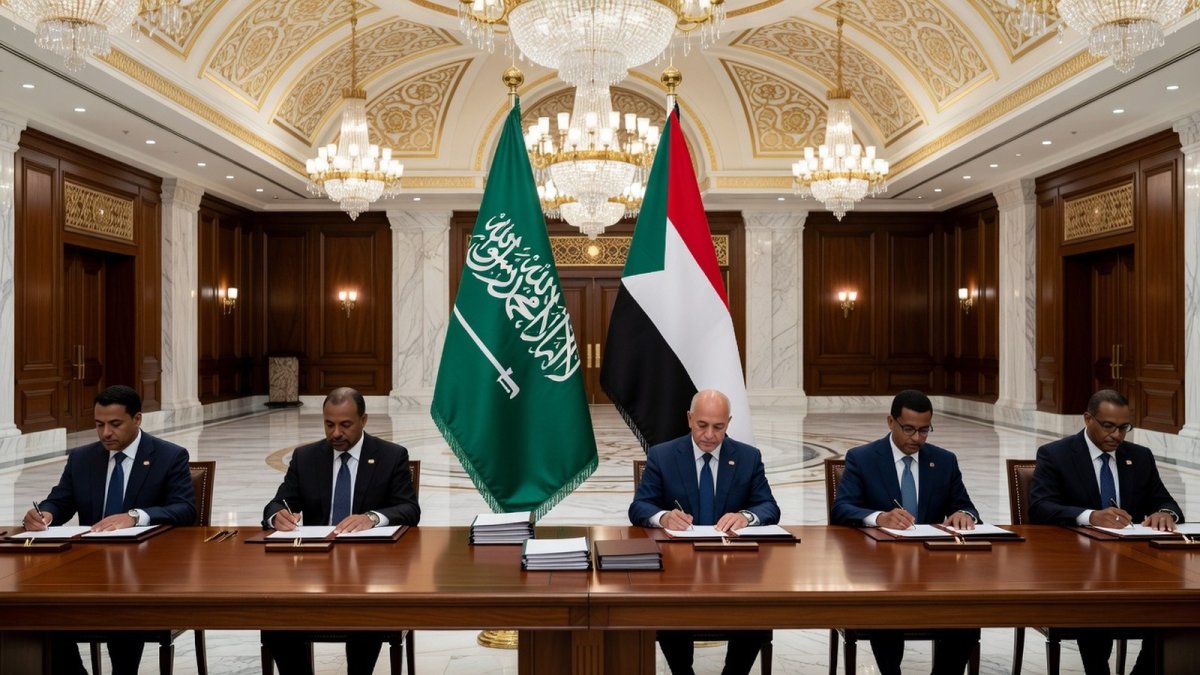
The Saudi-Sudanese relationship has entered a new institutional phase. On August 17, 2026, Saudi Foreign Minister Prince Faisal bin Farhan and Sudan's Minister of Foreign Affairs and International Cooperation, Mohieldin Salem Ahmed Ibrahim, signed a document establishing the Saudi-Sudanese Coordination Council at the Saudi Ministry of Foreign Affairs headquarters in Riyadh. The move signals Riyadh's intent to formalize its leverage in Sudan's political future and economic reconstruction, even as the devastating war between the Sudanese Armed Forces (SAF) and the Rapid Support Forces (RSF) enters its fourth year.
Saudi Arabia and Sudan Establish a Coordination Council as Riyadh Deepens Its Stake in Ending the Sudanese War
Riyadh, Saudi Arabia - August 17, 2026 - The signing of the coordination council document, reported by the Saudi Press Agency, creates an institutional framework to work on initiatives and projects with Sudan. According to Sudanhorizon, the agreement reflects the two countries' keenness to strengthen political and economic relations and develop mechanisms for joint cooperation, expanding areas of economic, trade, and investment partnership. For Sudan, this is not merely a diplomatic nicety; it is a lifeline. For Saudi Arabia, it is a strategic hedge against instability on the African side of the Red Sea.
A Strategic Pivot: From December Meeting to Institutional Reality
The council's establishment is the culmination of a high-level diplomatic track that began long before this week's signing. The institutional roots trace back to March 2025, when discussions between Sudan's de facto head of state, General Abdel Fattah al-Burhan, and Saudi Crown Prince Mohammed bin Salman (MBS) first agreed on the concept of a supreme strategic cooperation body. That agreement remained dormant until the Sudanese side reconstituted the Supreme Council for Strategic Cooperation and Coordination at the beginning of 2026.
The catalyst was a pivotal one-day visit by General al-Burhan to Riyadh on December 15, 2025, where he met MBS at Al-Yamamah Palace. Just four days later, on December 19, 2025, Saudi Arabia and the United States presented al-Burhan with a three-point plan to end the war. On January 17, 2026, al-Burhan issued a decree formally reconstituting the Supreme Council, a move Sudan's Sovereign Council described as based on the understandings reached during that December Riyadh meeting. The timing is critical: Riyadh is moving from being a mediator to being a guarantor of a specific political trajectory.
The War Context: A Nation in Ruins and a Stalled Mediation
The urgency of this institutional push cannot be separated from the catastrophic reality on the ground. The war, which began on April 15, 2023, between the SAF under al-Burhan and the RSF under Mohamed Hamdan Dagalo (Hemedti), is now in its fourth year with no end in sight. The Human Rights Watch World Report 2026 confirmed that all warring parties have committed war crimes. The RSF has expanded its territorial control into Gezira, Sennar, White Nile, and North Kordofan states throughout 2025 and 2026.
The human toll is staggering. According to Sudan Times (August 14, 2026), the war has killed tens of thousands and displaced approximately 15 million people, creating the world's largest displacement crisis. Famine conditions persist in multiple areas, and flash floods in August 2026 have further worsened the humanitarian catastrophe. Sudan's economy, which contracted by 13.5% in 2024, only rebounded modestly to 1.2% growth in 2025, according to the African Development Bank-a figure that masks the complete destruction of formal economic infrastructure.
Mediation efforts have been fragmented. The Jeddah platform, hosted by Saudi Arabia and the United States since May 2023, remains the primary framework for peace talks, though Sudanese rights groups have repeatedly urged its reactivation. Meanwhile, the "Quartet" or "Quad" mechanism-comprising Saudi Arabia, Egypt, the United States, and the UAE-has struggled to present a unified front, largely because Sudan has repeatedly declined to engage with the UAE, which it accuses of supporting the RSF.
Economic Dimensions: The $50 Billion Promise and the Banking Bottleneck
The coordination council is not just about ending the war; it is about owning the peace. The economic agenda is ambitious. A Sudanese delegation to Riyadh in June 2026 carried approximately 100 proposed partnership projects valued at more than US$50 billion, spanning agriculture, energy, minerals, infrastructure, and technology. A Sudanese-Saudi investment forum was planned for Riyadh in June 2026, which would have been the first major bilateral economic forum since the war began.
However, the gap between proposal and implementation remains vast. Banking transfers between the two nations are a key challenge, as the Sudanese banking sector has been decimated by the conflict. The agricultural dimension is particularly sensitive: Sudan has historically allocated roughly 2 million acres for Arab agricultural investors, including from Saudi Arabia. With global food prices volatile and Gulf states seeking to secure supply chains, Sudan's fertile land is a strategic asset that Riyadh is keen to develop-but only if security can be guaranteed.
For Saudi Arabia, the investment is not charity. It is a calculated bet on a post-war Sudan that is aligned with Riyadh's vision of Red Sea economic integration. The proposed projects in energy and minerals, particularly gold, would feed directly into Saudi supply chains and reduce dependence on more distant markets.
Red Sea Security and the Yemen Factor
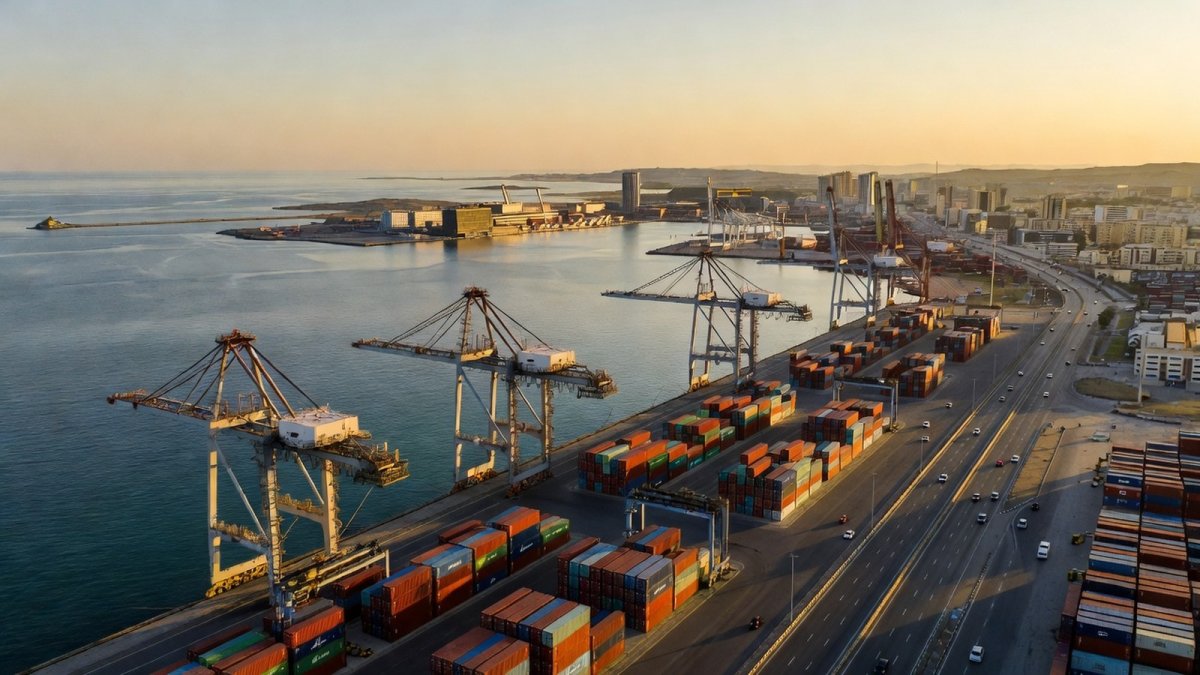
The strategic backdrop to this council is the escalating crisis in the Red Sea. Saudi Arabia is currently preparing a sea and possible land offensive against Houthi forces in central Yemen to break the chokehold on its oil exports through the southern Red Sea, as reported by The Guardian on July 30, 2026. Sudan's Red Sea coastline and the vital port of Port Sudan are located dangerously close to the Bab el-Mandeb shipping lanes, making Sudanese stability a direct Saudi national security interest.
This is where the coordination council takes on a military-strategic dimension. A stable Sudan means a secure western flank for Saudi shipping lanes. Conversely, a failed Sudan-or worse, a Sudan aligned with hostile actors-would present an existential threat to Saudi energy exports. The August 2026 signing of the Mecca Joint Defense Agreement between Saudi Arabia, Turkiye, and Pakistan, with Turkish President Erdogan suggesting Egypt could join, and Bangladesh joining a Saudi-led defense coalition, underscores the Kingdom's broader pivot toward proactive security arrangements. Sudan, with its strategic coastline, is a natural candidate for inclusion in this emerging security architecture.
Regional Implications: The Saudi-UAE Rivalry and Gulf Competition in Africa
The coordination council also sharpens the competitive dynamics within the Gulf Cooperation Council. The UAE has been deeply involved in Sudan, but its role has been highly controversial. Sudan's repeated refusal to engage with the UAE within the Quartet framework has created a diplomatic vacuum that Saudi Arabia is now filling. By establishing a bilateral institutional mechanism, Riyadh is signaling that it can deliver what the multilateral Quartet cannot: a direct channel to the Sudanese military establishment.
This is not merely about Sudan; it is about the broader Gulf competition for influence in Africa. The Horn of Africa and the Red Sea littoral have become the new arena for great power and regional power competition, with Turkiye, the UAE, Qatar, and Saudi Arabia all vying for ports, military bases, and economic concessions. Saudi Arabia's deepening bilateral engagement with Sudan-through the coordination council, the proposed investment projects, and its mediation role-positions Riyadh as the primary external actor in Sudan's reconstruction, potentially at the expense of Emirati influence.
For General al-Burhan, this alignment with Riyadh is a strategic necessity. Isolated diplomatically and facing a resilient RSF insurgency, the SAF leadership needs a powerful patron. Saudi Arabia offers financial backing, diplomatic cover, and a potential pathway to legitimacy. For MBS, supporting al-Burhan is a bet on a specific outcome: a unified Sudanese state under SAF control that is friendly to Saudi interests. It is a high-risk bet, given the fluidity of the conflict, but one that Riyadh appears determined to make.
Post-War Reconstruction: The Race to Rebuild
Looking ahead, the coordination council is designed to be the vehicle for post-war reconstruction. The $50 billion in proposed projects is a staggering figure, but it is contingent on a cessation of hostilities. The council's mandate to work on "initiatives and projects" suggests that Riyadh is preparing for the day after the war, even as it continues to push for a negotiated settlement through the Jeddah platform.
The reconstruction challenge is immense. With 15 million people displaced, entire cities in ruins, and a collapsed economy, Sudan will require hundreds of billions of dollars over a decade or more. Saudi Arabia cannot fund this alone, but it can act as a gatekeeper, directing Gulf and international investment toward projects that align with its strategic interests. The coordination council gives Riyadh the institutional mechanism to do precisely that.
There are also significant risks. If the war continues to drag on, the coordination council risks becoming a hollow shell, a diplomatic artifact without substantive impact. The banking transfer issue remains unresolved, and the security situation in key agricultural and mineral-rich regions is volatile. Moreover, the Saudi bet on al-Burhan could backfire if the SAF leadership proves unable to deliver a military victory or a negotiated settlement that holds.
For now, the signing of the coordination council document is a clear statement of intent. Saudi Arabia is no longer content to be a passive mediator in Sudan's tragedy. It is actively building the institutional architecture for a post-war order that serves its economic, security, and geopolitical interests. Whether that architecture can withstand the brutal realities of the ongoing conflict remains the defining question for both nations.
By Malik Hassan, Staff Writer
This article was produced with AI-assisted research and editorial support. Reporting is based on sources cited in the article.
What's Your Reaction?
 Like
0
Like
0
 Dislike
0
Dislike
0
 Love
0
Love
0
 Funny
0
Funny
0
 Wow
0
Wow
0
 Sad
0
Sad
0
 Angry
0
Angry
0

Middle East Correspondent at Global1.News. Based in Beirut, covering politics, conflict, energy, and society across the Middle East. Brings context and depth to a region often reduced to headlines.












Comments (0)