
Hormuz Showdown: Trump Threatens Oman as US-Iran Deal Collapses
The 60-day deadline for the US-Iran peace and nuclear deal expired Monday with both sides further from agreement than when talks began in June — and the crisis has now drawn a new, alarming threat from the White House aimed not at Tehran, but at the Sultanate of Oman.
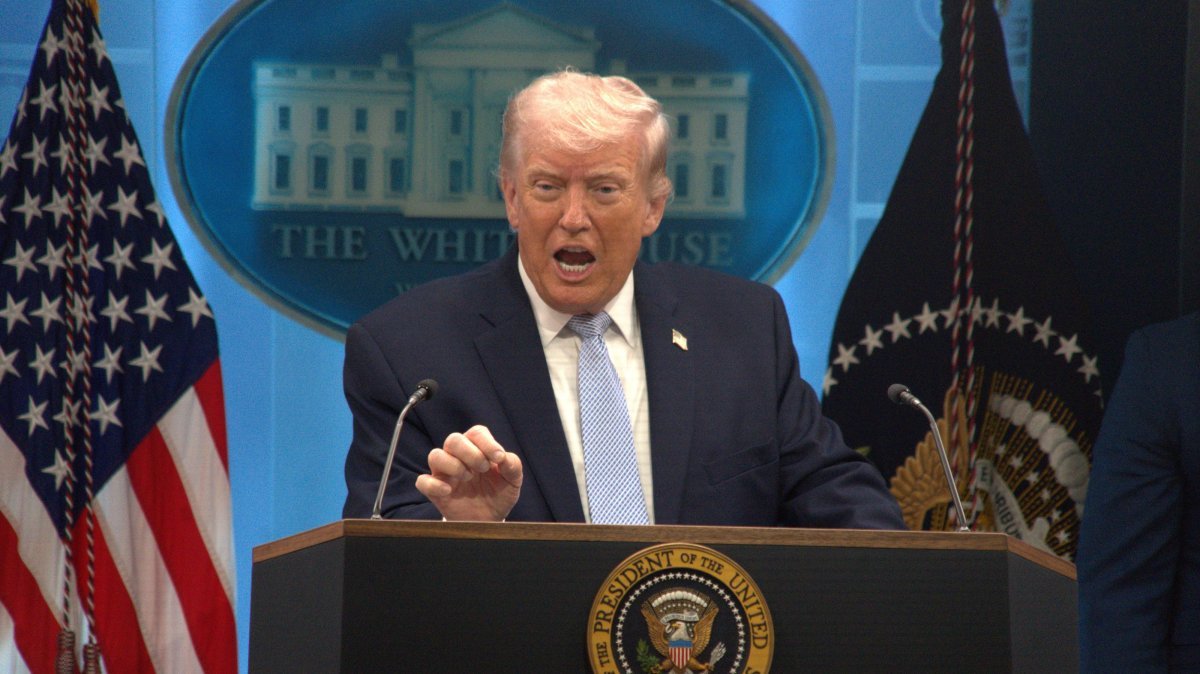
The 60-day deadline for the US-Iran peace and nuclear deal expired Monday with both sides further from agreement than when talks began in June — and the crisis has now drawn a new, alarming threat from the White House aimed not at Tehran, but at the Sultanate of Oman.
Hormuz Showdown: Trump Threatens Oman as US-Iran Deal Collapses
Washington, D.C. – Aug. 17, 2026 — In an interview with Fox News journalist Trey Yingst, President Donald Trump issued a stark warning to Muscat over its ongoing mediation with Tehran on the future of the Strait of Hormuz. "If Oman gets in the way, we'll bomb the shit out of them," Trump said, according to Yingst's post on X.
A Threat That Shakes the Gulf
The threat comes as Iranian and Omani officials have spent weeks negotiating maritime navigation arrangements through the shipping route — talks that Washington views as an encroachment on its own claims of control over the waterway. The Iranian Foreign Ministry in Tehran confirmed Monday that "an understanding has been reached regarding the map of the transit route," according to spokesperson Esmail Baghaei, though he declined to elaborate.
Details that have previously emerged suggest the emerging Iran-Oman framework would reopen the strait with ships entering through a route close to Iran and exiting through a route close to Oman. Vessels would transit without paying fees or tolls during an interim period, with Iran coordinating inbound traffic and Oman overseeing outbound vessels. A joint statement is being drafted, but the arrangement falls short of a full reopening of the waterway.
Trump, however, has repeatedly insisted that the strait — which Tehran effectively closed at the start of the Middle East war on Feb. 28 — is under U.S. control despite traffic remaining throttled. On Friday, he went further, claiming he would declare the Strait of Hormuz part of U.S. territory. Iran retorted that the crucial energy waterway it has blockaded "will remain Iranian."
The Strategic Calculus Behind the Standoff
The confrontation over Hormuz is not merely a dispute over shipping lanes; it is the central leverage point in a war that has spiraled far beyond its initial scope. Before the launch of the U.S.-Israeli war against Iran, the strait carried approximately a fifth of the world's traded oil and gas, making it the single most critical chokepoint in global energy markets.
Tehran has used its effective seizure of control over the strait as its primary bargaining chip against U.S.-led attempts to destroy its military and force it to abandon its controversial nuclear power program. By controlling the waterway, Iran has transformed a defensive position into offensive leverage, threatening not just American interests but the economic stability of its Gulf neighbors.
For Washington, the calculus is equally stark. The United States has no good options for extricating itself from the war it started alongside Israel. Acceding to Iran's latest demands would mean granting Tehran control over a critical international waterway — a concession that would be tantamount to admitting defeat. The June Memorandum of Understanding, signed in Paris, called for a halt to all military operations and set the 60-day deadline for a permanent agreement. It also called for the strait to be reopened but gave Iran a vaguely defined role in facilitating traffic, leaving open the possibility it could charge fees after the deadline.
Iran has seized on that clause to claim control over the waterway, and a week after the deal was signed, Tehran began firing on vessels using a route along the coast of Oman — the very route overseen by the U.S. military and intended to bypass Iranian control. The U.S. responded by striking Iran, which retaliated by attacking Arab countries hosting American forces, including Jordan, Kuwait, and Bahrain. Washington then canceled waivers that had allowed Iran to sell its oil internationally and restored a blockade of Iranian ports.
Each side has accused the other of violating the June agreement, of which almost nothing remains as of Monday.
Turkey's Diplomatic Gambit
Into this volatile mix steps Turkey, positioning itself as a mediator with channels to both Tehran and Washington. Foreign Minister Hakan Fidan and his Iranian counterpart Abbas Araghchi discussed efforts to reopen the Strait of Hormuz and preserve the cease-fire in a phone call Monday, according to Turkish diplomatic sources.
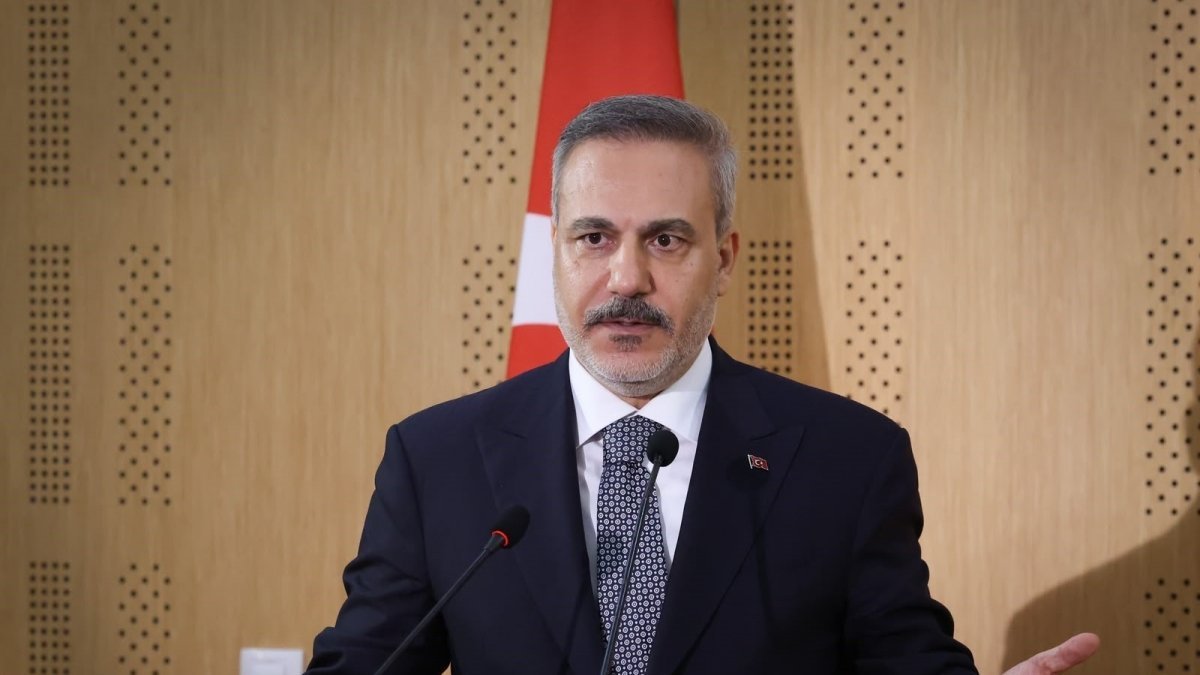
The two ministers reviewed the latest developments in ongoing negotiations concerning the reopening of the strategic waterway and the continuation of the cease-fire, the sources said. The call came amid ongoing tensions in the region, with suspected Iranian drones targeting Kurdistan Regional Government (KRG) Prime Minister Masrour Barzani's office in Irbil on Monday.
Ankara's role is significant. Turkey has maintained a delicate balancing act throughout the conflict, maintaining diplomatic and economic ties with Iran while also serving as a NATO member with obligations to the Western alliance. President Recep Tayyip Erdogan has positioned Turkey as an indispensable regional power broker, and the Fidan-Araghchi call underscores Ankara's ambition to shape the post-war order in the Gulf.
For Iran, Turkey offers a lifeline — a channel to the West that does not run through Washington. For the United States, Turkey's involvement provides a face-saving mechanism for potential negotiations. For the Gulf states, however, Turkey's growing influence is a double-edged sword, raising questions about Ankara's long-term intentions in a region already crowded with competing powers.
The Gulf States Caught in the Crossfire
The Gulf Arab states find themselves in an unenviable position. Saudi Arabia, the UAE, Kuwait, and Bahrain have all been drawn into the conflict, hosting American forces and suffering Iranian retaliation. The UAE and Saudi Arabia, which had been pursuing economic diversification strategies under Vision 2030 and similar frameworks, now face the prospect of prolonged regional instability that threatens their ambitious reform agendas.
The reopening of Hormuz is existential for these states. Their economies, their energy exports, and their future prosperity all depend on the free flow of oil and gas through the strait. Yet they have little control over the outcome. The negotiations are being conducted between Tehran, Muscat, and Washington, with the Gulf states largely relegated to the sidelines.
Oman's role as mediator is particularly notable given its historical position as a neutral broker in regional disputes. Muscat has maintained diplomatic channels with both Tehran and Washington for decades, and its geographic position — straddling the strait itself — makes it an indispensable partner in any maritime arrangement. Trump's threat to bomb Oman is therefore not just reckless; it is strategically counterproductive, potentially alienating the one Gulf state that has the trust of both sides.
Energy Markets and Global Implications
The collapse of the June memorandum has profound implications for global energy markets. With the strait effectively closed to commercial traffic since February, oil prices have remained elevated, and the uncertainty surrounding the negotiations has prevented any sustained recovery. The restoration of the U.S. blockade on Iranian ports has further tightened supply, even as global demand continues to recover.
The broader geopolitical picture is equally fraught. The war has drawn in multiple regional actors, with Iran attacking Arab countries hosting American forces and the U.S. striking Iranian targets. The conflict has also created openings for other powers — China and Russia have maintained their engagement with Tehran, while Turkey has expanded its diplomatic footprint.
Trump's insistence that he is in no hurry to reach a deal, despite the deep unpopularity of the war among Americans ahead of November midterm elections, suggests that the administration is prepared to weather domestic political costs. The president told Yingst that there is a direct back-channel between his administration and officials of Iran's Revolutionary Guard. "They're good poker players, but they're dying," he was quoted as saying.
Trump also reiterated Monday that Iran cannot have a nuclear weapon amid a lack of progress in diplomatic efforts to resolve the Middle East conflict. "The number one Goal is, and always will be, that Iran cannot have, in any way, shape, or form, a Nuclear Weapon," Trump said in a post on Truth Social.
What Comes Next
Analysts see three risky options for the United States: an economic squeeze, military escalation, or a fragile return to negotiations. Each carries significant risks. An economic squeeze would deepen the humanitarian crisis in Iran but is unlikely to force a capitulation. Military escalation risks drawing the U.S. deeper into a quagmire with no clear exit. A return to negotiations would require Washington to accept terms it has so far rejected.
For Iran, the calculus is equally difficult. The war has inflicted significant damage on its military and economy, but Tehran has demonstrated that it can inflict costs on its adversaries as well. The question is whether the leadership in Tehran is willing to accept a compromise that falls short of its maximalist demands.
The expiration of the 60-day deadline marks a critical juncture. Both sides have dug in, hoping the other will blink first. So far, neither has. The threat to Oman adds a new and dangerous dimension to the crisis, raising the possibility of a wider conflict that draws in yet another Gulf state.
The coming weeks will be decisive. If the Iran-Oman framework can be finalized and implemented, it could provide a pathway toward de-escalation. If not, the region faces the prospect of renewed hostilities with no end in sight. The stakes could not be higher — for the Gulf states, for global energy markets, and for the millions of people caught in the crossfire of a war that has already lasted nearly six months.
By Malik Hassan, Staff Writer
This article was produced with AI-assisted research and editorial support. Reporting is based on sources cited in the article.
What's Your Reaction?
 Like
0
Like
0
 Dislike
0
Dislike
0
 Love
0
Love
0
 Funny
0
Funny
0
 Wow
0
Wow
0
 Sad
0
Sad
0
 Angry
0
Angry
0
Middle East Correspondent at Global1.News. Based in Beirut, covering politics, conflict, energy, and society across the Middle East. Brings context and depth to a region often reduced to headlines.










Comments (0)