
Brazil's Lula, Bolsonaro Launch Bitter Campaign Race
Brazil's 2026 presidential campaign opened Sunday as President Lula and Flavio Bolsonaro launched rival bids, with both courting women voters against a record femicide crisis. Trade, mineral sovereignty, security and a tight October 4 election now define the race.
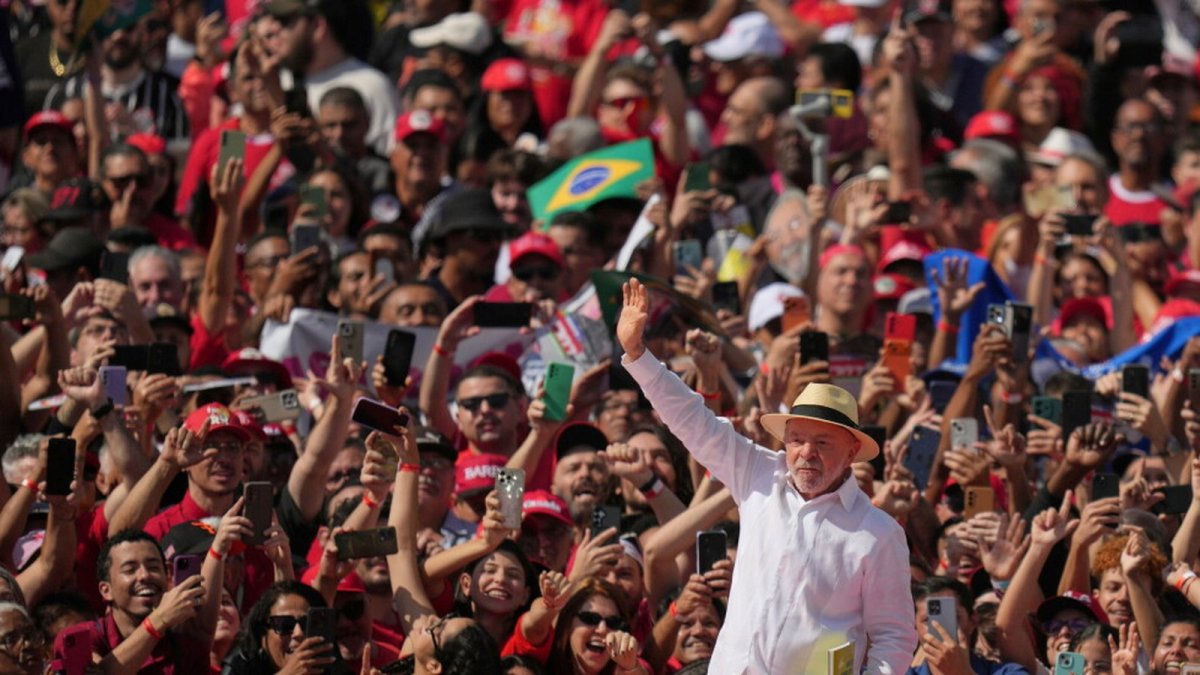
Brazil's two leading presidential candidates launched their campaigns on Sunday, drawing thousands of supporters to rival events in São Paulo and Rio de Janeiro, setting the stage for a fiercely contested October election. President Luiz Inácio Lula da Silva returned to the industrial heartland where he rose to prominence as a union leader, while Senator Flavio Bolsonaro rallied his base on Copacabana Beach, seeking to extend his family's political legacy. With women making up nearly 53 percent of the electorate, both campaigns opened with sharp appeals on gender violence, while trade, security, and mineral sovereignty emerged as defining themes.
Brazil's Lula, Bolsonaro Launch Bitter Campaign Race
Sao Paulo, Brazil - President Luiz Inácio Lula da Silva addressed more than 10,000 supporters at the Vila Euclides Stadium in São Bernardo do Campo on Sunday, the symbolic birthplace of his political career, where he led metalworkers' strikes during the 1964-1985 military dictatorship. The 80-year-old president, wearing a hat due to recent radiotherapy for skin cancer, insisted Brazil needs more of his policies as he seeks a fourth nonconsecutive term. The venue recalls the ABC strikes that launched his rise to national prominence 47 years ago.
Bolsonaro Rallies Base in Rio Without Father
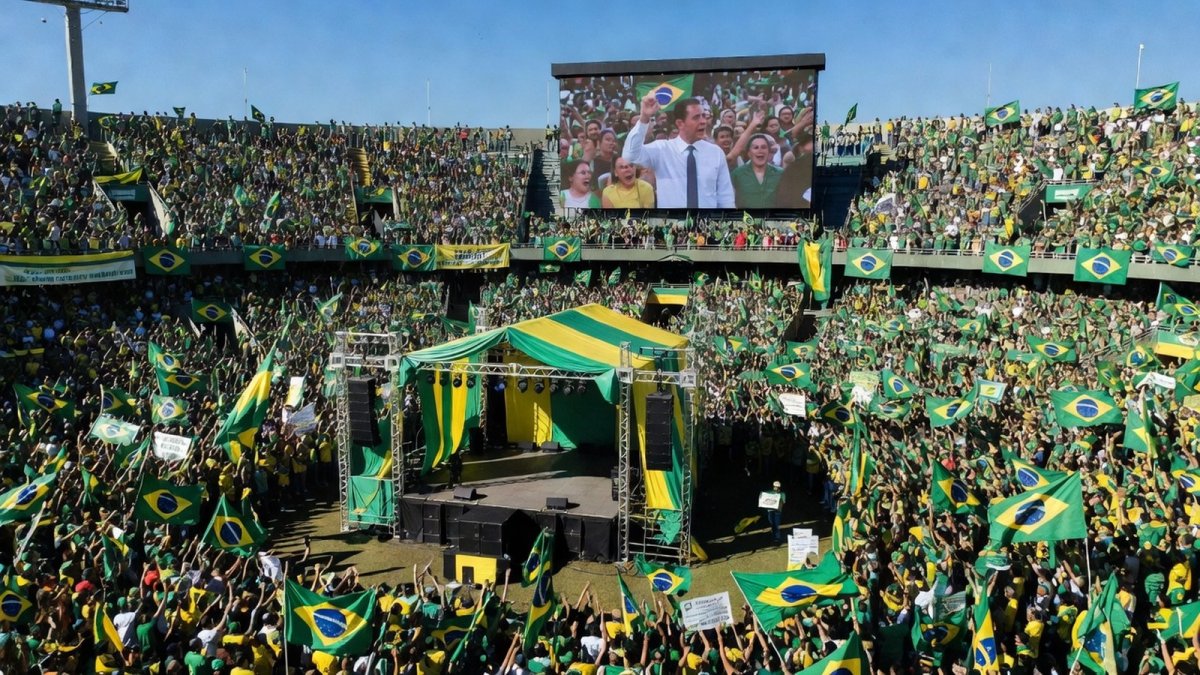
Senator Flavio Bolsonaro, 45, gathered thousands of voters on Copacabana Beach in Rio de Janeiro, a traditional stronghold for the Bolsonaro family. His father, former President Jair Bolsonaro, remained under house arrest following his conviction for an attempted coup and did not attend the rally. The younger Bolsonaro, wearing a bulletproof vest, said during a live broadcast that he has received 1,800 death threats, without offering evidence. His campaign has faced headwinds since its start, with moderate political parties keeping their distance, a public rift with his stepmother, and difficulties in finding a running mate.
The senator's launch leaned heavily on public safety, contrasting sharply with Lula's emphasis on industrial policy and social themes. Bolsonaro promised to classify the PCC, Comando Vermelho, and militias as terrorist organizations if elected, a hardline stance aimed at voters concerned about rising crime in Brazilian cities. He was joined by his wife Fernanda, running mate Alfredo Gaspar, and Liberal Party figures Douglas Ruas and Daniella Marques.
Lula Frames Campaign Around Gender Equality
Both candidates opened their campaigns with appeals to women, who account for nearly 53 percent of Brazil's 158 million eligible voters, according to the country's electoral court. Lula, with First Lady Rosangela da Silva by his side, declared that "men need to learn from childhood that they are no better than women. We need to be equal." The first lady was one of the event's main speakers in São Bernardo do Campo, where Lula lived for many years.
Lula said he would launch a platform within 10 days with more details on gender-responsive policies, including education initiatives and laws to further thwart and punish violence against women. During his Workers' Party convention in early August, Lula had said that men who commit acts of domestic or gender-based violence must choose between supporting him or hitting a woman, declaring that if they choose violence, "they don't need to vote for me." Senator Bolsonaro, with his mother and wife by his side, also promised supporters he would work to fight violence against women.
Femicide Crisis Looms Over Election
The emphasis on gender violence reflects grim national data. Brazil registered nearly 400 femicides in the first quarter of 2026, the highest number for the period since the country first began tracking the crime 11 years ago, according to the Justice and Public Security Ministry's database. In 2024, femicide stopped being classified as an aggravated form of homicide and became a separate crime, punishable by 20 to 40 years in prison, yet the trend has not abated.
The campaign events targeted women and evangelicals, with Women's Minister Cida Goncalves, Senate candidates Benedita da Silva, Simone Tebet, and Marina Silva, and First Lady Janja on stage or cited at Lula's rally. Singer-pastor Kleber Lucas performed "Deus Cuida de Mim," a gospel hit that resonated with the crowd, signaling the campaign's outreach to religious voters.
Mineral Sovereignty and Trade Deals Take Center Stage
Lula used his launch to denounce foreign interference in Brazil's politics, with his allies accusing the United States government of seeking to boost Flavio Bolsonaro's bid through measures such as raising tariffs on Brazilian exports and revoking the visa of Brazil's ambassador to Washington. Speaking about Brazil's vast reserves of rare minerals, Lula said, "No one [abroad] will tap our minerals. We are going to tap them for the benefit of the Brazilian people."
The president defended domestic industrialization of minerals and rare earths, framing it against the US-China strategic rivalry. This policy push aims to boost Brazil's strategic autonomy and economic resilience, according to reports from Folha, Poder360, O Globo, and R7. Under Lula, Brazil's Amazon deforestation has hit a decade low, with enforcement surges delivering record-low deforestation and Amazon fires, a record the campaign is likely to tout as it balances conservation with development pressure.
Bolsonaro countered by arguing that he is "the only one who can sit with the United States, with China, with Israel, with the Middle East, with India and with Argentina to make the best and biggest trade deals for our nation." His party's convention was attended by Argentina's President Javier Milei, while Israeli Prime Minister Benjamin Netanyahu and several members of the Trump administration have expressed support for him.
Other Candidates Enter the Fray
Sunday marked the first campaign day for the 13 candidates in the running, though many voters are expected to pay more attention once campaign ads start airing on TV and radio at the end of the month. Ronaldo Caiado, a former state governor and agribusiness leader, toured the surroundings of Brazil's capital Brasilia and reinforced his anti-Lula credentials. Romeu Zema met voters and attended a Catholic ceremony in the countryside of Minas Gerais, considered a bellwether state for the elections, a state he had governed until recently.
Pablo Marcal registered his candidacy with the Superior Electoral Court on Saturday, despite being ineligible until 2032 under São Paulo regional court rulings, with his status marked "awaiting judgment." He declared assets of about R$7.418 billion, roughly US$1.42 billion. His ineligibility stems from rulings tied to his 2024 São Paulo mayoral campaign, with an appeal rejected on August 5 by a 7-0 vote.
Security Threats and Political Violence Cast Shadow
The campaign opened under the shadow of political violence. Before his Copacabana appearance, Bolsonaro said during a live broadcast that he has received 1,800 death threats, noting he was wearing a bulletproof vest. Senate police on Saturday detained a person planning an attack on him in Juiz de Fora, Minas Gerais, according to the senator. His father was attacked by a man with a knife while campaigning for the presidency in 2018, suffering internal bleeding and intestinal injuries.
In his speech, the younger Bolsonaro vowed to fight crime and to remove what he described as left-wing "ideology" from Brazilian schools, saying every student "has the right to dream of being Elon Musk someday." Four years ago, Lula beat incumbent Jair Bolsonaro with 50.9 percent of the vote, and the upcoming election is expected to be similarly narrow. "It looks like we are starting slow this time," said 68-year-old Flavio Alves, a Lula supporter who lives on the same street where the rally was underway. "We all expect a narrow election, but now Lula is in government, things are different."
Brazilians will vote in the presidential election on October 4.
This article was produced with AI-assisted research and editorial support. Sources: Al Jazeera, The Associated Press, Rio Times.
By Elena Vasquez, Staff Writer
What's Your Reaction?
 Like
0
Like
0
 Dislike
0
Dislike
0
 Love
0
Love
0
 Funny
0
Funny
0
 Wow
0
Wow
0
 Sad
0
Sad
0
 Angry
0
Angry
0

Latin America Correspondent at Global1.News. Based in Mexico City, covering politics, economics, energy, and culture across the region. Brings an on-the-ground perspective to stories spanning from the Rio Grande to Patagonia.










Comments (0)