
Samsung, SK Hynix Tests of Chinese Chip Tools Expose Cracks in US Export Strategy
The quiet hum of semiconductor fabrication lines in Xi’an, Wuxi, and Dalian has become the backdrop for a strategic recalibration that extends far beyond the cleanrooms. For roughly two years, Samsung Electronics and SK Hynix — the world’s two largest memory chipmakers — have been testing.
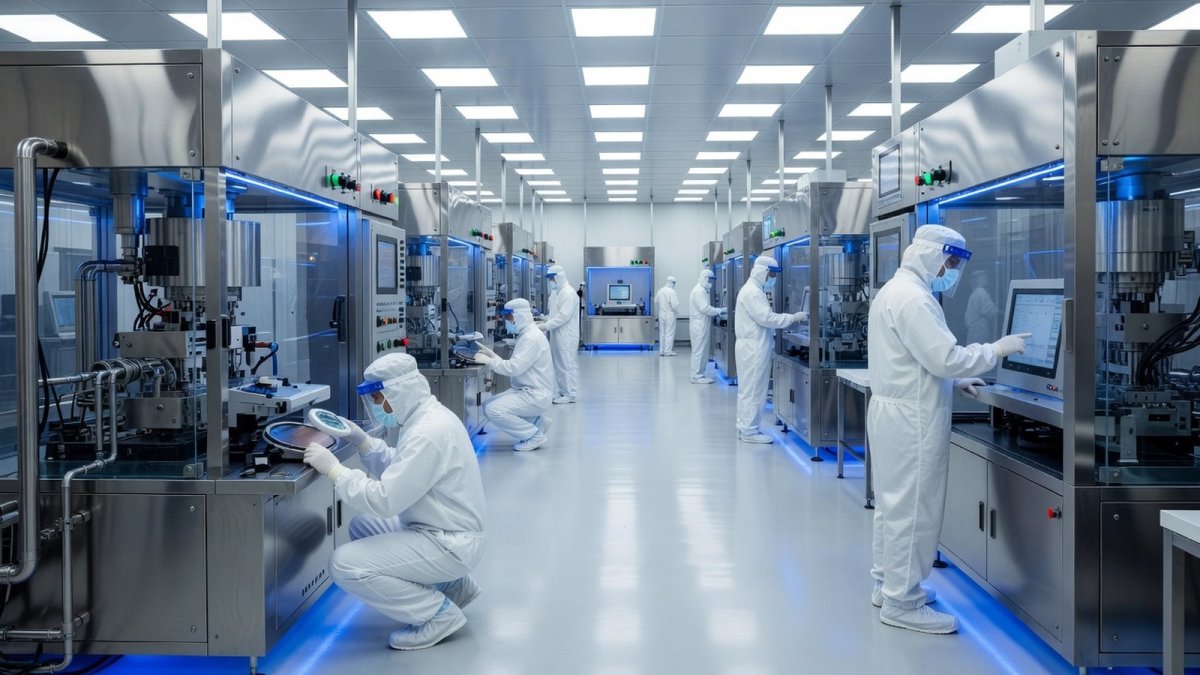
The quiet hum of semiconductor fabrication lines in Xi’an, Wuxi, and Dalian has become the backdrop for a strategic recalibration that extends far beyond the cleanrooms. For roughly two years, Samsung Electronics and SK Hynix — the world’s two largest memory chipmakers — have been testing etching equipment from the Shanghai-based firm Advanced Micro-Fabrication Equipment Inc. (AMEC). First reported by Reuters on August 5, 2026, and analyzed by The Diplomat’s Mitch Shin on August 10, these trials represent a hedge against the tightening coils of U.S. export controls. The evaluations, which have yet to yield decisions on wider deployment, expose a fundamental paradox: Washington’s measures to constrain Beijing’s semiconductor ambitions are creating opportunities for Chinese rivals to gain a foothold inside foreign-owned fabs operating in China.
This is not merely a corporate procurement story. It is a signal of structural change in the Korea-US-China semiconductor triangle, a testament to the strategic hedging instincts of Korean chaebols, and a preview of the policy dilemmas Seoul will face as it navigates between its security ally and its largest trading partner. The trials, while preliminary, underscore a reality that Washington has yet to fully confront: export controls are a blunt instrument, and the friction they generate is being absorbed by American equipment makers, not just their Chinese targets.
The AMEC Trials: A Hedge Against Supplier Uncertainty
According to three people familiar with the matter, engineers at both Samsung and SK Hynix began qualifying AMEC’s etching tools approximately two years ago. The timing was not coincidental. At that moment, uncertainty was mounting over whether Washington would continue allowing the two Korean firms to import U.S. chipmaking tools into their Chinese factories. The trials, as The Diplomat notes, amount to a hedge against the possibility that future restrictions could extend beyond new equipment to the servicing, repair, or replacement of Western tools already installed at their Chinese plants.
Samsung has publicly denied testing AMEC equipment at its China site or considering such a test. SK Hynix has not commented on the matter. The denials and silences are themselves instructive. For two companies that depend on American and Dutch equipment for their most advanced production, openly courting Chinese suppliers would risk antagonizing Washington. Yet the operational logic is clear: memory-chip production lines depend on equipment calibrated with extreme precision, and supplier uncertainty is difficult for a fab to absorb. Keeping Chinese suppliers in reserve is a rational risk-management strategy — a way to maintain and upgrade existing production lines, rather than expand manufacturing capacity in China.
The stakes are substantial. Samsung operates a NAND flash memory chip plant in Xi’an, while SK Hynix has NAND facilities in Dalian and a DRAM memory chip plant in Wuxi. These facilities rely heavily on etching tools supplied by U.S. firms including Applied Materials and Lam Research. The Wuxi facility alone contributes an estimated 35-40% of SK Hynix’s total DRAM output, while the Dalian plant — formerly Intel’s NAND operations, acquired by SK Hynix in 2021 — carries critical production capacity. Any disruption to the servicing of these tools would have immediate and severe consequences for global memory supply.
The Leverage Effect of Annual Licenses
The immediate catalyst for the AMEC trials lies in the shifting regulatory landscape. In 2023, the U.S. Commerce Department designated Samsung and SK Hynix’s Chinese factories as validated end users (VEU), a status that allowed them to import certain controlled American equipment without applying for a license each time. That status was revoked in 2025, and on December 30, 2025 — one day before the VEU waiver officially expired — the Commerce Department approved annual export licenses covering the companies’ equipment imports for 2026.
The shift from VEU status to annual licenses is more than a bureaucratic change. As analysis from Mo-Tek (April 2026) highlights, the annual license regime has a distinct “leverage effect”: a yearly approval window means Washington can adjust conditions, add restrictions, or withhold renewal at any time based on the broader trade and national security climate. For Samsung and SK Hynix, this means their Chinese operations are now subject to an annual review cycle in which their fate is tied to the vicissitudes of U.S.-China relations. Each policy swing — from VEU to revocation to annual license — has left the two chipmakers less certain that their existing American and Dutch tools will continue receiving spare parts, software updates, and repair support.
The Korean government has been actively communicating with Washington to secure longer-term licensing arrangements. These diplomatic efforts reflect a deeper anxiety: the annual license regime places Korean corporate strategy at the mercy of U.S. political cycles. For a country that has built its economic model on export-led growth and deep integration into global supply chains, this is an uncomfortable position. Seoul’s policy response has been twofold: engage Washington diplomatically while promoting diversification of domestic semiconductor capabilities. The AMEC trials, however, suggest that Korean companies are also pursuing a third track — diversifying their supplier base within China itself.
China’s Rapid Strides in Chip Hardware
The AMEC trials are occurring against a backdrop of rapid advancement in China’s chipmaking industry. A state-backed manufacturer based in Shanghai — identified as Shanghai Aishengna Electronic Technology Group, a company built by absorbing engineering teams from several Chinese lithography startups — began mass-producing immersion deep ultraviolet (DUV) lithography machines in late July 2026. The company aims to deliver roughly five units this year and about 20 in 2027 to three of China’s leading chipmakers.
Lithography machines etch the circuit patterns that give a chip its function. The technology has long been dominated by the Dutch firm ASML, which builds the extreme ultraviolet (EUV) systems needed for the most advanced chips. The Aishengna machines use DUV, an older process that falls well short of ASML’s capabilities and are not expected to pose an immediate commercial threat to the Dutch company. Yet the symbolic significance should not be underestimated. China’s drive for chip-hardware self-sufficiency is no longer confined to theoretical research; it is now producing commercial-grade equipment, however modest in capability.
Chinese equipment makers continue to trail overseas rivals in advanced lithography and some inspection systems, but they have narrowed the gap in areas such as etching, deposition, cleaning, and planarisation — often at significantly lower cost. According to Dan Hutcheson, vice chair of research firm TechInsights, Chinese tools can cost 20% to 30% less than comparable equipment from established foreign suppliers. Deutsche Bank estimates that Naura Technology, AMEC, Piotech, and ACM Research will each generate more than $1 billion in revenue in 2026. Together, they could capture 25% to 30% of China’s projected $28 billion wafer-fabrication equipment market this year. Excluding lithography and metrology, Chinese suppliers’ share could approach 40%.
AMEC equipment is already used by leading Chinese chipmakers, including NAND producer Yangtze Memory Technologies Co (YMTC). This gives Samsung and SK Hynix greater confidence that some systems are mature enough for testing. The fact that Chinese tools are now being evaluated by the world’s leading memory chipmakers represents a milestone in China’s long march toward semiconductor self-sufficiency.
The Paradox of Export Controls
The broader implications of these developments extend well beyond the corporate strategies of Samsung and SK Hynix. The trials underscore a paradox at the heart of U.S. technology controls: measures designed to constrain Beijing’s semiconductor ambitions are creating opportunities for Chinese rivals to gain a foothold in foreign-owned fabs operating in China. By making Western equipment suppliers unreliable, Washington has inadvertently incentivized the very diversification it sought to prevent.
The rise of Chinese suppliers poses a longer-term challenge to dominant equipment makers including Applied Materials, Lam Research, and KLA, as well as Japanese and European rivals. Applied Materials reported $8.53 billion in China revenue in fiscal 2025, equal to 30% of total sales. A shift by Samsung and SK Hynix toward Chinese equipment — even if limited to their China operations — would erode this revenue base and strengthen the competitive position of Chinese suppliers.
Yet any breakthrough for Chinese suppliers would still face significant hurdles. These include lengthy qualification processes, smaller service networks, intellectual-property concerns, and potential political pressure from Washington. It is also unclear whether Korean chipmakers would install Chinese equipment at domestic factories because of security and intellectual-property risks. The AMEC trials, for now, appear confined to the China operations — a pragmatic response to a specific regulatory environment, not a wholesale abandonment of Western suppliers.
Huawei’s South Korea Push and the AI Dimension
The equipment trials are one facet of a broader Chinese technological offensive. Huawei plans to launch its Ascend 950 processors and Atlas 950 SuperPod computing system in South Korea in the fourth quarter of 2026, positioning them as a cheaper alternative to U.S. firm Nvidia’s export-compliant H20 chip. Huawei has signed distribution agreements with two Korean partners — Hansol PNS and SK Shieldus — and claims its inference-focused chip delivers roughly 2.87 times the performance of Nvidia’s H20 at about a quarter of the price.
Security concerns about Chinese technology and doubts over software support could slow Huawei’s adoption in South Korea, even as its AI chip launch stays on track for the fourth quarter of this year. Carl Benedikt Frey, an associate professor of AI & Work at the Oxford Internet Institute and a Fellow of Mansfield College at the University of Oxford, has argued that China’s “move fast and regulate later” strategy has spurred growth in emerging technology like artificial intelligence and renewable energy at an accelerated pace, although that strategy raises questions about the security and quality of Chinese innovations.
For South Korea, the Huawei entry presents a delicate dilemma. On one hand, Korean firms are eager to diversify their AI chip suppliers and reduce dependence on Nvidia. On the other hand, the security implications of deploying Chinese AI infrastructure in a country that hosts U.S. military bases are profound. The Korean government’s response to Huawei’s market entry will be closely watched as a test of its ability to balance economic pragmatism with alliance commitments.
Seoul’s Policy Position and the Legacy Chip Strategy
The AMEC trials and Huawei’s market entry come at a time when Korean semiconductor strategy is already under strain. Both Samsung and SK Hynix primarily use their Chinese facilities for mature-process legacy DRAM and NAND production, freeing advanced lines in Korea for products like high-bandwidth memory (HBM) — a “legacy chips from China, advanced chips from Korea” division of labor. This strategy has served the chaebols well, allowing them to capture the AI-driven HBM boom while maintaining cost-competitive legacy production in China.
In Q1 2025, SK Hynix overtook Samsung in global DRAM revenue share (36% vs 32%) for the first time, driven by HBM demand from AI chipmakers like Nvidia; Micron ranked third with 23%. Samsung’s investment in its Xi’an NAND flash facility surged from approximately 480 billion won in 2024 to about 804 billion won in 2025, a 67.5% year-on-year increase, driven by AI data center demand for conventional memory chips. SK Hynix’s combined 2025 investment in its Wuxi DRAM plant and Dalian NAND flash subsidiary exceeded the 1 trillion won mark.
This division of labor, however, is predicated on the continued viability of Chinese operations. The annual license regime threatens that viability by introducing uncertainty into the supply chain. The AMEC trials are a direct response to that uncertainty — a signal that Korean companies will not passively accept the risks Washington’s policies create. For Seoul, the challenge is to maintain its alliance with the United States while protecting the commercial interests of its most important industrial sector. The Korean government’s active engagement with Washington on licensing arrangements suggests it understands the stakes, but the outcome remains uncertain.
The coming months will reveal whether the AMEC trials move beyond testing. Samsung and SK Hynix have not said whether they will deploy Chinese equipment in their China fabs, and the qualification process for semiconductor equipment is notoriously lengthy. Yet the very existence of these trials — and the fact that they have continued for two years — signals a fundamental shift in the calculus of Korean chipmakers. The era of unquestioned reliance on Western equipment suppliers is over. In its place has emerged a more complex, multipolar landscape in which Korean chaebols must navigate between Washington’s security demands, Beijing’s technological ambitions, and their own commercial imperatives. The cracks in U.S. export strategy are not merely visible; they are being actively exploited by the very companies Washington seeks to protect.
By Prof. David Park, Staff Writer
This article was produced with AI-assisted research and editorial support. Reporting is based on sources cited in the article.
What's Your Reaction?
 Like
0
Like
0
 Dislike
0
Dislike
0
 Love
0
Love
0
 Funny
0
Funny
0
 Wow
0
Wow
0
 Sad
0
Sad
0
 Angry
0
Angry
0

East Asia/Technology Correspondent at Global1.News. Seoul-based voice covering Korean politics, technology, business, and culture. Analyzes how technology and geopolitics intersect across East Asia.















Comments (0)