
Spain to Relocate 1,300 Migrant Children from Overcrowded Ceuta
In a recent DW News report from the North African enclave of Ceuta, the scale of Spain's newest humanitarian challenge comes into sharp focus: hundreds of unaccompanied migrant children, many...
In a recent DW News report from the North African enclave of Ceuta, the scale of Spain's newest humanitarian challenge comes into sharp focus: hundreds of unaccompanied migrant children, many sleeping rough on the streets and beaches, are waiting for a solution that the Spanish government says is finally coming. This week, Spain's Minister for Youth and Children, Sira Rego, announced a plan to relocate more than 1,300 of these minors to mainland Spain, prioritizing the most vulnerable — younger boys and girls. The decision marks a critical juncture for a country grappling with the aftermath of the largest border surge in Ceuta's history, a crisis that echoes challenges Mexico knows all too well along its own northern border.
Spain to Relocate 1,300 Migrant Children from Overcrowded Ceuta
Ceuta, Spain — The announcement comes after weeks of chaos. On July 30 and 31, an estimated 80,000 people crossed from Morocco into Ceuta, many swimming around the Tarajal and Benzú breakwaters while others arrived in small boats. It was the largest border surge in the enclave's history, and at least 111 people lost their lives — 100 in Ceuta and 11 in Fnideq, Morocco. While Spanish officials reported that roughly 70,000 people had voluntarily returned to Morocco by August 3, thousands remained, camping on Ceuta's beaches. Among them were 1,342 registered unaccompanied foreign minors, according to Rego's Friday announcement, a number that has overwhelmed the city's reception system, which could provide only 29 child-specific accommodations as of August 3.
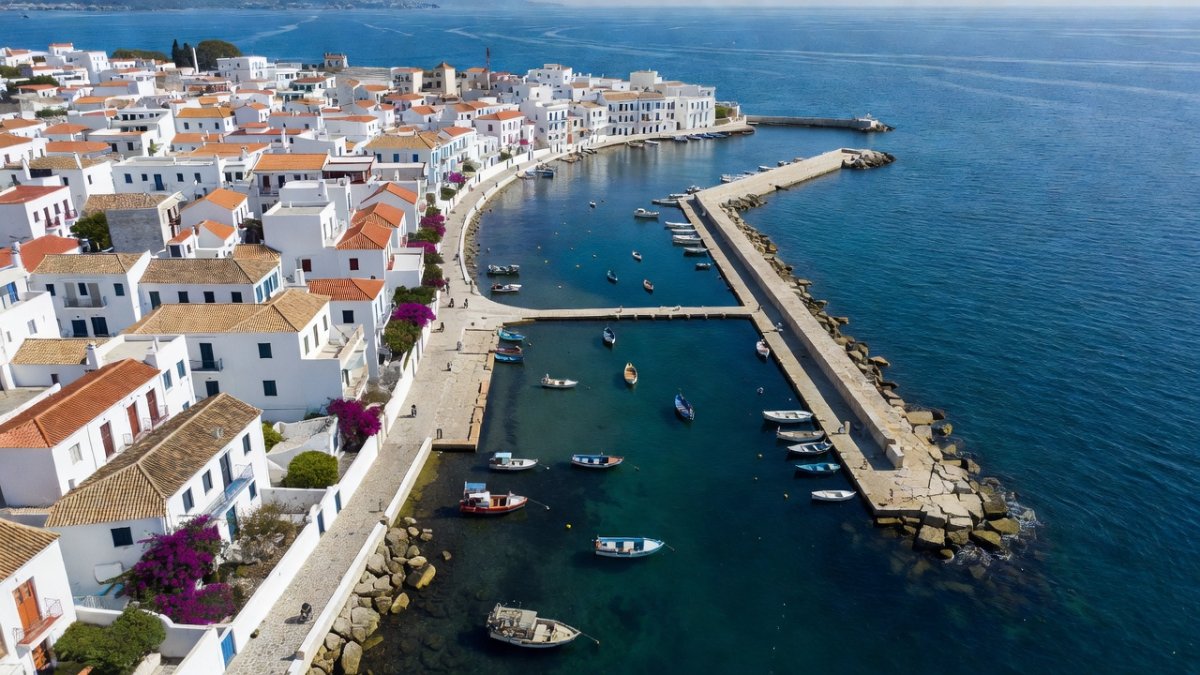
A Humanitarian Emergency in a Tiny Enclave
Ceuta's mayor-president, Juan Jesús Vivas, has not minced words. He called the situation a "humanitarian and social emergency" and formally requested that the national government declare an emergency for the city. "It is impossible for 60,000 people to enter without the approval of the Moroccan government," Vivas said, pointing to the geopolitical complexity of the crisis. The enclave, a Spanish territory of roughly 85,000 residents on Morocco's Mediterranean coast, has become a pressure cooker. Local facilities are overwhelmed, and DW's correspondent Jan-Philipp Scholz reported that many minors are sleeping rough, exposed to the elements and to significant risks. Save the Children and other NGOs have warned of abuse, trafficking, and exploitation, and reports about sexual abuse among the stranded children have emerged, adding urgency to the government's relocation plan.
For Mexicans, the imagery is painfully familiar. The sight of children waiting at the border, uncertain of their future, is a daily reality in Ciudad Juárez, Tijuana, and Reynosa. The difference is scale and jurisdiction, but the human cost is the same. Dr. Ingi Iusmen, a University of Southampton expert interviewed by DW, said transferring the children to the mainland is "the right thing to do," a sentiment that resonates with child welfare advocates on both sides of the Atlantic. The priority, she and others argue, must be the "best interests of the child," a legal standard that Spain's government says will guide every individual case.

Who Are the Children Waiting in Ceuta?
The profile of the minors in Ceuta has shifted compared with previous crises. According to Spanish officials, more girls and younger children are among the latest arrivals than during the May 2021 crisis, when around 8,000 people entered the enclave in two days. This time, the government's plan prioritizes girls and children under 13 for transfer to the mainland. Rego stated that a permanent technical team from her ministry will deploy to Ceuta starting August 16 to speed up identification and reception of minors ahead of the transfers. She described the situation as "extremely complex," acknowledging that the identification process is the first hurdle. Many children arrive without documents, and Spanish authorities must determine their age, origin, and family situation before any placement decision can be made.
Family reunification remains a stated priority for minors whose parents in Morocco request their return. Each case will be assessed individually, Rego said, to ensure the "best interests of the child" are served. This is a delicate balancing act. For some children, returning to family in Morocco may be the safest option. For others, particularly those fleeing conflict or persecution in sub-Saharan Africa, return could be life-threatening. The Spanish government insists it will not engage in mass returns of minors, a stance that aligns with the country's legal obligations under international child protection conventions. The process will be slow, case-by-case, and legally rigorous — a stark contrast to the "hot returns" that Spain's Supreme Court struck down in June 2026.
The Supreme Court Ruling That Changed Everything
To understand why this crisis happened, one must look at a landmark legal decision. On June 29, 2026, Spain's Supreme Court ruled that migrants intercepted at sea while attempting to reach Ceuta or Melilla could not be summarily returned under the enclaves' special border rejection regime, commonly known as "hot returns." The court determined that these individuals are entitled to due-process procedures, including the right to apply for asylum. The ruling was a victory for human rights organizations, but it had an unintended consequence: smuggling networks exploited the decision to encourage sea crossings, knowing that Spanish authorities could no longer immediately push people back. The result was the mass surge in late July, as thousands of people, largely from sub-Saharan Africa, took to the water in a desperate gamble for European soil.
This legal tension mirrors the debate at the US-Mexico border, where due-process rights for asylum seekers have been a flashpoint for years. In Mexico, the principle of non-refoulement and the right to seek asylum are enshrined in law, yet the practical application at border crossings often falls short. The Spanish experience offers a cautionary tale: when courts uphold rights but enforcement capacity is insufficient, the result can be a humanitarian crisis at the border. The question now is whether Spain can manage the aftermath without resorting to the very practices the Supreme Court struck down.
Political Fallout and European Divisions
The political reaction to the Ceuta crisis has been fierce. Prime Minister Pedro Sánchez visited the enclave on July 31 and was met with protests, boos, and chants of "Ceuta is not for sale." Locals, many of whom feel abandoned by Madrid, demanded immediate solutions. The crisis has also exposed deep divisions within the European Union. France reimposed border checks with Spain on July 31, and Italy did the same, prompting Spain to respond with checks on travelers from Italy. Twenty-two heads of government wrote to European Commission President Ursula von der Leyen, demanding a coordinated EU response to what they see as a systemic failure at the bloc's southern border. The EU, already fractured over migration policy, now faces another test of its unity.
For Mexico, the European divisions are a familiar story. The US-Mexico border has long been a political football in Washington, with states and the federal government often at odds over enforcement and humanitarian obligations. The Ceuta crisis shows that Europe is not immune to the same dynamics. The difference is that Spain, unlike the United States, is a single country managing a single border crisis, yet it still struggles to coordinate a response among its own autonomous regions. The sectoral committee on childhood meets next week with representatives of Spain's regions, followed by a sectoral conference at the end of August to discuss the distribution of minors and funding. The government hopes to begin the first transfers within weeks, but the logistics are daunting.
What This Means for Mexico and Latin America
Spain's migration story is deeply intertwined with Latin America. In January 2026, Prime Minister Sánchez announced a mass regularisation programme for migrants living illegally in Spain. More than one million people applied, primarily of Latin American and Moroccan origin, exceeding government projections by roughly a quarter. Venezuelans, Colombians, Hondurans, and Salvadorans make up a significant portion of Spain's migrant community, and many have family members who have made the perilous journey across the Atlantic or through North Africa. The Ceuta crisis, while geographically distant, is a reminder that migration is a global phenomenon, and that the humanitarian challenges faced at one border are often replicated at another.
Mexico knows this story intimately. Unaccompanied migrant children at Mexico's northern border have been a persistent challenge for years, with DIF shelters struggling to accommodate the influx and family reunification cases often taking months or years to resolve. The Mexican government has faced criticism from human rights groups for its handling of migrant children, just as Spain now faces similar scrutiny. The Ceuta crisis offers a mirror: how does a country protect children at the border while managing the political and social fallout of mass migration? There are no easy answers, but the Spanish government's decision to prioritize the most vulnerable children for transfer to the mainland is a step that Mexican authorities could study.
The Road Ahead: Transfers, Asylum, and Prevention
The first transfers of minors from Ceuta to mainland Spain are expected to begin within weeks, according to government sources. The process will involve coordination with Spain's autonomous regions, which will be responsible for housing and caring for the children once they arrive. Funding will be a key issue, and the sectoral conference at the end of August will address how the costs will be shared. The government has also promised to strengthen asylum application procedures for children, ensuring that those who qualify for international protection receive it in a timely manner. But the deeper question remains: what is Spain doing to prevent another mass migration incident?
Social media played a significant role in organizing the July crossings, with Spanish fact-checkers uncovering online groups sharing detailed plans for reaching Ceuta. Smuggling networks are using platforms like WhatsApp and TikTok to spread information about border conditions and legal loopholes, making prevention a technological challenge as much as a law enforcement one. Spanish authorities are working with Moroccan counterparts to improve border surveillance, but the fundamental drivers of migration — poverty, conflict, and climate change — remain unaddressed. The Ceuta crisis is a symptom of a larger global problem, and Spain, like Mexico, is caught in the middle.
For the 1,342 children currently registered in Ceuta's reception system, the wait is almost over. They will soon be transferred to the mainland, where they will have access to shelter, education, and legal representation. But for the thousands of others who remain unregistered, and for the countless more who are still considering the journey, the crisis is far from resolved. Spain's plan is a humanitarian response, but it is not a solution. The solution, if one exists, lies in addressing the root causes of migration and in building a global system that protects the most vulnerable — children above all. Mexico, with its own border challenges, understands this better than most. The question is whether the world is ready to listen.
By Rosa Martinez, Staff Writer
This article was produced with AI-assisted research and editorial support. Reporting is based on sources cited in the article.
What's Your Reaction?
 Like
0
Like
0
 Dislike
0
Dislike
0
 Love
0
Love
0
 Funny
0
Funny
0
 Wow
0
Wow
0
 Sad
0
Sad
0
 Angry
0
Angry
0

Latin America/Andes Correspondent at Global1.News. Based in Bogota, covering politics, environment, energy, and social movements across the Andean region. Passionate about environmental journalism and communities protecting their land.














Comments (0)