
Peso Reaches Strongest Level Against Dollar in Six Months
The Mexican peso closed at 17.21 to the US dollar on August 6 and dipped below 17.14 in early trading on August 7, marking its strongest performance since February 23. This move came as markets reacted to a weak US jobs report and Banxico's decision to hold rates steady.
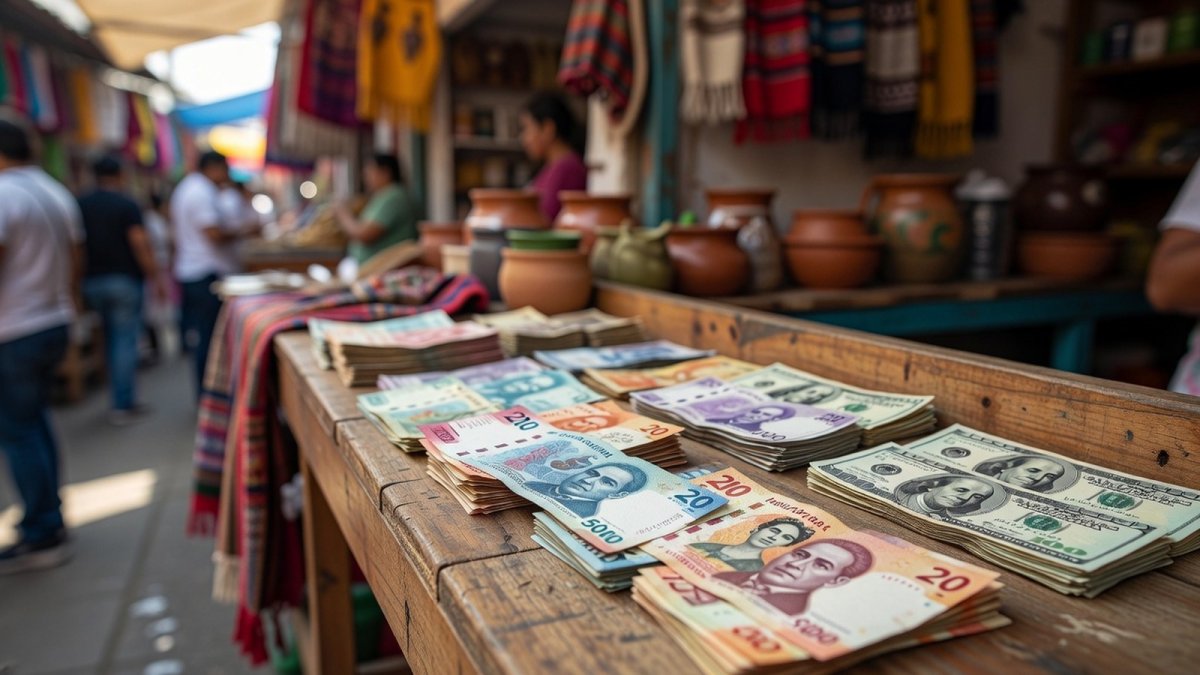
Mexican Peso Reaches Strongest Level Against Dollar in Six Months
The Mexican peso closed at 17.21 to the US dollar on August 6 and dipped below 17.14 in early trading on August 7, marking its strongest performance since February 23. This move came as markets reacted to a weak US jobs report and Banxico's decision to hold rates steady. Families across Mexico now watch how the shift touches daily life in colonias and rural communities.
Tags: Mexican peso, US dollar, Banxico, inflation, remittances, Sheinbaum, exchange rate, Mexican families, carry trade, INEGI data
Banxico Holds Benchmark Rate at 6.50 Percent for Second Meeting
Banxico's board of governors voted unanimously on August 6 to keep the benchmark interest rate at 6.50 percent. The central bank signaled that rates would likely stay at this level for the foreseeable future. Officials noted that headline and core inflation are expected to decline throughout the forecast horizon, though more gradually than previously anticipated.
This decision supports the peso through a wide interest rate gap with the United States. Mexico's policy rate stands well above the Federal Reserve's 3.50 to 3.75 percent target range. Global investors have responded by borrowing in lower-yield currencies and directing funds into Mexican assets.
Ordinary households feel the effects through continued higher borrowing costs. Mortgage payments and credit card interest remain elevated while the rate holds firm. Small business owners in tianguis and taquerías face the same pressure when seeking loans to expand.
Inflation Falls to 3.12 Percent in July According to INEGI
INEGI data released on August 7 showed Mexico's headline inflation rate dropped to 3.12 percent in July from 3.37 percent in June. This marked the fourth consecutive monthly decline and the lowest rate since May 2020. President Sheinbaum called the drop very important during her Friday morning press conference.
Speaking from the National Palace on Friday, Sheinbaum told reporters the decline was "very important," framing it as evidence that her administration's economic policies are reaching ordinary households. The reading sits just above the central bank's 3 percent target, a level Mexico last saw before the pandemic disrupted prices in 2020. For families in colonias and rural towns, the steady cooling of inflation means the cost of the traditional canasta básica — beans, tortillas, eggs, and cooking oil — is beginning to stabilize after years of sharp increases.
The central bank does not expect inflation to reach its 3 percent target until late next year. Slower progress means families continue to feel price pressures on basic goods even as the peso gains strength. Rural communities and indigenous groups track these numbers closely because food costs affect daily budgets.
Lower inflation combined with the stronger peso could eventually ease costs for imported items. Gasoline and some consumer products may become slightly more affordable in coming weeks. Yet the gradual pace of decline keeps many households cautious about spending.
US Jobs Report Weakens Dollar and Supports Peso Advance
US nonfarm payrolls fell by 23,000 jobs in the latest month after a downwardly revised gain of 20,000 the prior month. Markets quickly reduced bets on near-term US rate increases. The peso benefited as the dollar weakened across trading desks.
Analysts at Monex Grupo Financiero noted the peso's advance stems from dollar weakness and shifting expectations for Federal Reserve policy at its September meeting. Forbes Mexico linked the early Friday gains directly to the disappointing US employment figures. The peso is on pace for a 1.3 percent weekly appreciation.
TradingEconomics data showed the USD/MXN rate at 17.1041 on August 7, down 0.43 percent from the prior session. Over the past month the peso has strengthened 2.71 percent and stands 7.89 percent higher over the last twelve months. These moves ripple through border economies where cross-border trade shapes daily commerce.
Carry Trade Flows Boost Peso as Investors Seek Higher Yields
Gabriela Siller, director of analysis at Grupo Financiero BASE, attributed the peso's rise to carry-trade activity. Investors borrow in low-rate currencies such as the US dollar and Japanese yen, then move funds into higher-yielding Mexican assets. The wide rate differential makes Mexico attractive for these strategies.
Large global investors have increased positions in Mexican markets under this approach. The flow supports the peso but also ties its value to external decisions that can reverse quickly. Families in maquiladora regions watch these capital movements because they influence local job stability.
While the strategy lifts the currency now, sudden shifts in investor sentiment could bring volatility. Communities that rely on steady export work understand how quickly exchange rates affect factory orders. The current strength offers short-term relief but requires careful monitoring by Banxico.
Remittance Families Face Reduced Purchasing Power from Stronger Peso
Families in Michoacán, Guerrero, Oaxaca, and Zacatecas, states with deep migration ties, feel the peso's recent strength directly in their daily budgets. When the currency closed at 17.21 to the dollar on Thursday and dipped below 17.14 early Friday, each dollar sent home converted into fewer pesos than before. This shift reduces the real value of remittances that have long supported households across these regions, where many rely on funds from relatives working abroad to cover essentials like food, school supplies, and medical care.
The 4.6 percent annual decline in remittances, the largest in 16 years and tied to US immigration enforcement impacts on the diaspora, compounds the pressure. Mexico has received more than 60 billion dollars in such transfers in recent years, making the drop especially noticeable in tight-knit communities. Families adapt by tightening budgets, purchasing in bulk at local tianguis markets, and turning to neighborhood credit networks for short-term needs. The emotional weight remains heavy, as senders and recipients alike balance pride in supporting loved ones with the practical strain of making every peso stretch further amid slower inflows.
Imported Goods and Credit Costs Shape Daily Life for Mexican Families
A stronger peso brings gradual relief to Mexican households through lower costs for imported electronics, appliances, clothing, and certain foods that rely on international supply chains. Gasoline prices, which track global benchmarks, can also ease over time when the currency holds firm against the dollar. These changes help stretch family resources in everyday purchases, from kitchen staples to household upgrades, and support small vendors who pass along savings to customers in colonias and markets nationwide.
Yet borrowing costs stay elevated because Banxico held its benchmark rate at 6.50 percent for a second straight meeting, with rates expected to remain steady. Young families seeking mortgages and small business owners running taquerías or tortillerías face higher interest on consumer credit and loans. The tension between currency gains and persistent borrowing expenses means many households weigh cheaper imports against the challenge of financing larger investments or expansions, requiring careful planning to balance immediate savings with longer-term credit obligations.
What to Watch For
The Federal Reserve's September meeting stands as the next key inflection point, where shifts in US policy expectations could influence dollar strength and carry-trade flows that have supported the peso's advance. Banxico has signaled that headline and core inflation will decline gradually, with convergence to the 3 percent target not anticipated until late next year, keeping domestic rates steady in the near term and affecting credit availability for families and businesses.
Carry-trade positions, where investors borrow in lower-rate currencies to invest in Mexico's higher yields, carry reversal risks if global sentiment changes quickly. Families and small business owners should monitor exchange rates, gasoline prices, mortgage rates, and remittance values closely. This cautious outlook supports measured optimism for the Mexican economy as communities navigate both opportunities from currency strength and ongoing pressures from inflation and credit conditions.
The coming weeks will test whether the peso can hold its gains or whether profit-taking pulls it back toward the 17.30 level seen earlier in the week. Banxico's next rate decision, due later this year, will depend on how quickly inflation keeps falling. For now, the advice from analysts is simple: families receiving dollars from abroad should convert strategically rather than all at once, while small businesses should lock in import costs when the exchange rate is favorable.
By Rosa Martinez, Staff Writer
This article was produced with AI-assisted research and editorial support. Reporting is based on sources cited in the article.
What's Your Reaction?
 Like
0
Like
0
 Dislike
0
Dislike
0
 Love
0
Love
0
 Funny
0
Funny
0
 Wow
0
Wow
0
 Sad
0
Sad
0
 Angry
0
Angry
0

Latin America/Andes Correspondent at Global1.News. Based in Bogota, covering politics, environment, energy, and social movements across the Andean region. Passionate about environmental journalism and communities protecting their land.














Comments (0)