
State must acquire Kodanad estate land for converting a private road into a public road: PIL in HC
In the Nilgiris district of Tamil Tamil Nadu, a public‑interest litigation (PIL) has been lodged in the Madras High Court demanding that the state acquire a stretch of land from the Kodanad Estate to convert a 2.5 km private road into a public thoroughfare.
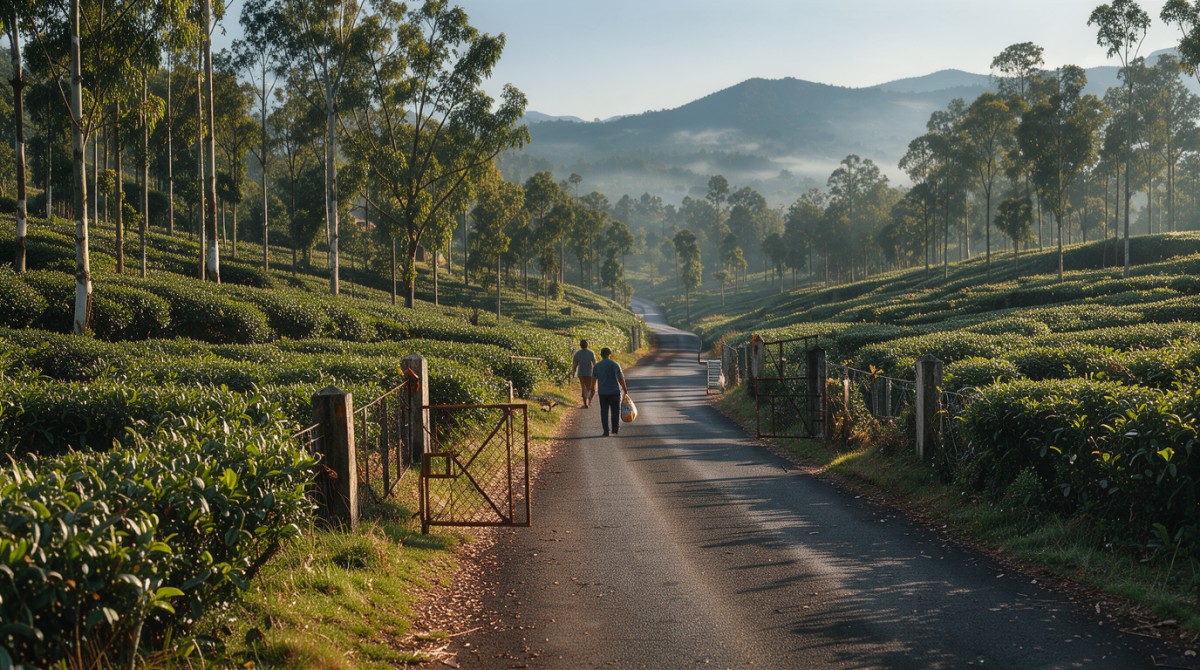
In the Nilgiris district of Tamil Tamil Nadu, a public‑interest litigation (PIL) has been lodged in the Madras High Court demanding that the state acquire a stretch of land from the Kodanad Estate to convert a 2.5 km private road into a public thoroughfare. The petition, filed by 61‑year‑old farmer P. Ganesan on behalf of residents of the hamlets Anna Nagar and Kamaraj Nagar, underscores how historic land‑ownership patterns and piecemeal legal interventions have left a vulnerable rural community dependent on a privately controlled access route.
Background of the Kodanad Estate and the private road
The Kodanad Estate, once owned by former Chief Minister J. Jayalalithaa during her lifetime, continues to be managed by a private estate authority. The estate’s internal road, which runs for roughly 2.5 km, has for many years served as the sole link between the two hamlets and the broader road network. Access has been regulated through a gate‑pass system, a nominal toll, and a daily closure of the gates after 6 p.m., limiting movement for residents who rely on the road for work, education and medical visits.
According to the petitioner, the estate’s management has historically allowed passage but only under the conditions of a gate pass and a small fee, effectively treating the road as a private conduit rather than a public right‑of‑way. This arrangement has created a chronic bottleneck, especially after dusk, when the gates are locked and villagers are forced to wait until morning to resume travel.
Legal chronology: from 2007 order to 2011 Supreme Court directive
In 2007, the then Assistant Collector invoked Section 133 of the Code of Criminal Procedure (Cr.P.C.) to declare the estate road a “detailed road” based on its long‑standing use by locals. The order sought to prevent the estate from levying tolls or restricting night‑time access. However, the High Court in April 2008 struck down that order, criticizing the use of criminal law to resolve a civil property dispute and emphasizing that the appropriate remedy lay in civil jurisprudence.
The court’s judgment highlighted the need for a permanent, lawful solution rather than ad‑hoc directives. It noted that the estate could continue to impose reasonable conditions, but the overarching principle was that the road served a public function. This tension persisted until the Supreme Court’s 2011 ruling, which explicitly directed the estate management to allow continuous access, prohibiting the locking of both ends of the road and thereby removing the night‑time barrier.
Current hardship and the petitioner’s demand
Despite the Supreme Court’s directive, the petitioner argues that the community continues to face hardship. The estate’s continued imposition of gate passes and nominal tolls, coupled with the physical constraints of a narrow private road, hampers emergency response, restricts market access and limits educational opportunities for children who must travel after school hours.
Ganesan’s PIL seeks a more definitive remedy: the acquisition of the requisite land by the State to convert the private road into a public road. By doing so, the petitioner contends, the community would gain an unrestricted, state‑maintained artery that would eliminate the need for permits, fees or gate closures, aligning the road’s status with its functional reality as a public lifeline.
Implications for land‑acquisition policy in Tamil Nadu
The case arrives at a time when Tamil Nadu’s land‑acquisition framework is under scrutiny for balancing development needs with private property rights. The state’s ability to acquire land for public utility is governed by the Right to Fair Compensation and Transparency in Land Acquisition, Rehabilitation and Resettlement Act, 2013, which mandates fair compensation, rehabilitation and a clear public purpose.
If the court orders acquisition, the government will need to navigate these statutory requirements, ensuring that compensation to the estate aligns with market valuations and that any rehabilitation measures for estate employees or tenants are addressed. The precedent set by this case could influence future acquisition proposals involving private estates that host critical public infrastructure, prompting a re‑examination of how “public use” is defined in rural contexts.
Potential impact on rural connectivity and public health
Improved road access in remote hill districts like the Nilgiris has direct health implications. Residents of Anna Nagar and Kamaraj Nagar often travel to nearby towns for medical care, and delayed or denied access can exacerbate health emergencies. Converting the private road into a public road would likely reduce travel time, facilitate ambulance movement and improve the reliability of supply chains for essential medicines.
From a broader perspective, enhanced connectivity can stimulate local economies by easing the transport of agricultural produce to markets, thereby supporting farmer incomes. It also expands educational access, allowing children to attend schools beyond the hamlets without the constraints of gate‑pass timings.
Administrative and political dimensions
The petition calls for the district collector to act, placing the onus on the state’s administrative machinery. Historically, the collector’s office has been pivotal in land‑acquisition decisions, balancing local grievances with estate interests. The involvement of a former chief minister’s estate adds a political layer, as any decision may be perceived through the lens of legacy politics and contemporary governance.
Given that the case is before a division bench comprising Chief Justice Sushrut Arvind Dharmadhikari and Justice G. Arul Murugan, the judgment could also signal the judiciary’s stance on reconciling private land rights with public welfare in post‑colonial property regimes. A ruling favoring acquisition would underscore a judicial willingness to prioritize community needs over historic private holdings, while a denial could reinforce the sanctity of private estate rights, potentially prompting legislative action.
Broader lessons for infrastructure planning in hill districts
The Kodanad road dispute illustrates a recurring challenge in India’s hill districts: infrastructure that predates modern administrative boundaries often remains under private control, creating bottlenecks for essential services. Planners and policymakers must anticipate such legacy constraints when designing rural connectivity projects, ensuring that legal pathways for public appropriation are embedded from the outset.
Moreover, the case highlights the importance of proactive state intervention. Rather than relying on piecemeal court orders that address symptoms rather than root causes, a comprehensive policy approach—identifying critical private corridors, negotiating acquisition early, and integrating them into state road networks—could preempt similar disputes. As the nation pushes toward universal road connectivity under schemes like the Pradhan Mantri Gram Sadak Yojana, the Kodanad episode serves as a reminder that legal clarity, timely compensation, and community engagement are essential to translating policy into on‑ground reality.
This article was produced with AI-assisted research and editorial support. Reporting is based on the source material cited below. Sources: The Hindu; thehindu.com; Global1.News (16 November 2026).
By Dr. Raj Patel, Staff Writer
What's Your Reaction?
 Like
0
 Dislike
0
 Love
0
 Funny
0
 Wow
0
 Sad
0
 Angry
0

India/South Asia Correspondent at Global1.News. Analytical voice with a background in science and health journalism. Based in New Delhi, covering Indian politics, education, healthcare, technology, and policy. Breaks down complex data into clear, actionable reporting.















Comments (0)