
Canadian NATO Intern Arrested on Espionage Charges, Exposing Gaps in Security Screening
In a recent CBC News report, the identity of a Canadian woman arrested by Belgian authorities on suspicion of spying at NATO's military headquarters has been revealed, raising serious questions about Canada's security screening processes for sensitive international postings.
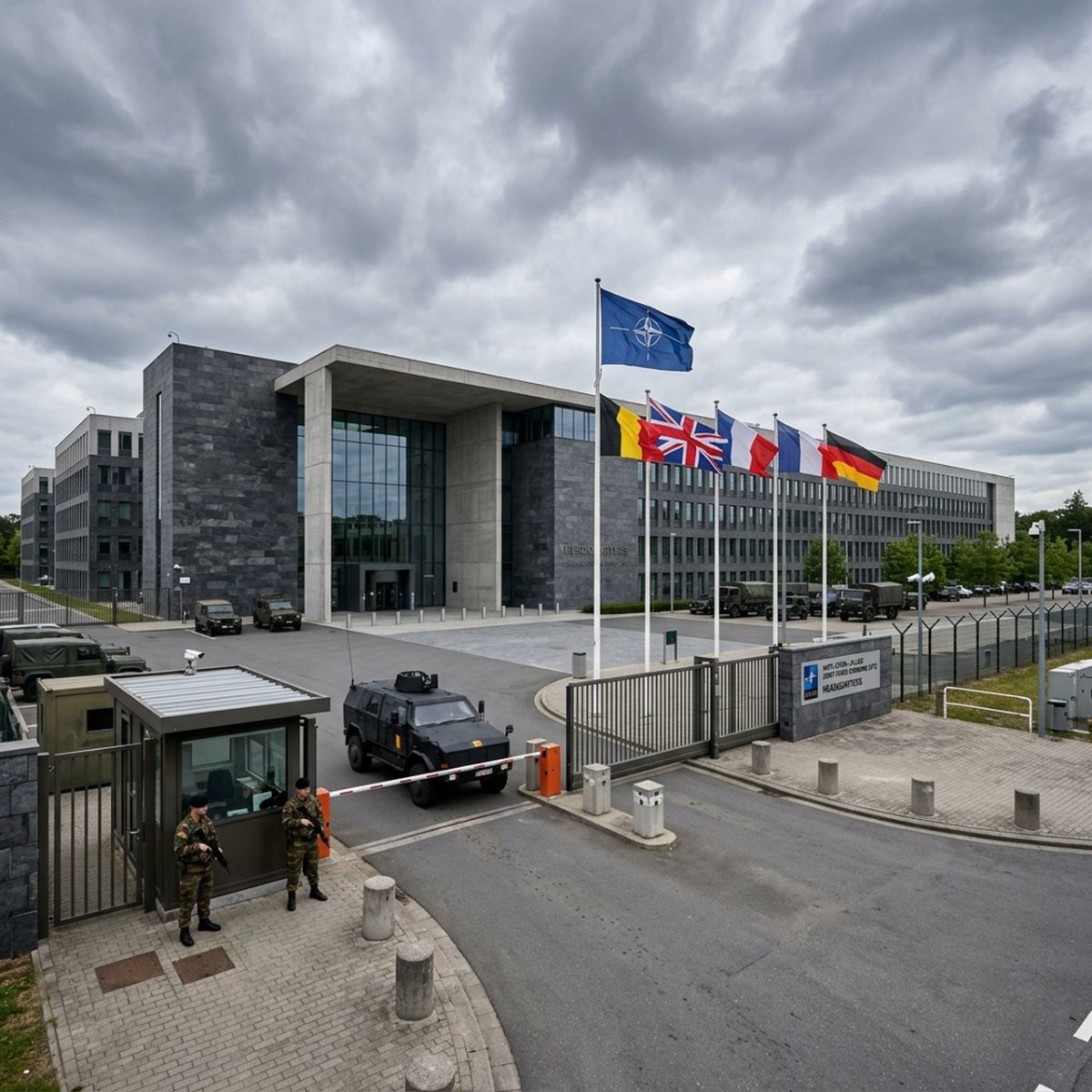
In a recent CBC News report, the identity of a Canadian woman arrested by Belgian authorities on suspicion of spying at NATO's military headquarters has been revealed, raising serious questions about Canada's security screening processes for sensitive international postings. The investigation, featured on Hanomansing Tonight, identified the suspect as Biwei Zhang, a systems engineer with a background in economics who was working as an intern at Supreme Headquarters Allied Powers Europe (SHAPE) in Mons, Belgium. The case has sent shockwaves through Canadian national security circles, prompting commitments from federal ministers to examine how such an individual could pass vetting procedures.
Canadian NATO Intern Arrested on Espionage Charges, Exposing Gaps in Security Screening
Ottawa, Ontario – July 2026 — Belgian federal prosecutors arrested Biwei Zhang, a 32-year-old Canadian citizen of Chinese origin, on Friday, July 24, 2026, on charges of "espionage and participation in a criminal organization." The arrest followed a coordinated raid on her home and workplace at SHAPE, the military headquarters of NATO that plans and executes the alliance's military operations and decides where to deploy troops and weapons. The case has ignited a political firestorm in Canada, where federal officials are now grappling with how an intern with prior government experience could have been granted a security clearance for one of the most sensitive military postings in the world.

The Arrest and Investigation
According to the Belgian Federal Prosecutor's Office, the suspect's home and workplace at SHAPE were searched on Thursday, July 23, 2026, one day before her arrest. NATO security services tipped off Belgian prosecutors, leading to the raid. Reuters reported from Belgian sources that Zhang is suspected of spying for China, though the prosecutor's office has been careful not to publicly identify the third country involved. The charges of espionage and participation in a criminal organization carry significant penalties under Belgian law, and Zhang now faces a prolonged legal battle in a foreign jurisdiction.
Belgian courts do not publicly identify defendants until trial, a practice rooted in the presumption of innocence. The prosecutor's office told CBC News it "never disclose[s] the identities of individuals suspected in ongoing investigations," citing "respect for the presumption of innocence, which must be guaranteed under all circumstances." This approach contrasts with Canadian practice, where publication bans are often used but suspects are more frequently named, yet it reflects a shared commitment to due process that is central to both legal systems.
Who Is Biwei Zhang?
Zhang uses the name Claire Zhang professionally and Catina Zhang on Facebook, where her username "biwei.zhang.93" suggests she was born in 1993. She holds a master's degree in systems science and engineering from the University of Ottawa, earned in 2022, with a thesis focused on autonomous vehicles and AI methods. Her academic work included collaboration with the Smart Connected Vehicles Innovation Centre (SCVIC) in Kanata North, Ottawa's technology hub. She also holds an Honours Bachelor of Arts in Economics from York University, earned in 2019, and speaks English and French, with Mandarin as her first language.
Her resume suggests previous work at the Canadian Space Agency, Statistics Canada, the World Trade Organization in Geneva, the European Space Agency, and the Standards Council of Canada. She worked full-time at Statistics Canada beginning in May 2020 for one year, and held public service positions through the Federal Student Work Experience Program (FSWEP) from May 2017 to June 2019. A security source told Reuters she worked in SHAPE's IT department, described her as "not a student" and "in her 30s." In a July 2025 Facebook post to a Mons group, she said she was looking for a room to rent for six months as she began her internship at SHAPE.
Prior Red Flags at CBSA
Perhaps most troubling for Canadian officials is that Zhang's background included a prior fraud allegation that reached the Federal Court. In a 2023 judicial review application, Zhang applied for a junior analyst job at the Canada Border Services Agency (CBSA) while at Statistics Canada but was accused of fraud by the Public Service Commission of Canada. The investigation started after she applied for the same position using two different names — Biwei Zhang and Claire Zhang — and took the CBSA application exam twice without notifying the agency. The Federal Court dismissed her case in 2024 without awarding costs despite her seeking $3,000.
This history raises obvious questions about how she subsequently passed Canadian security screening for a NATO internship. Dan Stanton, a former CSIS intelligence officer, told CBC News that intern positions are an "excellent in-road" for intelligence gathering at an organization like NATO. The fact that Zhang had prior federal employment and international organization experience may have actually made her appear more credible to screeners, rather than raising concerns about her dual-name usage and the fraud allegation.
Canada's Security Screening Process Under Scrutiny
The responsibility for security checks on NATO interns lies with their countries of origin — in this case Canada. Per SHAPE's website, vetting "starts once you have been selected" and takes from eight weeks to 18 months depending on the national rules of NATO member states. A Global Affairs Canada spokesperson confirmed that the "Government of Canada, following security assessments provided by CSIS, makes the final decision to grant, deny or revoke security clearances for Canadians seeking positions with international organizations, including NATO."
Public Safety Minister Gary Anandasangaree has committed to investigating Canada's security screening processes, stating: "Ultimately, we need to get to the bottom of this, and we need to ensure that these types of incidents do not occur in the future." He described the charges as "quite serious." The RCMP said it is supporting Belgian law enforcement partners but declined further comment. NATO spokesperson stated the alliance "remains fully committed to protecting Allied personnel, safeguarding classified information, and maintaining the trust and security upon which the Alliance depends."
Implications for Canadian National Security
This case strikes at the heart of Canada's relationship with NATO, an alliance of which Canada is a founding member since 1949. Canadian Armed Forces personnel serve at NATO command structures, and Canada has committed to spending 2% of GDP on defence. The arrest comes after years of Canadian concerns about foreign interference, including alleged Chinese interference in Canadian institutions and elections, which were the subject of a public inquiry. The fact that a Canadian citizen with Chinese origins was allegedly spying for China at NATO headquarters will inevitably fuel concerns about dual loyalties and the effectiveness of Canada's screening mechanisms.
Col. Martin O'Donnell, spokesperson for the NATO command centre, sought to reassure allies: "at this time, there is no indication that NATO or SHAPE operational readiness, command and control arrangements, or ongoing tasks have been adversely affected." SHAPE hires about 35 interns a year, making each position highly competitive and presumably subject to rigorous vetting. The fact that Zhang slipped through raises questions about whether Canada's screening processes are adequate for the volume of personnel being posted to sensitive international organizations.
Legal Proceedings and Next Steps
Belgian officials have ordered one-month pretrial custody for Zhang, and she will remain in custody for at least another month as the investigation continues. She is appealing the decision to deny bail. Zhang did not respond to CBC's requests for comment on her LinkedIn and Facebook profiles. Follow the Money, an independent European investigative outlet, and its media partners reported similar identifying details on Tuesday, July 28, 2026, confirming the CBC's reporting.
The case has broader implications for Canadians seeking positions with international organizations. The federal government's role in granting security clearances, based on CSIS assessments, is now under intense scrutiny. If a person with a documented fraud allegation and dual-name usage could pass vetting, what else might be slipping through? The answer to that question will determine whether Canada can maintain the trust of its NATO allies and whether Canadian citizens can continue to serve in sensitive international roles.
What Happens Next
Public Safety Minister Anandasangaree's commitment to investigating Canada's security screening processes will likely lead to a formal review, possibly involving CSIS and Global Affairs Canada. The outcome of Zhang's Belgian legal proceedings will also be closely watched, as will any additional information that emerges about the nature of the alleged espionage. For Canadians, this case serves as a stark reminder that national security screening is not infallible and that the consequences of failure can be measured in damaged alliances and compromised military operations.
The presumption of innocence remains a cornerstone of both Canadian and Belgian law, and Zhang is entitled to a fair trial. But the questions raised by her arrest will not be resolved by the courts alone. They will require a thorough examination of how Canada vets its citizens for sensitive international postings, and whether the current system is fit for purpose in an era of heightened foreign interference threats. The answers will shape Canada's approach to national security for years to come.
By Alex Thompson, Staff Writer
This article was produced with AI-assisted research and editorial support. Reporting is based on sources cited in the article.
What's Your Reaction?
 Like
0
Like
0
 Dislike
0
Dislike
0
 Love
0
Love
0
 Funny
0
Funny
0
 Wow
0
Wow
0
 Sad
0
Sad
0
 Angry
0
Angry
0

Canada Correspondent at Global1.News. Based in Toronto, covering Canadian politics, energy, trade, and US-Canada relations. Provides the Canadian perspective on North American and global affairs.















Comments (0)