
Lovable’s annualized revenue crosses $600M as vibe coding takes off
Lovable’s latest brag at the HumanX summit in Amsterdam was a classic founder’s‑playbook: flash a $600 million run‑rate, cite a billion monthly app views, and drop a roster of Fortune 500 names.
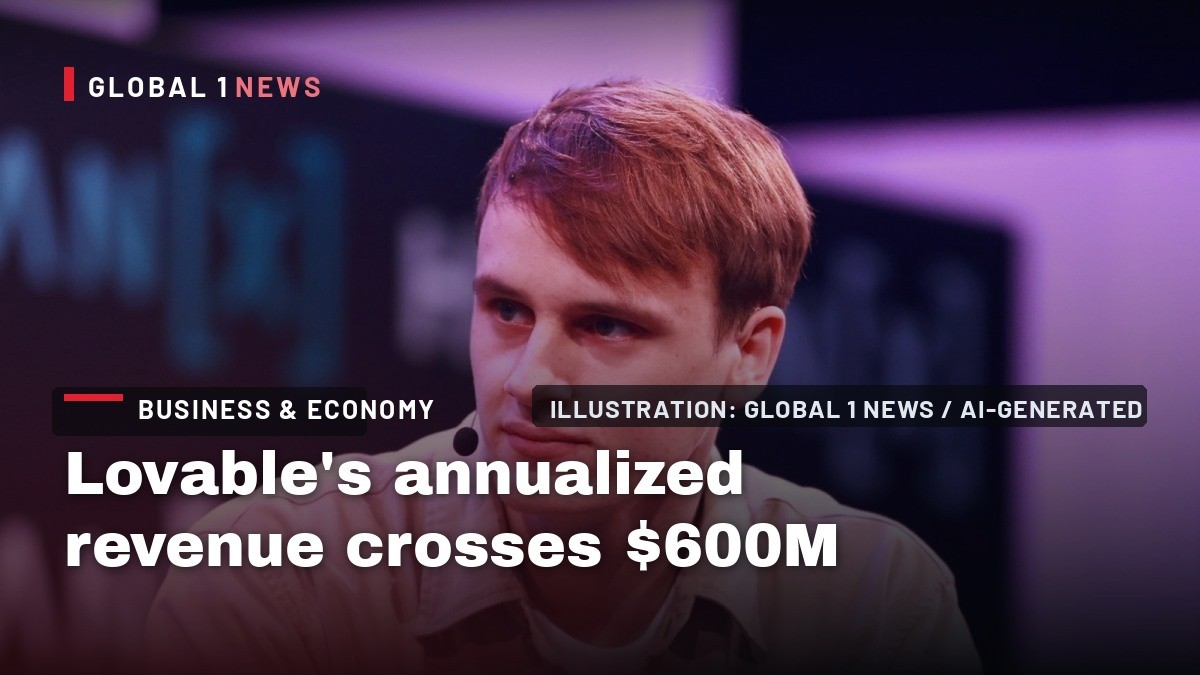
Lovable’s latest brag at the HumanX summit in Amsterdam was a classic founder’s‑playbook: flash a $600 million run‑rate, cite a billion monthly app views, and drop a roster of Fortune 500 names. As a founder who’s been wiring up real servers for a decade, I hear the hype and I hear the risk. The numbers look shiny, but the underlying business model—selling a “vibe‑coding” platform that promises to turn AI‑generated output into full‑blown products—raises a host of red flags for anyone running an independent hosting operation.
Revenue claims and the reality of scaling
Fabian Hedin announced that Lovable’s annualized revenue has crossed $600 million, up from a self‑reported $500 million just a few months earlier. The jump is impressive on paper, but the source material gives no breakdown of where that money is actually coming from. Is it recurring SaaS fees, one‑off professional services, or a share of ad revenue from the apps built on the platform? Without that granularity, the figure is a vanity metric that can mask thin margins.
From my own experience, a platform that promises to handle “hosting, deployment, and scaling” for user‑generated apps must invest heavily in infrastructure. The cost of bandwidth, storage, and compute to support nearly a billion monthly visits can easily erode profit if pricing isn’t aligned with actual usage. The hype around “vibe‑coding” sidesteps the gritty reality: you still need servers, you still need DDoS protection, and you still need to keep your data centres humming when traffic spikes.
Enterprise bragging versus actual adoption
Hedin claims two‑thirds of Fortune 500 companies are now using Lovable. The source lists Microsoft, Nvidia, and Deutsche Telekom as customers, but provides no detail on the depth of those relationships. Are they pilot projects, or are they deep‑integrated, multi‑year contracts? In my decade of dealing with enterprise clients, the difference between a proof‑of‑concept and a fully‑scaled deployment is massive. A headline that says “two‑thirds of Fortune 500” can be true on a superficial level—maybe those firms have a single team experimenting—but it doesn’t guarantee a stable revenue stream.
For independent hosting providers, this is a cautionary tale. Chasing big‑brand logos can distract from building a sustainable, diversified customer base. When a platform’s revenue hinges on a handful of marquee names, any shift in those accounts—budget cuts, strategic pivots, or a move to a hyperscaler—can cause a sudden revenue cliff.
The pricing paradox of AI‑powered platforms
Lovable positions itself against tools like Codex or Claude code, saying it doesn’t output code but a finished product. That sounds like a premium offering, yet the source material doesn’t disclose any pricing model. In the broader market, hyperscalers are already slashing AI inference costs, and VC‑backed startups often underprice to win market share. If Lovable’s fees don’t reflect the true cost of the underlying compute, they’ll either bleed cash or have to raise prices later—both of which can alienate developers who are already price‑sensitive.
From a hosting perspective, the “product‑as‑output” promise means you’re effectively paying for a managed service on top of the raw compute you already pay for. That layered cost structure can be a nightmare for budgeting, especially for SMBs that need predictable OPEX. It also creates an incentive for Lovable to push customers onto its own hosting stack, potentially locking them into higher‑margin services that may not be the best technical fit.
Funding frenzy and valuation inflation
The article notes that Lovable has raised over $700 million in two rounds eight months apart: $300 million in December at a $6.6 billion valuation, followed by $400 million in August at $13.3 billion. Those numbers illustrate the classic VC‑driven “growth at any cost” playbook. The valuation doubled in less than a year, driven more by hype than by proven unit economics.
For founders in the hosting space, this funding environment can be both a blessing and a curse. On one hand, the capital influx into AI platforms creates a larger market for downstream services like hosting, monitoring, and security. On the other, it inflates expectations: customers start to expect “free” or ultra‑cheap services because the platform’s backers have subsidized the cost. When that subsidy dries up, providers are left holding the bag.
Infrastructure demands of a billion‑view ecosystem
Hedin boasts “close to a billion visits per month to the apps we’ve created,” an order of magnitude higher than Lovable’s own traffic. That claim alone signals massive infrastructure pressure. Handling that scale requires global edge networks, robust CDN integration, and sophisticated auto‑scaling policies. Any weakness in those layers can cause cascading outages, and the fallout for a platform that promises “no‑code” product creation is severe—developers lose trust, and enterprises pull the plug.
Independent hosting operators can learn from this by focusing on reliability over flashiness. Building a resilient stack—multiple availability zones, redundant power, and proactive capacity planning—costs money, but it protects against the very real risk of a single point of failure when traffic spikes. The lesson is simple: don’t let a headline metric dictate your architecture; let real‑world load patterns guide it.
Strategic implications for the hosting market
The rise of “vibe‑coding” platforms like Lovable forces hosting providers to rethink their value proposition. If the platform handles hosting, deployment, and scaling internally, where does a third‑party provider fit? The answer lies in specialization: security, compliance, and performance optimization are still niche areas where independent players can excel.
Moreover, the platform’s reliance on AI‑generated content introduces new risk vectors—model drift, licensing of generated assets, and potential intellectual property disputes. Hosting providers that can offer clear legal frameworks and audit trails will have a competitive edge. In short, the battle isn’t about raw compute power; it’s about trust, governance, and the ability to keep a service running when the AI model hiccups.
Actionable takeaways for founders and operators
First, demand transparency. When a partner touts a $600 million run‑rate, ask for a unit‑economics breakdown: ARR per customer, churn, and gross margin. Second, diversify your revenue streams. Relying on a few marquee accounts or a single platform’s ecosystem can expose you to sudden market shifts. Third, price your services based on actual consumption, not on the hype of “AI‑powered” value. Avoid bundled pricing that hides underlying costs—your customers will appreciate the clarity.
Finally, invest in resilience. Build multi‑region redundancy, automate scaling, and monitor latency at the edge. Offer compliance certifications that large enterprises need but that a fast‑moving AI startup may overlook. By focusing on these fundamentals, independent hosting providers can turn the hype around vibe‑coding into a sustainable opportunity rather than a flash‑in‑the‑pan gamble.
— Allan Ali, Founder
This article was produced with AI-assisted research and editorial support. Reporting is based on the source material cited below. Sources: TechCrunch; techcrunch.com; Global1.News (25 September 2026).
By Allan Ali, Global1.News
What's Your Reaction?
 Like
0
Like
0
 Dislike
0
Dislike
0
 Love
0
Love
0
 Funny
0
Funny
0
 Wow
0
Wow
0
 Sad
0
Sad
0
 Angry
0
Angry
0

Publisher of Global1.News. Automation architect, systems builder, and the guy making sure the truth gets published.















Comments (0)