
Doctor Vs Internet: 21 Rules to Beat Chronic Inflammation in India
India's lifespan is rising but its healthspan is collapsing, with 101 million diabetics and 315 million hypertensives. Apollo Hospitals' Dr Navin Gnanasekaran, author of 'The 100 Year Blueprint', says the fix is inflammation control — sleep, movement, strength training and early screening — not biohacking hype.
India's non-communicable disease burden has reached critical levels, with ICMR-INDIAB data showing 101 million diabetics and 136 million prediabetics across 31 states and union territories. A new India Today episode featuring Apollo Hospitals Chennai radiologist Dr. Navin Gnanasekaran highlights how prolonged sitting, poor sleep and chronic inflammation accelerate ageing far faster than chronological years. The discussion ties directly into India's demographic shift, where nearly one in five citizens will be 60 or older by 2050.
India's Longevity Gap: Inflammation Control Must Replace Biohacking Hype
Chennai, Tamil Nadu – August 5, 2026 — Dr. Navin Gnanasekaran, Head of Radiology at Apollo Hospitals Chennai and author of the 328-page book "The 100 Year Blueprint: An Indian Doctor's Guide to Longevity" released June 24, 2026, argues that India's rising lifespan masks a collapsing healthspan. The India Today "Doctor Vs Internet" episode, which has surpassed 140,000 views since its August 1 publication, presents 21 practical rules focused on inflammation reduction rather than expensive supplements or Bryan Johnson-style protocols.
The Silent Fire: Why Inflammation Is India's Real Ageing Accelerator
Chronic low-grade inflammation, often termed inflammageing, accelerates biological ageing through visceral fat accumulation that releases pro-inflammatory cytokines, combined with DNA damage and impaired autophagy that fails to clear cellular debris. In India this process interacts with a metabolic profile where citizens develop insulin resistance and cardiovascular complications at lower abdominal fat thresholds than global averages, amplifying risks even before overt obesity appears. The National Programme for Prevention and Control of NCDs under the National Health Mission offers free screening for diabetes, hypertension and related conditions at Ayushman Bharat Health and Wellness Centres for adults aged 30 and above, providing an entry point for early detection of inflammatory markers before they progress to irreversible organ damage.
Urban lifestyle drivers compound these vulnerabilities as reliance on ultra-processed foods and seed oils elevates systemic inflammation while chronic stress from long commutes and extended work hours suppresses restorative processes. Dr Gnanasekaran notes that visceral fat is metabolically active and that reversal requires 7-8 hours of sleep, strength training, daily movement, visceral fat reduction, time-restricted eating and limiting ultra-processed foods. With India's 2026 population at approximately 1.48 billion and projections that one in five citizens will be aged 60 or older by 2050, unchecked inflammageing threatens to overwhelm public resources unless integrated into existing frameworks such as NP-NCD screening protocols that already reach both urban and rural populations.
Indian laboratories routinely offer CRP, hs-CRP, ESR, homocysteine, fasting insulin, waist circumference and DEXA scans to quantify inflammatory burden and body composition. These tests allow clinicians to stratify risk for the metabolic conditions that drive two-thirds of deaths nationally. By linking such diagnostics to Ayushman Bharat infrastructure, policymakers can shift from reactive ICU care toward preventive strategies that reduce long-term costs for taxpayers while preserving workforce productivity in the decades ahead.
The 40-Year-Old ICU Club and India's Metabolic Crisis
ICMR-INDIAB data across 31 states and union territories reveal diabetes prevalence at 11.4 percent affecting roughly 101 million people, prediabetes at 15.3 percent impacting about 136 million, and hypertension at 35.5 percent reaching approximately 315 million, with combined diabetes and prediabetes exceeding 230 million. Goa records the highest diabetes prevalence in the study while rural areas rapidly converge toward urban rates, indicating that the metabolic crisis is no longer confined to cities. These figures translate directly into higher ICU occupancy as complications such as cardiovascular events and kidney failure surge, placing pressure on both public hospitals and private insurers that must adjust premiums to cover the growing burden of NCD-related claims.
The April 2026 New Indian Express report underscores that two in three young adults face NCD risk, nearly half the working population is prediabetic or diabetic, and eight in ten are overweight. NCDs already account for roughly two-thirds of all deaths, eroding economic output through absenteeism and premature retirement. With India's population at 1.48 billion, even modest productivity losses compound into substantial drags on GDP, affecting tax revenues that fund schemes like Ayushman Bharat and highlighting the need for upstream interventions at Health and Wellness Centres to avert downstream ICU costs.
Regional disparities further complicate planning, as Goa's elevated rates and the rural catch-up trend demand tailored outreach under the NP-NCD programme. Without accelerated screening and lifestyle programmes, the projected rise in elderly citizens—70 percent of whom will reside in rural areas by 2050—will intensify pressure on limited critical-care infrastructure and widen inequities in access to timely treatment.
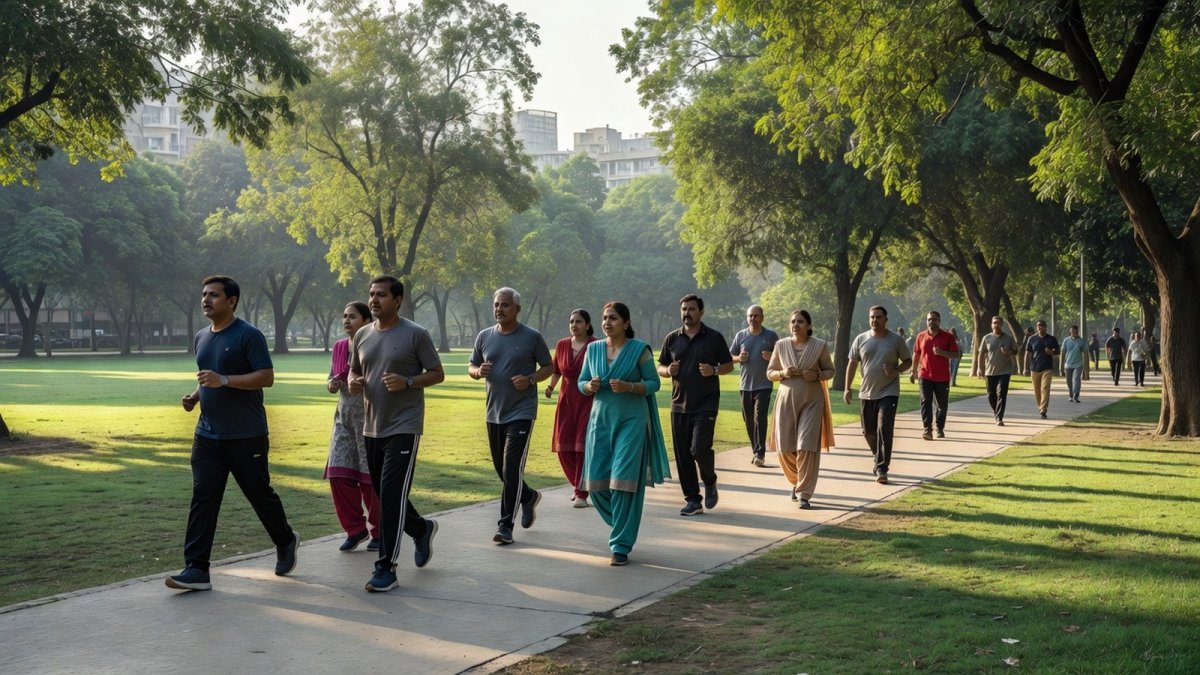
Your Chair Is Your Graveyard: The Sedentary Epidemic
Lancet Global Health data from June 2024 show that approximately 50 percent of Indian adults were insufficiently physically active in 2022, with rates at 57 percent for women versus 42 percent for men, rising from 22 percent in 2000 to 34 percent by 2010 and projected to reach 60 percent by 2030. The WHO guideline of 150-300 minutes of moderate activity weekly remains unmet for most, particularly office workers who spend 80 percent or more of work hours seated. Sitting beyond eight hours daily or roughly 60 hours weekly correlates with accelerated biological ageing and elevated cardiovascular risk even among those who exercise outside work hours, directly compounding the diabetes and hypertension burdens documented in ICMR-INDIAB.
Indian work culture, characterised by extended desk-bound hours, lengthy commutes and pervasive screen time, entrenches this sedentary pattern across both metropolitan and emerging tier-two cities. The resulting metabolic slowdown interacts with visceral fat accumulation to heighten inflammageing, pushing more individuals toward the prediabetic and hypertensive thresholds already affecting over 230 million citizens. Integration of movement prompts into workplace policies could complement the free NCD screening offered at Ayushman Bharat Health and Wellness Centres, creating a continuum from prevention to early intervention that protects taxpayer-funded insurance schemes from escalating claims.
Practical adjustments such as walking meetings, scheduled stand breaks and increased stair use offer low-cost entry points that align with Dr Gnanasekaran's emphasis on daily movement and strength training for visceral fat reduction. Scaling these within corporate and government offices would address the projected 60 percent inactivity rate by 2030, preserving workforce capacity and reducing the long-term fiscal strain on India's health infrastructure as the population ages toward one in five citizens over 60 by 2050.
India's Sleep Deficit: Second Most Sleep-Deprived Nation
Fitbit rankings place India as the second most sleep-deprived nation with an average of seven hours and one minute nightly, trailing only Japan at six hours and 47 minutes. RemeSleep and World Sleep Day 2026 data indicate that 59-61 percent of Indian adults now obtain less than six hours of uninterrupted sleep, up from roughly 50 percent in 2022. This deficit disrupts the sleep-inflammation-insulin resistance axis, elevating fasting insulin and inflammatory markers that accelerate the metabolic conditions already prevalent in 230 million citizens according to ICMR-INDIAB.
Urban India faces unique pressures from light pollution, late-night screen exposure, shift work and the 24x7 economy that erode sleep quality and quantity. These factors interact with sedentary behaviour and ultra-processed food consumption to intensify inflammageing, pushing more young adults into the NCD risk category identified in the April 2026 New Indian Express report. The resulting cognitive decline and reduced productivity impose measurable economic costs on students and the workforce, ultimately affecting tax revenues that sustain programmes such as NP-NCD screening at Health and Wellness Centres.
Dr Gnanasekaran emphasises the importance of light, deep and REM sleep phases achieved through a consistent schedule, alongside 7-8 hours nightly as part of a broader reversal strategy that includes time-restricted eating and visceral fat reduction. Embedding sleep hygiene guidance into existing Ayushman Bharat outreach could mitigate the projected rise in elderly dependency by 2050, when 70 percent of India's older population will live in rural areas, thereby lowering future ICU demand and insurance premiums while supporting sustained economic participation across the 1.48 billion population.
What This Means for India
India's 2026 population stands at approximately 1.48 billion, yet the gap between lifespan and healthspan widens as rural elderly populations are projected to reach 70 percent of those aged 60 and above by 2050. The government's NP-NCD framework offers free screening for diabetes, hypertension and three additional conditions for adults over 30 under Ayushman Bharat, yet uptake remains limited. Without aggressive inflammation control, taxpayers will shoulder rising costs for late-stage interventions rather than preventive care.

The 21 Rules: Prevention Over Biohacking
Dr. Gnanasekaran's Pyramid of Longevity prioritises seven to eight hours of quality sleep, daily movement, strength training to reduce visceral fat, and time-restricted eating for metabolic flexibility. Recommended tests include C-reactive protein, high-sensitivity CRP, ESR, homocysteine, fasting insulin, waist circumference tracking and DEXA scans. The supplement list remains modest: melatonin, magnesium, creatine, omega-3 and vitamin D, with emphasis on limiting ultra-processed foods and seed oils rather than exotic biohacking routines.
Expert Perspectives from Apollo Hospitals
At the June 24 book launch attended by Tamil Nadu Health Minister Dr. K.G. Arunraj, Dr. Gnanasekaran stated that India is living longer than ever before, but longevity without health, independence and quality of life is not real progress. The 1,000-plus pre-orders reflect public demand for age-specific preventive checklists covering the 30s through the 80s. Apollo Hospitals Chennai continues to integrate these markers into routine screenings for early detection of inflammageing.
The Bottom Line
With 230 million Indians already affected by diabetes or prediabetes and nearly one-fifth of the population heading toward age 60 by 2050, the policy focus must shift from treatment to inflammation control through sleep, movement and early screening. Dr. Gnanasekaran's 21 rules offer a scalable, low-cost framework that aligns with existing NP-NCD infrastructure. Indian patients and taxpayers stand to gain the most from prioritising healthspan over headline-grabbing longevity experiments.
— By Dr. Raj Patel, Staff Writer
This article was produced with AI-assisted research and editorial support. Reporting is based on sources cited in the article.
What's Your Reaction?
 Like
0
Like
0
 Dislike
0
Dislike
0
 Love
0
Love
0
 Funny
0
Funny
0
 Wow
0
Wow
0
 Sad
0
Sad
0
 Angry
0
Angry
0

India/South Asia Correspondent at Global1.News. Analytical voice with a background in science and health journalism. Based in New Delhi, covering Indian politics, education, healthcare, technology, and policy. Breaks down complex data into clear, actionable reporting.















Comments (0)