
Russia Blocks El Al’s Bid to Launch Tel Aviv-St. Petersburg Route in Apparent Tit-for-Tat Over Aeroflot
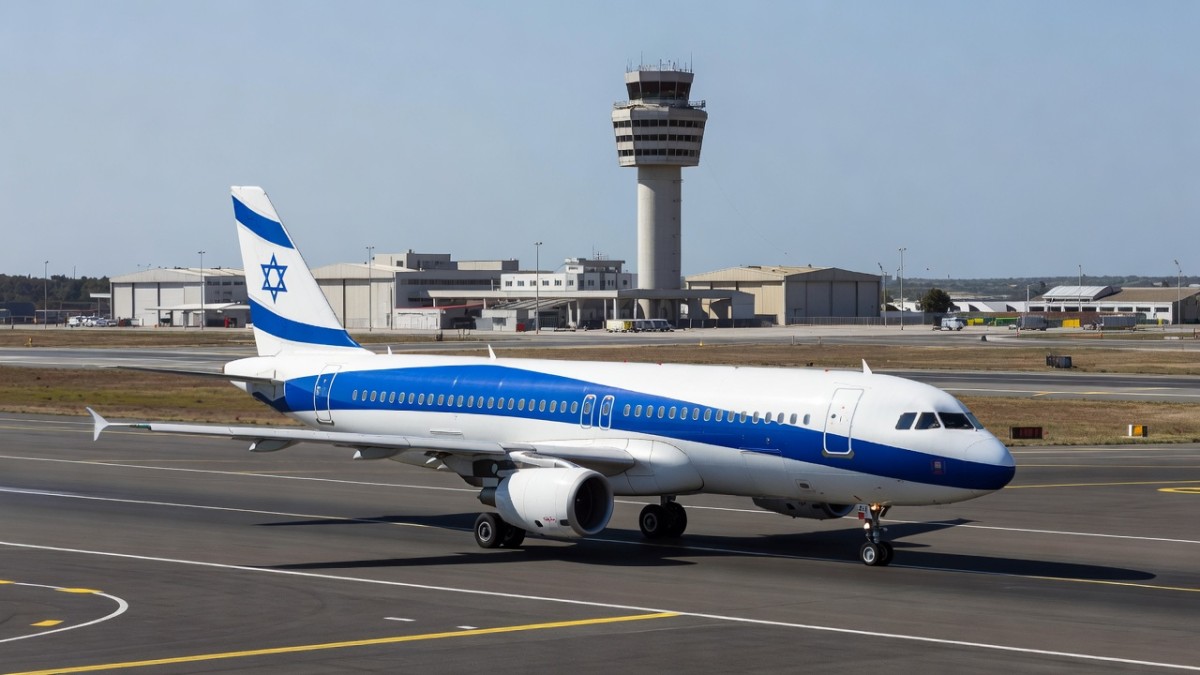
Israel's flagship carrier El Al has been blocked by Russian authorities from establishing a new flight route between Tel Aviv and St. Petersburg, a move widely seen as retaliation for Israel's refusal to allow Russia's Aeroflot to land under Western sanctions.

Israel's flagship carrier El Al has been blocked by Russian authorities from establishing a new flight route between Tel Aviv and St. Petersburg, a move widely seen as retaliation for Israel's refusal to allow Russia's Aeroflot to land under Western sanctions. The development, first reported by Israeli broadcaster N12 on Thursday, marks another low point in the frayed aviation relationship between the two countries, even as another Russian carrier, Red Wings, continues to operate flights between Israel and Russia.
The decision comes just months after El Al suspended its own Tel Aviv-Moscow route in June, citing security concerns over repeated Ukrainian drone attacks that repeatedly shut down airspace around the Russian capital. For Israeli travelers, businesspeople, and the large Russian-speaking community with deep roots in St. Petersburg and Moscow, the news raises fresh questions about the future of air links between the two countries.
What Happened: El Al's St. Petersburg Plan Rebuffed
According to N12, Russia rejected El Al's application to launch a route connecting Tel Aviv's Ben-Gurion International Airport with St. Petersburg's Pulkovo Airport. The report characterized the move as an attempt to "punish" Israel, though no formal explanation was provided by Russian aviation authorities.
El Al had been exploring the St. Petersburg route as a potential alternative to its suspended Tel Aviv-Moscow service, which has been grounded since late June. The airline, which carries more than 6.5 million passengers annually, had hoped to maintain a commercial presence in Russia despite the ongoing war between Russia and Ukraine and the associated security risks.
The rebuff is not a complete surprise. In recent weeks, Russian officials have signaled growing displeasure with Israeli policy, particularly regarding sanctions and security cooperation. The blocked route application appears to be the latest expression of that frustration, delivered through the lever of aviation access.
Why Russia Says It Is Punishing Israel: The Aeroflot Factor
At the heart of the dispute is the case of Aeroflot, Russia's flagship carrier. According to N12, Russia barred El Al's St. Petersburg plan after Aeroflot was prevented from landing in Israel. That prevention stems from US and European sanctions imposed on Russian companies following the full-scale invasion of Ukraine, which began in February 2022.
Israeli authorities, while not formally part of the Western sanctions regimes, have largely aligned with them in practice, particularly when it comes to aviation. Aeroflot, which is subject to US and EU restrictions, has been unable to operate flights to Ben-Gurion International Airport, a decision that has rankled Moscow.
For Russian officials, the asymmetry is glaring: Aeroflot cannot fly to Israel, yet El Al expects to expand its footprint in Russia. The St. Petersburg route rejection is, in their view, a balancing measure-a way to signal that access to Russian airspace and airports is a privilege, not a right.
The move also fits a broader pattern of Russia using aviation as a diplomatic tool. In recent years, Moscow has repeatedly restricted or denied flight permissions to carriers from countries it deems hostile, while rewarding airlines from more friendly nations with expanded access.
The June Suspension of Tel Aviv-Moscow: Drones and Disruption
The context for El Al's St. Petersburg ambitions lies in the chaotic summer of 2026. On June 18, Ukrainian forces launched the largest drone barrage on Moscow since the start of the full-scale invasion. Russian officials said 194 drones were shot down on approach to the capital, and Moscow's airports delayed or cancelled a total of 527 flights.
The attacks were part of a broader Ukrainian campaign targeting Russian infrastructure and logistics. Kyiv cast its strikes as a response to an attack that damaged a nearly 1,000-year-old monastery in the city, a symbolic and cultural blow that drew widespread condemnation.
For El Al, the repeated disruptions made operations to Moscow untenable. On June 25, the airline suspended its Tel Aviv-Moscow route, citing "developments in the airspace over Russia." The suspension was initially seen as temporary, but El Al later extended it until at least October 22, with its booking system showing the next available flights from November 1.
The St. Petersburg route was seen as a potential workaround-a way to serve Russian-bound passengers without relying on the volatile Moscow airspace. But with Russia now blocking that option, El Al's options in Russia have narrowed considerably.
What It Means for Israeli Travelers and the Russian-Speaking Community
The practical impact of Russia's decision falls hardest on the thousands of Israelis with family, business, and cultural ties to Russia. A significant share of Israel's population are Russian-speakers, many of whom emigrated from cities such as St. Petersburg and Moscow in the 1990s and 2000s. For them, direct flights are not a luxury but a lifeline-a way to visit aging relatives, maintain business interests, or simply stay connected to their roots.
The suspension of the Tel Aviv-Moscow route in June already disrupted travel plans for countless families. The loss of a potential St. Petersburg alternative compounds the problem, forcing travelers to seek indirect connections through third countries, often at higher cost and with longer travel times.
For business travelers, the situation is equally challenging. Israel's tech sector has historically maintained ties with Russian partners, and St. Petersburg, in particular, has been a hub for software development and innovation. The absence of direct flights makes those collaborations more difficult, adding friction to an already strained economic relationship.
Travelers now face a stark choice: fly with Red Wings, the Russian airline that continues to operate between Israel and Russia, or seek connections through hubs such as Istanbul, Dubai, or Yerevan. Neither option is ideal, particularly for those wary of flying on Russian carriers amid ongoing sanctions and safety concerns.
Red Wings and the Remaining Israel-Russia Air Links
Despite the broader freeze, not all air links between Israel and Russia have been severed. According to N12, Red Wings, a different Russian airline, continues to maintain a flight route between Israel and Russia. The airline has stepped into part of the gap left by the suspension of the major carriers on the route.
Red Wings' continued operations provide a narrow but functional corridor for passengers and cargo. However, the airline's capacity is limited compared to what El Al and Aeroflot previously offered, and its schedule is less frequent. For many travelers, Red Wings is a fallback option rather than a preferred choice.
The continued presence of Red Wings also highlights the uneven application of sanctions and restrictions. While Aeroflot is barred from Israel and El Al is now blocked from St. Petersburg, Red Wings operates without apparent hindrance. This patchwork of permissions reflects the complex, often contradictory nature of aviation diplomacy in a region where political alliances shift and sanctions are selectively enforced.
The Wider Picture: Israel-Russia Relations, Sanctions Diplomacy, and Aviation as Leverage
The blocked St. Petersburg route is not an isolated incident but part of a broader deterioration in Israel-Russia relations. This week, in a separate development reported by The Moscow Times, Russian authorities advised their citizens to avoid non-essential travel to Israel following Iranian attacks. That advisory, while framed as a security measure, underscored the deepening mistrust between Jerusalem and Moscow.
Israel has walked a careful line throughout the Russia-Ukraine war, providing humanitarian aid to Ukraine while avoiding direct military involvement and maintaining open channels with Moscow. That balancing act has become increasingly difficult as Russia aligns more closely with Iran, Israel's primary regional adversary.
Aviation has emerged as a key arena for this diplomatic friction. For Russia, denying El Al access to St. Petersburg is a low-cost way to signal displeasure without triggering a full-scale diplomatic crisis. For Israel, the decision is a reminder that its aviation sector remains vulnerable to geopolitical headwinds beyond its control.
The sanctions angle adds another layer of complexity. Israel is not formally part of the US and EU sanctions regimes against Russia, but its practical alignment-particularly in blocking Aeroflot-has not gone unnoticed in Moscow. Russia's decision to punish El Al can be read as a direct response to that perceived hypocrisy: if Israel will not allow Russian carriers to land, why should Russia accommodate Israeli carriers?
What Comes Next: Limited Options and Uncertain Prospects
For El Al, the immediate options are limited. The airline could appeal the decision through diplomatic channels, though the prospects for success appear slim given the current climate. It could also focus on expanding routes to other destinations, particularly in Asia and Europe, where demand remains strong.
For Israeli travelers, the near-term outlook is one of reduced connectivity and higher costs. The suspension of Tel Aviv-Moscow, now extended until at least late October, combined with the blocked St. Petersburg route, leaves Russia largely inaccessible by direct Israeli carrier. Those who must travel will likely rely on Red Wings or indirect connections, accepting longer journeys and greater uncertainty.
The broader question is whether this aviation standoff is a temporary blip or a lasting feature of Israel-Russia relations. Given the trajectory of the war in Ukraine, the deepening Russia-Iran axis, and Israel's continued alignment with Western sanctions, the latter seems more likely. Aviation, once a bridge between the two countries, has become another front in a widening diplomatic conflict.
For now, the message from Moscow is clear: access to Russian skies is a bargaining chip, and Israel's treatment of Aeroflot has come with consequences. Whether Jerusalem chooses to adjust its stance or accept the reduced connectivity remains to be seen. What is certain is that the era of easy, direct flights between Tel Aviv and Russian cities is, at least for the foreseeable future, over.
This article was produced with AI-assisted research and editorial support. Sources: Jerusalem Post, The Moscow Times, Times of Israel, Kyiv Post.
By Hannah Berg, Staff Writer
What's Your Reaction?
 Like
0
Like
0
 Dislike
0
Dislike
0
 Love
0
Love
0
 Funny
0
Funny
0
 Wow
0
Wow
0
 Sad
0
Sad
0
 Angry
0
Angry
0

Israel Correspondent at Global1.News. Based in Tel Aviv, covering Israeli politics, security, technology, and society. Provides balanced, deeply-sourced reporting on one of the most closely-watched regions in the world.















Comments (0)