
Ukraine's Drone War Reaches Sochi: Naval Strike Hits Russian Vessel
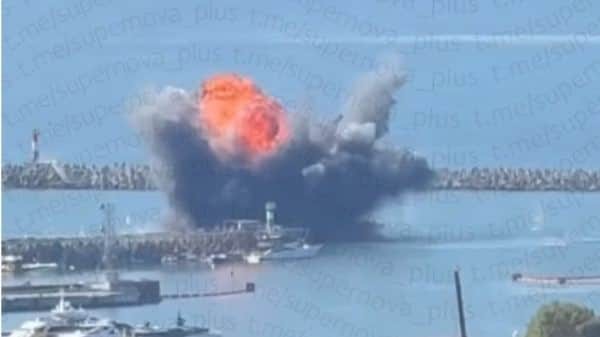
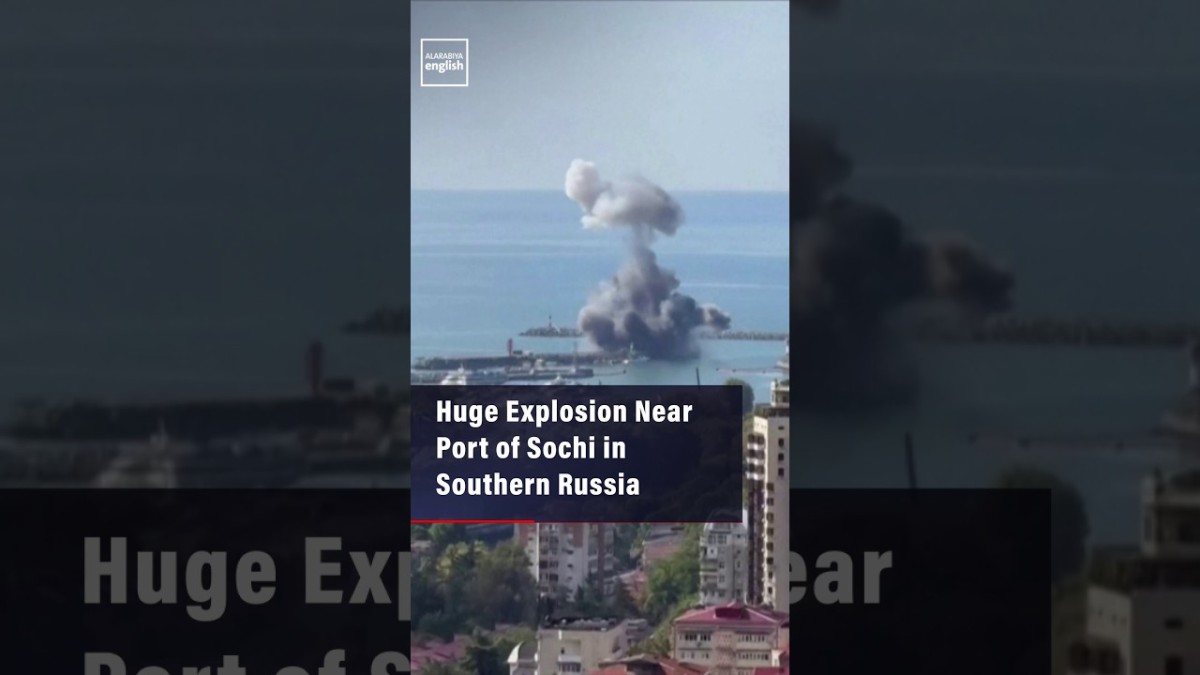
The morning calm of Sochi, a city that has long marketed itself as Russia's premier Black Sea resort, was shattered on 3 September 2026 by two thunderous explosions that sent a column of black smoke curling over the port district.
The morning calm of Sochi, a city that has long marketed itself as Russia's premier Black Sea resort, was shattered on 3 September 2026 by two thunderous explosions that sent a column of black smoke curling over the port district. The attack, which Ukrainian officials say was carried out by naval drones against a Russian support vessel, marks a significant escalation in Kyiv's campaign to carry the war to the economic arteries that sustain Moscow's military machine. It is a strike not merely against a ship, but against the intricate logistics of Russia's war economy, delivered by low-cost unmanned systems that have redefined the modern battlespace.
Ukraine's Drone War Reaches Sochi: Naval Strike Hits Russian Vessel
Sochi, Russia - 4 September 2026 - The attack on the port of Sochi, which occurred at approximately 09:45 local time on the morning of 3 September, targeted the Nefrit, a Russian multipurpose support vessel (MPSV) docked at the harbor. The Ukrainian Navy confirmed the strike, describing it in a statement as "a blow to the enemy's logistics, special capabilities, and military-economic infrastructure," and vowed to continue "depriving Russia of resources and its ability to wage war." The vessel, roughly 90 meters long and 18 meters wide with a capacity of nearly 4,000 tonnes, is owned by the company Alliance and registered at the port of St. Petersburg. Its history is telling: it has been used for offshore oil and gas operations, servicing underwater infrastructure, and transporting cargo and personnel. In October 2022, Russian authorities deployed it to the Baltic Sea following the explosions that damaged the Nord Stream pipelines, underscoring its role in sensitive maritime operations.

Residents in the city center reported hearing the explosions clearly, and video posted online showed a dense plume of smoke rising over the port district. Port authorities asked people in the area to leave immediately and move to a safe location. The immediate aftermath saw Russia's federal air transport agency, Rosaviatsiya, temporarily suspend operations at both Sochi and Gelendzhik airports due to the drone threat, a measure that highlights the reach and psychological impact of the attack. As of initial reports, neither Krasnodar region governor Veniamin Kondratyev nor Sochi mayor Andrey Proshunin had commented publicly on the strike, leaving a vacuum of official information that was quickly filled by monitoring channels and social media.
The Target: Why the Nefrit Matters
The choice of the Nefrit as a target is strategically significant, moving beyond the symbolic value of striking a Russian city to the practical disruption of Moscow's maritime capabilities. The vessel's prior operations near Novorossiysk and in the Black Sea, coupled with its deployment to the Baltic for Nord Stream-related work, mark it as a piece of dual-use infrastructure—capable of supporting both commercial energy logistics and specialized military or security tasks. By striking it, Ukraine is signaling that no part of Russia's maritime support network is out of reach, particularly those assets that enable the servicing of offshore facilities and underwater technical work that are vital to Russia's energy export machinery.
Early social media reports, citing video footage, suggested that a Pantsir air-defense system positioned on the pier may also have been struck, though this remains unconfirmed. If true, it would indicate a coordinated attempt to degrade the port's defensive capabilities in the same stroke as its logistical ones. The Ukrainian Navy's framing of the attack as a blow to "special capabilities" suggests a deliberate effort to target assets that have a unique function in Russia's naval and energy architecture, rather than simply any available target of opportunity.
A Coordinated Morning of Strikes Across Russia
The Sochi attack did not occur in isolation. The same morning, according to Moscow region governor Andrey Vorobyov and various Telegram channels, Ukrainian drones struck multiple targets in the Russian heartland. One drone hit an apartment building in the town of Pavlovsky Posad, with no casualties reported. A second struck an apartment building on the Naro-Fominsk Highway in the town of Kubinka, approximately five kilometers from the Kubinka air base, starting a fire but causing no injuries. A third drone hit a factory in the village of Bolshoye Bunkovo in the Bogorodsky district, also starting a fire; the Ukrainian monitoring channel Supernova+ reported that the strike hit the Pet.Rus plastic packaging plant.
This coordinated, multi-region assault demonstrates a significant expansion of Ukraine's drone campaign, moving beyond the border regions and Crimea to strike at the logistical and industrial underpinnings of the Russian state. The targeting of an apartment building near the Kubinka air base, a key military installation, suggests an attempt to disrupt or harass Russian air operations, while the factory strike points to an effort to degrade industrial production that feeds the war effort. The fact that these strikes occurred simultaneously with the Sochi port attack indicates a level of operational planning and coordination that speaks to Ukraine's growing capacity to project power deep into Russian territory.
The Broader Battlefield: Kyiv and Odesa Under Fire
While Ukraine was striking Russian soil, Russia continued its own campaign of aerial bombardment against Ukrainian cities. On the same day, Russia carried out a seventh straight night of drone attacks on Kyiv, according to Ukrainian authorities, and a separate drone and missile attack on Odesa injured at least 17 people, as reported by local officials. This reciprocal escalation underscores the grim reality of a war that has become a battle of attrition, with both sides seeking to inflict maximum damage on the other's civilian infrastructure and morale, even as the front lines remain largely static.
The contrast is stark: Ukraine is using relatively inexpensive unmanned surface vessels (USVs) and drones to strike at high-value targets across Russia, while Russia continues to launch waves of Shahed drones and missiles at Ukrainian population centers. The asymmetry of the cost—a single USV can cost hundreds of thousands of dollars, while the Nefrit represents a multi-million-dollar asset—highlights the strategic logic behind Ukraine's approach. It is a campaign designed not to seize territory, but to degrade Russia's ability to sustain its war effort by attacking the economic and logistical nodes that make it possible.
Russia's War Economy and the Black Sea Chokepoint
The Black Sea remains a vital corridor for Russian oil and gas exports, grain shipments, and naval operations. Sochi sits on the northeastern coast, near the main Russian port of Novorossiysk, which serves as a critical hub for the export of crude oil and refined products. The region's ports are integral to Russia's ability to generate revenue from energy exports, revenue that directly funds its military operations. By striking at Sochi, Ukraine is targeting not just a single vessel, but the broader maritime infrastructure that supports Russia's economic lifeline.
This campaign echoes a wider trend in modern conflict, where the vulnerability of maritime chokepoints and infrastructure has become a central strategic concern. From the Red Sea shipping crisis, where Houthi attacks have disrupted global trade routes, to the ongoing tensions around the Strait of Hormuz, through which a significant portion of the world's oil passes, the ability to threaten maritime commerce has become a potent tool of asymmetric warfare. Ukraine's use of USVs to strike Russian ports is a direct application of this principle, demonstrating that even a nation without a traditional blue-water navy can challenge a major maritime power in its own waters.
Global Energy Markets and Strategic Repercussions
The strike on Sochi carries implications that extend far beyond the immediate tactical success. For global energy markets, any disruption to Russian Black Sea exports—whether real or perceived—can introduce volatility into oil and gas prices. The region's proximity to Novorossiysk, a major export terminal, means that attacks on nearby ports raise the risk premium associated with Russian energy shipments. While the Nefrit itself is not a tanker, its role in servicing offshore oil and gas operations makes it a symbolic and practical target in the broader effort to undermine Russia's energy sector.
For Russia, the attack on Sochi is a strategic embarrassment. The city is not only a key port but also a symbol of Russian prestige and a popular destination for the country's elite. Striking so close to home, in a city that has largely been insulated from the direct effects of the war, sends a message to the Russian public that the conflict is not something that can be confined to the front lines or the border regions. Independent Russian outlet Novaya Gazeta Europe has mapped the war as having spread to at least 60 Russian regions, a figure that underscores the extent to which the conflict has been brought home to ordinary Russians.
Russia's Middle East Posture and the Wider Geopolitical Chessboard
The Sochi strike also has implications for Russia's broader geopolitical posture, particularly in the Middle East. Russia's ability to project power and maintain its alliances in the region—from its military bases in Syria to its deepening ties with Iran and its coordination with OPEC+ on oil production—depends on a functioning domestic economy and a secure maritime periphery. If Ukraine can successfully disrupt Russia's Black Sea logistics and energy infrastructure, it undermines Moscow's capacity to sustain its overseas commitments.
Russia's relationship with Iran, which has included the supply of weapons and potential cooperation on drone technology, is partly predicated on Russia's ability to present itself as a reliable and powerful partner. A visible vulnerability at home, such as the Sochi attack, could erode that perception. Similarly, Russia's role in OPEC+ and its influence over global energy markets is tied to its status as a major exporter. Any sustained threat to its export infrastructure could weaken its negotiating position and embolden other producers to assert greater independence from Moscow's preferences.
What Each Side Wants: The Strategic Calculus
For Ukraine, the campaign against Russian Black Sea ports and infrastructure serves multiple purposes. It aims to reduce Russia's economic capacity to fund the war, to force Moscow to divert resources to defend its own territory and coastline, and to demonstrate to both domestic and international audiences that Ukraine can strike back effectively. The use of USVs is a cost-effective way to achieve these goals, allowing Ukraine to challenge Russian naval dominance without engaging in a conventional fleet-on-fleet confrontation.
For Russia, the calculus is more complex. The Kremlin must balance the need to protect its critical infrastructure and maintain public confidence against the risk of overreacting in a way that could escalate the conflict or expose further vulnerabilities. The temporary suspension of flights at Sochi and Gelendzhik airports is a sign of the disruption the attacks cause, but it also highlights the difficulty of defending against a diffuse and persistent drone threat. Russia's response has so far focused on continued strikes against Ukrainian cities, a strategy that aims to break Ukrainian morale but has so far failed to deter Kyiv's long-range attacks.
Second-Order Effects and the Path Ahead
The second-order effects of the Sochi strike are likely to be significant. For the local population, the attack brings the reality of war to a city that has been a haven from it, potentially shifting public perceptions of the conflict. For the Russian military, it will necessitate a reassessment of port security and air defense priorities, potentially pulling resources away from other fronts. For the global community, it serves as another data point in the evolving understanding of how unmanned systems are changing the nature of warfare, particularly in the maritime domain.
The attack also raises questions about the future of the Black Sea as a contested space. If Ukraine can continue to strike targets along the Russian coast with impunity, it could fundamentally alter the balance of power in the region, challenging Russia's ability to use the sea as a secure launchpad for its operations and exports. The parallels with other maritime flashpoints—the Strait of Hormuz, the Red Sea—are instructive, suggesting that the vulnerability of chokepoints and port infrastructure will remain a defining feature of 21st-century conflict.
As of this writing, the full extent of the damage to the Nefrit and the port of Sochi remains unclear. The Ukrainian Navy has claimed responsibility and framed the attack as part of a sustained campaign. Russian officials have yet to provide a detailed public assessment. What is clear is that the war has entered a new phase, one in which the home front is no longer a sanctuary and the economic sinews of war are as much a target as the military forces in the field. The strike on Sochi is a reminder that in modern conflict, the front line is everywhere, and the cost of war is borne not only by soldiers but by the infrastructure and civilians that sustain them.
By Malik Hassan, Staff Writer
This article was produced with AI-assisted research and editorial support. Reporting is based on sources cited in the article.
What's Your Reaction?
 Like
0
Like
0
 Dislike
0
Dislike
0
 Love
0
Love
0
 Funny
0
Funny
0
 Wow
0
Wow
0
 Sad
0
Sad
0
 Angry
0
Angry
0

Middle East Correspondent at Global1.News. Based in Beirut, covering politics, conflict, energy, and society across the Middle East. Brings context and depth to a region often reduced to headlines.














Comments (0)