
Israel Releases Five Lebanese Detainees in US-Brokered Deal
In a recent i24NEWS report, the carefully choreographed handover of five Lebanese civilian detainees from Israeli custody to the Lebanese army via the International Committee of the Red Cross (ICRC) marked a rare moment of quiet cooperation between two states that remain formally at war.
In a recent i24NEWS report, the carefully choreographed handover of five Lebanese civilian detainees from Israeli custody to the Lebanese army via the International Committee of the Red Cross (ICRC) marked a rare moment of quiet cooperation between two states that remain formally at war. The transfer, which unfolded in two stages this week, was not merely a humanitarian gesture but the product of intense US mediation that has quietly expanded the scope of the Israel-Lebanon diplomatic track beyond the narrow confines of ceasefire implementation.
Israel Releases Five Lebanese Detainees in US-Brokered Deal, Signaling Fragile Momentum Toward Broader Negotiations
Jerusalem, Israel – this week — The first handover took place Thursday evening when detainee Malek Ghazi was transferred through the ICRC to the Lebanese army at an undisclosed point along the Blue Line. The remaining four detainees were released Friday morning in a second, larger transfer. All five individuals are civilians, not combatants, according to Israeli officials who emphasized the distinction in their public statements. The releases come at a delicate juncture: direct Israel-Lebanon negotiations, which began after the latest war with Hezbollah erupted in March, have produced a framework agreement but little tangible progress on the ground.
The Release and What It Unlocked
Prime Minister Benjamin Netanyahu's office confirmed that Israel agreed to the release after Lebanon provided concrete assistance in the search for the remains of Lebanese Jewish community leaders who were abducted and murdered by terrorist organizations during Lebanon's civil war in the 1980s. Netanyahu instructed relevant Israeli officials to step up efforts to locate and return those remains, framing the release as part of a reciprocal arrangement that touches on deeply sensitive historical wounds for both nations.
The deal was brokered by the United States, with a State Department official confirming that the arrangement was finalized in talks this week between Netanyahu and the US ambassadors to Israel and Lebanon, Mike Huckabee and Michel Issa respectively. Washington praised both governments for demonstrating good faith and expressed hope that the deal would serve as the foundation for broader discussions. For Israeli readers, the involvement of Huckabee — a longtime supporter of Israeli sovereignty in Judea and Samaria — signals that the Trump administration is willing to engage on multiple fronts simultaneously, even as it presses Israel on the Lebanese track.
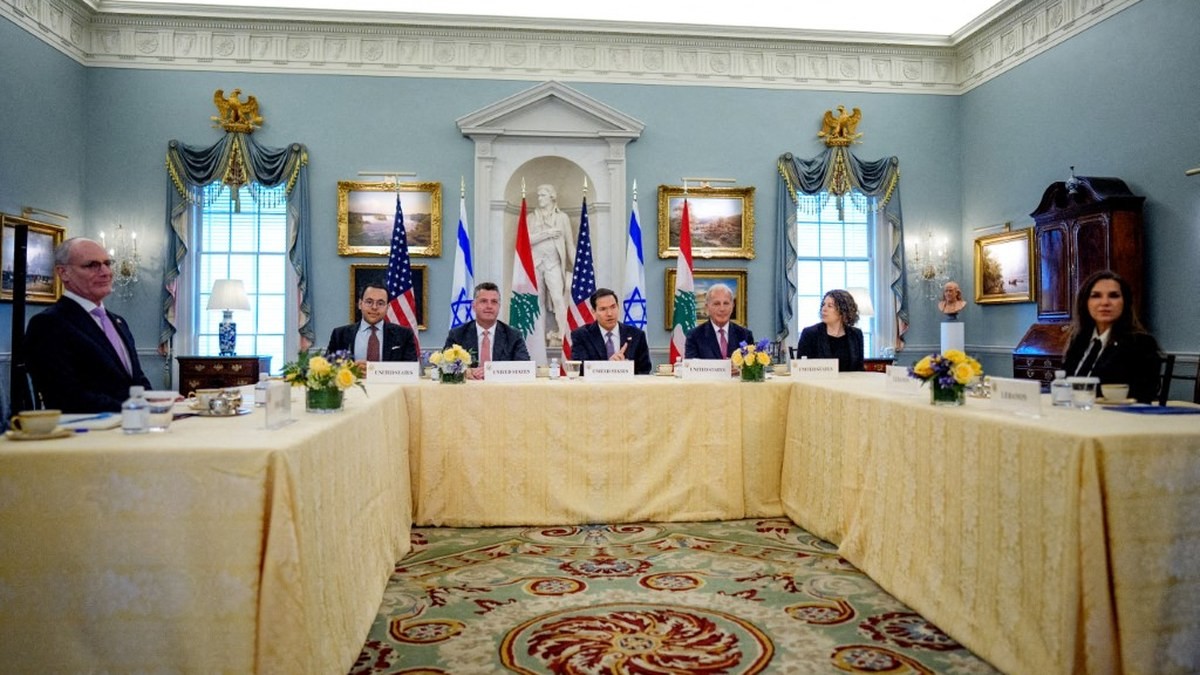
The ICRC, which facilitated the physical transfer, noted pointedly that it had not been granted access to detainees held in Israel since October 2023 and called for continued access to the remaining prisoners. The Lebanese Association for Prisoners and Released Detainees counted 36 cases as of last month, suggesting that while this week's release is significant, it addresses only a fraction of the outstanding cases. For families in southern Lebanon, the return of these five civilians offers a glimmer of hope, but the broader issue of detainee access remains a point of friction between Jerusalem and international humanitarian organizations.
The Remains of Lebanon's Jewish Community
The backstory of this release reaches into one of the darkest chapters of Lebanon's modern history. During the civil war that ravaged the country from 1975 to 1990, Lebanon's once-thriving Jewish community — which numbered in the thousands in Beirut, Sidon, and Tripoli — was systematically targeted. Community leaders were abducted, tortured, and murdered by various armed factions, their remains never returned to their families or to the Jewish community that had largely fled the country by the early 1980s.
Netanyahu's office said Lebanon's assistance in locating these remains was a precondition for the detainee release, marking an unusual convergence of interests. For Israel, the return of these remains is a matter of national honor and religious obligation — Jewish law mandates the proper burial of the dead. For Lebanon, the gesture offers a way to address a historical injustice without reopening the wounds of its civil war, which remains a taboo subject in Lebanese political discourse. The Lebanese government under President Joseph Aoun has shown a willingness to engage on issues that previous administrations avoided, a shift that Israeli officials have noted privately with cautious optimism.
The search for these remains is expected to involve coordination between Israeli intelligence agencies, the IDF's religious affairs unit, and Lebanese security services — a level of operational cooperation that would have been unthinkable just a year ago. Israeli officials familiar with the matter say the remains are believed to be buried in several locations in the Beirut area and the Chouf Mountains, where some of the worst atrocities against the Jewish community occurred.
A Fragile Diplomatic Track
The release comes amid rare direct negotiations between Israel and Lebanon, two countries that have not established diplomatic relations since Israel's founding in 1948. The current round of talks began after the latest war between Israel and the Iran-backed Hezbollah, which erupted in March following months of escalating cross-border fire. In June, the two countries signed a US-mediated framework deal under which Israeli forces were to withdraw from areas they occupy in southern Lebanon in exchange for the disarmament of Hezbollah — but little progress has been made on implementation since then.
Lebanese President Joseph Aoun thanked the United States under President Donald Trump's leadership for brokering the detainee release. Prime Minister Nawaf Salam also expressed gratitude to the US administration and Ambassador Michel Issa, calling the return of any freed citizen an important step toward resolving the detainee issue. The diplomatic choreography — with both leaders addressing Washington rather than each other — underscores the reality that the United States remains the essential intermediary in this process.
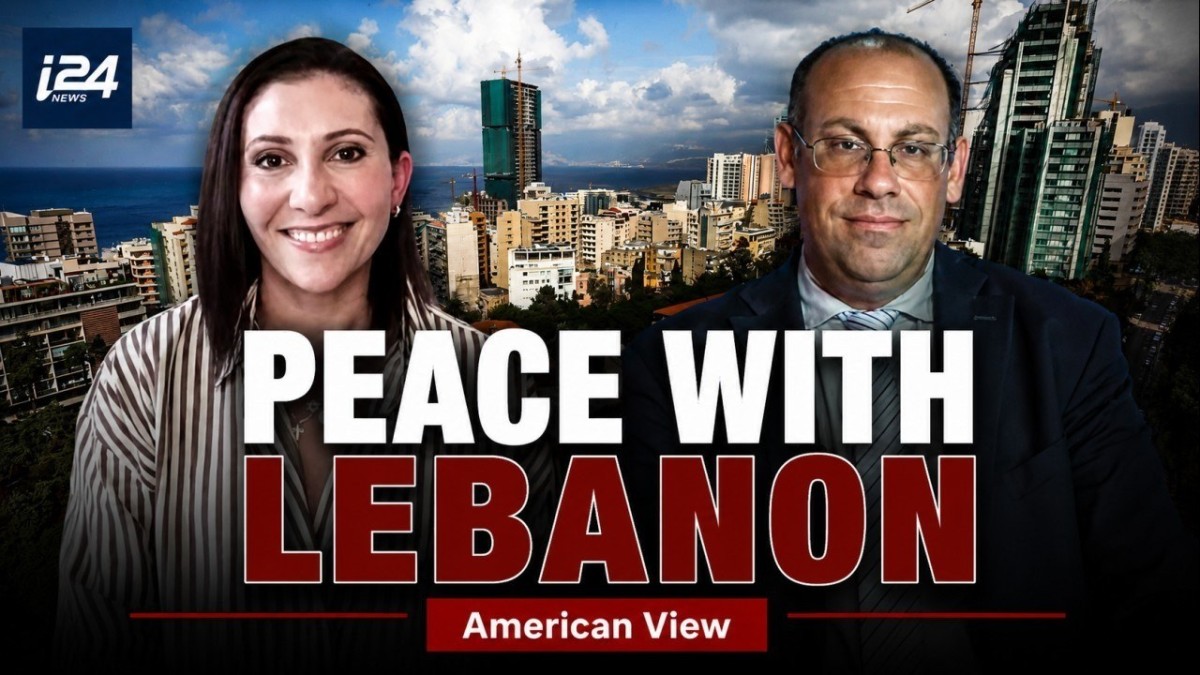
Another round of talks is expected in Rome later this month, with media reports citing September 15-16 as the target dates. Prime Minister Salam is also expected to meet US Secretary of State Marco Rubio in Washington on September 28. These meetings will test whether the goodwill generated by the detainee release can translate into progress on the core issues: the IDF's presence in southern Lebanon, Hezbollah's disarmament, and the eventual normalization of relations between Jerusalem and Beirut.
The Security Zone Standoff
While diplomats talk, the IDF continues to operate in southern Lebanon's security zone. Defense Minister Israel Katz said Friday that the IDF established operational control of the strategically important Ali al-Taher Ridge in southeastern Lebanon and cleared Hezbollah terrorists from two underground routes there. Katz reiterated Israel's position that the IDF will not withdraw from the security zone until Hezbollah is disarmed throughout Lebanon and threats to residents of the Galilee are removed.
This military posture creates a paradox at the heart of the negotiations. Israel demands Hezbollah's complete disarmament as a precondition for withdrawal, while Hezbollah — which is not a party to the talks — has said it will not give up its weapons in any area north of the Litani River. The framework agreement signed in June envisioned a phased withdrawal in exchange for Hezbollah's disarmament, but the implementation has stalled precisely because neither side trusts the other to fulfill its commitments.
The IDF says it remains committed to the ceasefire framework while responding to any Hezbollah attack. In recent weeks, the military has reported several incidents of Hezbollah activity in the security zone, including attempts to re-establish observation posts and weapons caches near the Blue Line. Israeli officials argue that the continued military pressure is what brought Hezbollah to accept the framework deal in the first place, and that relaxing that pressure now would be a strategic error.
Regional and International Reactions
The detainee release has been met with cautious approval from regional actors, though none have gone so far as to endorse the broader diplomatic track publicly. Saudi Arabia and the United Arab Emirates, which have watched the Israel-Lebanon negotiations with interest, have remained publicly silent, likely waiting to see whether the process produces concrete results before offering their support. Iran, Hezbollah's patron, has condemned the talks as a surrender to Israeli demands but has offered no alternative vision for southern Lebanon's future.
The United States has framed the detainee release as a confidence-building measure that could unlock progress on other fronts. A State Department official said Washington hopes the deal will serve as the basis for broader discussions, including on border demarcation, economic cooperation, and eventually the establishment of diplomatic relations. For Israeli policymakers, the prospect of a peace treaty with Lebanon — which would follow the Abraham Accords model — represents a strategic prize that would isolate Hezbollah and weaken Iran's forward position on Israel's northern border.
European governments, particularly France, which has historical ties to Lebanon, have also welcomed the release. French officials have been involved in parallel efforts to stabilize southern Lebanon, though Paris has been less visible in the current round of negotiations than Washington. The Rome talks later this month are expected to include European observers, reflecting the international community's interest in ensuring that any Israel-Lebanon agreement is sustainable and enforceable.
Analysis and What This Means
The release of five civilian detainees may seem like a minor development in the context of the broader Israeli-Lebanese conflict, but its significance lies in what it reveals about the direction of the negotiations. For the first time since the war began, Israel and Lebanon have engaged in a transaction that goes beyond the narrow mechanics of ceasefire implementation. The exchange — Lebanese detainees for assistance in locating Jewish remains — demonstrates that both governments are willing to make concessions on issues that carry deep emotional and historical weight.
For Israeli readers, the key question is whether this momentum can be sustained. The challenges are formidable: Hezbollah remains armed and defiant, the Lebanese government's authority over its own territory is limited, and the political landscape in both countries is fragile. Netanyahu's coalition includes parties that oppose any withdrawal from southern Lebanon, while Aoun and Salam face opposition from Hezbollah and its allies within Lebanon's confessional political system.
Yet the fact that these talks are happening at all represents a historic shift. Israel and Lebanon have been in a state of war for over seven decades, and the idea of direct negotiations between Jerusalem and Beirut was until recently considered a fantasy. The US-brokered framework deal signed in June, the ongoing talks in Rome, and now this detainee release all point toward a gradual normalization of relations — a process that could eventually lead to a peace treaty modeled on the agreements Israel signed with Egypt in 1979 and Jordan in 1994.
The road ahead will not be smooth. The IDF's continued operations in southern Lebanon, Hezbollah's refusal to disarm, and the unresolved issue of detainee access all threaten to derail the process. But the release of these five civilians, and the quiet cooperation it required, offers a glimpse of what a different Israel-Lebanon relationship might look like. For the residents of the Galilee who have lived under the threat of Hezbollah rockets for decades, and for the Lebanese civilians who have suffered through repeated wars, the promise of a negotiated peace is worth pursuing — even if the path remains uncertain.
The coming weeks will be critical. The Rome talks, scheduled for mid-September, will test whether the goodwill generated by this week's release can be translated into concrete progress on the core issues of withdrawal and disarmament. Prime Minister Salam's meeting with Secretary Rubio in Washington later this month will provide another indicator of the international community's commitment to this process. For now, the release of five Lebanese civilians stands as a small but meaningful step toward a future that once seemed impossible: peace between Israel and Lebanon.
By Hannah Berg, Staff Writer
This article was produced with AI-assisted research and editorial support. Reporting is based on sources cited in the article.
What's Your Reaction?
 Like
0
Like
0
 Dislike
0
Dislike
0
 Love
0
Love
0
 Funny
0
Funny
0
 Wow
0
Wow
0
 Sad
0
Sad
0
 Angry
0
Angry
0

Israel Correspondent at Global1.News. Based in Tel Aviv, covering Israeli politics, security, technology, and society. Provides balanced, deeply-sourced reporting on one of the most closely-watched regions in the world.














Comments (0)