
Rubio Warns US-China Conflict Catastrophic as Hormuz Tests Gulf Hedging
The rivalry between Washington and Beijing has become the defining axis of global power politics, and its tremors are now running directly through the Persian Gulf.
The rivalry between Washington and Beijing has become the defining axis of global power politics, and its tremors are now running directly through the Persian Gulf. As the Strait of Hormuz blockade enters its fifth month, US Secretary of State Marco Rubio has warned that any economic or military conflict between the United States and China “would be catastrophic for both countries and for the world,” framing the superpower balancing act as “the hard work of foreign policy.” For Gulf capitals that have spent a decade hedging between American security guarantees and Chinese energy demand, the stakes could not be higher.
Rubio Warns US-China Conflict Catastrophic as Hormuz Tests Gulf Hedging
Dubai, United Arab Emirates – August 2, 2026 —
US-China Rivalry Meets Gulf Energy Crisis
The closure of the Strait of Hormuz in late February 2026, following US-Israeli strikes on Iran, has exposed the fragile intersection of great-power competition and Middle East energy security. US Secretary of State Marco Rubio warned in an exclusive Fox News interview that any US-China conflict, economic or military, “would be catastrophic for both countries and for the world.” His remarks arrive as the blockade severs roughly 20 percent of daily global oil supply and one-third of LNG trade, pushing Brent crude above US$110 per barrel.
Gulf states now confront direct pressure on their diversification plans. Saudi Arabia’s Public Investment Fund, valued near US$925 billion, and Abu Dhabi’s ADIA, near US$1 trillion, face volatility that could slow non-oil investment. The Dallas Federal Reserve estimates a 2.9 percentage point drag on annualized global GDP growth in Q2 2026, underscoring how Hormuz disruptions ripple far beyond the Persian Gulf.
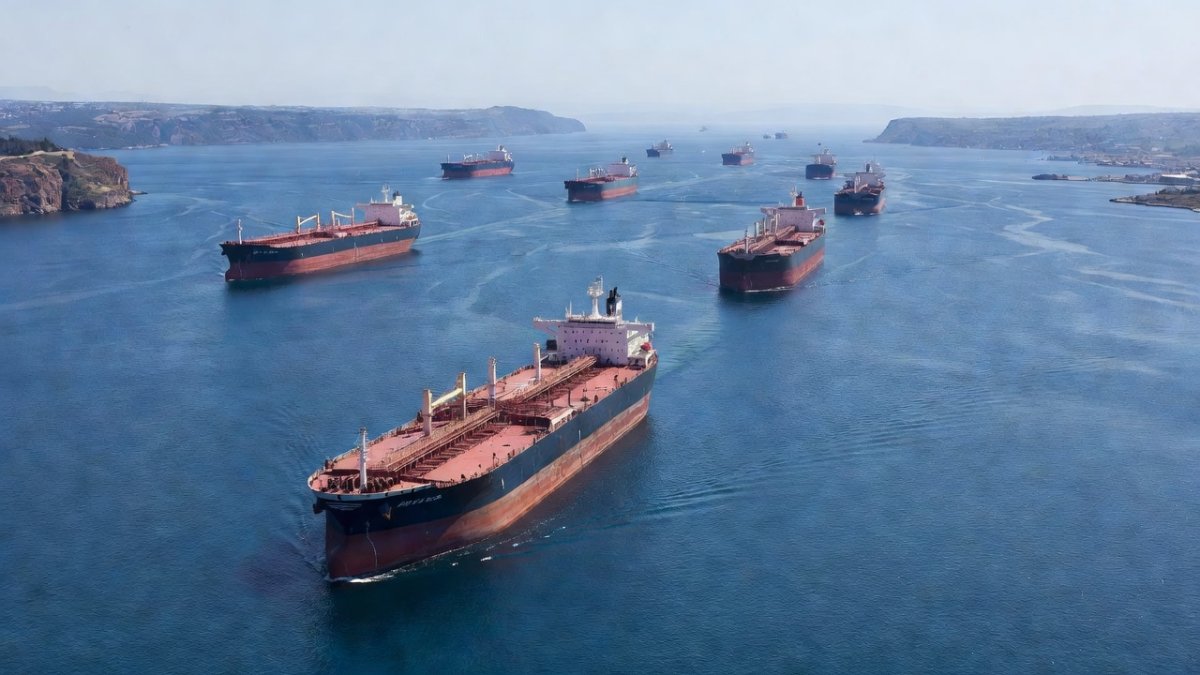
The 2026 Hormuz closure echoes the 1973 oil embargo's supply shock, when Arab producers curtailed exports and prices quadrupled, yet today's disruption compounds that precedent with the 2019 Abqaiq attacks' demonstration of Saudi vulnerability and the 1980-88 tanker war's precedent of sustained Gulf shipping losses. Saudi Arabia's Public Investment Fund and the UAE's Mubadala now weigh these risks against Vision 2030 timelines, as elevated Brent levels above $110 threaten to inflate project costs for NEOM and other diversification megaprojects while OPEC+ members debate output adjustments amid Iranian supply constraints.
Gulf governments recognize that prolonged closure could erode the fiscal buffers built since the 1970s, when petrodollar recycling funded early sovereign wealth vehicles. Riyadh and Abu Dhabi must now calibrate spending to preserve non-oil growth targets even as China's MOFA urges restraint on all sides to protect broader Belt and Road energy corridors.
Regional hedging intensifies because any US-China rupture would amplify the very energy volatility that diversification seeks to escape, forcing Gulf planners to reassess exposure to both American security guarantees and Chinese demand stability.
Rubio Frames Delicate US-China Balancing Act
Rubio described Washington-Beijing ties as a “delicate balancing act,” insisting the United States must manage competition without forfeiting national interests. He stressed that both nations, the world’s two largest economies and nuclear powers, require open communication lines. This stance directly addresses Gulf capitals that have deepened economic links with China while retaining US security partnerships.
The secretary noted that many countries wish to help reopen Hormuz but lack capacity. Washington and Beijing share an interest in ending the West Asian conflict before any potential Trump visit to China. Rubio’s comments signal that US policy will continue pressing Beijing to leverage its influence over Tehran without triggering broader rupture.
China’s Stake in Reopening the Strait of Hormuz
China remains Iran’s largest oil customer and therefore holds unique leverage. Beijing hosted recent talks with Iranian officials aimed at restoring Hormuz transit. Rubio stated explicitly that it is in China’s interest for Iran to cease the closure, given Beijing’s dependence on stable Gulf crude flows.
Yet China also benefits from its 2023-brokered Saudi-Iran rapprochement in Beijing. Riyadh and Tehran have maintained that diplomatic channel even as fighting continues. Gulf analysts view Beijing’s dual role as both crisis mediator and major energy buyer as a calculated hedge that could either accelerate de-escalation or prolong stalemate depending on oil-price tolerance.
China's crude imports via the Strait of Hormuz account for roughly 40 percent of its total supply, with annual volumes exceeding 4 million barrels per day from Gulf sources alone, creating direct exposure that Beijing's Foreign Ministry has sought to manage through sustained engagement with both Tehran and Riyadh. Trade data show China-Iran bilateral volumes surpassing $15 billion in recent years, centered on energy and infrastructure, giving Chinese diplomats leverage that contrasts with Washington's more confrontational posture.
Beijing's 2023 mediation of the Saudi-Iran deal positioned it as a neutral broker, yet the current crisis tests whether that channel can deliver Hormuz reopening without alienating either side. Analysts note that China's MOFA has avoided explicit criticism of Iranian actions while quietly signaling to Gulf partners that stable flows remain a priority for Asian importers.
This positioning allows Beijing to differentiate itself from US policy, which Gulf states view as more likely to prolong tensions through sanctions and military posturing, even as both powers share an interest in preventing wider economic fallout.
Gulf States Hedge Between Washington and Beijing
Saudi Arabia and the UAE have expanded trade and investment ties with China while hosting US military facilities. The current crisis tests this dual alignment. With Brent prices elevated, Gulf sovereign wealth funds gain short-term valuation boosts from energy assets but face longer-term risk if global recession deepens.
OPEC+ production decisions now carry added geopolitical weight. Riyadh’s willingness to coordinate output with Moscow and other members intersects with Chinese demand signals. Any perception that Beijing is shielding Iran could strain these relationships, forcing Gulf leaders to recalibrate their diversification timelines.
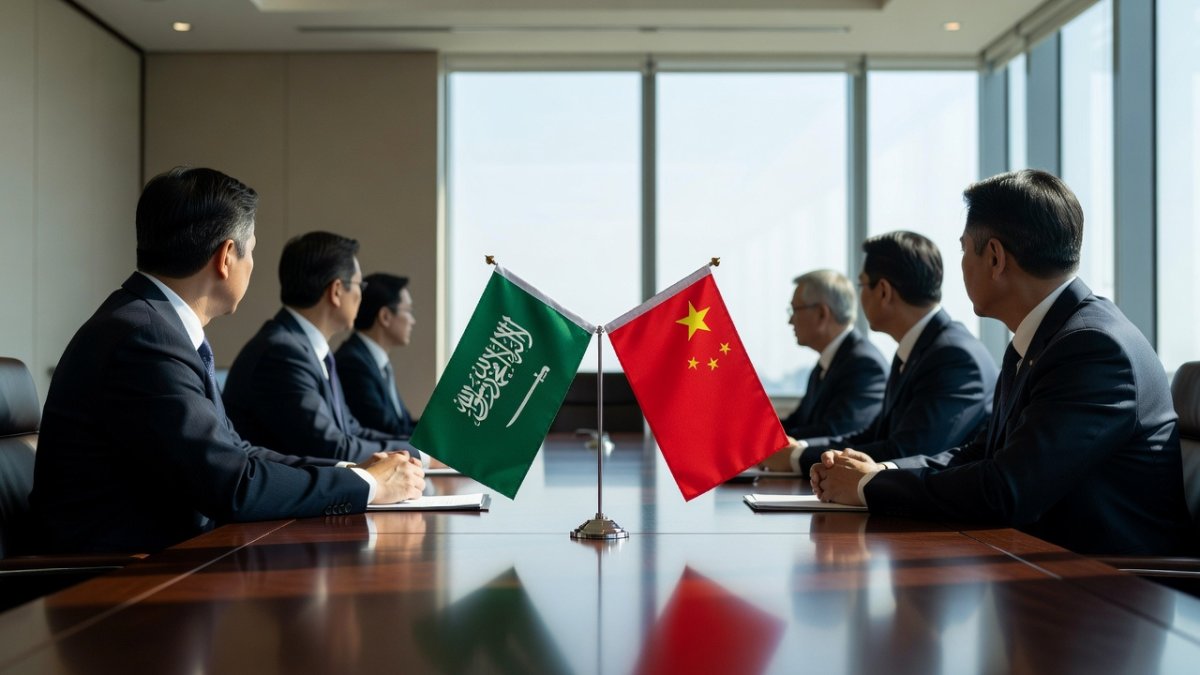
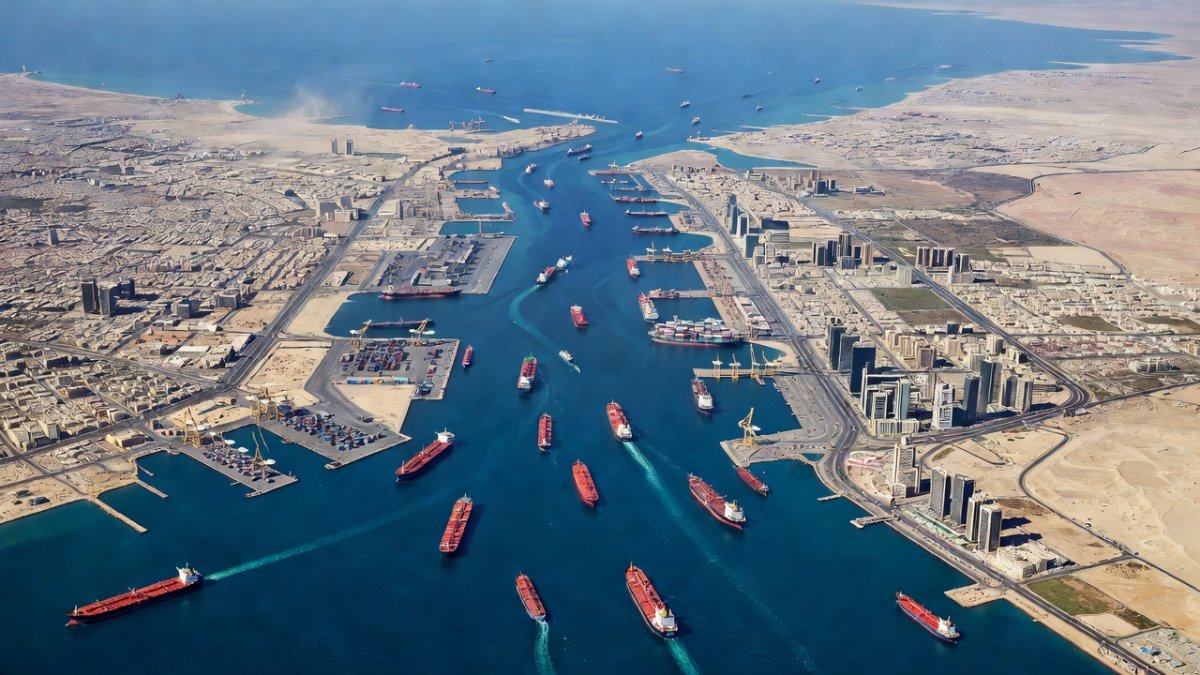
Saudi Arabia's Public Investment Fund has channeled billions into Chinese technology and infrastructure partnerships, while the UAE's ports in Dubai and Abu Dhabi handle growing volumes of Belt and Road cargo alongside hosting the US Fifth Fleet. Qatar similarly balances LNG sales to China with Al Udeid's role as a forward base for American operations, illustrating the layered alignments now under strain.
BRICS membership for the UAE and Saudi Arabia's invitation further embed Gulf economies in Chinese-led frameworks, yet these ties coexist with longstanding US security commitments that include joint exercises and basing rights. The strategic dilemma centers on whether Washington might condition defense support on reduced Chinese engagement, particularly if Hormuz tensions escalate.
Gulf leaders therefore pursue calibrated engagement, expanding sovereign fund allocations to Chinese projects while preserving interoperability with US forces to avoid choosing sides in a rivalry that could disrupt both energy revenues and diversification capital.
Oil Markets, LNG Trade, and Global GDP Shock
The Hormuz blockade has already lifted Brent past US$110, with some reports citing US$126. This surge directly affects Asian importers who purchase the majority of Gulf crude. China’s refining sector and India’s energy security both depend on swift reopening.
Rubio emphasized that Washington seeks Chinese cooperation precisely because Beijing’s economic exposure creates shared incentives. If the strait remains closed, second-order effects could include accelerated Gulf investment in alternative export routes and faster development of domestic gas projects to offset LNG shortfalls.
Asian importers including China, India, Japan, and South Korea absorb the bulk of Hormuz-transiting crude and LNG, where spot prices for cargoes have risen sharply alongside shipping insurance premiums that now exceed $200,000 per transit. Alternative routes such as the UAE's Fujairah pipeline or Saudi east-west lines offer only partial relief, handling under 2 million barrels daily against the strait’s normal 21 million.
OPEC+ spare capacity, concentrated in Saudi Arabia and the UAE at roughly 3.5 million barrels, provides limited buffer if Iranian closures persist, while global GDP forecasts already incorporate a multi-percentage-point drag from sustained high prices. Gulf producers face pressure to coordinate output decisions with both Moscow and Beijing's demand signals.
These market dynamics underscore why reopening Hormuz carries immediate consequences for inflation across Asia and for the fiscal planning of energy-dependent economies worldwide.
Taiwan Arms Sales and Broader Strategic Calculus
On July 29, 2026, Rubio confirmed that a proposed US$14-18 billion US arms package to Taiwan remains under review and is not conditioned on any Xi Jinping visit. Beijing has labeled Taiwan the “biggest risk” in bilateral ties. Semiconductor export controls and South China Sea frictions add further layers of tension.
These disputes matter for the Gulf because any US-China rupture would likely tighten technology controls and financial sanctions, complicating Gulf sovereign wealth fund strategies that increasingly target Chinese tech and infrastructure projects.
US semiconductor export controls already limit Gulf access to advanced chips essential for Saudi Vision 2030's smart-city ambitions and UAE artificial-intelligence initiatives valued in the tens of billions. A sharper US-China rupture would tighten these restrictions, raising costs for technology transfers that Gulf sovereign funds have pursued through partnerships with firms in both countries.
Financial second-order effects could include reduced valuations for Gulf holdings in Chinese tech equities and delayed infrastructure financing, as export controls ripple into dual-use sectors. Riyadh and Abu Dhabi have sought to diversify suppliers, yet dependence on US-origin components in defense and civilian AI systems creates persistent vulnerabilities.
These constraints force Gulf planners to weigh short-term energy windfalls against longer-term technological isolation, with any Taiwan-related escalation likely to accelerate efforts at indigenous capability development even as US arms packages remain under review.
Strategic Outlook for Regional Stability
Rubio’s interview underscores that Washington expects Beijing to use its economic leverage with Tehran to restore Hormuz access before oil-price volatility triggers wider instability. Gulf states, caught between US security guarantees and Chinese energy demand, will continue calibrated hedging.
If implemented, renewed diplomatic pressure could shorten the current crisis. Yet the episode has already demonstrated how quickly Middle East chokepoints can become arenas for great-power bargaining, with direct consequences for Saudi Arabia, the UAE, and global energy markets.
By Malik Hassan, Staff Writer
This article was produced with AI-assisted research and editorial support. Reporting is based on sources cited in the article.
What's Your Reaction?
 Like
0
Like
0
 Dislike
0
Dislike
0
 Love
0
Love
0
 Funny
0
Funny
0
 Wow
0
Wow
0
 Sad
0
Sad
0
 Angry
0
Angry
0
Middle East Correspondent at Global1.News. Based in Beirut, covering politics, conflict, energy, and society across the Middle East. Brings context and depth to a region often reduced to headlines.











Comments (0)